
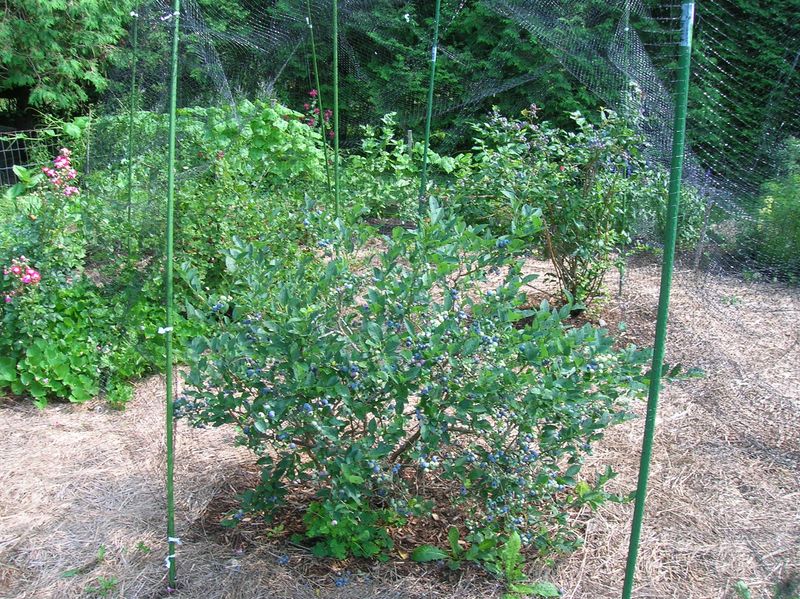
Your blueberry bushes may look finished once the last berries are picked, but they are already getting ready for next year. Flower buds for next spring start forming while the weather is still warm.
What the plants go through during that stretch can shape how well they crop later. Here is how to help them without wasting time on fall chores they do not need.
Next year’s flower buds begin forming before fall is over
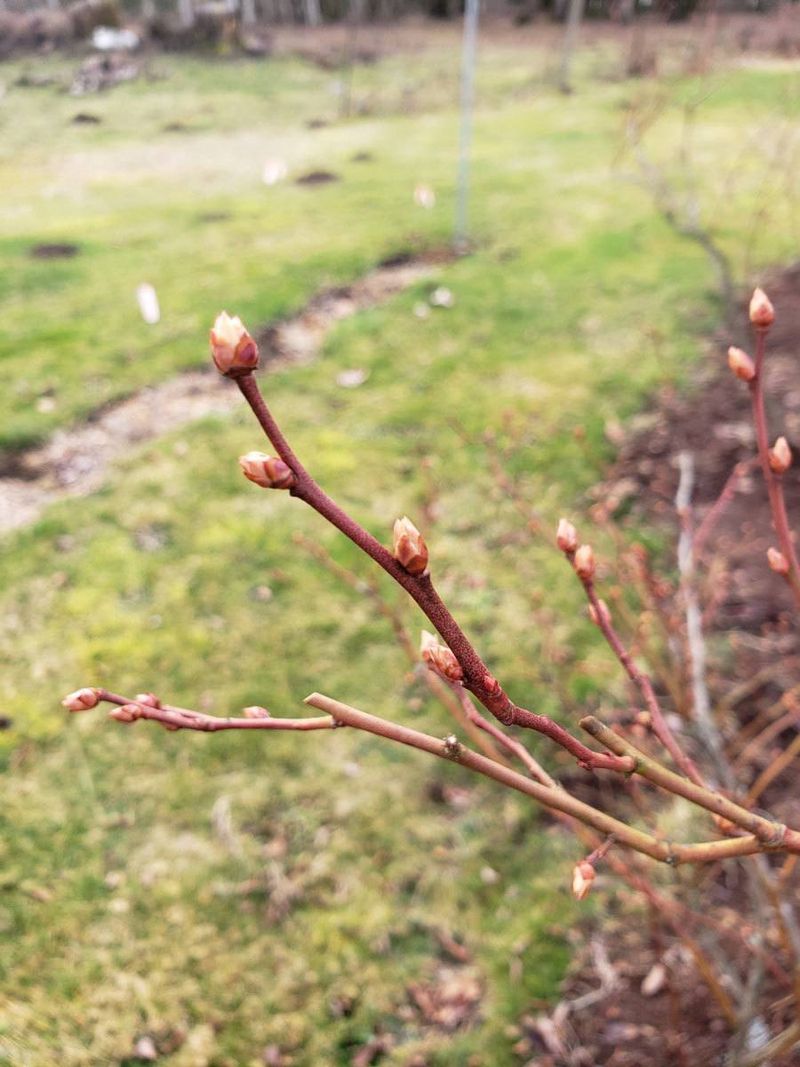
Long before winter, your blueberry bush is already planning next spring. According to UGA Extension’s blueberry phenology guide, flower-bud initiation generally runs from August through October.
The exact timing shifts with the cultivar, the weather, and how the plants are managed.
That is why late-season conditions matter. A bush that stays healthy and well supplied with water during bud formation has a better chance of carrying its full yield potential into next year.
Notice the wording, though: care can influence a crop, but it cannot guarantee one. Cultivar, winter chill, spring frost, and pollination all still have a say.
Plant type matters too. In Florida, some southern highbush systems keep their leaves through fall and winter, as described in UF/IFAS guidance on evergreen production.
A deciduous rabbiteye bush follows a different calendar, so check which type you have before copying anyone else’s fall routine.
Protect foliage and keep the root zone evenly moist
Leaves are the factory that feeds those developing buds, so keep them on the plant as long as nature intends. Red and orange fall color on a deciduous bush is normal seasonal change.
Leaves that brown, spot, or drop in late summer while the plant should still be active are a different story, and they are worth investigating. UGA notes that early fall defoliation can hurt cultivars forming buds at that time.
Look for drought stress, pests, or disease.
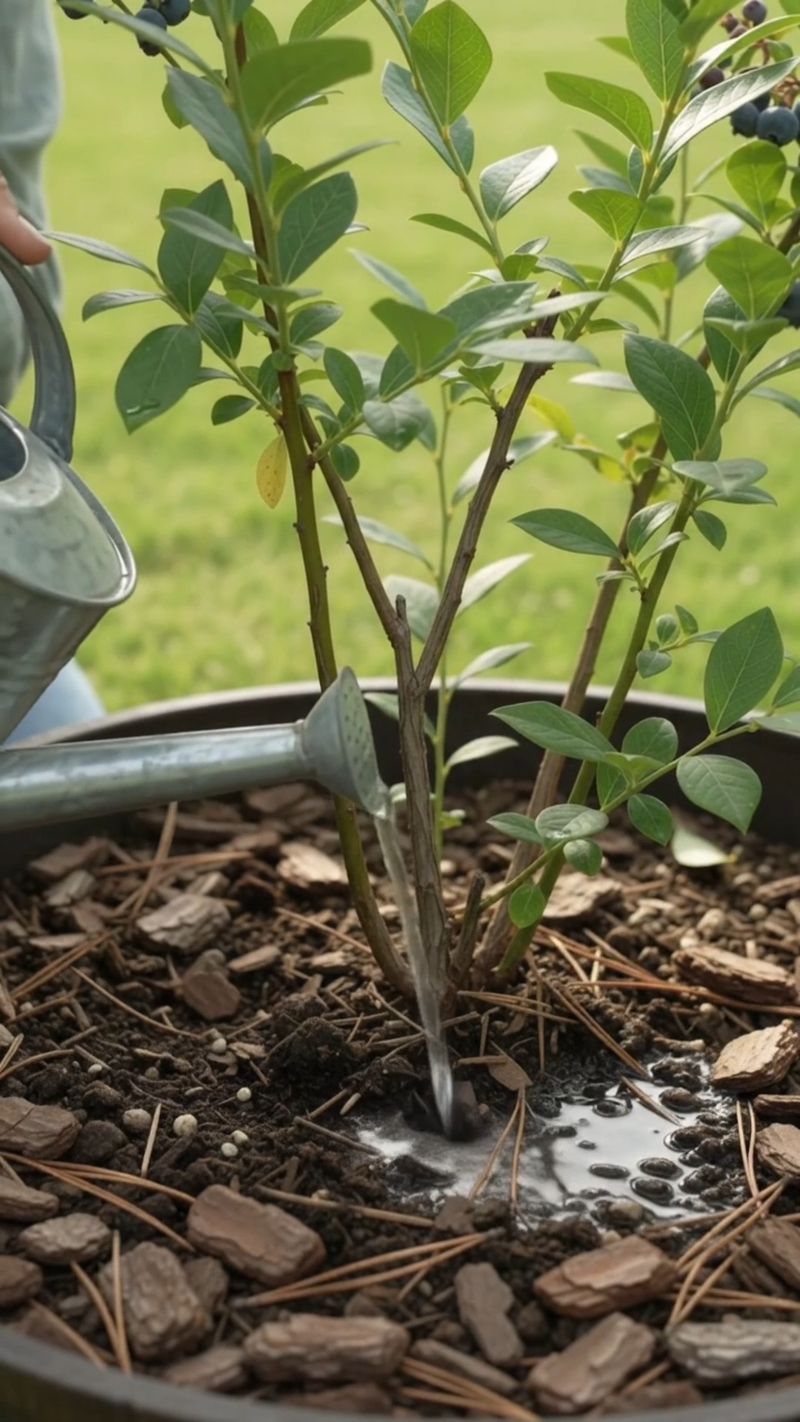
Blueberry roots are shallow and sensitive to drying out. During dry spells, water often enough to keep the root zone evenly moist, as in UF/IFAS irrigation advice for southern highbush.
Avoid soggy soil, though. Prolonged waterlogging can damage roots.
Organic mulch helps here. According to Mississippi State Extension, a few inches conserve moisture, suppress weeds, and add organic matter as they break down.
Refresh it as it thins. Do not count on mulch to fix high soil pH.
When should you prune after harvest?
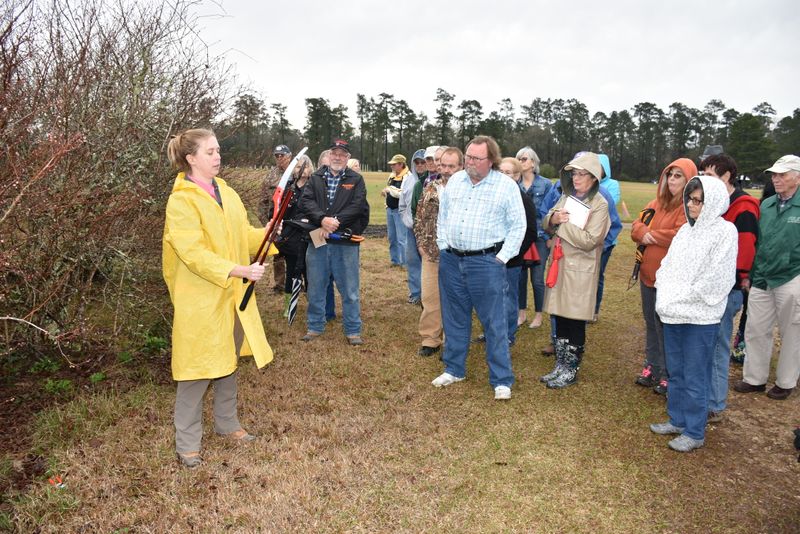
Pruning calendars differ across the South, so there is no single date to circle. For rabbiteye blueberries, Mississippi State Extension recommends pruning after harvest and before August 1.
That gives new wood time to mature and form flower buds. The state’s fruit and nut review points the same way.
Louisiana is similar in spirit. LSU AgCenter favors pruning shortly after harvest, which suits its long growing season.
Notice that both schedules land in summer, not deep fall. In other climates and growing systems, dormant-season pruning may be the better fit.
If you are not sure, check with your county Extension office, and match the advice to your blueberry type and region.
Pruning can improve fruit quality while reducing the crop load
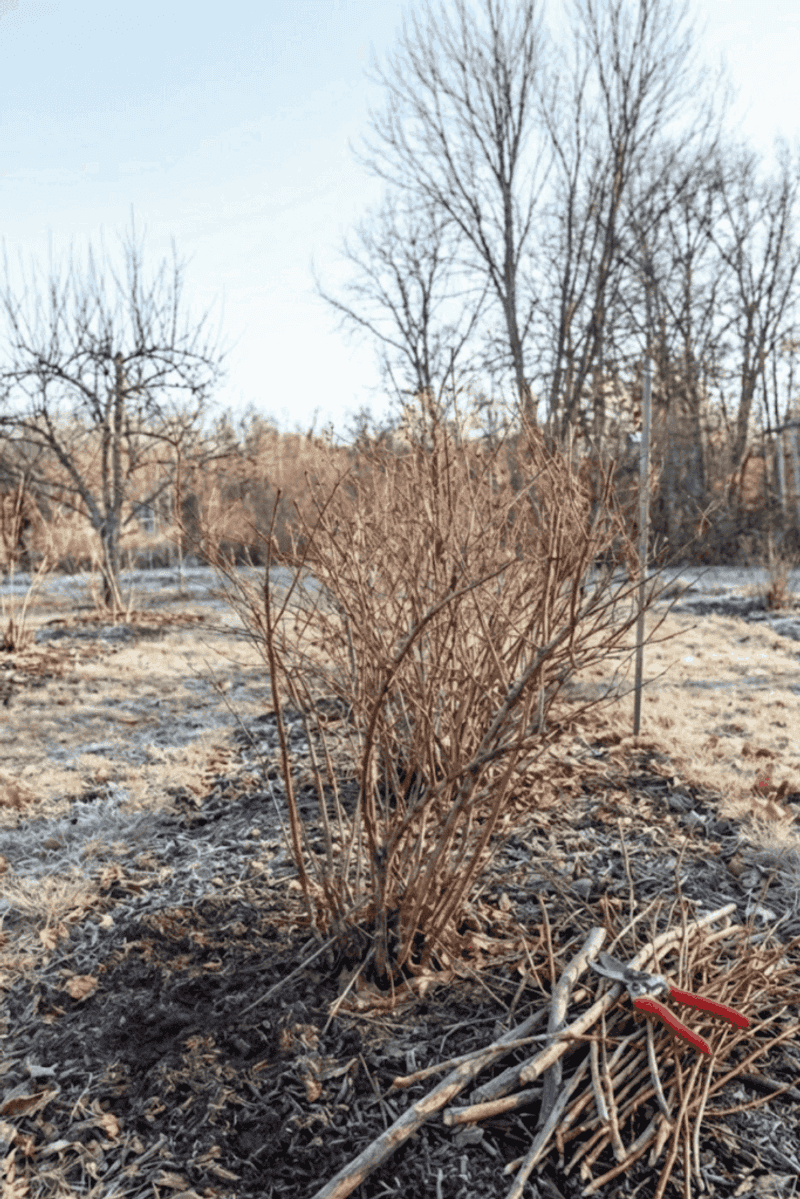
Think of pruning as bush management, not a crop booster. Cuts control cane age, open the canopy to light, and adjust how much fruit the plant carries.
UGA Extension’s pruning guidance covers these goals, including renewing older wood.
There is a tradeoff. Every flower bud you remove is fruit you will not pick, so heavy cutting can shrink the coming crop.
Thinning can give fewer but better berries, and it helps renew the plant over time. A larger berry is not the same as a larger total harvest.
On the other hand, leaving every bud may mean more fruit, but it can overburden a crowded bush. LSU AgCenter ties postharvest pruning to plant renewal.
Prune with a purpose, and do not expect pruning alone to deliver a bigger harvest.
Postharvest feeding does not mean feeding in late fall
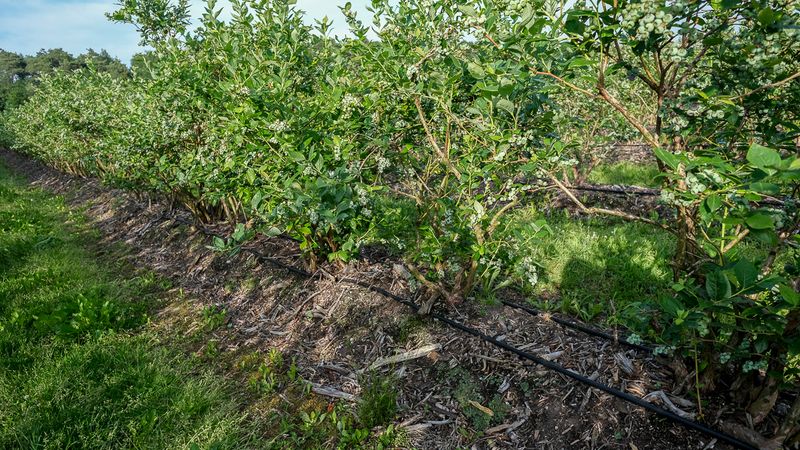
A few Southern guides do include a postharvest fertilizer application, but that is a regional schedule, not a late-fall habit. Mississippi State Extension describes spring and postharvest feedings and says to stop by August.
LSU AgCenter likewise describes a final application after harvest.
Those two states have different calendars, so do not borrow a date or an amount from one and apply it somewhere else. Rates also depend on the plant and its age.
Blueberries are sensitive to excess fertilizer, and the risk rises when plants are dry. Water stressed bushes first, and do not push extra feed on them in hopes of a bigger crop.
Ask your local Extension office what fits your plant type, soil, and area.
Test soil before trying to make it more acidic
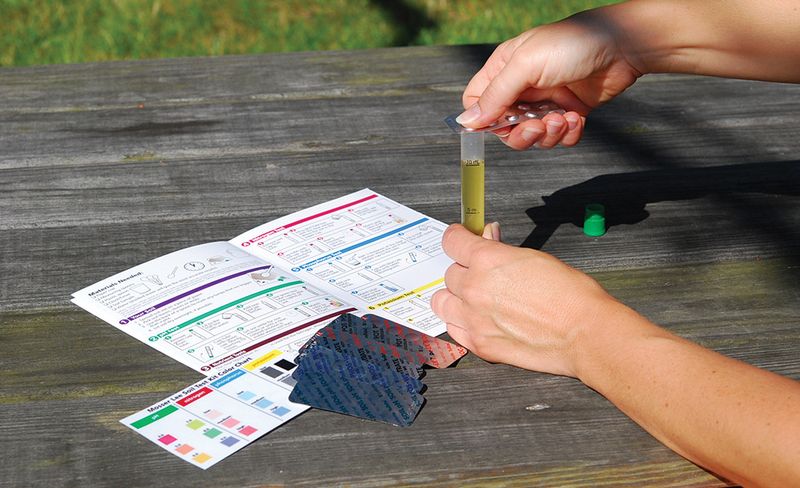
Guessing at soil acidity can backfire. Start with a soil test, then follow the results and your local Extension recommendations.
Targets vary by source. The UF/IFAS Blueberry Gardener’s Guide gives a pH range of 4.0 to 5.5.
Florida production guidance and Texas A&M AgriLife commonly cite 4.5 to 5.5.
Elemental sulfur works slowly, so it is not an instant fall fix. Too much can over-acidify the soil and harm plants, which is why an arbitrary dose is a bad idea.
Mulch also should not be expected to correct a high-pH site.
Texas readers should note that Texas A&M points to acidic soils and areas such as East Texas as suitable. It also says rabbiteyes are poorly suited to alkaline soils.
For background on how pH works, see UF/IFAS soil pH guidance.
Let the plant and local schedule guide your fall checklist
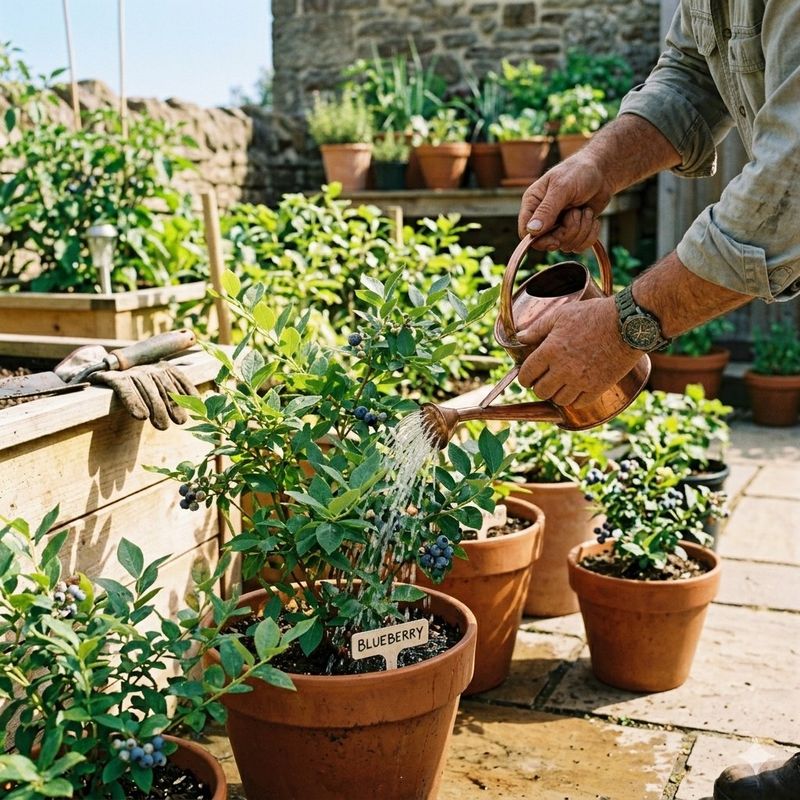
Keep the list short. Watch the leaves, keep moisture steady without flooding, and prune or feed only when regional Extension timing supports it.
Test soil before changing pH.
A bush in good shape may need very little. Skipping a task is fine when the plant does not call for it.
Blueberries reward steady attention more than a flurry of fall chores.