
Fresh lettuce in the cooler months sounds great, but the calendar matters a lot. In some warm parts of the South, late October can still work for sowing, while in other places that window has already closed.
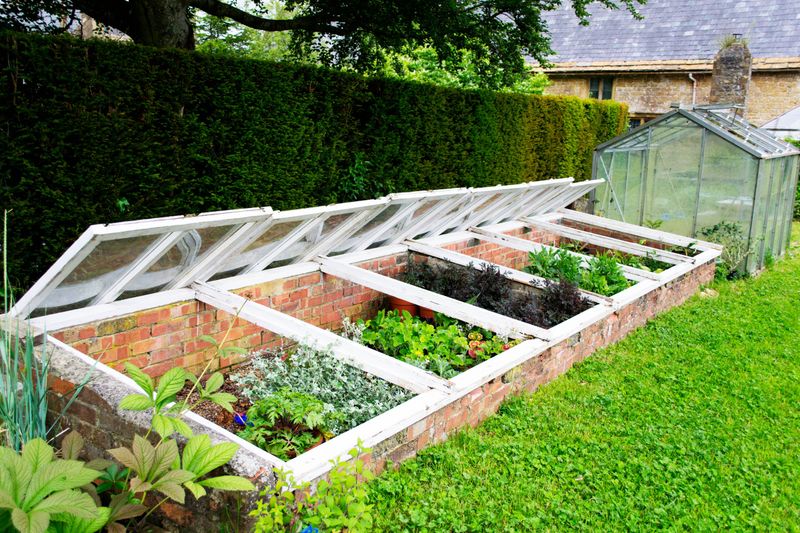
A simple cold frame can protect young plants from cold and wind. Here is how to decide if you should sow now, and how to give your lettuce a fair shot.
Is late October still a planting window where you live?
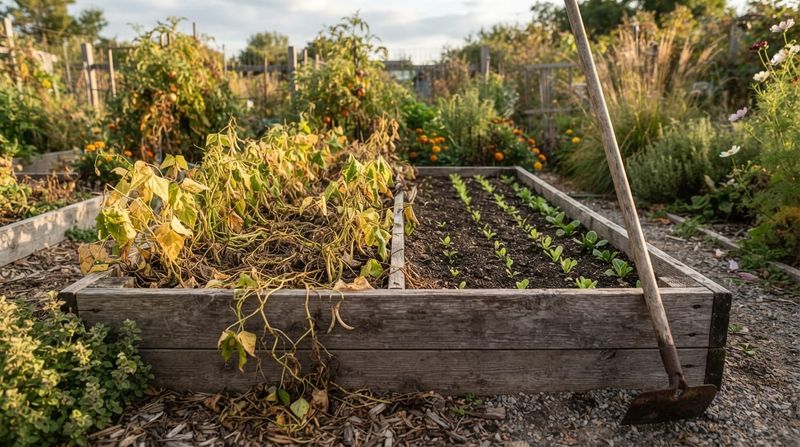
Planting dates for fall lettuce change a lot from one place to the next. Texas A&M’s fall calendar lists leaf lettuce planting from September 1 in northern Texas to December 1 in the southernmost region.
The two middle regions fall on October 10 and November 1.
Florida and Georgia split the same way. UF/IFAS guidance lists outdoor lettuce planting from September through February in central and south Florida, but February to March in north Florida.
UGA’s fall schedule for leaf lettuce ends October 15.
So late October fits some warm spots and has already passed in others. Skip the hardiness zone map for this decision, since it is not a planting calendar.
Look up your county extension’s fall planting table and think about when your first killing frost usually arrives. Even a date that fits is no promise of a winter crop, only a fair starting point.
Leaf lettuce gives a late sowing its best chance
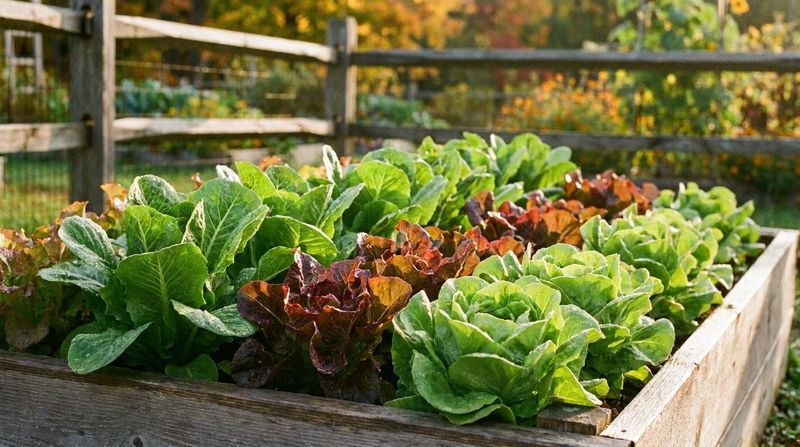
When time is short, leaf types are the practical pick. Mississippi State Extension describes leaf lettuce as more cold-hardy and faster-maturing than head lettuce.
That combination suits a sowing made after the best of fall has passed.
Head lettuce is a tougher bet in much of the South. UGA notes that it performs poorly in Georgia’s hot climate.
For Georgia gardens, UGA lists varieties such as Red Sails, Black-seeded Simpson, Slobolt, and some Romaine selections.
Treat those names as starting points for Georgia, not as a winter guarantee anywhere. Check what your own state extension recommends, or ask a local garden center what grows well in your area.
Choosing a leaf type improves your odds, but timing and weather still make the final call.
Shallow sowing and steady moisture help seedlings establish
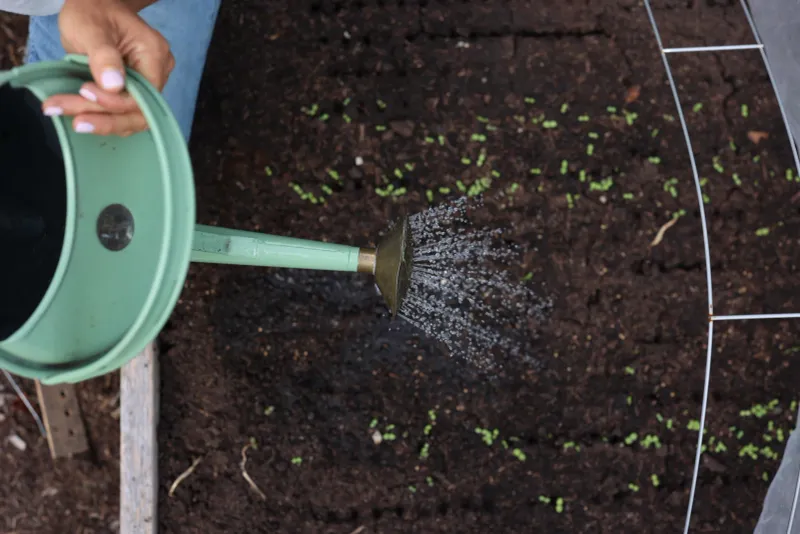
Lettuce seed is tiny, so burying it deep works against you. Sow it about 1/8 to 1/4 inch deep, then press the soil lightly so the seed touches the ground.
A fine spray from a watering can keeps the seeds from washing out.
UGA recommends watering frequently during the first two weeks. The goal is soil that stays moist but never waterlogged.
Soggy ground can cause its own trouble, so check with a finger before you water again.
The same source says too little moisture can sometimes contribute to bitter leaves. That does not mean extra water fixes every bitter batch, since variety and maturity play a part too.
Think of steady moisture as a good habit for young seedlings, not a flavor cure.
A sunny cold frame needs regular weather checks
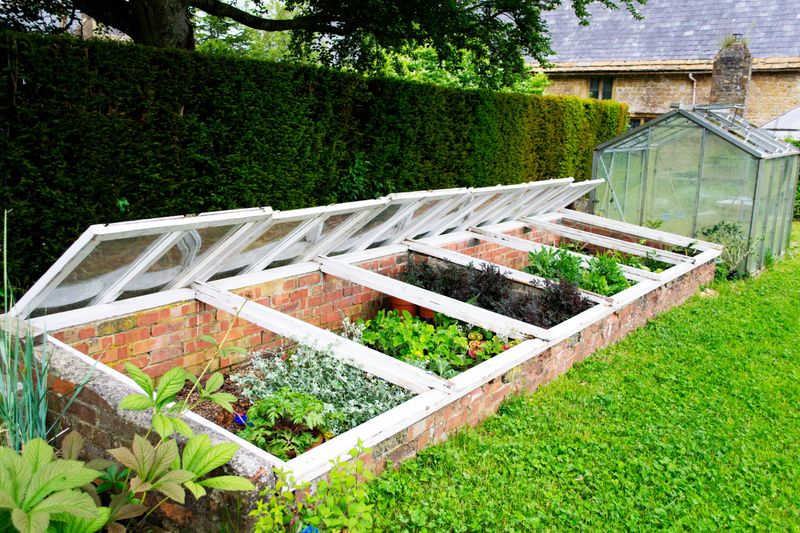
A cold frame is an unheated box with a clear, hinged lid. According to University of Minnesota Extension, it captures daytime solar warmth and protects plants at night.
It also blocks wind that can batter tender leaves.
Put the frame where it gets plenty of sun. Then plan to open it.
Utah State Extension gives the same advice: vent during the day so plants do not overheat. A closed lid on a bright afternoon can cook lettuce faster than a cold night can harm it.
Build a quick routine. Prop the lid on warm or sunny mornings, and close it again as the afternoon cools.
Peek in during cloudy spells too. A cold frame works best when you treat it as something to tend, not something to set and forget.
Winter survival does not mean continuous growth
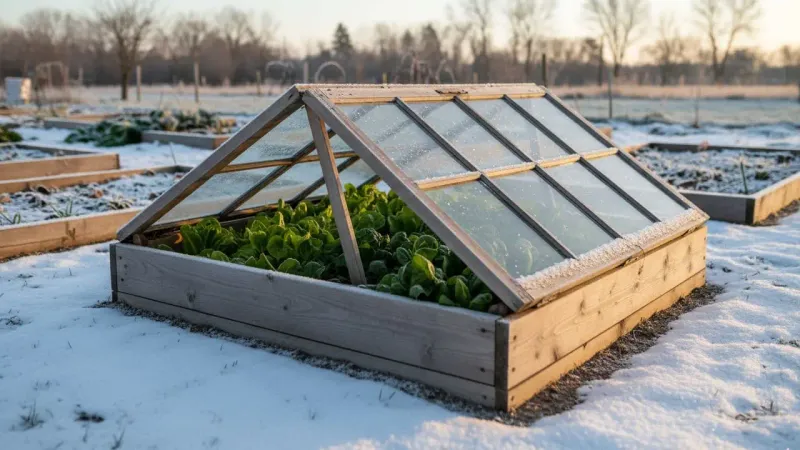
Staying alive and growing are two different things. Texas A&M counts lettuce among frost-tolerant vegetables, and it may handle a light frost.
That is not protection against every freeze, a long stretch of cold, or injury to a particular variety.
UGA’s lettuce guide warns that extreme cold can kill plants. Under a frame, they may survive but grow very slowly once nights are long and days are short.
A late sowing may sit as small plants for weeks.
A frame can soften some of that, since the Minnesota Extension season-extension guidance is about protection, not heat. It is unheated, so a hard freeze can still get in.
Expect pauses, and treat any salad you pick as a bonus when growth allows.
Cool weather may affect bolting and flavor, but outcomes vary
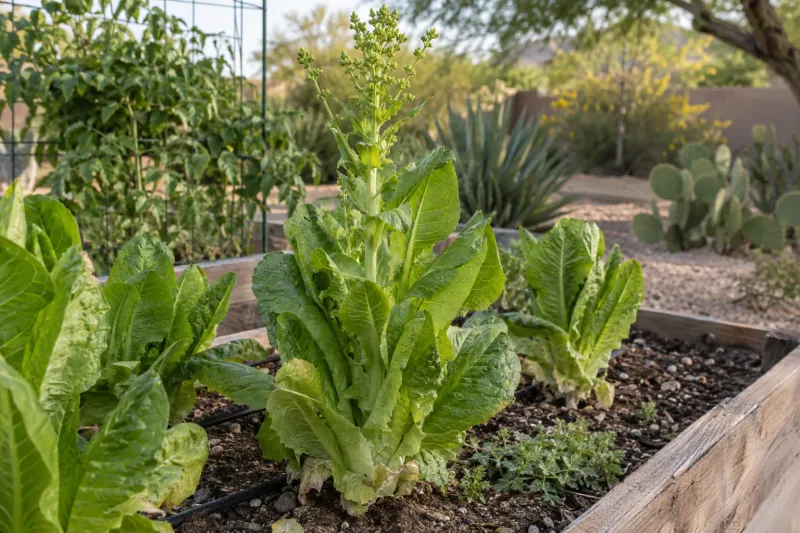
Bolting means the plant shoots up a flower stalk, and the leaves turn bitter. Minnesota Extension says long days, strong light, and heat can trigger it, and even slow-bolting cultivars may flower.
Cooler weather may ease heat pressure, but it does not remove the risk.
Frame temperature matters too. On a warm day, a closed box can get hot enough to push plants, which is another reason to follow Utah State’s venting advice.
Sweetness is a similar story. One study of two lettuce varieties found higher sugar at lower growing temperatures, and an iceberg lettuce study found more sugar in cooler-season harvests.
Those results came from particular varieties and conditions, so they do not promise sweeter lettuce in your frame. Flavor also depends on variety, maturity, and moisture, as UGA notes.
Taste a leaf and judge for yourself.
Pick outer leaves as they reach usable size
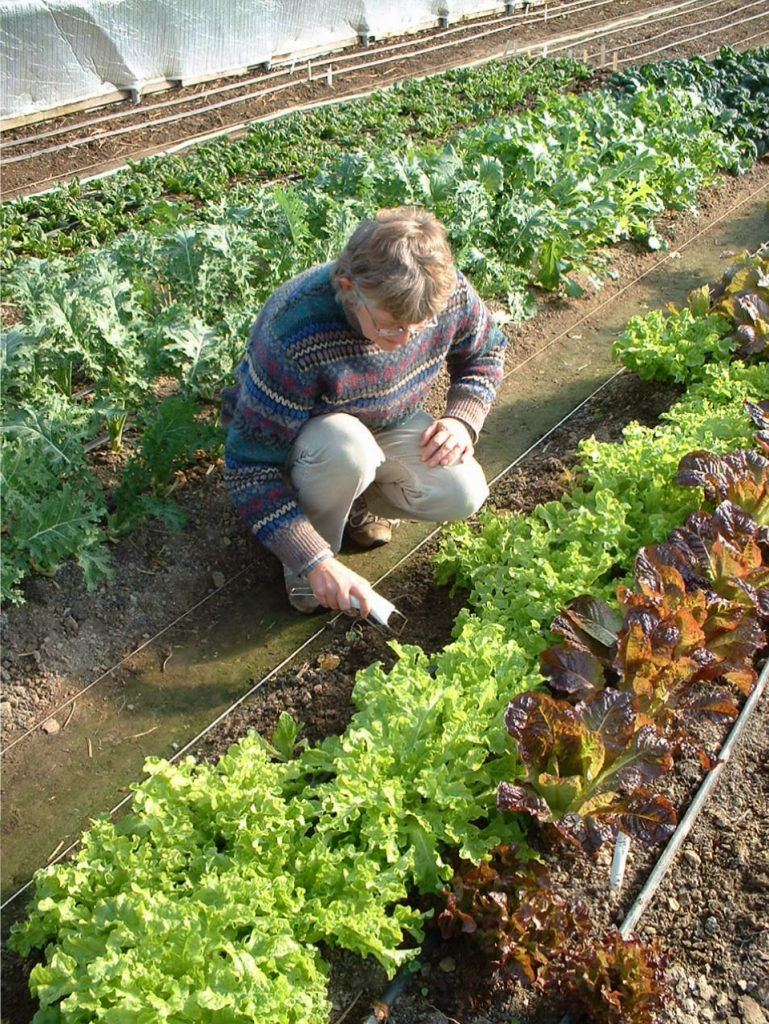
Cut-and-come-again picking stretches a small planting. UGA recommends harvesting the older outer leaves as they reach useful size, which leaves the center to keep producing.
Take a few leaves per plant rather than stripping one bare.
Here is the whole sequence in practice. First, check your local planting dates.
Second, pick a leaf type suited to your region. Third, sow shallowly and keep the seedbed moist, then set up a sunny frame and vent it on warm days.
After that, let the plants set the pace. In cold, dim weeks you may get a few leaves, and in milder spells a bigger handful.
No fixed supply is guaranteed, which is fine for a small winter salad bowl.