
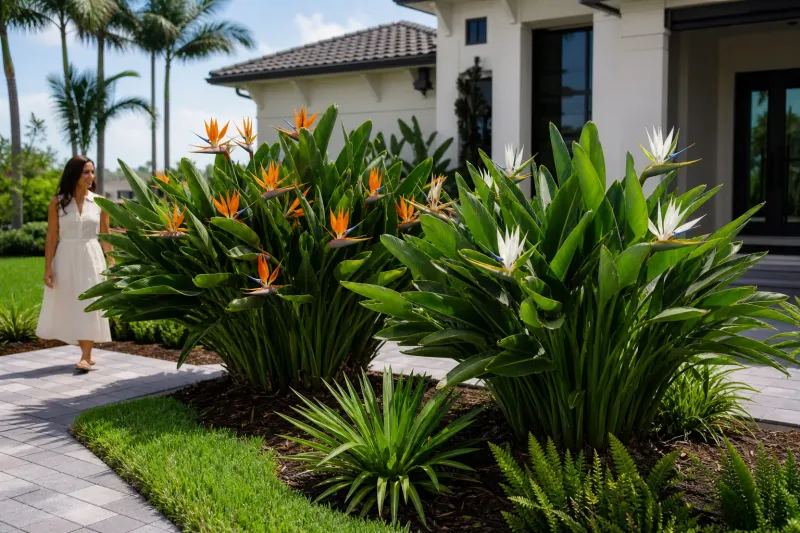
A cold snap can turn a lush bird-of-paradise into a ragged clump overnight, but it does not always happen that way. How much harm your plant takes depends on its species, the forecast low, and where it grows in your yard.
Knowing which number on the forecast should send you outside gives you time to act before the cold arrives. Here is how to move, cover, and water the right way, and what to do once the freeze has passed.
Identify your bird-of-paradise
Before you pick a temperature to worry about, figure out which plant you have. The familiar orange-and-blue flower that looks like a bird’s head belongs to Strelitzia reginae.
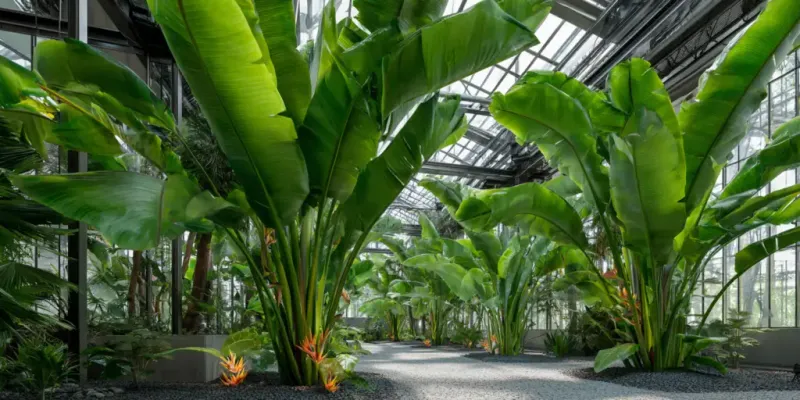
The giant white bird-of-paradise, Strelitzia nicolai, grows into a tall, banana-like clump with big paddle leaves and white and blue-gray blooms.
These two plants do not share one cold rating. UF/IFAS guidance on Strelitzia reginae says it can tolerate temperatures as low as 24°F for a short time.
That figure describes survival during a brief exposure. It does not promise that leaves, flowers, or buds will come through unharmed, and the same source notes that freezing temperatures damage developing flower buds and flowers.
The giant white type has its own numbers. A UF/IFAS fact sheet on Strelitzia nicolai reports that it can survive short periods at 28°F with minimal leaf burn and recover quickly.
Notice the careful wording: short periods, minimal burn. It is not a guarantee for every plant or every freeze.
So do not borrow one species’ number for the other. If you are not sure which you have, look at the size and the leaves.
Small clumps with stiff, blue-green, paddle-shaped leaves on long stalks are usually reginaenicolai. Trunk-forming giants that reach well over head height are .
Once you know, you can read the forecast with the right expectations.
Use 32°F as a protection cue, not a damage guarantee
Here is the forecast rule to remember: when the overnight low is predicted to hit 32°F or lower, protect your bird-of-paradise before the temperature reaches freezing. UF/IFAS Brevard County Extension advises protecting tender plants when 32°F or lower is forecast.
Think of it as a cue to act, not a promise that your plant will be hurt at exactly that number.
Why not wait for 24°F, the figure often quoted for Strelitzia reginae? That number only describes brief survival.
UF/IFAS also says freezing damages developing flower buds and flowers, so waiting for 24°F can cost you the blooms you were hoping to save.
A forecast is also a regional guess. Your yard may run colder or warmer than the number on your phone.
Low spots, open areas, and wind can make a plant feel the cold more, while a spot near a wall or under a roof can soften it. Duration matters too, since a couple of hours near freezing is different from a long night below it.
Recent weather plays a part as well. UF/IFAS winter protection advice and its cold protection publication note that a freeze after warm weather can cause more damage than the same temperature after a gradual cooldown.
If December has been mild and a hard drop is coming, take it seriously and prepare early.
Move container plants before the cold arrives
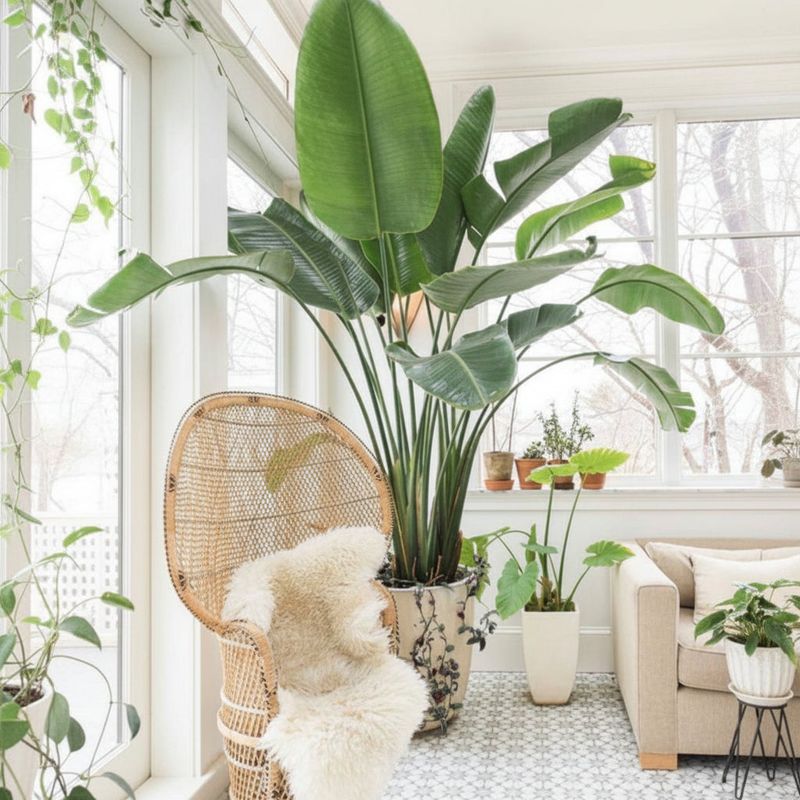
Container plants have a big advantage: you can take them out of the weather. When frost or freezing temperatures are in the forecast, UF/IFAS Gardening Solutions recommends moving potted plants to a warmer, sheltered place.
A garage, a screened porch, or a spot under a roof overhang all work better than an open patio.
Timing is the key. Do the move in the afternoon, well before the temperature falls, so you are not wrestling a heavy pot in the dark.
Pots on the ground lose heat quickly, and the roots in a container have less buffering than roots in the soil.
Choose the shelter with some care. Against the south or east wall of the house, cold air is often a few degrees milder than in the open yard.
A garage that stays above freezing is better still. If you bring the plant into a dim space, plan to return it to light within a day or two so it does not sulk.
Shelter helps, but it is not a guarantee. A porch can still get cold when the freeze is hard, and UF/IFAS cold protection guidance reminds gardeners that protection works best in milder freezes.
Use a rolling plant stand if the pot is heavy, and group pots close together so they share warmth.
Once the cold passes and the forecast warms, set the pot back outside.
Cover rooted plants with material that reaches the ground
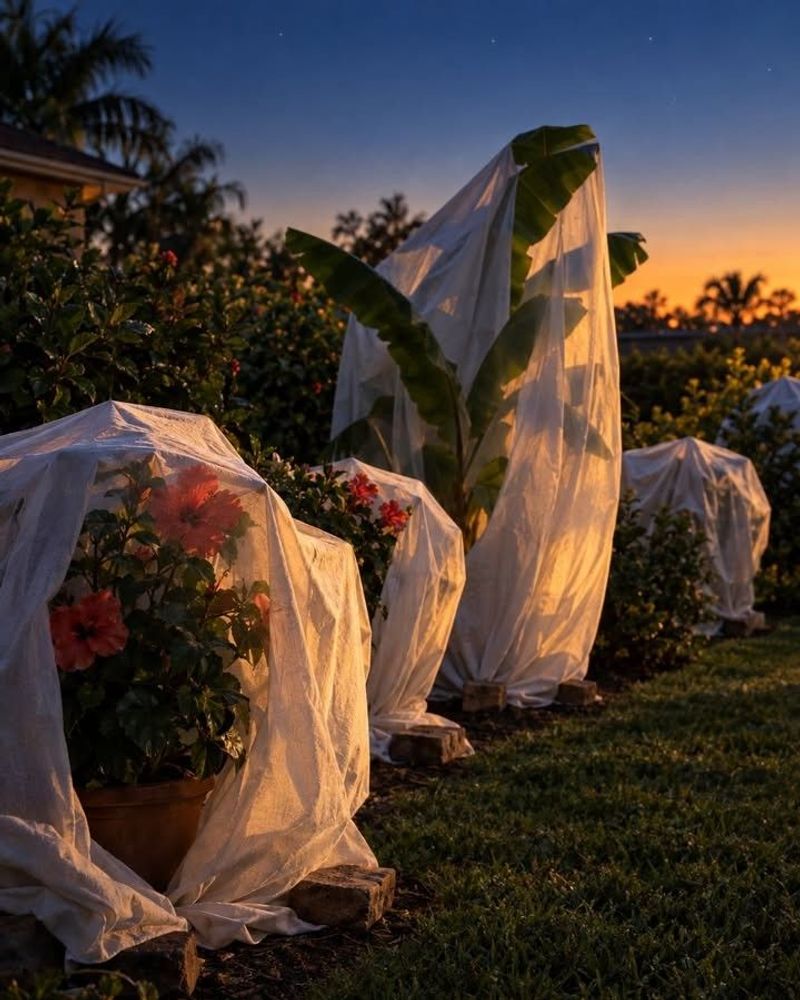
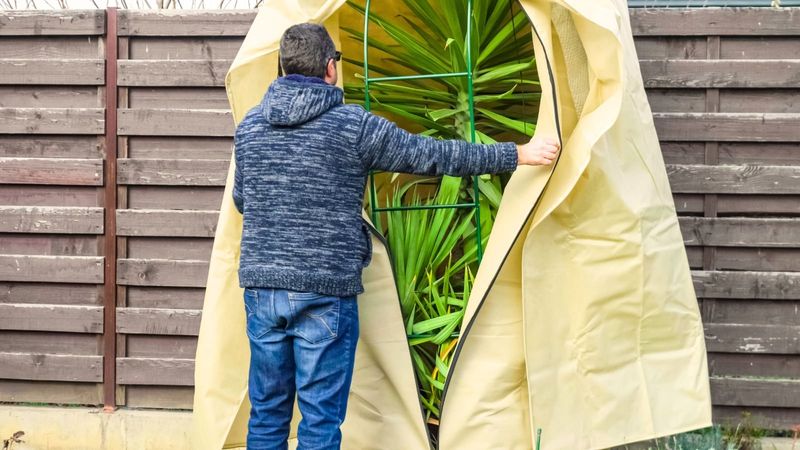
Plants in the ground cannot be carried away, so cover them. Use a cloth, blanket, or purpose-made frost cover, and drape it so it reaches the ground.
UF/IFAS advice on preparing for cold weather explains that a cover to the soil traps the warmth rising from the ground. A short cover that stops at the leaves lets that heat escape.
Set up in the afternoon while the day is still warm. Stakes, tomato cages, or a light frame can hold the cloth up and away from the leaves, and bricks or stones along the edge keep wind from lifting it.
A big clump may need two people.
Plastic needs extra care. If you use it, keep it from touching the foliage, since leaves pressed against plastic can be injured where they touch.
Put a cloth layer or a frame between the plastic and the plant.
Take the cover off after temperatures rise above freezing the next morning. Leaving it on through a warm, sunny day can overheat the plant and trap moisture.
Keep your expectations realistic. UF/IFAS cold protection guidance notes that covers help more against frost than against extreme cold.
On a night that dips well below freezing, a cover may soften the blow without preventing all damage.
Water the soil carefully and skip the sprinkler
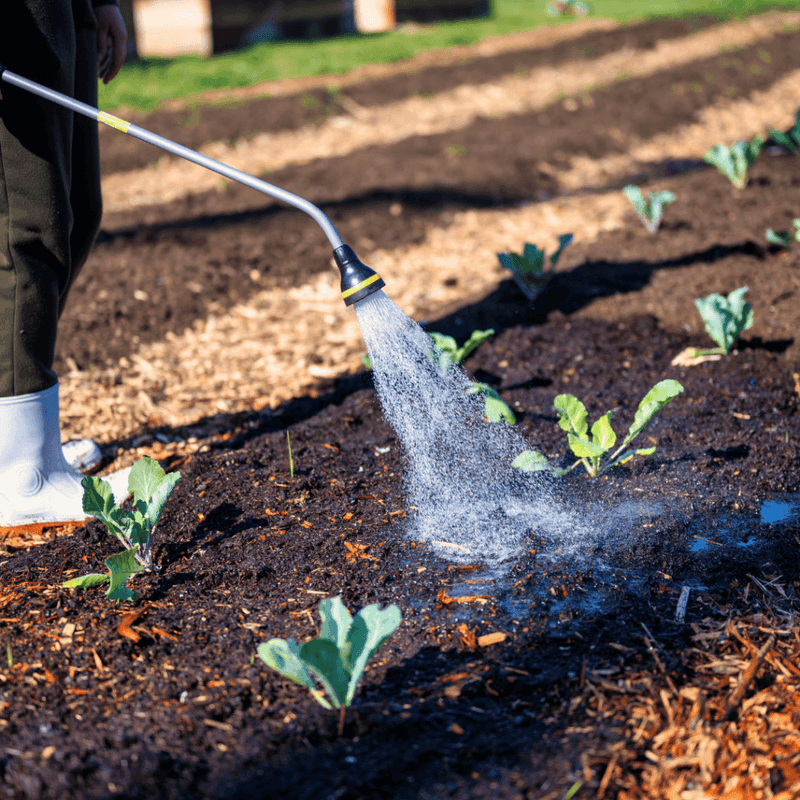
Soil can be a helper on a cold night. According to UF/IFAS winter plant protection guidance, moist soil absorbs and releases more heat than dry soil.
If the ground around your bird-of-paradise is dry, a careful watering a day or so ahead of the freeze may help.
Aim the water at the soil, not the leaves, and stop short of soaking it. Florida’s sandy soil drains quickly, so a moderate drink is usually enough.
In spots with poor drainage, skip the extra water, since soggy soil is hard on roots. Moist soil may buffer temperatures a bit, but it cannot guarantee protection.
Do not turn on the lawn sprinklers and let them run over the plant. UF/IFAS Gardening Solutions and its cold protection publication warn that home irrigation systems generally are not designed for freeze protection.
They can waste water, weigh plants down with ice, or cause damage.
Farm-style freeze protection works only because the system is built to apply enough water continuously through the whole freeze and thaw. A typical backyard sprinkler cannot do that.
If the water stops or falls short, ice can do more harm than the cold alone.
For home gardens, the plan is simple: water dry soil ahead of time, add a cover or shelter, and leave the sprinkler off.
Wait for damage to become clear before pruning
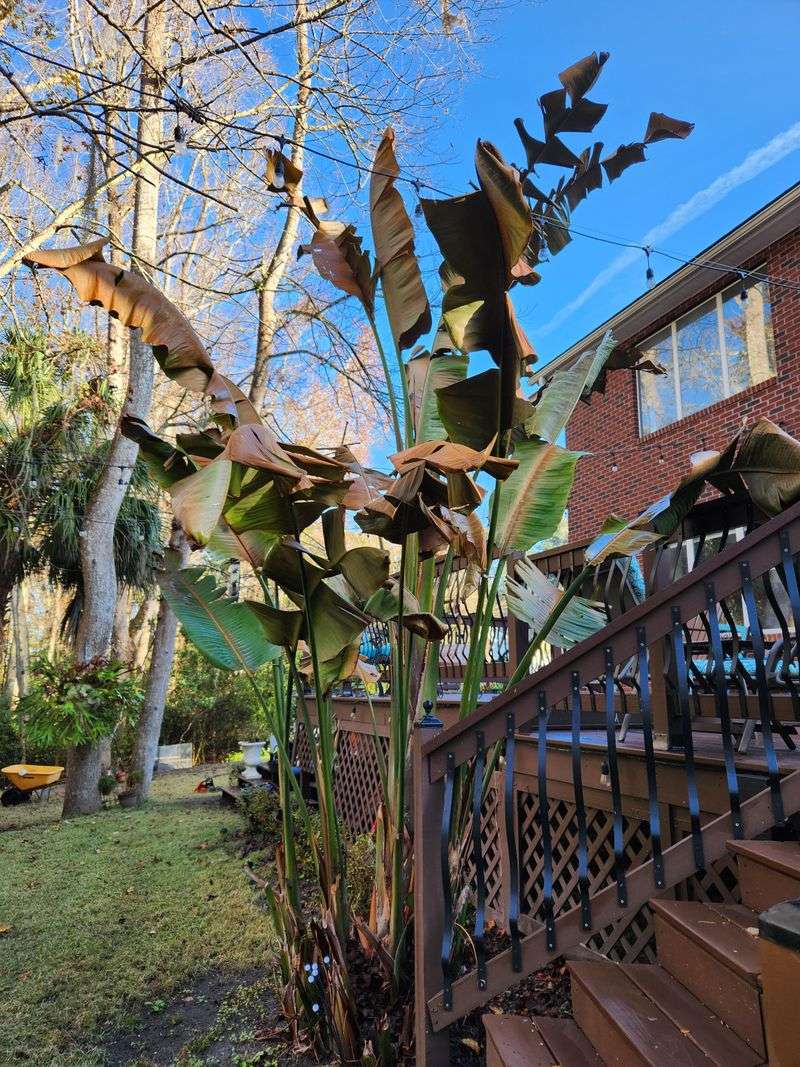
The morning after a freeze, a bird-of-paradise can look rough, and the urge to grab the pruners is strong. Hold off.
UF/IFAS cold protection guidance points out that injured leaves can still provide some insulation for the plant during later cold nights, and that new growth helps show where living tissue begins.
Early damage can also look worse than it is. Leaves that seem limp or browned right away may be only partly harmed, and some tissue that appears fine may fail later.
Time sorts it out.
There is one exception. If tissue turns soft or mushy, you can remove it, since that part is not coming back and can invite rot.
Cut just those pieces rather than clearing out the whole clump.
For a Texas gardener asking the same question, an Ask Extension freeze recovery answer also supports waiting to see where new growth appears before cutting. Watch the base of the plant as the weather warms, and trim back to just above healthy growth once it shows.
Skip heavy feeding right after the freeze, since fertilizer pushes tender new growth that the next cold front can nip. Patience is cheap, and a plant with its brown leaves still attached is often simply getting through the winter.