
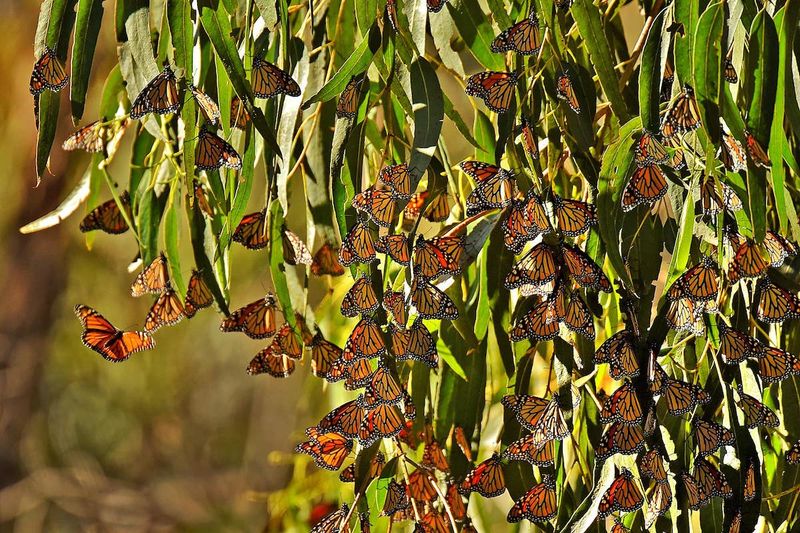
Every fall, thousands of orange and black monarch butterflies fly to the California coast to wait out the winter in quiet groves of trees. They hang in thick clusters that look like dead leaves until the sun warms them and the whole branch bursts into flight.
By late February or March, most of them scatter inland to find milkweed and start a new generation. If you want to see this living spectacle, and learn how your own yard can help these butterflies, now is the time to plan a visit.
1. Pismo Beach Monarch Butterfly Grove
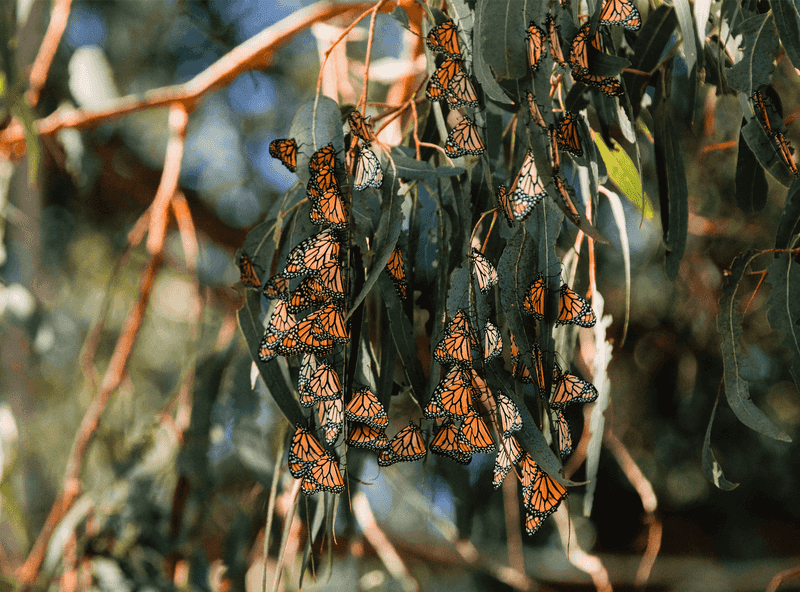
Picture a small grove of eucalyptus just off Highway 1, with a volunteer handing you a spotting scope and pointing straight up. That moment is the Pismo Beach experience in a nutshell.
In good years, this site has hosted some of the largest monarch counts in the state.
Docents are usually on hand from roughly November through February, and they love explaining why the butterflies pick this exact spot. The trees block wind, hold moisture, and keep temperatures mild, which can help monarchs save energy through the cold months.
Go on a sunny day around midday if you can. Warm air gets the clusters moving, and you may see butterflies sipping water or drifting down to sunny patches on the ground.
2. Natural Bridges State Beach Monarch Preserve
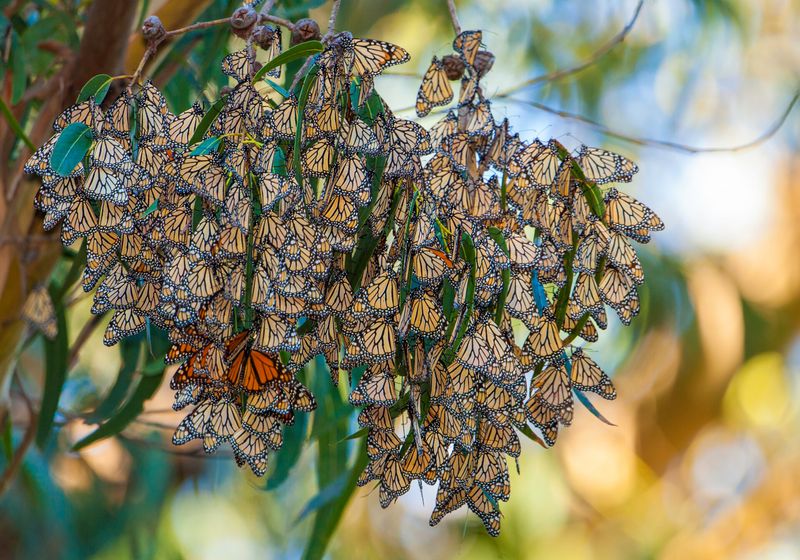
Santa Cruz does a lot of things with personality, and its monarch preserve is no exception. A wooden boardwalk winds down into a shaded eucalyptus canyon, ending at a viewing platform where the clusters often gather.
Families will appreciate how easy the walk is, and the visitor center has displays that make the monarch life cycle simple for kids to follow. Weekend tours typically run during the peak season.
Fun fact: the preserve sits next to a beach with a natural rock arch, so you can pair butterfly watching with tide pools in a single afternoon.
3. Pacific Grove Monarch Sanctuary

Few towns love an insect the way Pacific Grove does. Nicknamed Butterfly Town, U.S.A., it once held parades for returning monarchs and has local rules protecting them.
The sanctuary itself is tucked into a neighborhood, which makes it a great reminder that monarch habitat can sit right beside homes. Monterey pines, cypress, and eucalyptus give the butterflies the shelter they need.
For homeowners, the takeaway is hopeful. Thoughtful neighbors, careful tree care, and fewer pesticides can make a real difference to an overwintering site, and Pacific Grove shows that in action.
4. Ellwood Mesa Monarch Grove
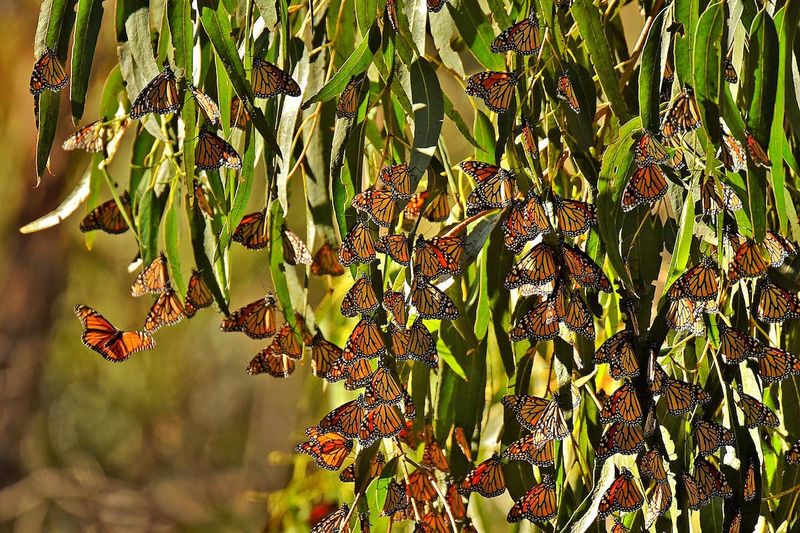
Goleta’s Ellwood Mesa feels a little wilder than the other spots on this list. You walk across open bluffs before dipping into a sheltered eucalyptus grove where monarchs often roost.
Bring binoculars. Clusters here can sit high in the canopy, and a closer view really helps you notice the tiny wing details.
Stay on marked trails, since trampling the understory can damage the grove’s microclimate. Afterward, the bluff trail offers ocean views that make the trip worth it even on a slow butterfly day.
5. Lighthouse Field State Beach
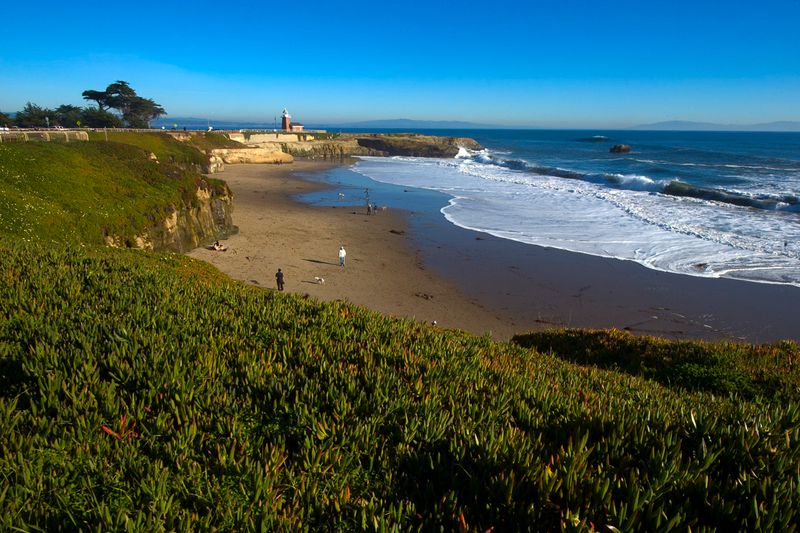
Here is a quieter Santa Cruz option for anyone who wants to skip crowds. Lighthouse Field sits near West Cliff Drive, and some winters its cypress trees host a modest number of monarchs.
Counts vary from year to year, so treat it as a bonus stop rather than a guaranteed show. That uncertainty is part of the charm, since spotting even a few clusters feels like finding treasure.
Combine it with a stroll to the surfing museum at the lighthouse for an easy, low-pressure outing.
6. Ardenwood Historic Farm

Monarchs on a historic farm in the East Bay? It sounds unlikely, yet Ardenwood in Fremont has a eucalyptus grove that has drawn overwintering butterflies.
The park sometimes hosts monarch-themed programs, which are great for kids who learn best by doing. Check the schedule before you go, since events can change by season.
It is also proof that monarchs do not only use beachfront groves. Inland bay sites with the right shelter can matter too.
7. Monarch Grove at Los Osos
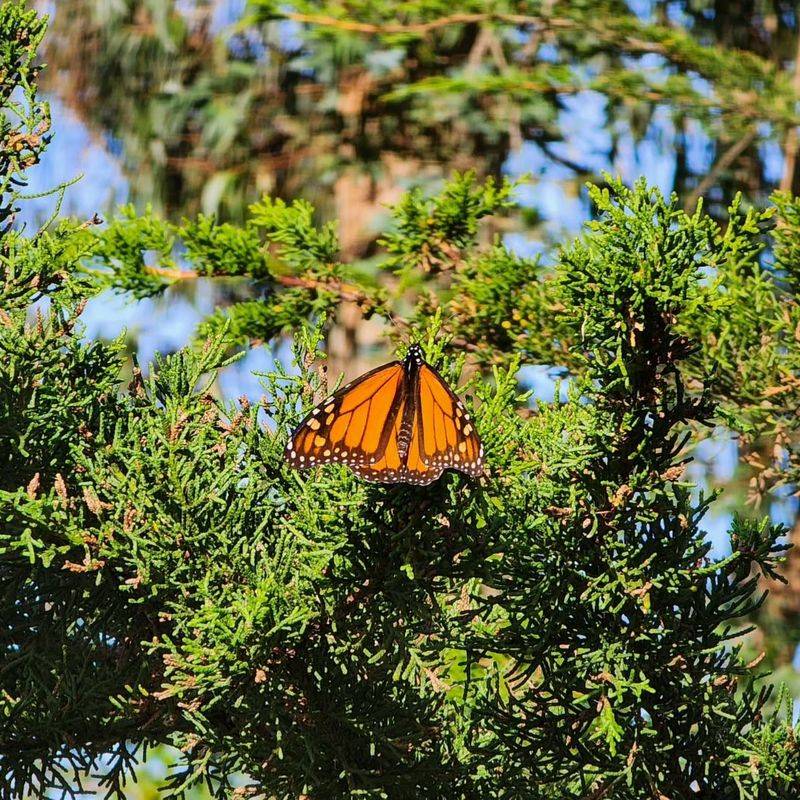
Tucked near Morro Bay, the Los Osos area offers small, peaceful groves that locals treasure. Sweet Springs Nature Preserve is one place where monarchs have been reported in winter.
The preserve also attracts shorebirds, so it is a fun stop for anyone who enjoys mixing wildlife watching. Quiet paths make it easy to linger.
Visit on a calm, sunny morning and stand still for a few minutes. Watching a cluster slowly warm up is surprisingly relaxing.
8. Your Own Monarch-Friendly Backyard

After seeing the groves, many visitors ask the same thing: what can I do at home? Quite a bit, actually.
Plant native milkweed such as narrowleaf or showy milkweed rather than tropical milkweed, which may encourage disease and confuse migration when it stays green all winter near the coast. Add water-wise nectar plants like California buckwheat, ceanothus, and native asters.
Skip broad-spectrum pesticides, and avoid planting milkweed right next to overwintering sites, since experts generally recommend keeping it some distance away. Small, thoughtful choices can help turn your yard into a helpful stop along the monarch journey.