
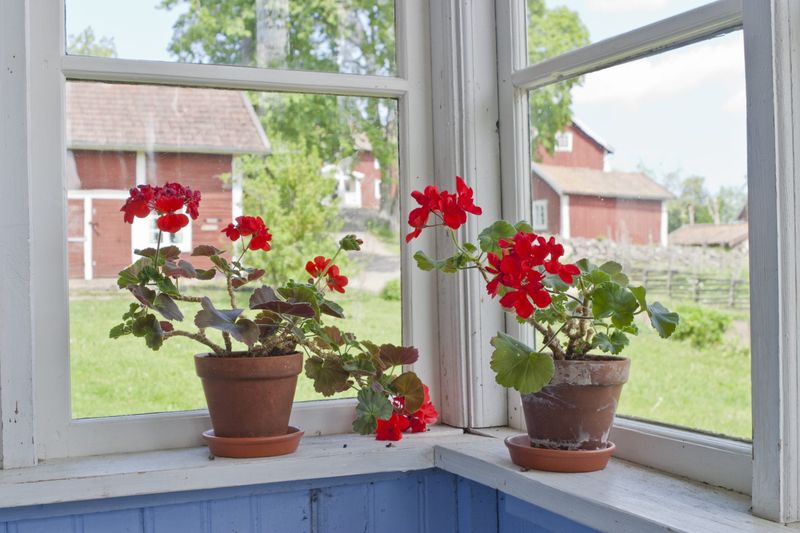
Potted geraniums can be expensive to replace every year, and a surprise freeze can end them overnight. With a little planning, many gardeners can carry their plants through winter and enjoy them again.
The trick is picking the right winter method and matching your care to it. Here is a plain, step-by-step way to give your plants a fair shot.
What “geranium” means—and which plants have scented leaves
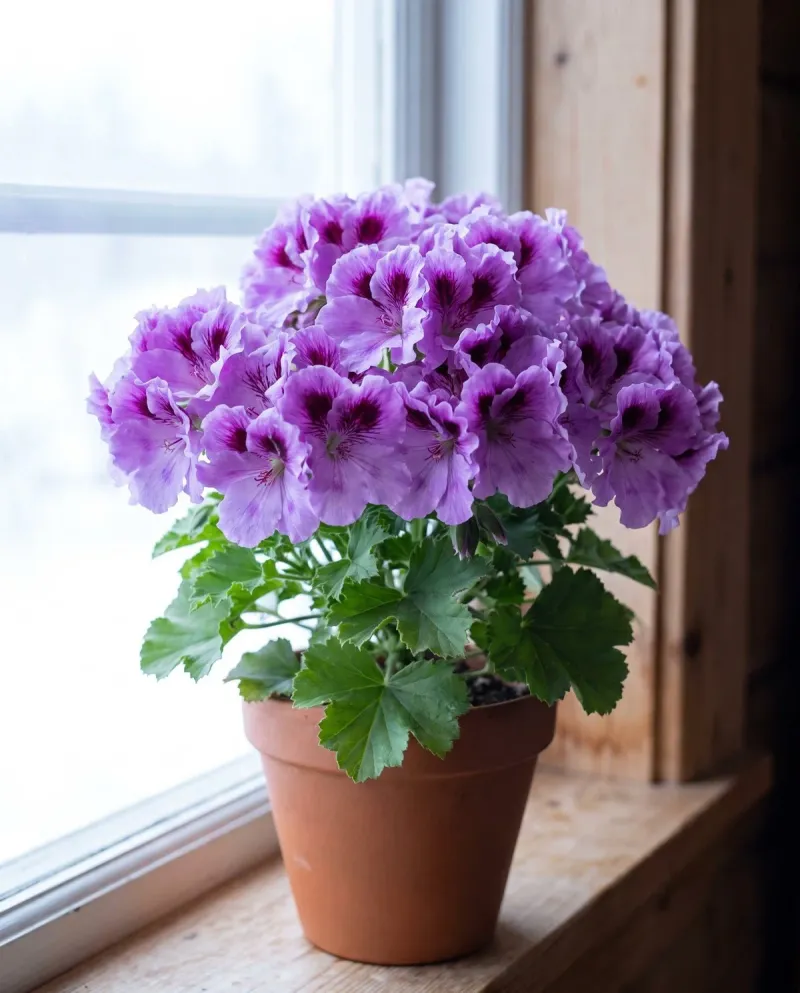
Most plants sold as garden geraniums are really Pelargoniums, tender bedding plants that are different from the hardy true geraniums in the genus Geranium. This guide is about Pelargonium only.
Hardy perennial geraniums have their own winter habits and do not need this routine.
Fragrance is where expectations often go wrong. Scented foliage belongs to particular varieties, and their leaves can smell of rose, lemon, mint, or apple.
The Royal Horticultural Society’s scented-leaf guide describes these types as grown for aromatic foliage, while many common flowering geraniums are not grown for that trait.
So rub a leaf between your fingers before you plan on perfume. If your plant has no scent now, overwintering will not create one, and nothing shows that winter care makes a scented type smell stronger.
The same Illinois Extension advice on overwintering focuses on keeping the plant alive, which is a worthy goal by itself. In warmer parts of Florida, UF/IFAS notes that geraniums are grown as winter annuals, so your local winter matters.
Bring plants inside before frost and inspect them
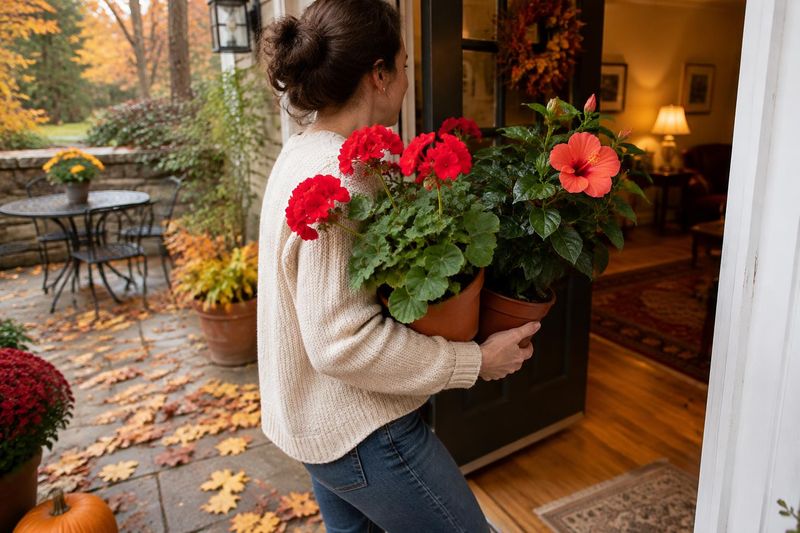
Frost is the line that matters. UF/IFAS says Florida geraniums cannot tolerate a freeze, so watch your local forecast and move pots in before the first one.
A Houston gardener and a North Texas gardener will not share the same date, so let your own weather decide.
Before pots cross the threshold, look over each plant. Check leaf undersides and stems for pests, and remove any spotted or diseased leaves.
University of Minnesota Extension offers a helpful routine for checking plants that come in for winter.
Use a pot with drainage holes and a well-drained potting mix. Do not be alarmed if some leaves yellow or drop after the move.
UMN notes this is common while plants adjust, and they can leaf out again.
Trim for indoor space; save pinching for new growth
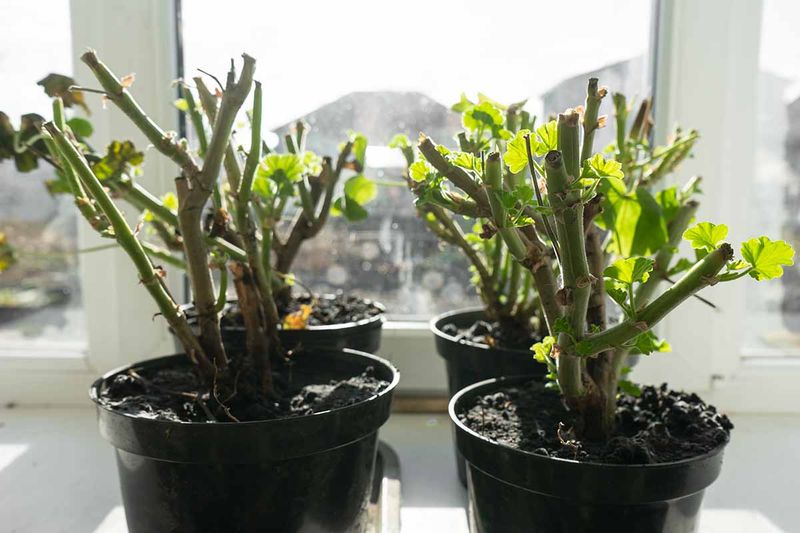
A big, sprawling geranium can be hard to fit near a window. Cutting it back before the move is optional, and it simply makes the plant easier to handle.
UMN Extension says a large plant may be cut back to about two-thirds its size.
Illinois Extension suggests pruning by one-third to one-half. These are two different guidelines, so choose what suits your plant and your space rather than treating either as a required formula.
Make cuts just above a leaf node with clean shears. Keep in mind that this trim is about size, not a promise of fuller growth.
Branching is encouraged later, when new shoots appear and you pinch or prune them.
Choose active growth or dormant storage
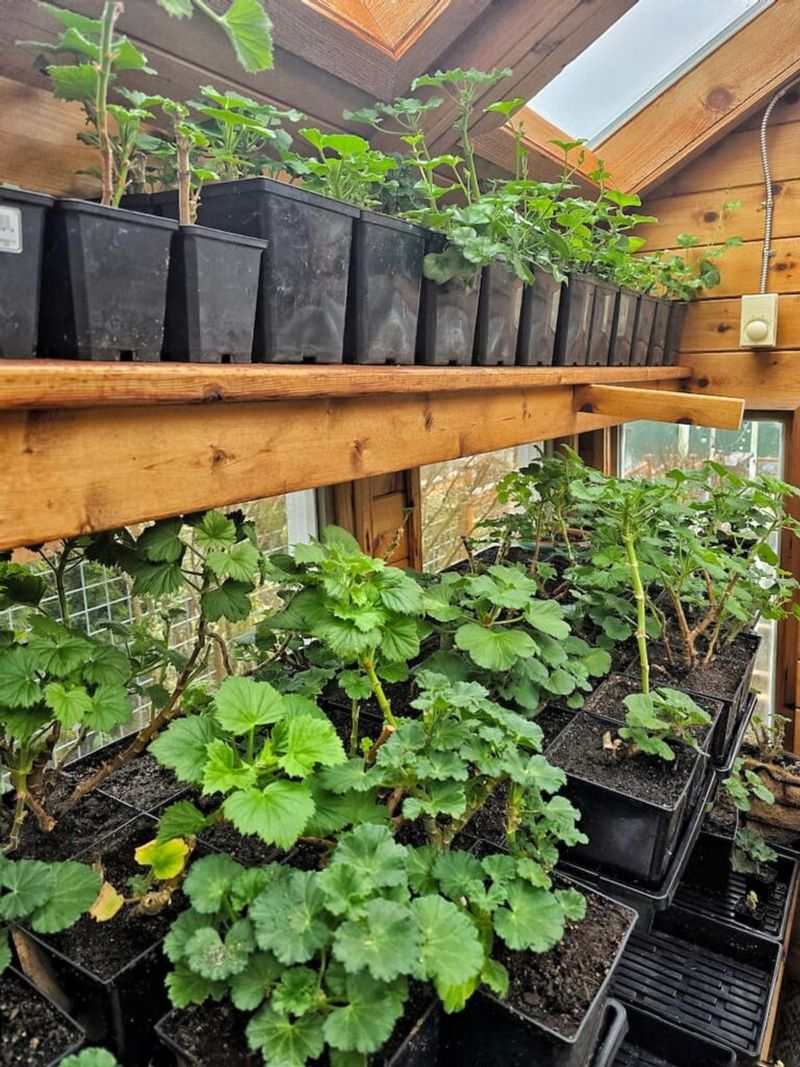
Two winter methods work, and they do not mix well. Pick one.
Mixing bright-window watering with dark-storage conditions is a common way to lose a plant.
Active growth means keeping the plant in a sunny window or under supplemental light, where it stays leafy and may even bloom, though blooms are never guaranteed. You water it when the mix feels dry.
Dormant storage is the second option. UMN Extension describes keeping potted plants in dark storage at about 45 to 50 degrees F, with watering about once a month.
In early spring, they move to a sunny window and regular watering resumes.
Illinois Extension also covers overwintering options. In much of the South, a storage spot must stay above freezing, so skip any place that dips below it.
Give actively growing plants bright, cool conditions
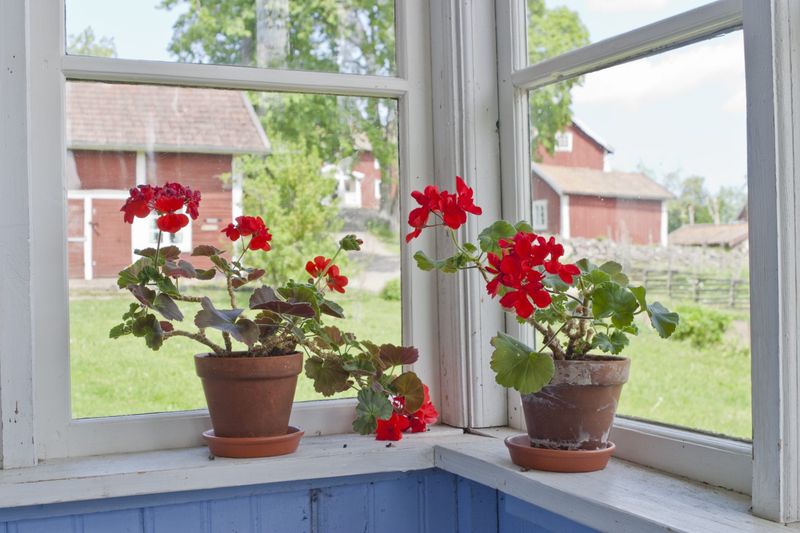
For plants staying active, light is the top need. Choose a sunny window or add supplemental light.
UMN Extension gives 60 to 65 degrees F as a suitable cooler indoor range.
Cool does not mean cold. Keep plants away from drafty glass, door gaps, and unheated porches or garages where a freeze could reach them.
Southern winters swing widely, so check the actual temperature near the window on a cold night.
Warmth combined with low light can lead to lanky, stretched stems. A cool, bright spot helps avoid that problem, but it does not by itself promise a compact or bushier plant.
If stems stretch anyway, move the pot closer to light and plan to pinch later.
Let the potting mix set the watering pace
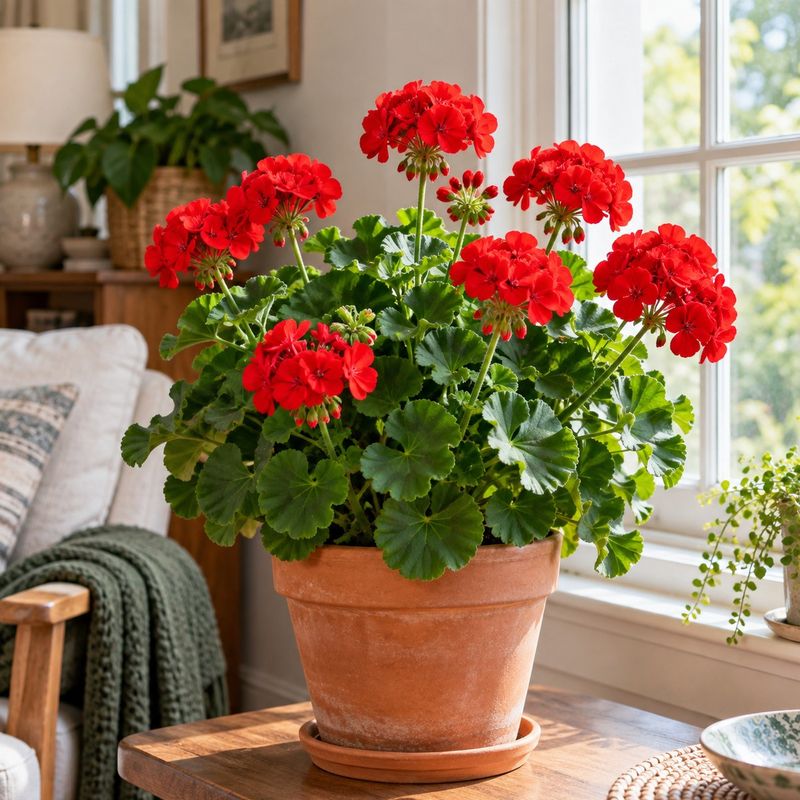
Skip the calendar and use your finger. For geraniums growing indoors, UMN Extension advises watering when the soil is dry to the touch.
When it is time, water thoroughly and let the extra drain out of the pot. Empty any saucer so roots do not sit in water.
Soggy mix is a common reason a wintering geranium declines.
A plant in a brighter, warmer spot will dry out faster than one in a dim corner, so the pace changes from pot to pot. Dormant storage is a different story, with watering about once a month.
Do not apply that sparse schedule to a leafy plant in a sunny window, and do not water a dormant plant like an active one.
Pinch new growth for branching, not guaranteed results
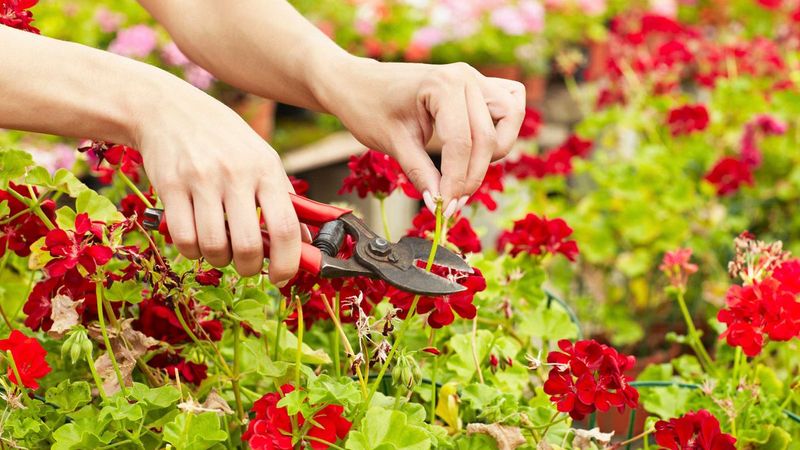
When new shoots appear, pinching is your best tool for fuller plants. Remove the soft growing tip just above a leaf node.
Clemson Extension says pinching encourages full plants, and Texas A&M AgriLife says pinching growing tips encourages bushier growth.
Pinching is separate from survival and from scent. Fragrance depends on variety.
In scented types, UF/IFAS notes that aromatic oils release when leaves are rubbed or crushed, and the RHS lists scents like rose, lemon, and mint.
Here is a realistic picture. Overwintering may preserve a plant for another season, and UMN guidance backs bright light for flowering.
None of the sources promise a bushier, more fragrant plant or spring blooms by a set date.
Sometimes the reward is simply a familiar plant still alive when spring arrives.