
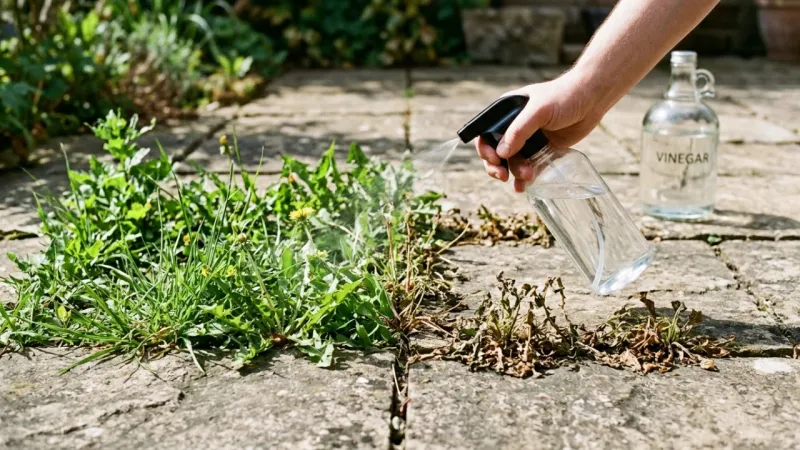
That jug of vinegar in your pantry looks like an easy fix for weeds popping up in patio and driveway cracks. Some tiny weeds really do turn brown after a spray.
But a brown leaf is not the same as a clear path, and the gap between the two matters for your time, your plants, and your safety. Here is what vinegar can and cannot do in a Southern yard.
Can pantry vinegar clear a mixed patch of weeds?
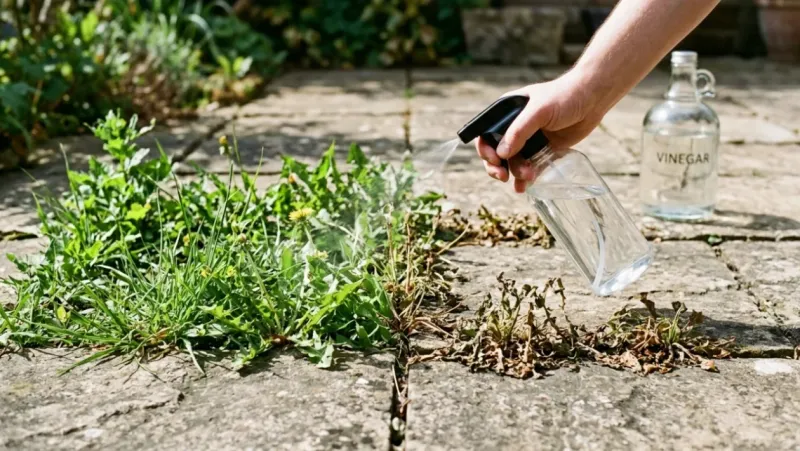
Short answer: probably not. Household vinegar is typically around 4 to 6 percent acetic acid, and it may visibly scorch some vulnerable weeds.
A mixed patch of grasses, broadleaf weeds, and older plants is a much tougher job.
Results swing a lot from one situation to the next. In a USDA-ARS field study in southeastern Oklahoma, outcomes changed with the weed species, the acetic acid concentration, and the amount sprayed.
Some broadleaf species were completely controlled, yet total weed control topped out at only 48 percent in the strongest overall treatment reported.
That study does not predict what will happen on your path, since it was done in one region with specific weeds. It does show how uneven the results can be.
University of Maryland Extension also notes that acetic-acid products work best on very small annual weeds and may need repeat applications.
So think of vinegar as something that might knock back a few tiny seedlings, not as a path-clearing tool.
A contact burn can leave roots in play
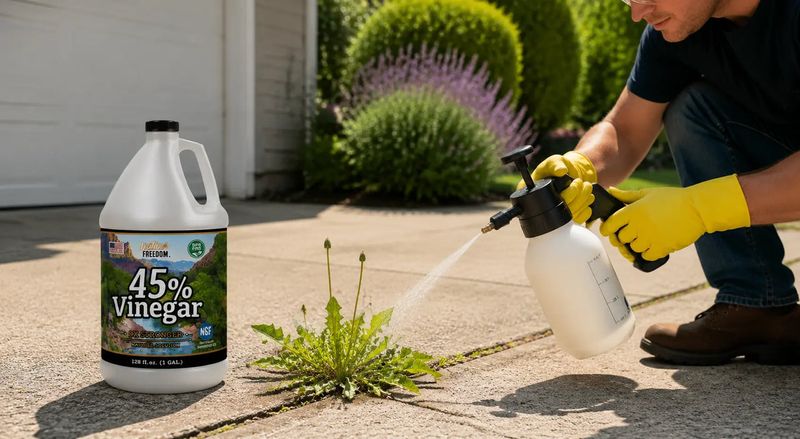
Picture a dandelion in a sidewalk crack after a spray. The leaves crisp up and look finished.
A week or two later, green growth pushes back up from the same spot.
That happens because acetic acid is a contact treatment. It damages the plant tissue it touches instead of traveling through the plant to kill the roots, as UF/IFAS guidance on postemergent herbicides describes.
Established perennials, with their larger root systems and stored energy, can often regrow from what survives below ground.
There is also no lasting protection once the spray dries. Maryland Extension points out that vinegar has no residual weed control after the first contact, so new seeds that sprout next week face no barrier.
A useful clue: if the weed returns from the center or base, the roots were never the target that got hit.
Young annual weeds are the likeliest targets
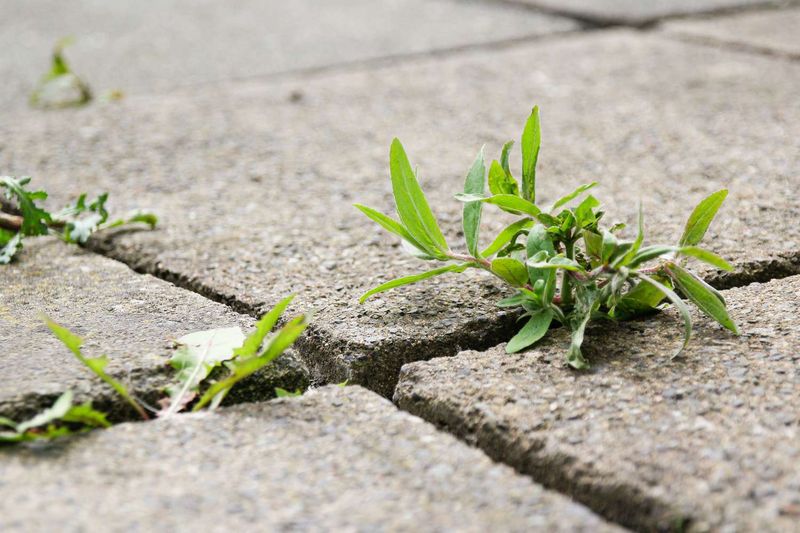
If vinegar helps anywhere, it is on seedlings. Tiny, newly emerged annual weeds with little leaf area and soft tissue are the most plausible targets.
Penn State Extension says 5 percent vinegar may burn very young seedlings but does not control perennial weeds.
Size and type both matter. Larger weeds and established perennials tend to shrug off a contact burn, and UF/IFAS notes that small, young weeds are more susceptible than big or well-established ones.
Broadleaf weeds may also be more vulnerable than grasses. In the Oklahoma field study, broadleaf species fared worse than grasses.
But results shifted with species, concentration, and spray volume, so treat that as a loose pattern, not a promise.
Crabgrass or Bermudagrass creeping into a crack, for example, is a poor bet for a pantry spray.
On paths, keep any treatment tightly targeted
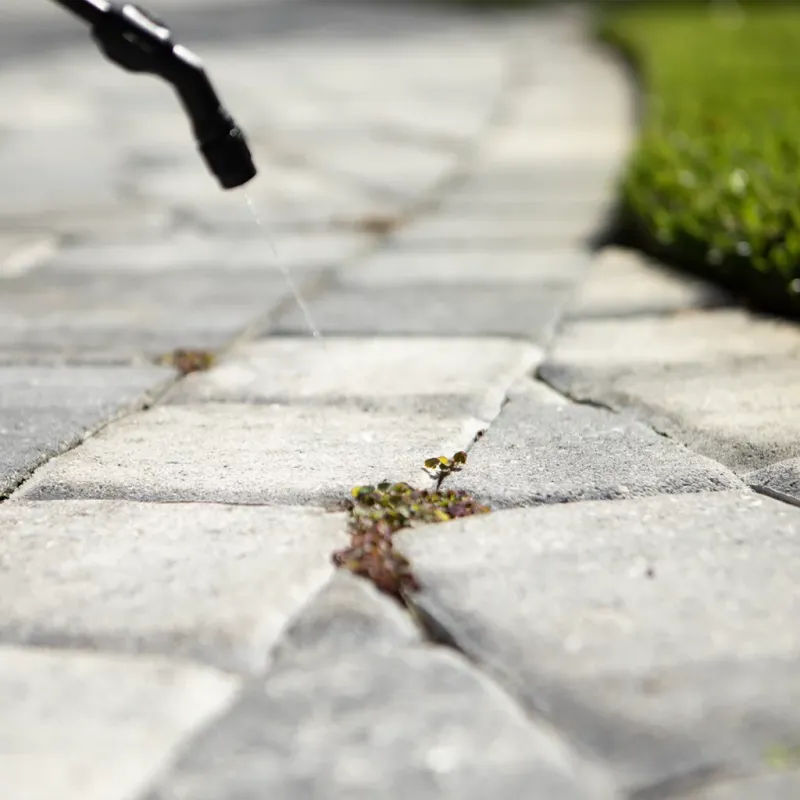
Patios and sidewalks are listed as possible use sites for acetic-acid products by University of Maryland Extension. That does not make the spray gentle.
It is not selective, so any green foliage it lands on can be injured.
Wind carries mist farther than most people expect, and liquid can run along a slope toward lawn edges or flower borders. A hard surface does not make vinegar harmless, and it does not give the treatment staying power either.
Montana State University Extension also cautions that desirable plants can be hurt by contact.
If you try it on a tiny weed, aim at that weed only, pick a calm day, and keep the nozzle low. Shield nearby plantings with a piece of cardboard if they sit close.
Choose a product labeled for the intended site
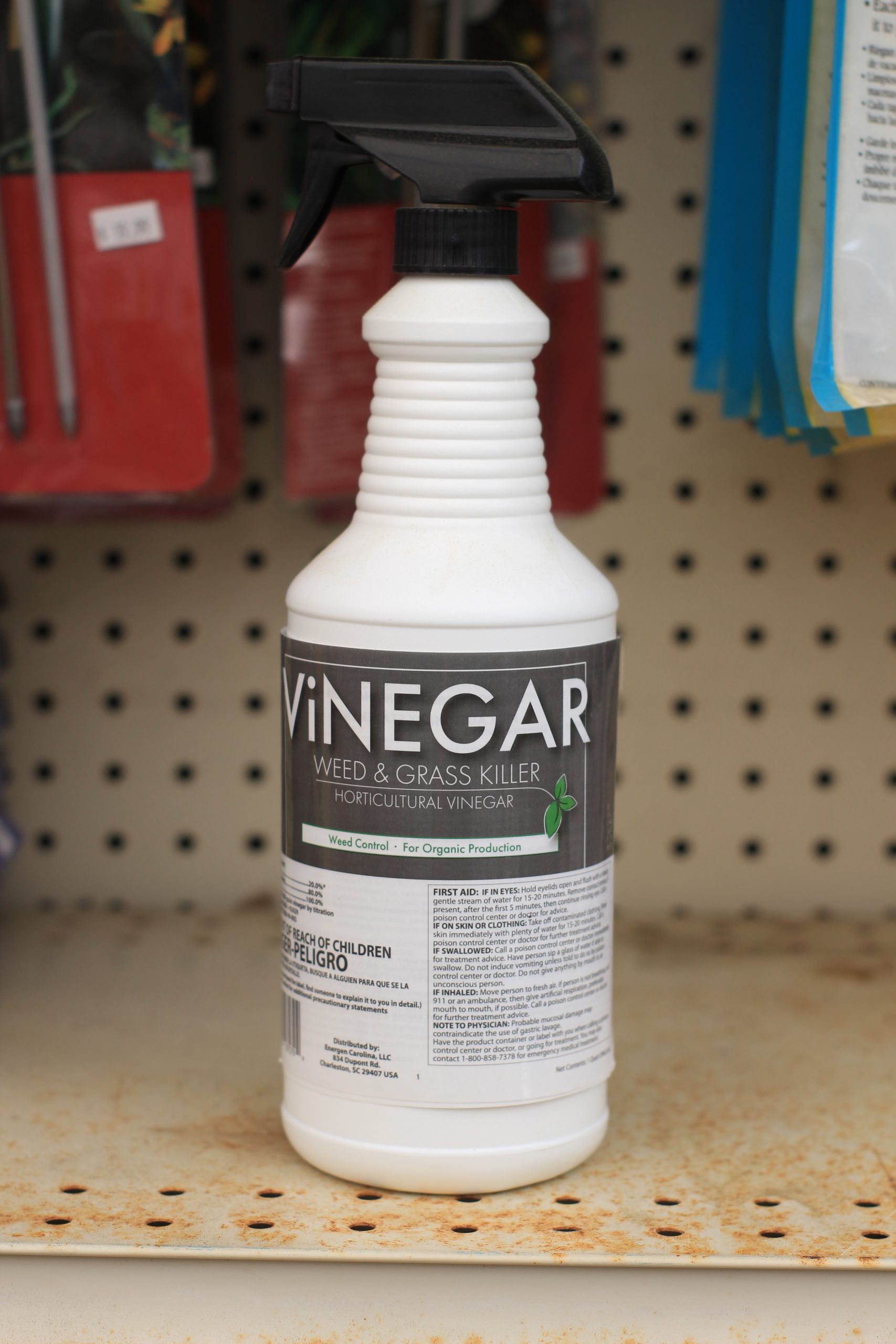
Vinegar is not one uniform product. Food vinegar from the grocery store is usually around 4 to 6 percent acetic acid, according to the National Pesticide Information Center, while horticultural formulations are substantially stronger and carry different hazards.
UF/IFAS advises using only acetic-acid products labeled as herbicides, and checking that the label allows your intended site, such as a patio or driveway edge. Keep in mind that UF/IFAS advice is written for Florida.
Pantry vinegar should not be treated as an officially approved herbicide. The EPA says vinegar is not eligible as the active ingredient in an unregistered minimum-risk pesticide under its cited rules.
Requirements can vary by product and jurisdiction, so read the label and check your state guidance.
Stronger acetic acid can injure eyes and skin
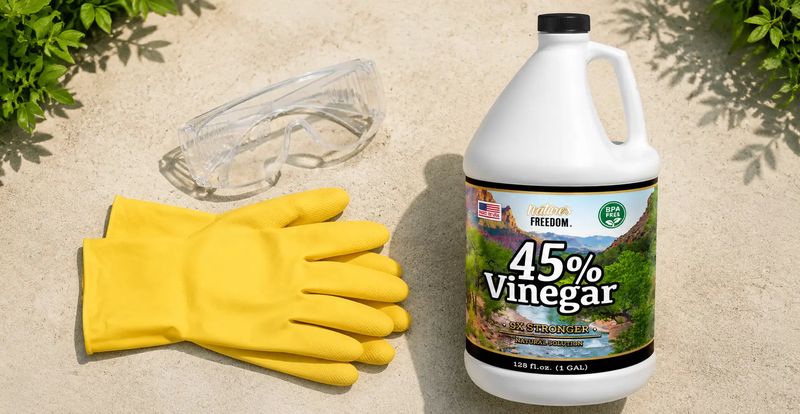
“Natural” does not mean harmless. Stronger acetic-acid herbicides can cause serious eye and skin injury, a hazard the National Pesticide Information Center warns about at higher concentrations.
The EPA raises similar cautions.
If you choose a labeled herbicide, the label is your rulebook. Follow its safety directions and wear the protective equipment it requires.
Gear needs differ between products, so skip guesses and any one-size-fits-all list.
Do not try to turn a stronger formulation into a pantry remedy by mixing or diluting it on your own. And keep children and pets away from treated areas as the label directs.
The jug’s price does not reveal the cost of control
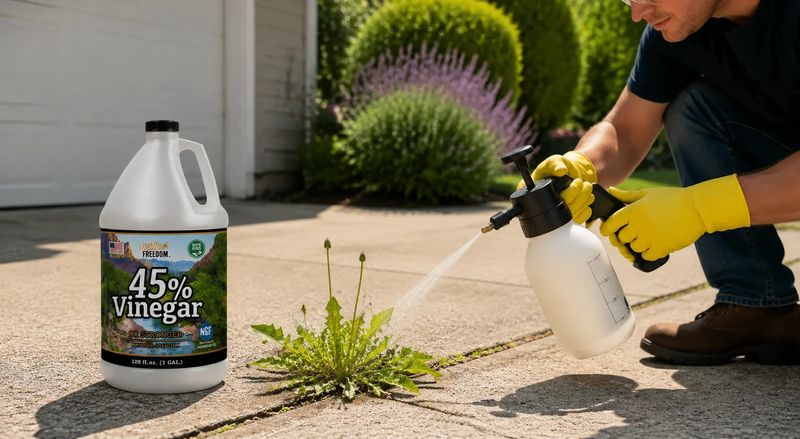
A gallon of vinegar costs little at the register. But cost is about what it takes to get weeds under control, not just the price of the jug.
If a spray only burns the tops, you may be back with the bottle again and again. Maryland Extension reports that in cited comparisons, some acetic-acid alternatives cost more per treated area than glyphosate, partly because of concentration and the need for repeat applications.
That comparison does not tell you what pantry vinegar will cost on your own path. The sources do not give an exact household figure, and no one can promise savings without knowing your weeds, your space, and how often they return.
Keep a simple tally of sprays and weeds that came back, and you will see the real cost soon enough.
Keep expectations modest
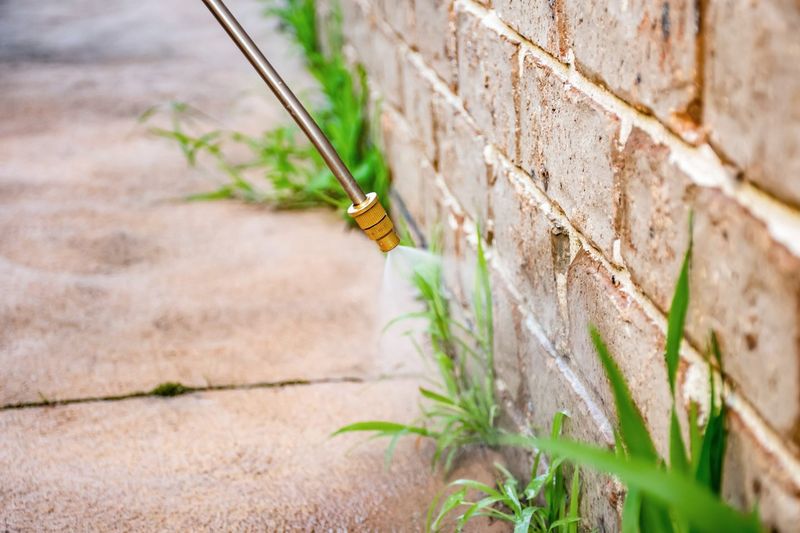
Pantry vinegar may burn a few tiny, exposed weeds, and that is about the limit. Maryland Extension describes acetic acid as best on very small annual weeds, and Penn State says it does not control perennials.
Roots can regrow, so expect to revisit the same cracks. Keep any spray on target, and if you reach for an herbicide, let its label guide the site and safety steps.
A scorched leaf is a preview, not a finished job.