
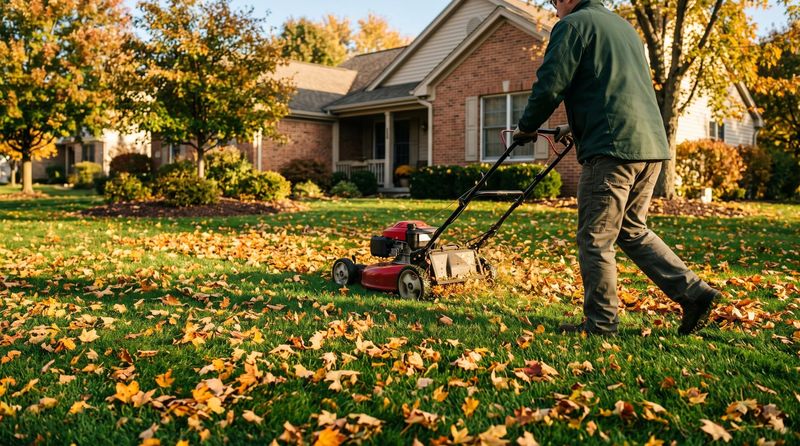
Fallen leaves can look like a big chore, but your mower may be able to handle a lot of the work. When a light layer of dry leaves is chopped into small pieces, the bits can settle into the grass and slowly break down.
That can mean less raking and bagging for you, and some organic matter returned to the soil. Here is how to do it well, and how to tell when the leaves are too thick to leave behind.
Mulched leaves can return organic matter to an established lawn
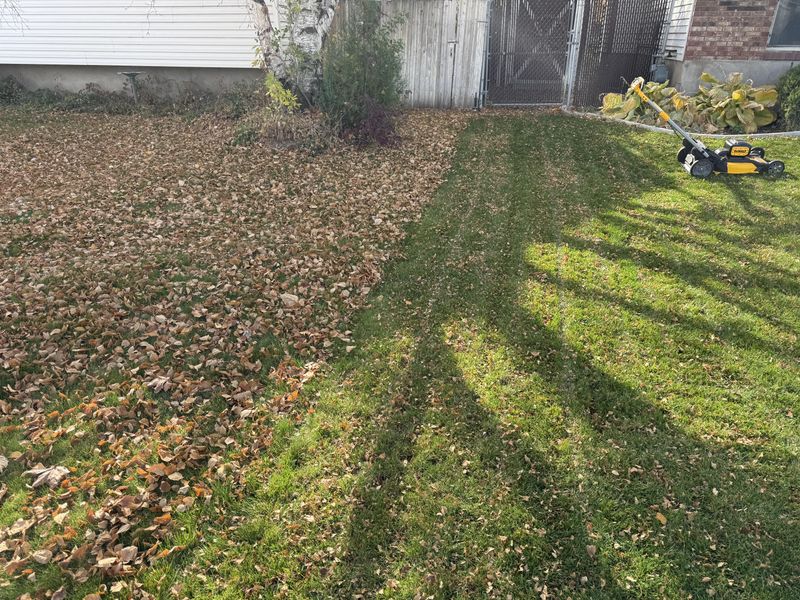
Mowing a light covering of leaves in place can return organic matter and some nutrients to the lawn as the small pieces break down. Texas A&M AgriLife recommends mowing a light leaf covering in place instead of bagging it.
A UConn Extension guide says fine leaf fragments can decompose and release nutrients, which may reduce fertilizer needs on mature, established turf. That does not make fertilizer unnecessary in every yard, so keep following your soil test results and local lawn guidance.
Some research points the same direction. A four-year study in Westchester County, New York, found some soil-health benefits from mulch-mowing and no harmful soil-health effect.
It was not a Florida or Texas lawn trial, so treat it as a helpful clue rather than a promise.
Think of mulch-mowing as a practical alternative to bagging, not as guaranteed food for next spring’s grass or a sure way to get a greener lawn.
Use grass visibility to judge whether the leaf layer is manageable
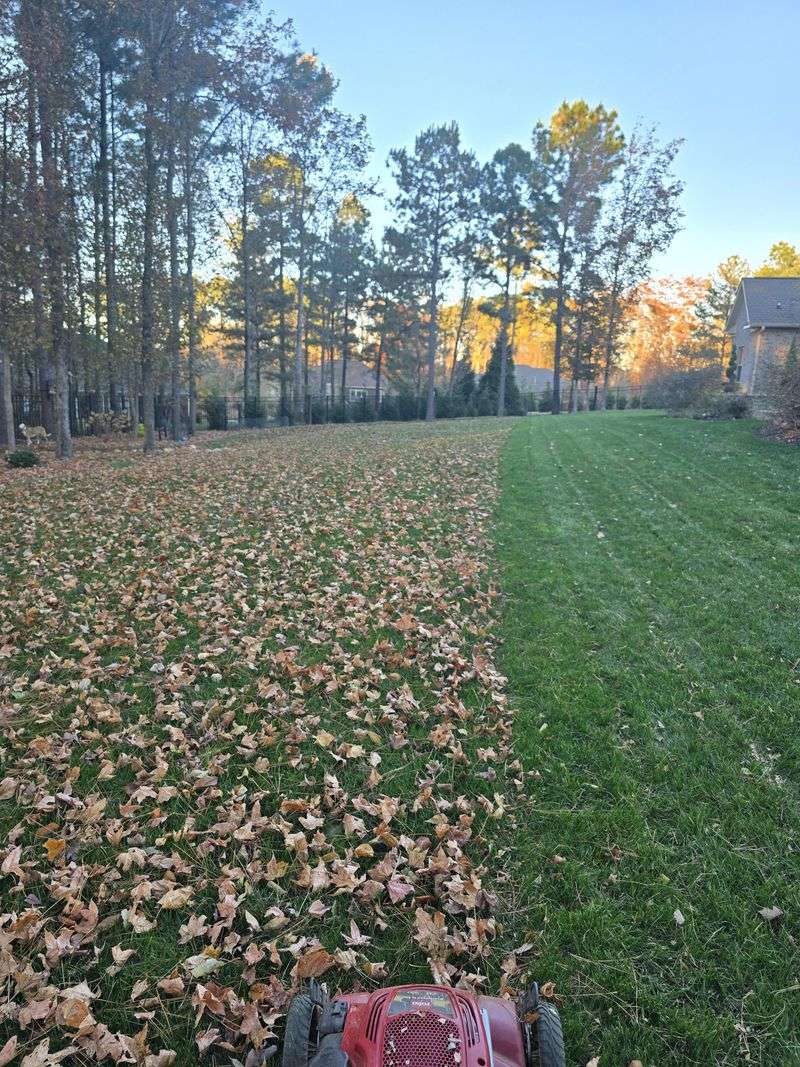
The simplest test happens after you mow. Look down at the lawn.
You should still see grass, and very little leaf debris should be sitting on top.
Extension advice differs on where to draw the line. Iowa State says a layer where little or no grass shows needs management, and it recommends leaving very little debris visible after mowing.
University of Minnesota Extension suggests bagging once less than half of the lawn surface is visible.
Those are rules of thumb from cooler states, so no single depth or visibility number fits every lawn. Your best cue is whether finely chopped pieces drop down into the grass canopy.
If leaves still form a thick cover, make another pass or collect the extra.
A regular mower may chop leaves with the right setup
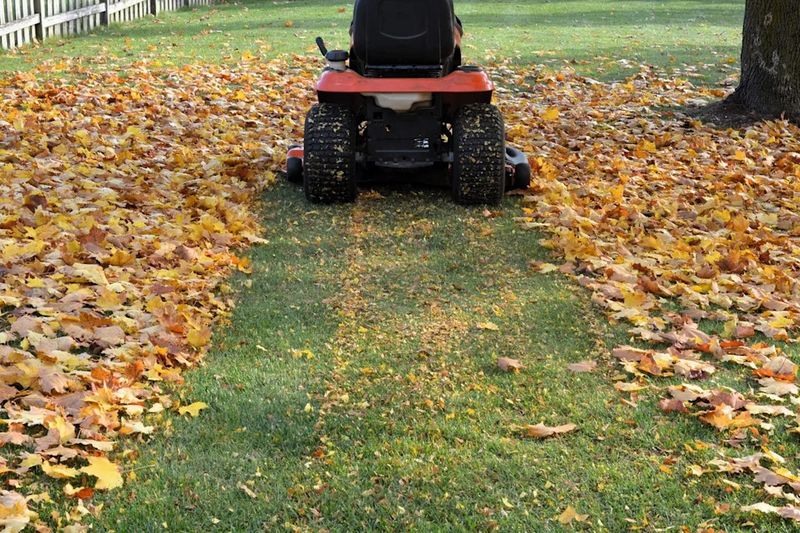
Mulching mowers are built for this job. They keep leaves circulating under the deck and cut them into smaller pieces, and smaller pieces break down faster than big ones.
A regular mower may work too. UConn advises raising the deck and making several crisscross passes.
Check your mower manual before changing any setup, especially anything involving the bagger or discharge chute.
Prep matters as much as the mower. UF/IFAS advises clearing debris first and following the manufacturer’s instructions.
Pick up sticks, stones, and other objects, keep all mower guards in place, and wear sturdy closed-toe footwear and eye protection.
Mow dry leaves as they fall instead of waiting for a deep accumulation
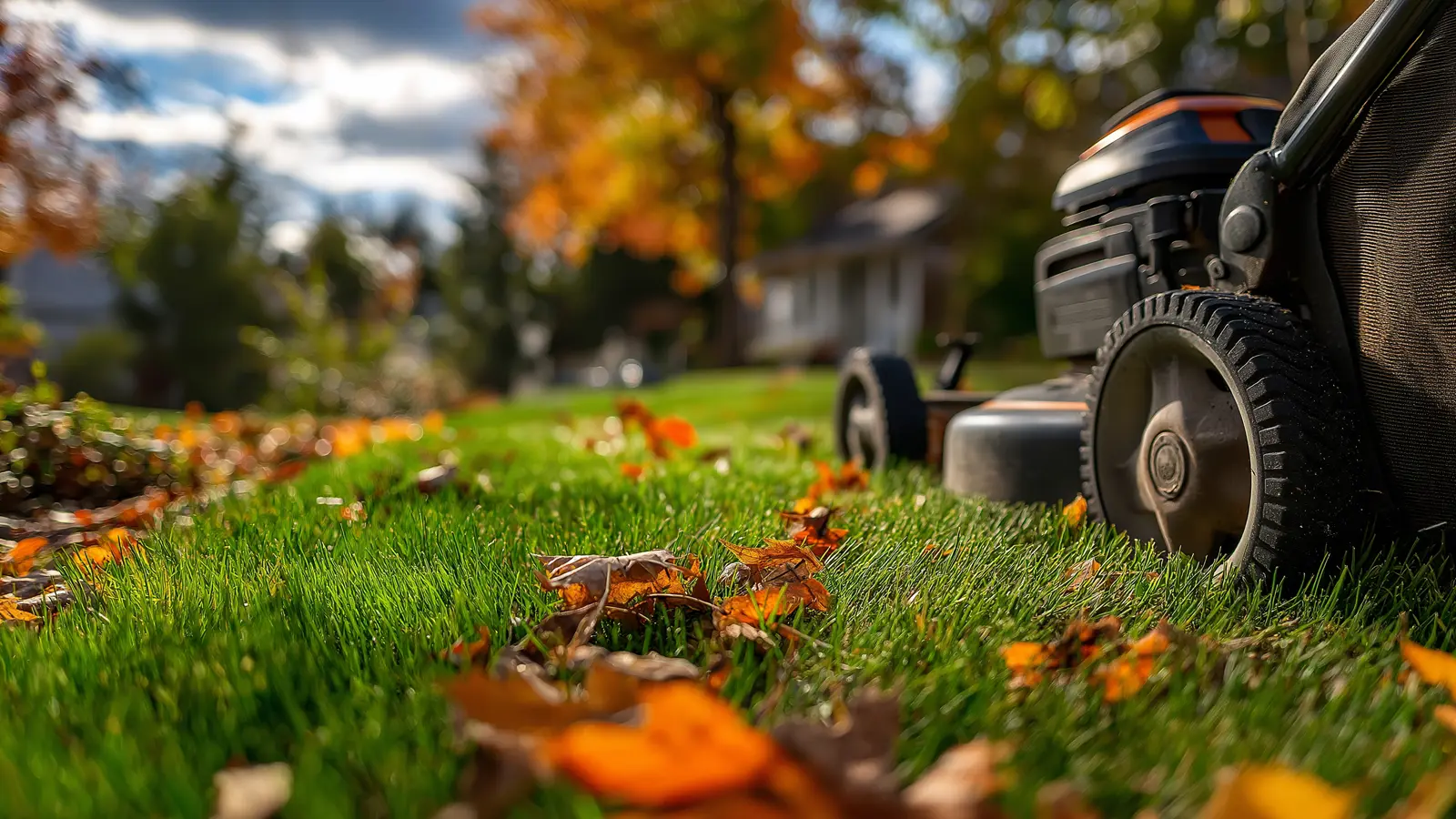
Timing at the mower is about conditions, not the calendar. Wait for dry turf and dry leaves.
UF/IFAS advises mowing dry turf, and wet leaves tend to clump and mat down.
During leaf drop, mow repeatedly rather than waiting for a deep pile. Iowa State Extension suggests regular mowing as leaves come down, which keeps each pass light.
With a regular mower, UConn describes a raised deck and crisscross passes, as long as your manual allows it.
There is no one weekend that works for every Southern yard. Let your trees and weather decide when the next mowing is needed.
Make another pass or collect leaves that remain on top
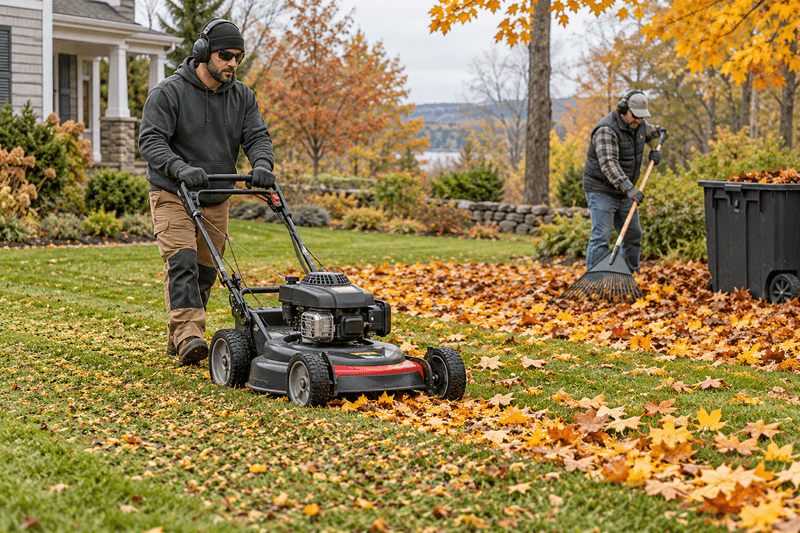
Sometimes one mowing is not enough. If grass is hidden or mats and clumps are left behind, go over the spot again.
Iowa State recommends managing a layer that covers the grass.
If extra passes do not fix it, rake or bag the excess for the compost pile. UConn says to remove or spread out leftover clumps instead of leaving a blanket that can block light.
Watch where the debris lands, too. Sweep leaves and clippings off sidewalks and streets and keep them away from storm drains.
UF/IFAS warns that yard waste on hard surfaces can wash into Florida waters.
The rule is simple: if grass shows through, you can leave it. If not, pass again or collect.
Let local leaf drop and lawn conditions set the timing

Southern yards do not share one fall schedule. Texas A&M notes that warm-season grass growth slows in cooler weather, and dormant turf is no longer actively growing.
In Florida, UF/IFAS guidance notes that many trees lose relatively few leaves in autumn, while live oaks commonly drop old leaves in spring. Your best mowing window may not be in fall at all.
So treat mulch-mowing as an option when leaves are falling and the lawn is suitable to mow, not as every yard’s final fall task.
It is also different from leaving leaves in beds. Texas A&M AgriLife describes leaf litter as shelter for beneficial insects, so keep some whole leaves in beds or a set-aside corner.
Your yard’s own leaf drop is the best calendar.