
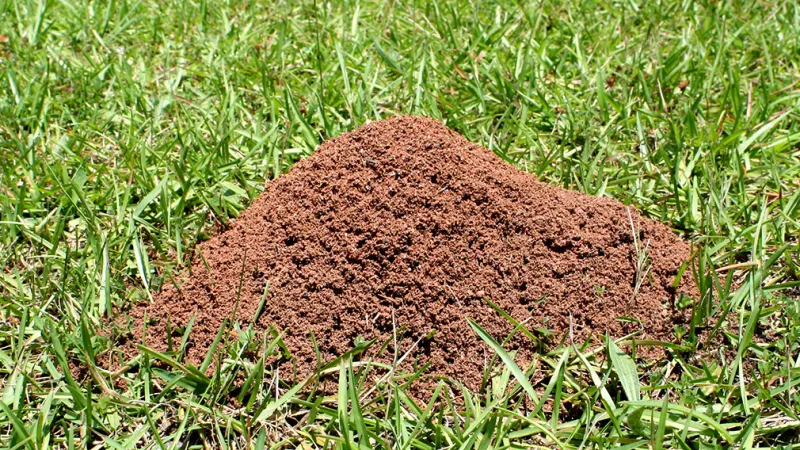
A small pile of dirt in the lawn can look like nothing, until a bare foot or a gloved hand lands on it. Fire ants build mounds that can hurt kids, pets, and gardeners, but other creatures leave soil piles too.
A careful look from a few steps away can tell you when to be cautious. Here is a no-contact check for North Carolina yards, plus what it can and cannot tell you.
Start with a look from a safe distance
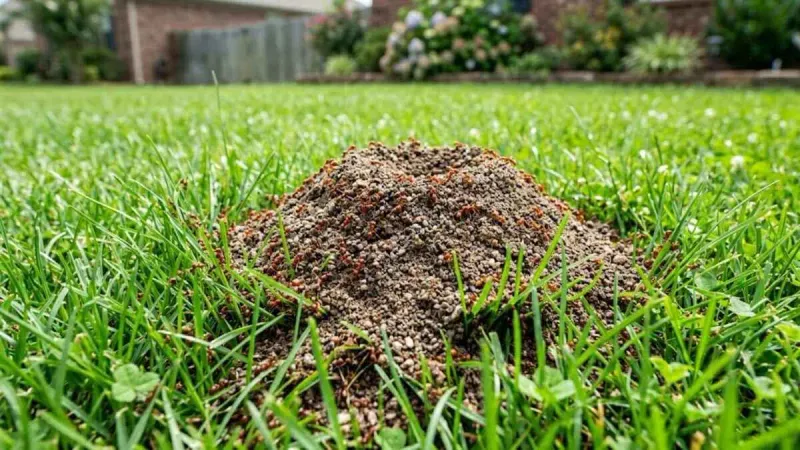
Stand a few steps back and let your eyes do the work. Scan the lawn, garden edges, and sunny spots near walkways for a pile of loose soil that rises above the ground.
Fire ants often build in open, sunny places, so check those areas first.
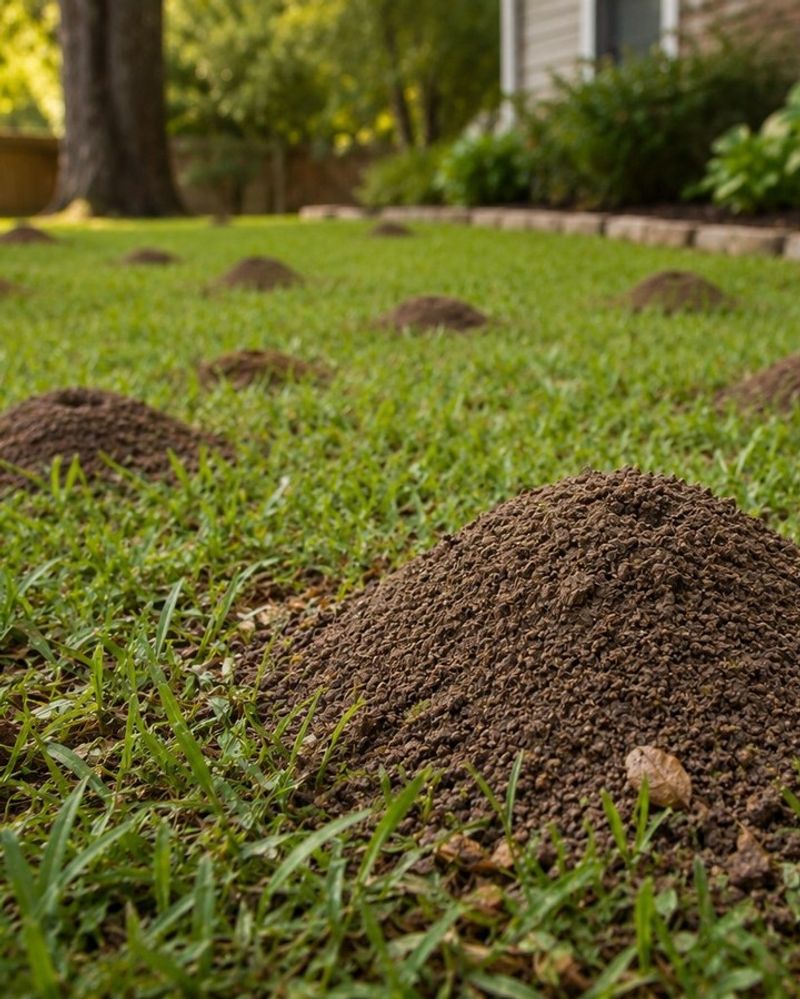
Next, notice the shape. Is the pile raised and dome-like, or is it flatter with a hole in the middle?
NC State Extension lawn-care guidance describes fire ant mounds as dome-shaped and lacking a central opening, which is why this detail is worth a look.
Then watch for ants moving on or around the soil. Ants walking over the surface are a clue worth noting.
Keep your distance while you look, because the goal is to observe, not to experiment.
Jot down what you see or snap a photo with your phone zoom. Note the spot in the yard, the mound’s rough size, and whether ants are active.
A NC State guide to turf pests shows that several different creatures can leave soil mounds in lawns, so your notes will help later when you work out what you are dealing with.
The next sections explain how to read these clues. For now, the whole check is simply looking, with nothing touched, poked, or stepped on.
Mound shape can raise a fire-ant warning
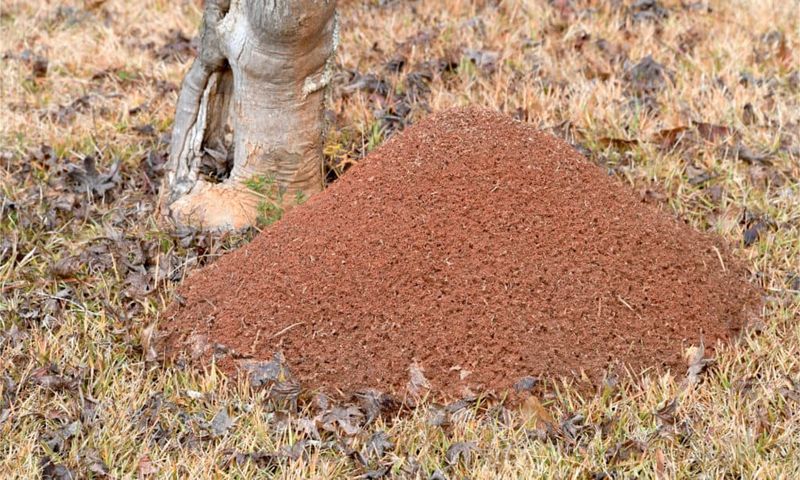
A raised, soil-built mound with no obvious central entrance is a useful warning sign in North Carolina. Fire ants tunnel out from underground and pile loose soil on top as they dig.
That is why the dome often looks like it has no front door.
NC State Extension calls the red imported fire ant mound distinctive in its biology and behavior. Still, a distinctive mound is a reason for caution, not proof.
Treat it as a flag that says keep clear and look closer.
Soil and site change how a mound looks. In clay soils, mounds can be fairly symmetrical, while sandy soils often produce irregular ones.
Color and texture also follow the soil, so a mound may look reddish, tan, gray, or dark depending on where it sits. NC State fire ant guidance for the state notes this variation.
Because of this, size, color, and neatness do not work as stand-alone tests. A big mound is not always a fire ant mound, and a tidy one is not always safe.
Mountain, Piedmont, and coastal plain yards have different soils, so the same colony can look different from one region to the next.
Also remember that North Carolina has more than one kind of fire ant. Do not assume every mound belongs to the red imported species.
An opening can have other explanations
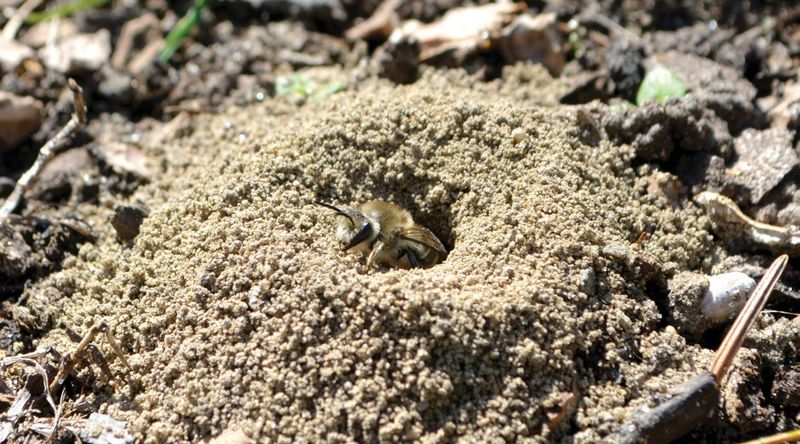
Spot a hole right in the middle of a patch of loose dirt? That pattern differs from the dome-with-no-opening clue, and it points to other possibilities.
One common one is a ground-nesting bee burrow.
According to NC State’s guide to turf pests, these bees are mostly harmless and chemical control is almost never needed. They often nest in thin or bare patches of lawn, and their small soil piles circle a visible hole.
Nuisance Formica ants are another possibility. They generally are not a health hazard in the way fire ants are, but their mounds can look messy and get in the way of mowing.
Here is the catch. A hole does not prove a mound is safe, and a dome does not prove it is fire ants.
Mound appearance alone cannot tell you which insect lives there, or whether it poses no concern for your family.
If you see a hole, treat it as one clue among several. Look for ant traffic, note the soil, and keep your distance.
Bees and ants can look very different up close, but getting that close is not a good idea, so rely on a photo and expert help instead of a closer inspection.
Do not disturb a suspected mound
Fire ants defend their nests. If a mound gets bumped, workers can pour out quickly and sting.
That is why NC State lawn guidance warns against disturbing fire ant mounds.
So never poke, kick, step on, or open a suspected mound to see if ants swarm. It might seem like a quick way to settle the question, but it is the exact thing that sets off stinging.
CDC and NIOSH advice on stinging insects also points toward avoiding contact with nests.
You may come across a suggestion to toss a potato chip on a mound and watch for ants. NC State’s yard-management page mentions this kind of activity check.
Since other guidance says not to disturb mounds, it should not be treated as a safe family activity, and kids should never be sent to try it.
If you feel you must watch for ants, do it from afar with your eyes or a phone camera. Mow and trim with care around suspicious spots, and use a long-handled tool only if you can keep well clear.
Looking is the check. Testing is where the trouble starts.
No visible mound does not rule out fire ants
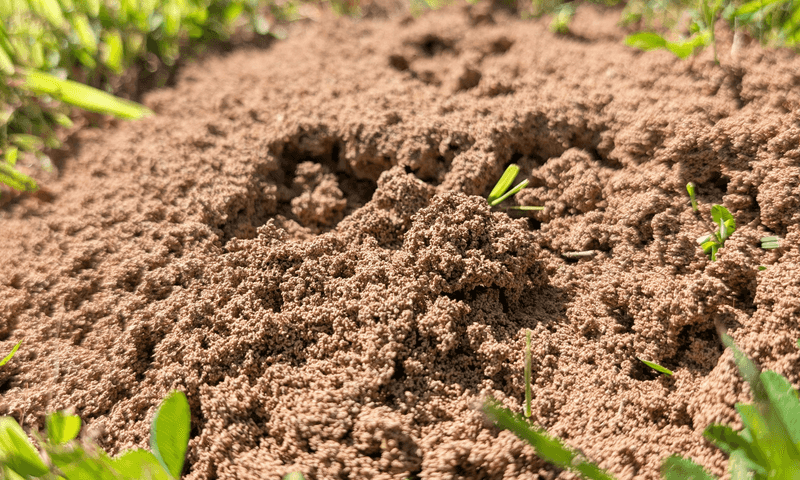
A clean, flat lawn can still hide a problem. Young fire ant colonies may not have built a noticeable mound yet, and small colonies can go undetected.
NC State Extension’s landscape guidance points out that mounds develop as colonies grow.
NC State’s turf guide also covers how fire ants show up in home lawns and landscapes, and it is a reminder that a yard can look fine at a glance.
For example, after heavy rain or mowing, a new colony might start a low pile that blends into the grass. Mulch beds, the edges of sidewalks, and the bases of shrubs can also hide early activity.
So the practical limit is simple. A visual mound check can flag a possible risk, but it cannot rule fire ants out.
Stay aware while you garden. Watch where you kneel, set down buckets, or push your hands into soil.
If ants start running up your glove or tools, step away and move on to a different spot.
Keep people and pets clear while you confirm

While you wait to learn what is in that mound, build a buffer. Steer children, pets, and gardening hands away from it.
This is a precaution, and it costs you nothing.
Do not test it or work over it. Skip weeding, digging, or planting right beside it.
Small stakes or flags placed from a distance can remind everyone where to avoid, and you can also move play areas and pet water bowls elsewhere for now.
Why bother? NC State Extension says fire ant stings can cause painful, itchy pustules, and a small number of people have serious allergic reactions.
Get immediate medical attention for severe symptoms such as difficulty breathing or serious swelling. CDC and NIOSH guidance on stinging insects also stresses taking allergic reactions seriously.
If someone is stung, move them away from the mound and brush off any ants. Call a doctor or emergency services if symptoms are severe.
If you decide to use any pesticide later, follow the directions on that specific product label for use and safety.
Ask Cooperative Extension when identification matters

When you cannot tell what is living in a mound, hand the puzzle to the experts. Take a clear photo from a safe distance, and note where the mound sits and whether ants are active.
Then contact your county Cooperative Extension office.
This step matters because several fire ant species live in North Carolina. NC State Extension recommends Extension help to tell imported fire ants from other fire ants found in the state, and the answer can shape your next move.
Extension agents can also help if you suspect ground-nesting bees or Formica ants, and they can explain options that fit your yard without harming helpful insects.
Until you hear back, keep the area clear for kids, pets, and gardeners.
A mound can raise a flag, but only identification can lower it.