
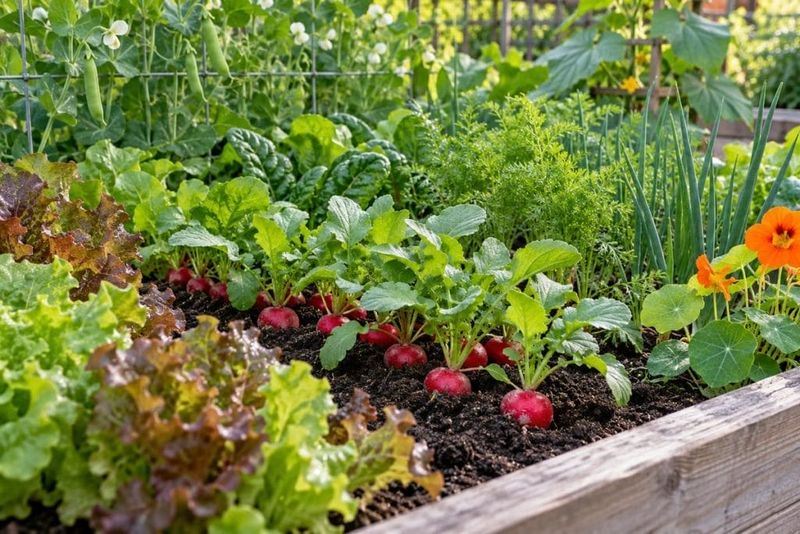
You water, you wait, and your radishes shoot up big green leaves. Then you pull one and find a skinny root, or hardly any root at all.
Crowding is one common reason this happens, and it is a mistake you can avoid with a little planning. Here is how to check your spacing, rule out other causes, and decide if a late-October resowing makes sense where you live.
What lush tops and small roots can mean
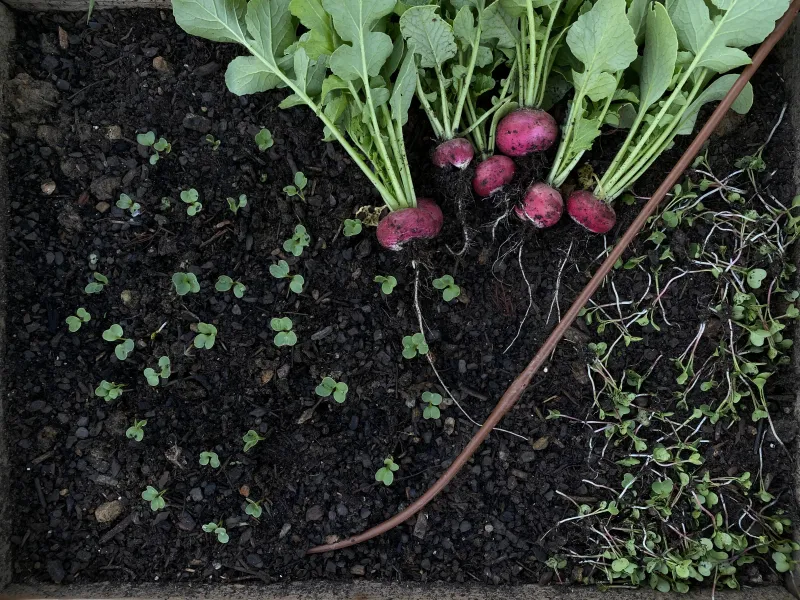
Big, healthy-looking leaves can fool you. When radishes put their energy into tops, the roots below may stay thin or never swell.
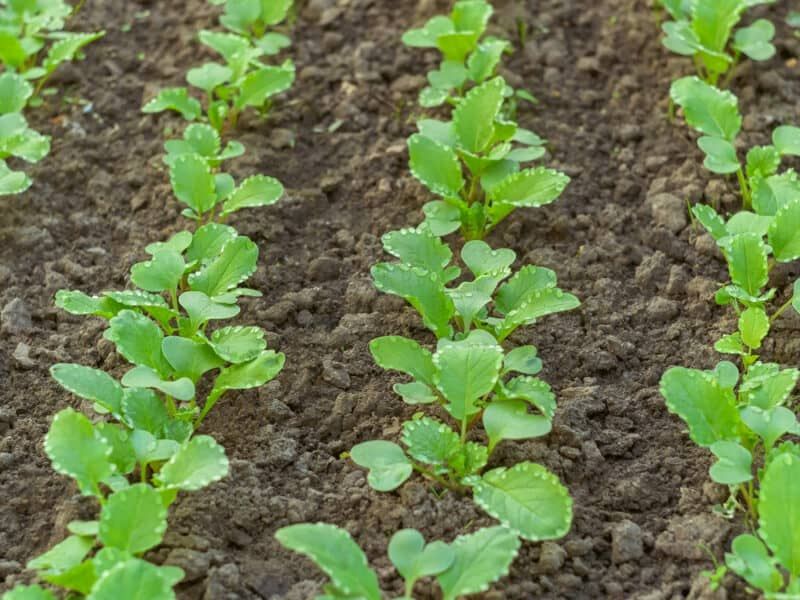
Overcrowding is a common suspect, especially if seeds were broadcast or sown thickly and the seedlings were never thinned.
Plants packed shoulder to shoulder compete for light, water, and soil space, and that competition can hold roots back. Iowa State Extension names overcrowding, excessive nitrogen, and hot weather as possible causes of lush foliage with poor roots.
Illinois Extension also lists crowding alongside heat and shade.
So treat leafy tops as a clue, not a verdict. Look at how close the plants are, then think about temperature, sunlight, and feeding.
Spacing is a smart first check, but it may not be the whole story and it will not rescue every bed.
Space and thin small radishes early
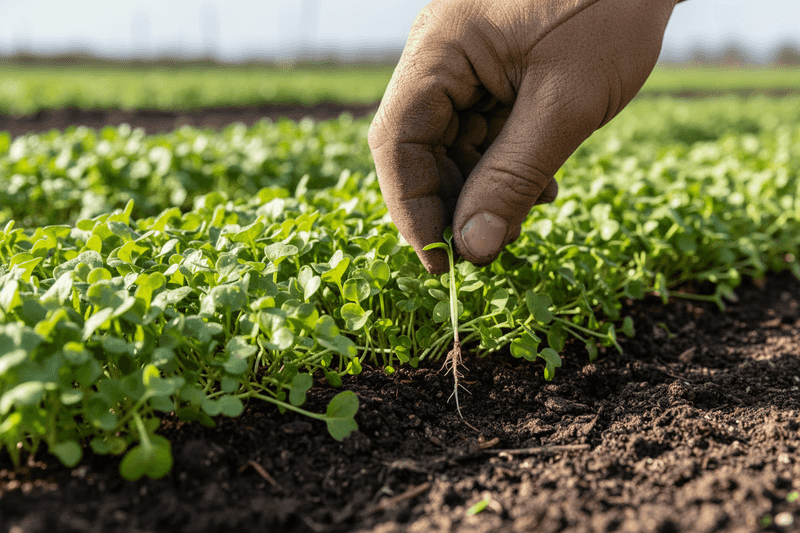
Spacing starts at sowing time. For small salad radishes, plant seeds about 1 to 2 inches apart and about 1/4 to 1/2 inch deep, as Maryland Extension recommends.
A ruler or a marked stick makes this quick.
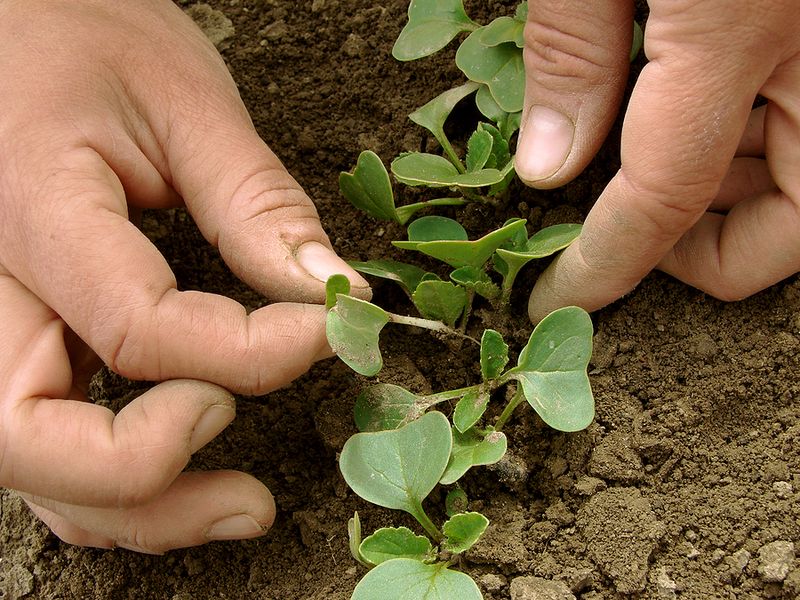
Once seedlings are up, thin them early to roughly 2 inches apart. Minnesota Extension gives the same 2-inch target.
Snip extra seedlings at soil level with small scissors so you do not disturb the roots of the plants you keep.
Early thinning works as prevention. It keeps neighbors from competing as they grow.
If your stand is already thick and the roots have stalled, thinning may not make them bulb up, so you may do better to pull the bed and start again with proper spacing.
Give larger radishes more room
Not every radish is a tiny spring salad type. Winter radishes and daikons grow much bigger roots, and they need elbow room to do it.
Using the small-radish spacing for them would crowd them quickly.
For these larger types, Illinois Extension advises thinning to 2 to 4 inches or farther apart, depending on the variety. Maryland Extension likewise gives a range of 2 to 4 inches based on type.
Your seed packet is the best guide here. A long daikon may call for more space than a round red radish, so read the packet before you plant.
If you are sowing two kinds in one bed, keep them in separate rows so each gets its own spacing.
Check regional timing before resowing in late October
Late October is a fine time to sow radishes in some Southern gardens and a poor fit in others. Florida and Texas are too big to share one answer.
UF/IFAS lists outdoor radish planting from September through March in north and central Florida, and from October through March in south Florida. That puts late October inside the window across the state, with about 20 to 30 days to harvest.
Texas is more varied. Texas A&M AgriLife gives average fall dates by region: September 1 in Region I, October 1 in Region II, November 25 in Region III, December 1 in Region IV, and December 15 in Region V.
Late October does not mean the same thing in each of those areas.
Before you resow, call or check your local county Extension office and read your seed packet for the variety’s needs. Local conditions matter as much as the calendar.
Consider heat, shade, nitrogen, and moisture
If your spacing was fine and roots are still small, look wider. Radishes are cool-season plants, and warm spells can push them toward leaves instead of roots.
Shade can do the same, so check how many hours of sun the bed gets.
Nitrogen is another possibility, but big tops do not always mean too much of it. Iowa State Extension lists it as one cause among several.
Radishes have low nutrient needs, so skip extra fertilizer and fresh manure unless a soil test suggests otherwise. Minnesota Extension cautions that fresh manure can cause roots to branch.
Aim for evenly moist soil that never sits waterlogged. Swings in moisture can crack roots and stress plants, according to Illinois Extension.
Steady watering helps, but no single change is a guaranteed fix.
Check roots regularly and harvest at usable size
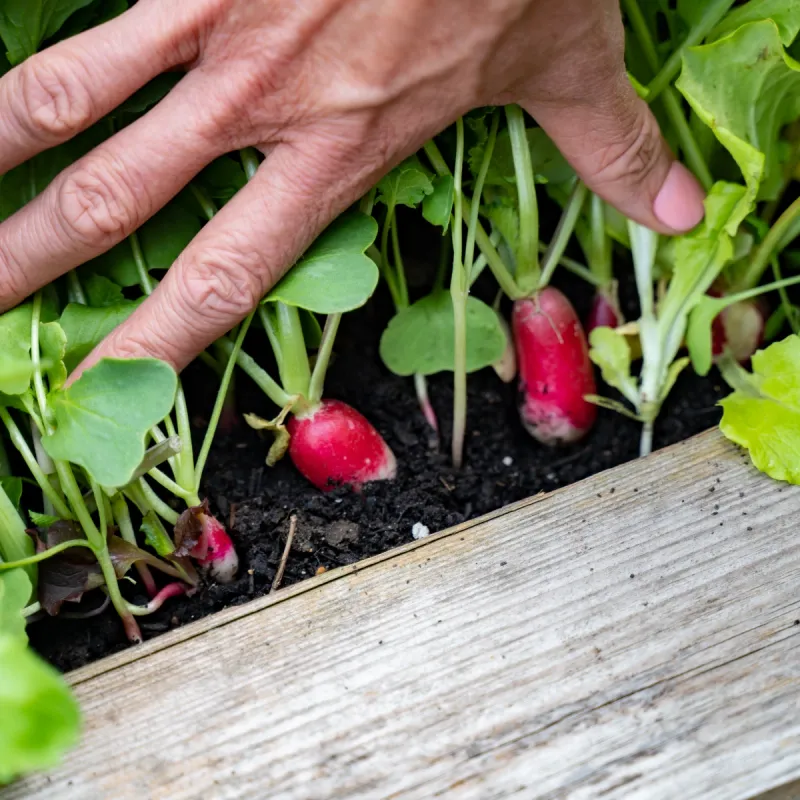
Once your radishes are up, make a habit of peeking at the roots. Brush a little soil from the top of one plant and see how big the shoulder has grown.
Harvest when the root reaches a usable size for its variety.
Small garden radishes often mature in about 20 to 35 days, a range reflected in the Maryland and Florida guides. Treat that as a rough guide, since variety and weather can shift the timing.
Good spacing and local planting dates give you a better shot at plump roots, but neither promises a particular size. Pull a test radish, taste it, and adjust next time.
A radish checked early is a lesson learned for the next sowing.