
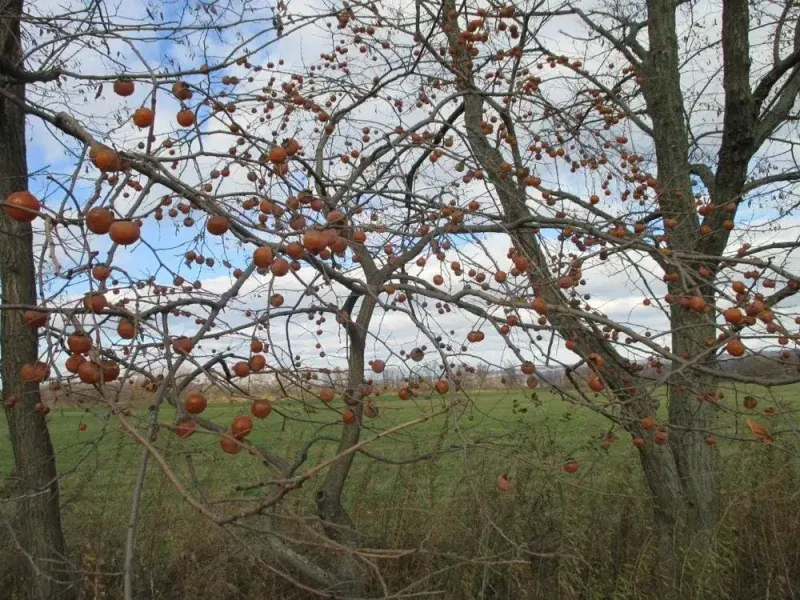
Walk a North Carolina field edge or fence line in fall and you may spot a tree hung with small, dusky orange fruit. That is the American persimmon, a native tree that many homeowners walk right past when they shop for yard trees.
It can offer sweet fruit, wildlife food, and a strong sense of place, but only if you match it to the right spot. Here is how to decide whether it fits your yard before you plant.
American persimmon is native across North Carolina
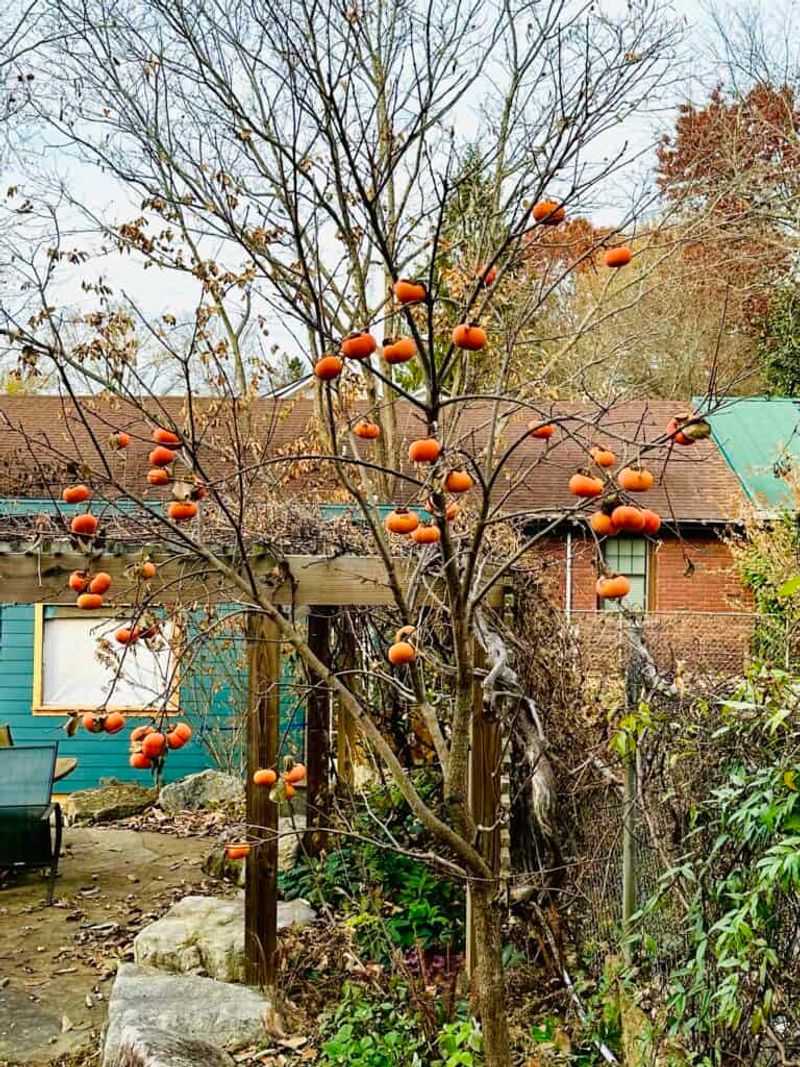
Gardeners hear the word persimmon and often picture the large, glossy fruit sold in stores. That is usually Asian or Japanese persimmon, Diospyros kaki.
This article is about a different species: American persimmon, Diospyros virginiana, the one that grows wild here.
According to the NC State Herbarium, American persimmon is native to North Carolina and occurs in the Mountains, Piedmont, and Coastal Plain. You may have seen one along a woodland edge, an old pasture, or a roadside without knowing what it was.
The fruit is smaller than the store-bought kind, and the tree is a tough, adaptable native.
Fruit timing varies, so think of fall as a season rather than a date. Sources give slightly different windows: September to October, September to November, and September to December.
Which one fits depends on the tree, the year, and where in the state it grows. No source shows that fruit is ripe on every tree at the same moment, and not every tree produces a crop.
NC State describes native fruit crops like persimmon as often overlooked. That is a fair way to put it.
This is a native tree with a real fall fruit season that many yards simply do not include, and it deserves a look if you have the room.
Keep the species name in mind when you shop or read advice. Information about Asian persimmons, including harvest and pollination, does not automatically apply to the native tree.
Soft fruit—not frost—signals ripeness
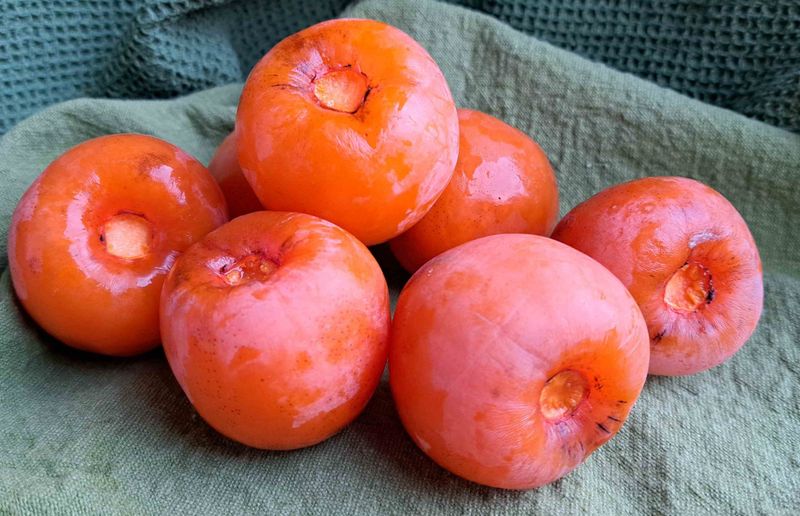
Squeeze gently. A ripe American persimmon feels soft, even a bit squishy, and its color deepens.
Firm fruit is the one to leave alone. NC State Extension says native persimmons must be soft before eating, and fruit can keep ripening after it is picked.
That detail gives you options. If you find fruit that is close but still a little firm, you can bring it indoors and wait rather than guess.
Let it soften fully before you taste it.
You may have heard that persimmons need a frost to sweeten up. Softness is the better guide.
Ripening is what takes away the puckery taste, and a frost is not required to make fruit edible. University of Georgia Extension notes that frost may even ruin immature fruit.
A cold night is not a ripeness test.
The caution here is about unripe fruit only. Firm American persimmons can be strongly astringent, leaving your mouth dry and tight.
Purdue Extension notes that tannins in unripe fruit have been linked to phytobezoars, which are masses that can form in the stomach, while describing the risk from occasional ripe fruit as very low. Ripe, soft persimmons are not a general food-safety worry.
A simple habit helps: taste only fruit that is fully soft, and skip anything firm.
Make room for the mature tree and its fruit
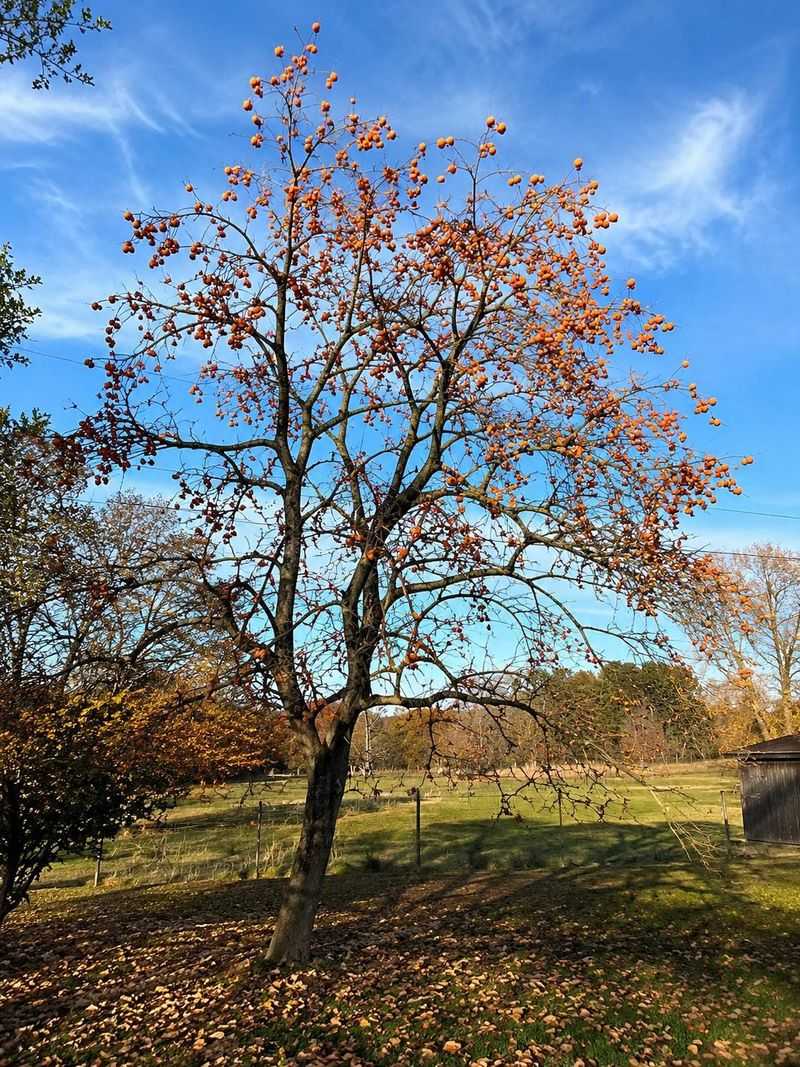
Before you buy, picture the tree at full size. The North Carolina Forest Service lists a mature height of 20 to 40 feet and a crown spread of 20 to 30 feet.
It recommends at least 25 feet of open space. That is a substantial tree, and it will not suit every small yard.
Light and soil are more forgiving. The Forest Service says American persimmon grows best in full sun or partial shade and tolerates a range of soils.
Still, a spot with plenty of sky and no crowding from buildings, power lines, or other big trees is the safer bet.
Wildlife is part of the picture. The Forest Service lists birds and mammals that eat the fruit.
If you enjoy watching backyard visitors, that can be a plus, though it also means you may share the harvest with them.
Fallen fruit is the other consideration. A University of Tennessee Extension guide flags dropped fruit as potentially messy.
Think about where it will land. A spot away from patios, driveways, and walkways may make cleanup easier, while a back corner or meadow edge could let fruit fall where it can be left for wildlife.
These are things to weigh when choosing a site, not promises. Some yards will love a persimmon, and others will be better off with a smaller plant.
Check pollination needs before choosing a tree
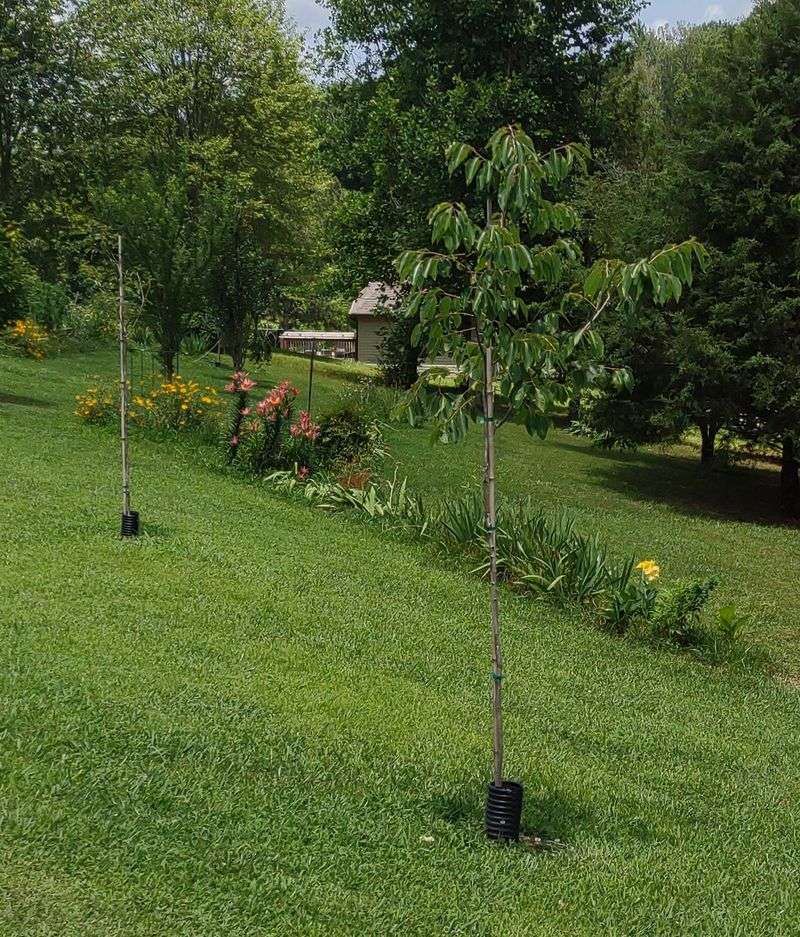
Planting a persimmon does not guarantee persimmons. According to NC State Extension, wild American persimmons are usually male or female, and they are usually not self-pollinating.
A seedling might turn out to be male and never bear fruit. A female may need a compatible pollinizer nearby.
Seedlings also vary. Fruit from one seedling can differ in size, flavor, and timing from another.
A named cultivar from a reliable nursery is one way to seek more predictable fruit, as described by University of Georgia Extension.
That said, a cultivar name is not a promise. Pollination behavior varies among varieties, and some may need a male tree or another compatible tree while others may behave differently.
Do not assume a single tree will fruit alone.
Take a short list of questions to the nursery:
Is this tree male, female, or a seedling of unknown sex? Does it need a pollinizer, and which one is compatible?
How does this particular variety behave when grown alone? And is it a grafted cultivar or a seedling?
Clear answers up front can save you years of waiting. Also check whether neighbors or nearby wild persimmons could play a role, but treat that as a bonus rather than a plan.
Plan planting for late fall or early winter
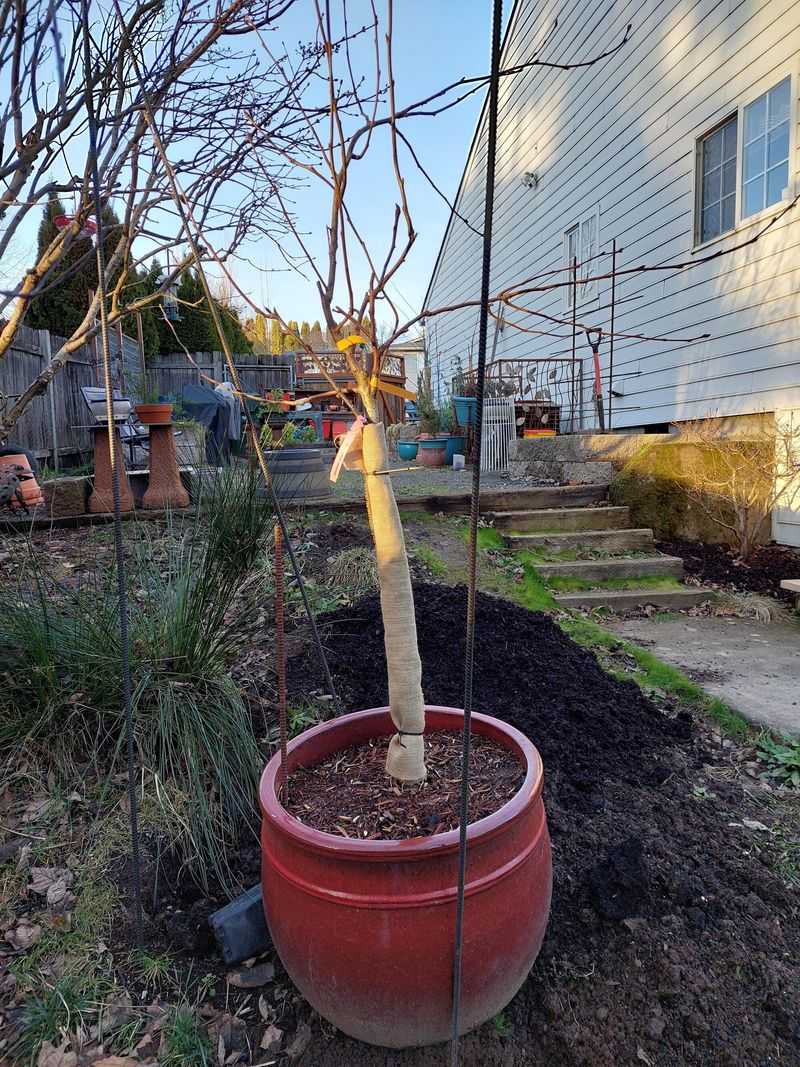
Fall is when many gardeners think about trees, and the timing fits here. NC State recommends late fall or early winter as the planting period for fruit and nut trees.
That is a season, not a fixed date for the whole state. Conditions in the Mountains, Piedmont, and Coastal Plain differ, so local weather matters.
The same guidance covers the hole. Dig it about twice as wide as the root system and no deeper than the root ball.
A wide hole gives roots loose soil to spread into, while a hole that is too deep can leave the tree sitting low.
Treat planting as the last step, not the first. Settle the big questions earlier.
The NC Forest Service recommends at least 25 feet of open space and a site with full sun or partial shade, so measure before you dig. Then confirm the tree’s sex and pollination needs with the nursery.
A practical weekend plan: mark the spot with a stake, pace out the open space, check the light at different times of day, and call a nursery to ask what they have. If the planting window is still ahead, you have time to choose well.
No date or site guarantees the tree will establish or fruit. Good timing simply gives it a fair start.
Match the tree to your yard and goals
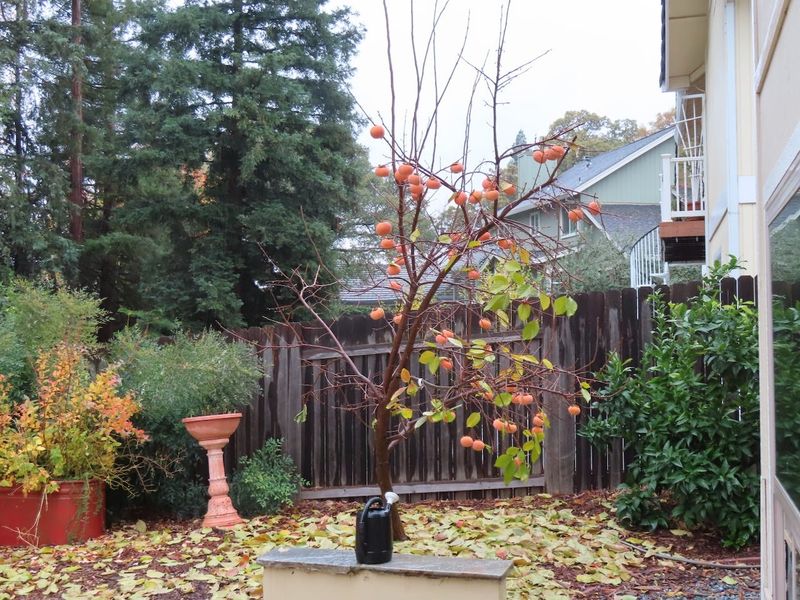
If you have room for a large native tree and want fall fruit, American persimmon is worth considering. Check the Forest Service size guidance first, then ask about the selected tree’s pollination needs.
Plan to plant within the late fall to early winter window NC State recommends. A harvest is never certain, but a well-chosen tree gives you a fair shot.
Some trees reward patience with fruit, and all of them reward a good spot.