
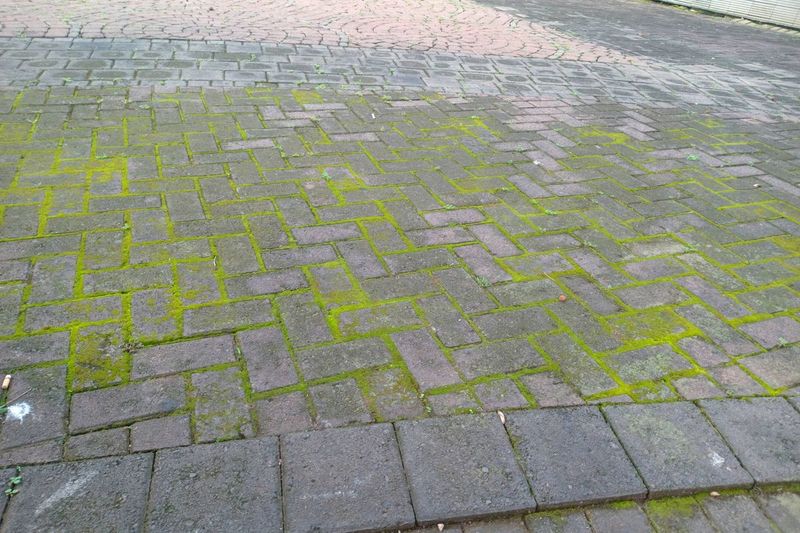
Slick green patches on a patio can turn a simple walk to the mailbox into a slip risk. Damp weather helps moss and algae spread, and many homeowners want a cheap fix from the kitchen cupboard.
Household vinegar may help on pavement, but it takes a few rounds and some cleanup. A porch roof is a different job with different risks, so it needs its own plan.
Vinegar may help on pavement, not every surface
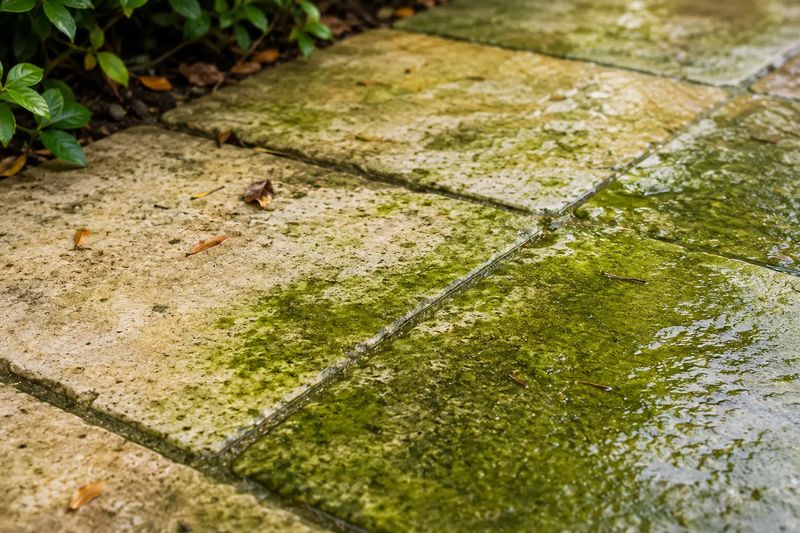
Plain white vinegar from your pantry is a reasonable thing to try on green growth covering pavement. Oregon State University Extension lists vinegar as an option for moss and algae deposits on pavement, such as a driveway or patio slab.
Set your expectations before you pick up the sprayer. The guidance does not describe a quick wipe and done.
It calls for spraying, waiting, repeating the treatment over about a week, and then washing the pavement. Stubborn patches may need scrubbing or scraping on top of that.
Keep the scope narrow, too. That advice is for pavement, and it does not make vinegar a proven treatment for a porch roof.
Roof moss is covered by separate Extension guidance, including a roof moss article that focuses on other methods and on slip hazards.
Also keep in mind that the vinegar timing and steps come from Pacific Northwest guidance. Nothing in it says one season is best for Florida or Texas yards, where moisture, shade, and surfaces vary widely from one property to the next.
Apply the pavement treatment and clean up
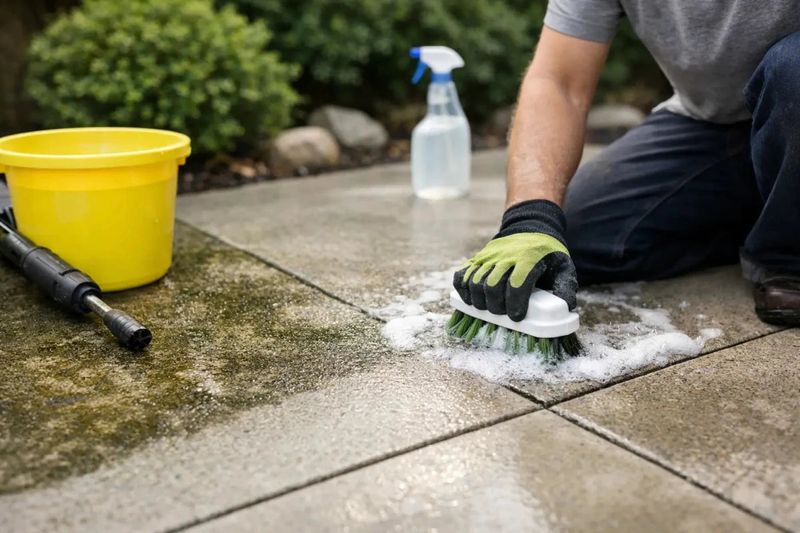
Start by clearing leaves, dirt, and other debris off the pavement so the vinegar can reach the growth itself. Then spray vinegar onto the moss and algae deposits and leave it in place for 15 to 20 minutes, following the Oregon State Extension pavement guidance.
One round is rarely the whole story. The guidance repeats the treatment over a week, so plan on several sessions rather than a single afternoon.
Finish by washing the pavement, and rinsing with a garden hose works well for that.
Some patches hang on after treatment. Scrub them with a stiff-bristle brush, or lift thick growth with a flat scraper.
Work in small sections so you can see which spots respond and which need another pass.
Treat every wet, green surface as slippery, even while you work and even after you rinse. Wear shoes with good grip, move slowly, and keep kids and pets off the area.
Extension names mossy roofs, decks, and steps as slip-risk locations. These steps are written for pavement, not as a recipe for every material you own.
Protect concrete, plants, and people
Vinegar is an acid, and acids can attack concrete. The Concrete Society notes that acidic substances should be removed and the surface washed with fresh water.
That is a reason to rinse promptly, not proof that one brief treatment will ruin every patio.
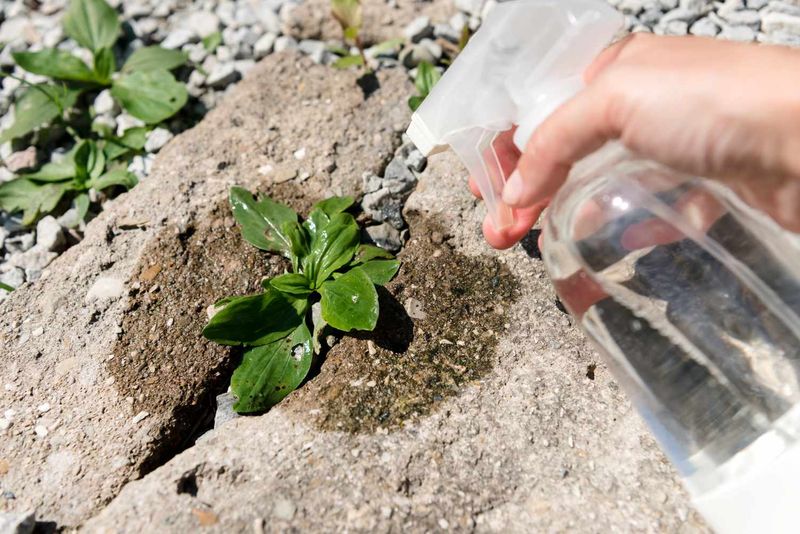
Next, look at what grows beside the slab. A Michigan State University Extension response through Ask Extension says vinegar can burn plant foliage.
Spray low and close to the surface, and keep the liquid away from shrubs, flowers, and lawn edges you want to keep.
Never mix vinegar with bleach. Georgia public-health guidance in a household chemical hazards sheet warns that bleach combined with vinegar or another acid can produce chlorine gas.
If you tried bleach earlier, rinse the area well before using vinegar.
Finally, stick to ordinary household vinegar. University of Maryland Extension warns that acetic-acid products at 11 percent or higher can cause severe skin and eye injury.
That warning concerns those stronger products, but kitchen vinegar is still not harmless, so wear gloves and eye protection.
Reduce the conditions that favor regrowth
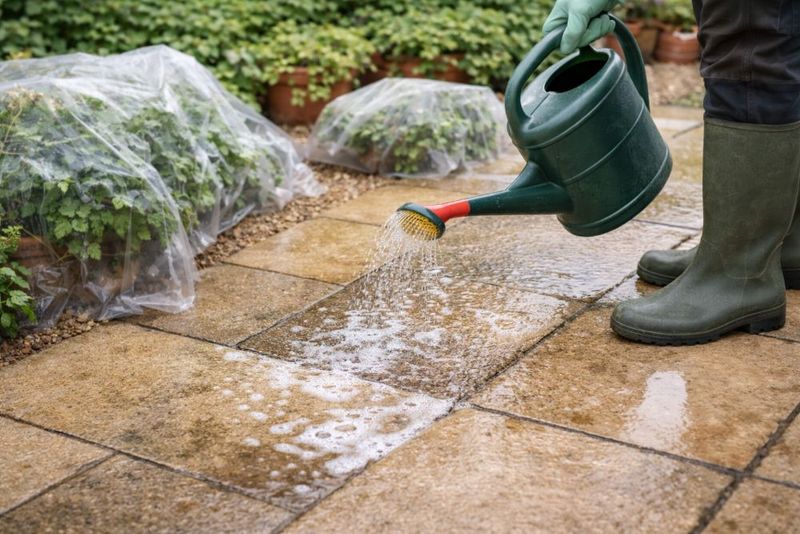
Cleaning only helps for so long if the spot stays perfect for moss. It tends to stick around where pavement stays damp and shaded, and a corner that never dries out after rain is a typical trouble spot.
Oregon State Extension offers two practical changes in its pavement moss guidance: reduce shade and keep sprinklers from wetting the pavement. Trimming a low branch or thinning a hedge can let more light and air reach the slab.
Check your irrigation next. Watch a sprinkler cycle and see whether spray lands on the walkway or patio.
Turning a head, swapping a nozzle, or adjusting the zone can cut down on daily wetting.
These steps change growing conditions, so they may discourage moss from coming back. They cannot promise a growth-free surface.
A shady patio under live oaks in Texas and a humid, rain-soaked slab in Florida may behave very differently, so judge your own site by how long it stays wet and shaded.
Treat a porch roof as a separate problem
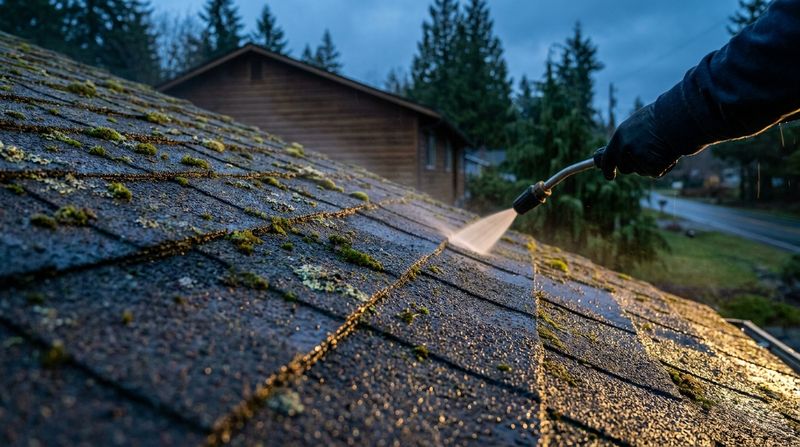
A porch roof is not a bigger patio. Roof material, slope, access, and fall risk all change what is safe and what works, so the pavement steps do not carry over.
Vinegar is not recommended here as a roof treatment.
Oregon State Extension explains in its roof moss article that improper pressure washing can damage shingles. Skip the pressure washer on a porch roof, even if it works well on your driveway.
The same Extension guidance says to weigh the hazards of roof work carefully. Climbing a ladder onto a damp, mossy surface is one of the riskiest parts of the job.
A question-and-answer page on removing roof moss points toward mechanical removal and specific labeled products rather than a kitchen fix.
If the roof is steep, hard to reach, or covered in slick growth, hire a qualified roofing professional. Ask about your shingle type and what method suits it.
Keeping your feet on the ground costs less than an injury or a repaired roof.
Choose any commercial product for its intended surface
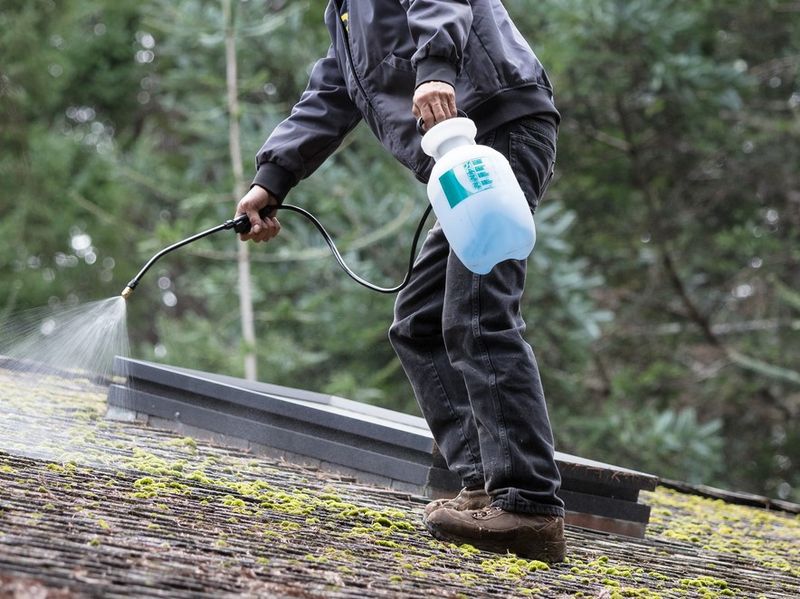
Some homeowners would rather buy a moss killer than mix up repeated vinegar rounds. That can be a fair choice, but the label is your rule book.
Follow its directions, and keep the product off plants you want to keep.
Surface matters just as much. Oregon State’s lawn moss guidance makes clear that products for lawns, walkways, and roofs are not interchangeable.
A product made for turf may not suit a walkway, and a roof product belongs on roofs only if the label says so.
No product comes with a guarantee, so treat results as likely to vary. Look for the surface named on the front or in the directions, and skip any item that does not list yours.
For roofs, the roof moss guidance mentions specific labeled products as part of a wider plan.
Use the vinegar steps only on pavement, and seek roof-specific advice for the porch roof. A wet, mossy surface is slick no matter what is sitting in your spray bottle.