
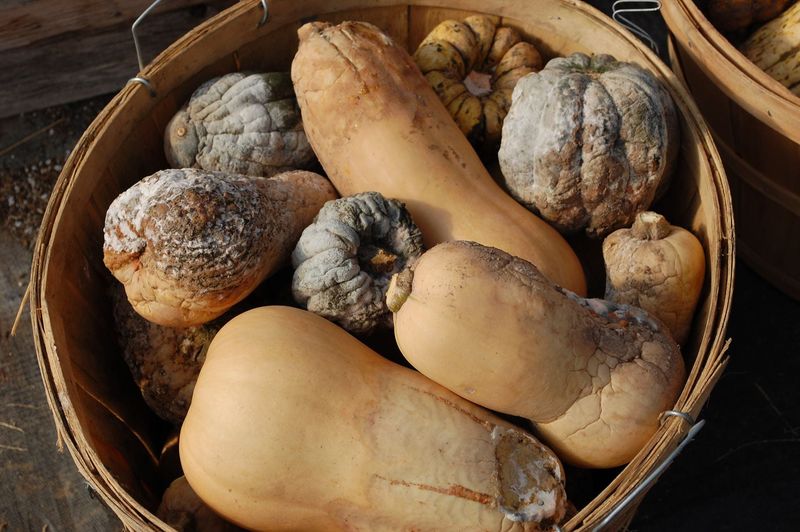
You reach for a butternut or pumpkin from the pantry shelf and feel a soft, brown patch under your thumb. That sinking feeling is fair, because one bad squash can be a sign of trouble for the others nearby.
Many gardeners hear that rot always starts in one hidden place, but it is not that simple. Here is how to look closely, sort what you have, and set up storage that gives your squash a better shot.
A soft spot is a warning, not a diagnosis
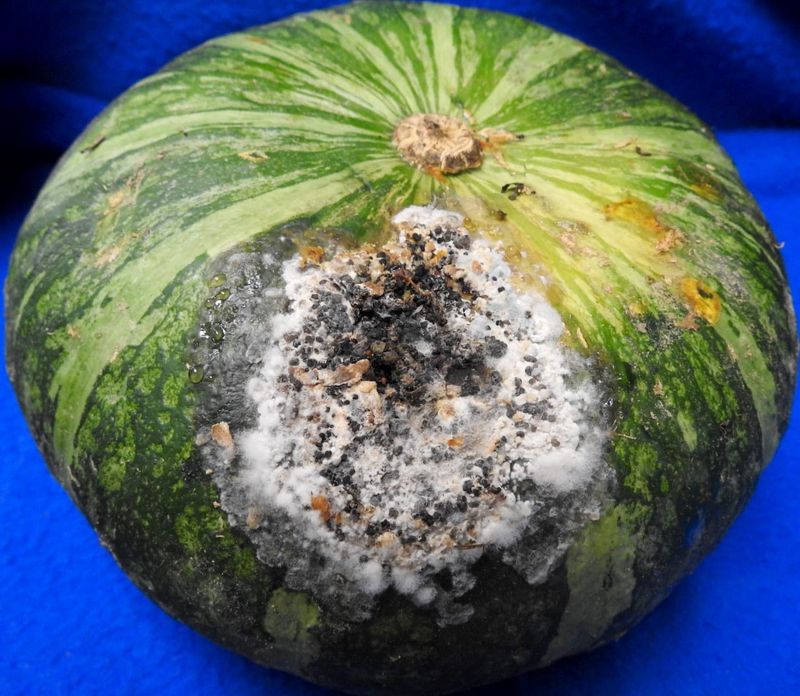
Brown, soft, sunken, water-soaked, discolored, or fuzzy moldy patches on a stored squash all tell you something is wrong. They do not tell you what caused it.
Several different organisms can cause storage decay, and their symptoms overlap.
You may have heard that rot starts in one spot that gardeners never check. That is too simple.
Oregon State University reports that lesions can show up anywhere on the fruit, though they are often found at the stem end or where the squash touched soil.
Some rots do favor certain places. The Pacific Northwest disease handbook notes that some Fusarium rots often begin at the stem end.
Even so, a spot’s location is a clue at best, never a verdict.
So treat a soft spot as a prompt to act. The next sections walk through how to inspect each fruit, sort the pile, and adjust storage.
Nothing here can reverse rot that has already set in, but careful checks can help you cut losses.
Inspect the whole squash
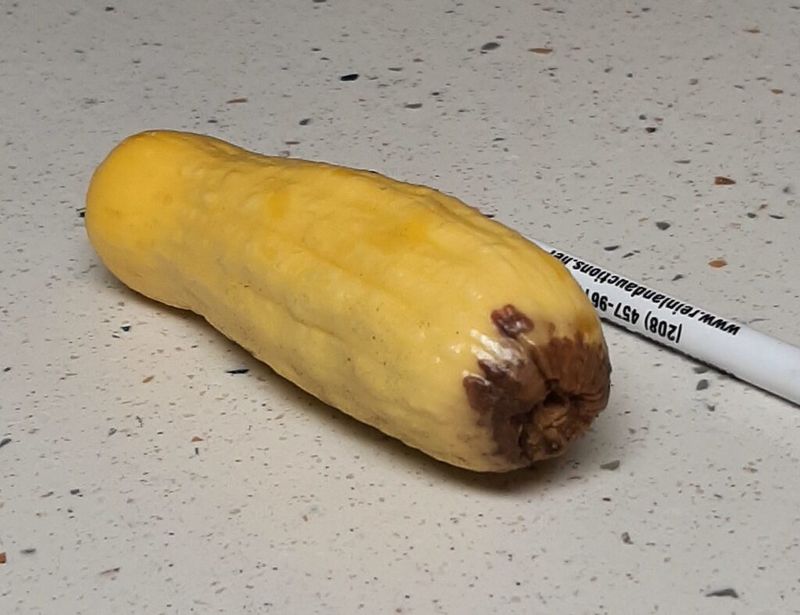
Pick up one squash at a time and work your way around it. Start at the stem scar, where the stem was cut, and look for softness, moisture, or mold.
Then flip it to check the blossom end, the small scar opposite the stem.
Next, run your hands over the sides and the underside, where a squash rested on the shelf or the ground. Watch for soft, water-soaked, sunken, discolored, or moldy areas.
A firm, dry rind is what you want to feel everywhere.
Both ends are handy checkpoints, but they are not the only places decay can appear, and a spot at either end does not prove a particular disease. Skipping the sides and bottom is an easy way to miss trouble.
Make this a routine. Oregon State Extension advises checking stored fruit regularly and removing any that are softening or rotting.
A quick weekly look helps you catch a problem while it is still a single squash, as the storage rot guidance also suggests.
Similar-looking spots can have different causes
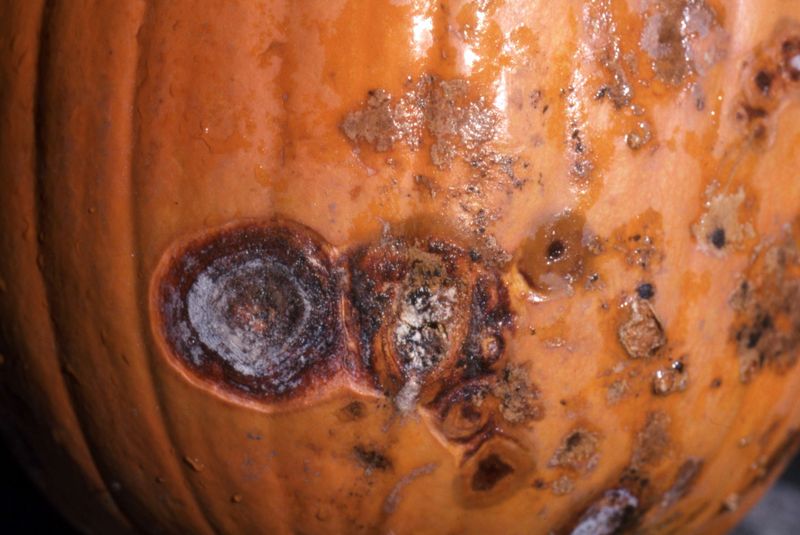
Two squash can each have a dark, sunken spot and still have very different problems. Storage decay is caused by several pathogens, and a spot’s look or position cannot name the culprit.
Oregon State notes that diagnosis may take more than a visual check.
Some patterns do show up. The Pacific Northwest handbook links certain Fusarium rots to the stem end and one species to blossom-end rot in storage.
Treat those as loose associations, not proof.
Do not confuse any of this with blossom-end rot, the garden problem. UF/IFAS Extension describes it as a physiological disorder tied to calcium availability and water balance in developing fruit, and it can affect squash and pumpkins.
That disorder happens on the vine, not on the shelf. A soft spot on a squash in storage is not a calcium issue, so skip calcium products for it.
Sorting and storage changes are the useful responses.
Remove fruit that is already softening
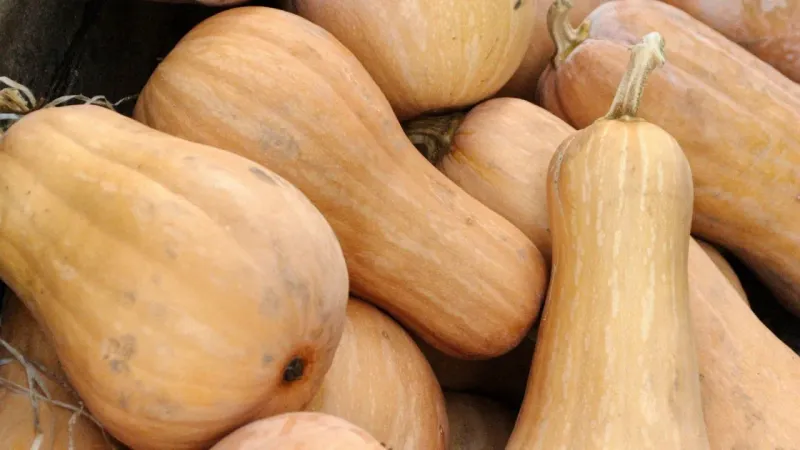
Once a squash feels mushy or looks like it is rotting, take it out of storage right away. Then go through the neighbors one by one, checking for soft areas, moisture, or mold where fruit touched.
Oregon State and its extension service both point to removing affected fruit as part of managing storage.
Think of sorting as a way to reduce losses. It cannot cure fruit that is already infected, and it cannot promise the rest will keep.
Some of the remaining squash may still go bad.
Food safety needs a clear line here. Please do not cut away the visible spot and eat the rest of a squash that is mushy or actively rotting.
USDA guidance allows trimming small mold spots from firm, low-moisture produce, and says soft produce should be discarded.
That guidance does not create a squash-specific exception for soft or decayed fruit, so when in doubt, throw it out.
Choose a cool, dry place with airflow
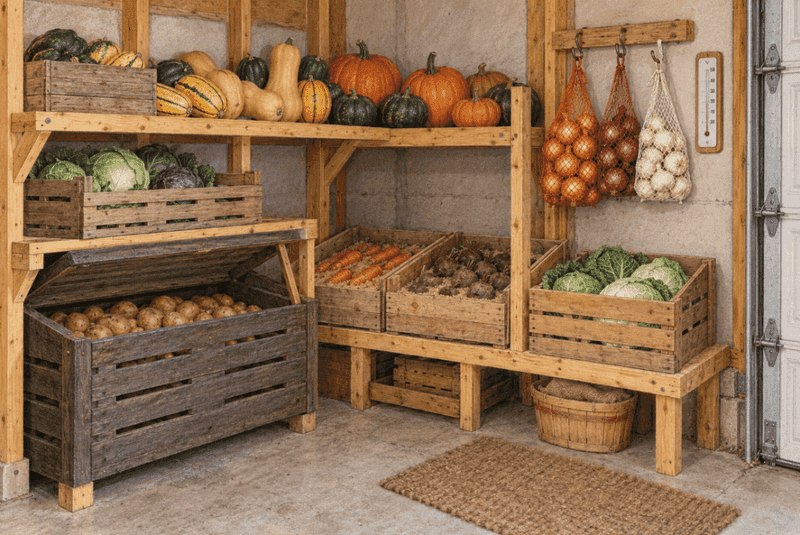
A common home target is about 50 to 55 degrees F with good airflow. Oregon State Extension recommends that temperature range along with 50 to 70 percent relative humidity.
Humidity matters because damp air helps decay get going. UC Davis gives the same 50 to 70 percent range and warns that high humidity favors rot.
For Southern gardeners, a cool, dry spot can be hard to find. Treat these numbers as general targets, not a guarantee for Florida or Texas homes.
A cheap thermometer and humidity gauge can show how your closet, pantry, or garage really behaves.
Space the fruit in a single layer so air can move around each one. Storage life also varies by type.
Acorn squash generally keeps for less time than butternut, hubbard, or some other types, so use the shorter-keeping ones first and do not count on every squash lasting for months.
Handle and cure squash according to type
Storage success starts before the shelf. Mature, sound, dry fruit stores best.
Cuts, bruises, broken stems, wet surfaces, and infections picked up in the field can all add to losses, as Oregon State Extension explains.
Handle each fruit gently, and carry it by the body rather than the stem. A stem that snaps off leaves an open wound.
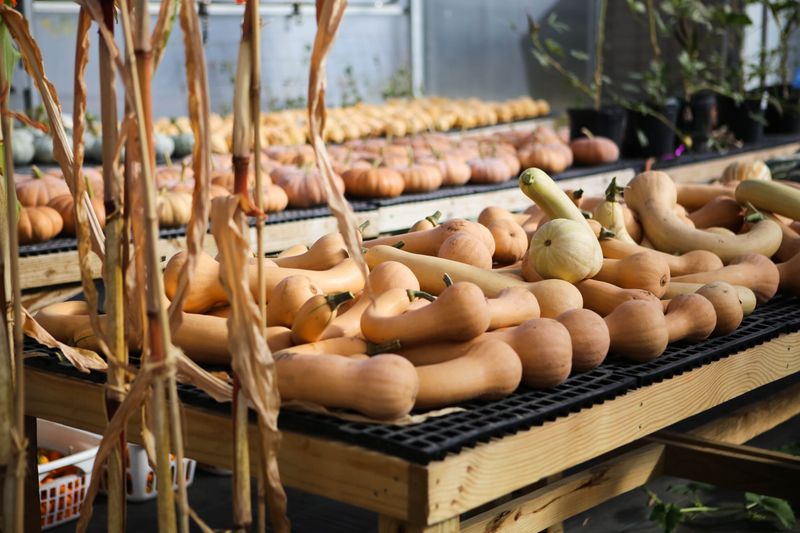
Curing is a preventive step. In warm, dry conditions with airflow, many squash types can harden their rinds and heal small wounds.
Advice differs on the details: Oregon State suggests roughly 80 to 85 degrees F for several days, while University of Minnesota Extension describes 7 to 10 days. Curing cannot reverse rot that has already started.
Not every squash needs it. Minnesota Extension says curing is unnecessary for some winter squash and specifically advises against curing Table Queen acorn.
Check your variety first.
A squash is only as good as the care it got on its way to the shelf.