
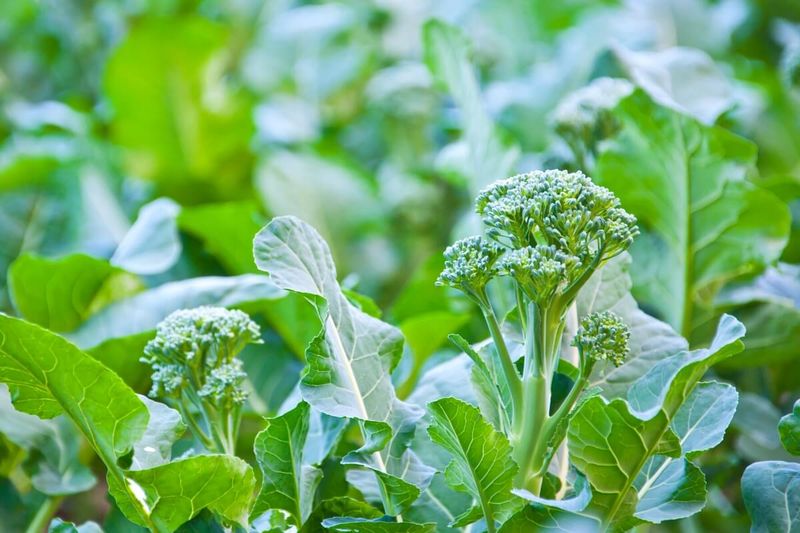
You walk out to the garden and spot tiny yellow flowers where a tight green broccoli head should be. It looks like the end of the crop, but the plant may not be finished.
A smart cut can leave the door open for a few more pickings, though nothing is guaranteed. Here is what to do, what to expect, and how to catch the next crop earlier.
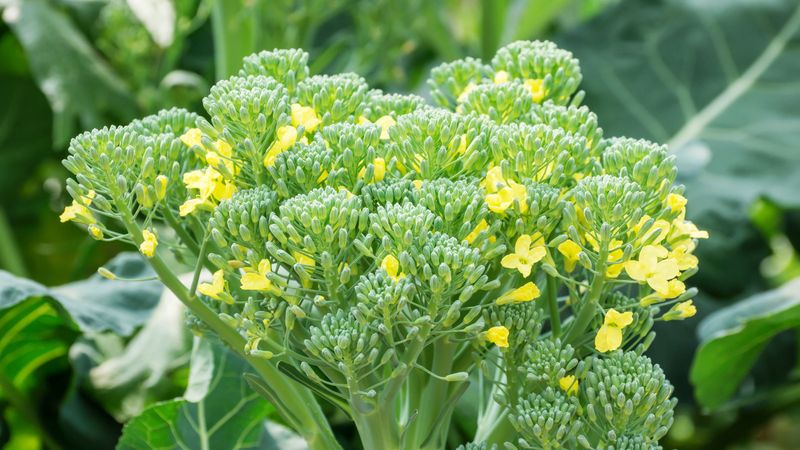
Yellow flowers mean the central head has passed its peak
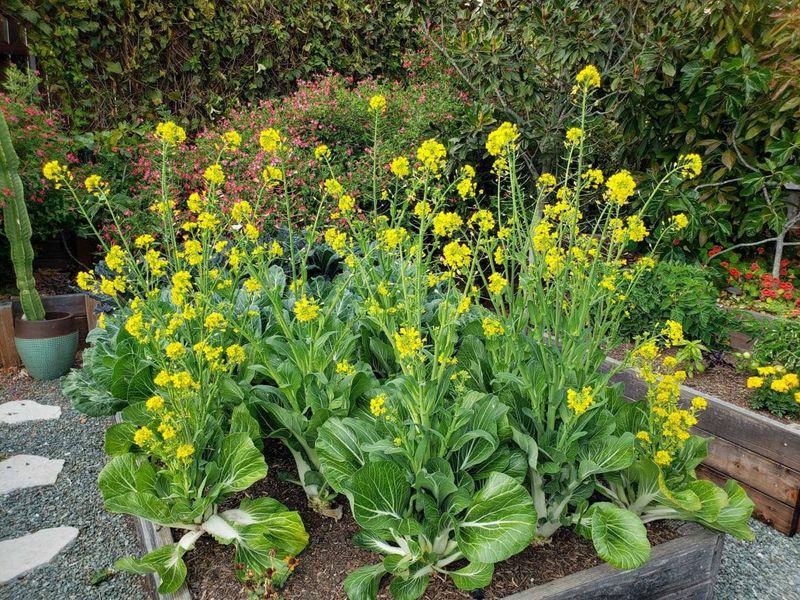
Broccoli is a flower bud crop, and the best central head is one you cut while it is tight and green. North Carolina Extension harvest tips say to cut before the buds open or show yellow.
Once yellow flowers appear, the head has passed its preferred harvest stage.
That does not make the whole plant useless. A head with open flowers may still be edible, though its quality or taste can decline.
Sources differ on how strongly they describe the change. UF/IFAS says broccoli can turn quite bitter when it blooms, while other extension guidance says a yellowing head is still edible but may not taste as good.
Bitterness is not a given, so a small taste test is reasonable.
One clue helps you read your plant correctly. Yellow buds or open flowers on the head are a different problem from yellowing leaves.
The harvest advice here is about the head, so healthy green leaves lower on the plant are still doing useful work.
Remove the flowering head and keep the plant rooted
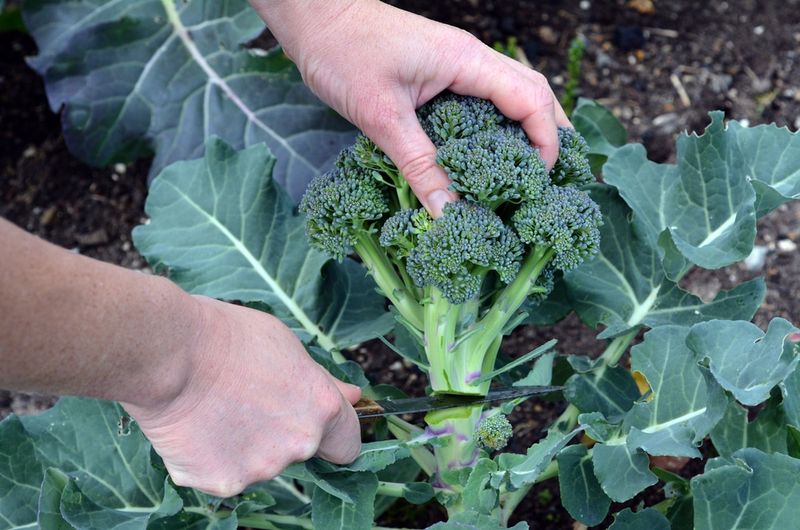
Grab clean snips or a sharp knife and cut off the central flowering head. Then stop.
Leave the broccoli plant rooted in the ground rather than pulling it out.
This is the same step gardeners use after a normal harvest. As UF/IFAS broccoli guidance describes, some varieties send up side shoots after the main head is cut, which only happens if the plant stays put.
There is no magic cut height in the research, so there is no need to measure. Just remove the head and leave the stem below it.
Cutting the plant down to its base is not what the advice calls for.
Cook or taste the removed head if it looks decent. You may find it perfectly fine, or you may find the flavor has slipped, and either way you will know more about your plant.
Preserve the lower stem and healthy leaves
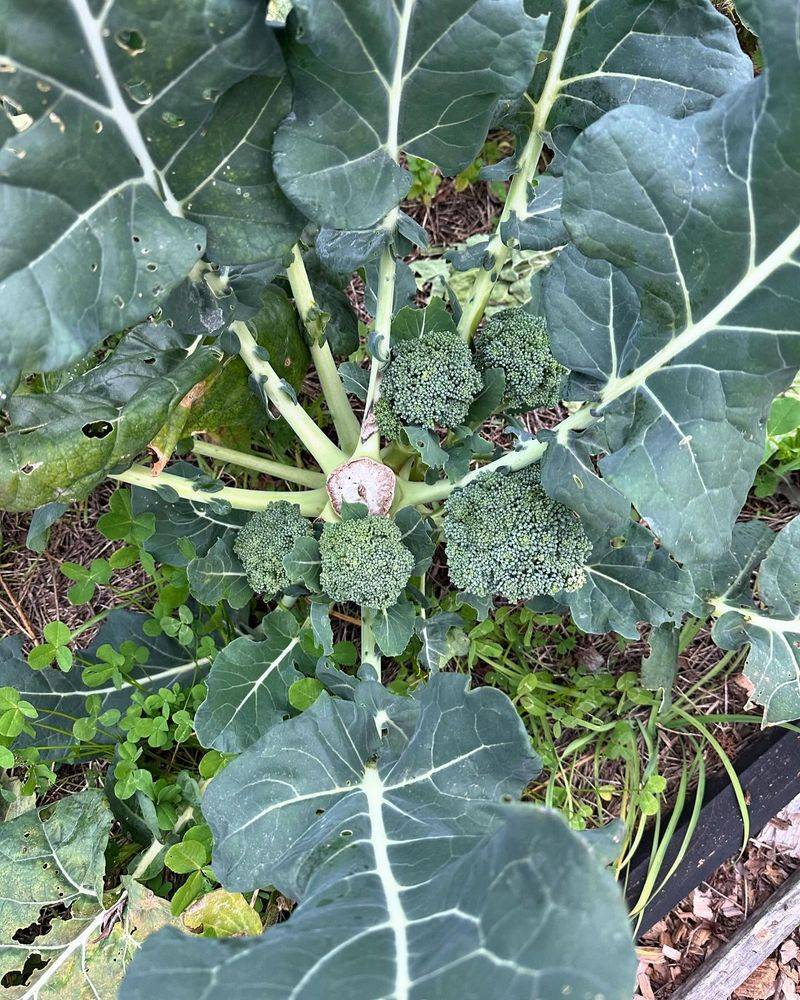
After the central head is gone, the plant that remains is your best asset. The lower stem and healthy leaves feed whatever growth comes next, so resist the urge to tidy up.
Side shoots usually form where leaves join the stem, according to North Carolina Extension. The same source cautions that removing too many leaves can reduce side-shoot production.
Check the joints every few days. Tiny green buds there are a good sign.
Snip off only leaves that are clearly dead or diseased.
Keeping the foliage gives the plant a fair chance, but it does not promise a second crop. Think of it as not getting in the way.
Side shoots are possible, but a flowering plant is uncertain
Will the plant give you more? Maybe.
Broccoli can form side shoots after the central head is removed, and UF/IFAS names Waltham 29 as a Florida variety that does so.
That advice, though, is built around cutting the head before its buds open. Cutting a head that is already in flower is a less certain move.
Nothing in the guidance shows that this cut reliably triggers new shoots.
There is one hopeful note. UF/IFAS says pinching flowers on bolting vegetables may extend harvest by a few weeks.
That is not a guarantee for broccoli.
So treat it as a low-cost experiment. Remove the head, keep the plant, and watch.
If shoots appear, enjoy them. If they do not, you have lost very little.
Expect smaller shoots and a harvest that depends on conditions
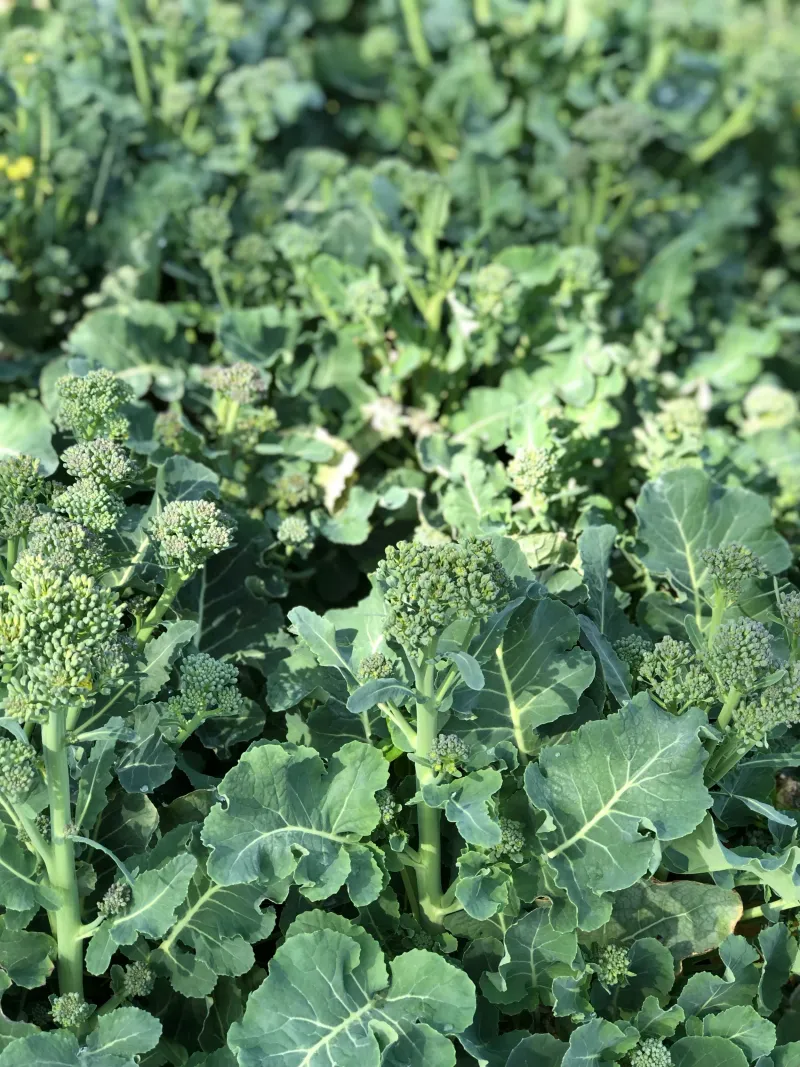
Picture florets, not full heads. Side shoots are smaller than the first head, and Iowa State reports typical side heads of about 1 to 3 inches.
They are great for stir-fries and steaming.
How long they keep coming varies. North Carolina Extension notes that mild temperatures can allow several weeks of picking.
A warm snap or a stressed plant can shorten that.
Variety matters too. Types bred for side shoots, such as Italian sprouting broccoli, can extend a harvest.
Those are examples only, and not every variety produces abundantly.
Pick shoots while they are small and tight. Regular picking keeps you on top of them before they flower too.
Plan the next Southern crop around local timing
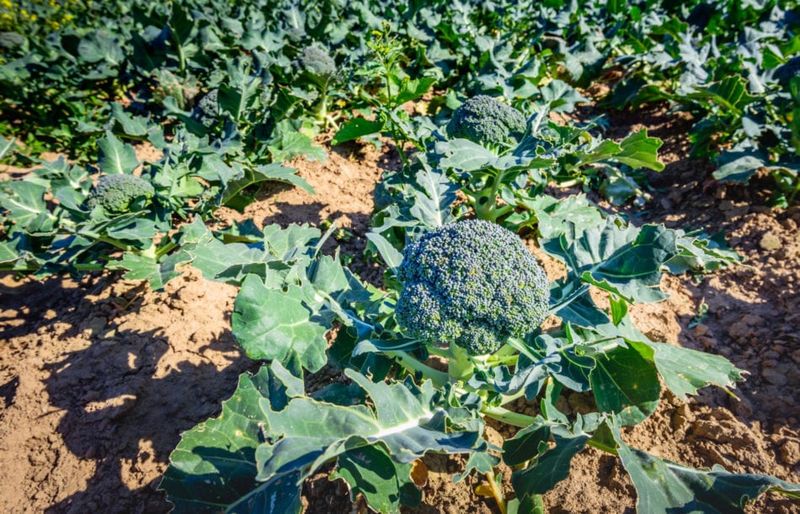
Next season, check the center of each plant often. The goal is to cut the head while it is tight and green, before the buds open, which is also the standard route to side shoots, per North Carolina Extension.
Timing the planting is half the battle. UF/IFAS recommends fall and winter broccoli in Florida, with transplant windows that differ by region.
North, central, and south Florida do not share one date.
Texas varies as well. Texas A&M AgriLife gives different fall planting periods by region, so look up your area before you buy transplants.
Broccoli rewards the gardener who is watching. A head caught early beats a head rescued late.