
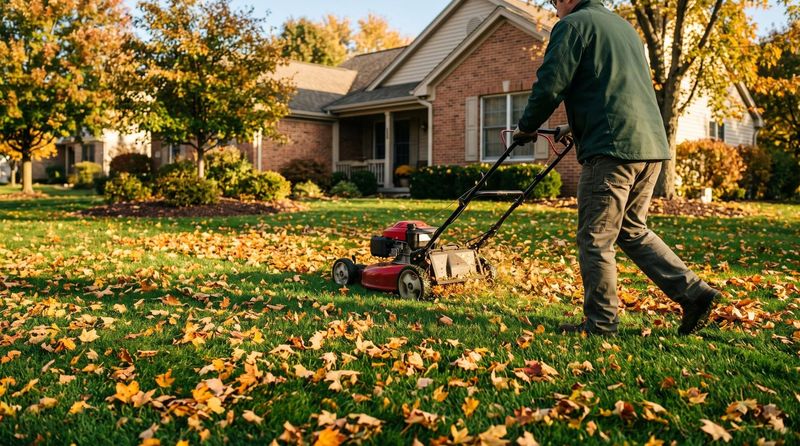
Every October, North Carolina yards fill up with leaves, and so do the weekends of people who rake them. There is a faster option for many lawns: run the mower right over them.
Chopped into small pieces, leaves can slip down into the grass and feed the soil as they rot. Here is when that works, when it does not, and how to tell the difference.
This works best on an established tall-fescue lawn
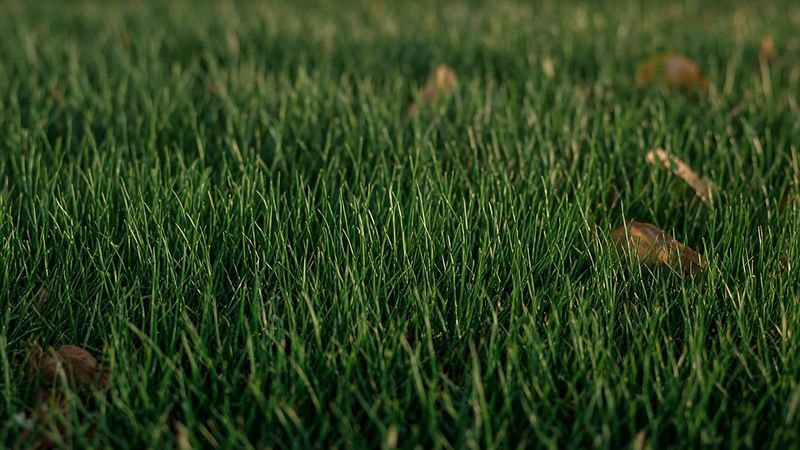
Before you fire up the mower, check what kind of grass you have. The advice in this article is built around established tall fescue, a cool-season grass.
NC State’s lawn handbook lists tall fescue and other cool-season grasses as best adapted mainly to the mountains and the Piedmont.
Out in the coastal plain, those grasses face more stress, and plenty of yards there are planted with warm-season turf instead. Bermudagrass and centipedegrass are common examples.
Their mowing heights and care schedules differ, so the fescue numbers in this article should not be copied onto them automatically.
A simple check can help. If your lawn stays green through winter and you live in the mountains or Piedmont, fescue is a good bet.
If your lawn turns tan after the first hard frosts, you likely have a warm-season grass, and you should look up guidance for that type before you mow leaves into it.
The lawn should also be established, meaning it has grown in thick and has been mowed for a while. Fresh seedlings are small and easily buried.
NC State’s fescue lawn calendar is the best place to match fall tasks to your lawn’s age and timing.
Shredded leaves return organic matter and nutrients
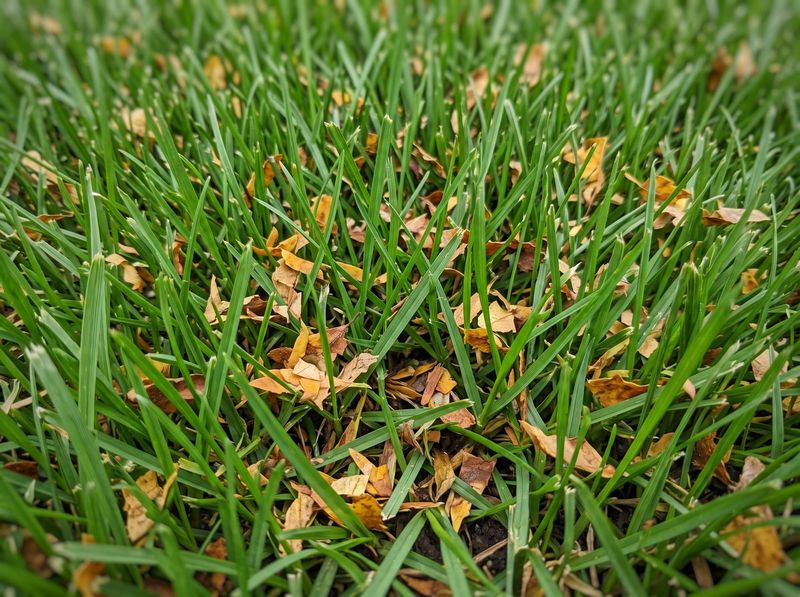
Leaves are not just litter. They hold nutrients the trees pulled from the soil all year, and those nutrients go back when the leaves break down.
Small pieces that settle between grass blades rot faster than whole leaves sitting on top, and they add organic matter to the soil as they go.
A Burke County Cooperative Extension article on raking explains that leaves left on the lawn can be mowed up and recycled this way. Think of it as slow composting right where the leaves landed.
The key word is gradual. Shredded leaves do not act like a bag of fertilizer that greens up the lawn in a week.
Nutrients release over months as the pieces decompose, helped by soil life and moisture.
That also means leaf mulch is a bonus, not a full meal plan. NC State’s guidance on caring for your lawn and the environment ties fertilizer choices to grass type, timing, and soil-test results.
No one can promise a set amount of fertilizer savings from mowing leaves, so treat any savings as a pleasant side effect rather than a plan.
How much leaf cover can stay?
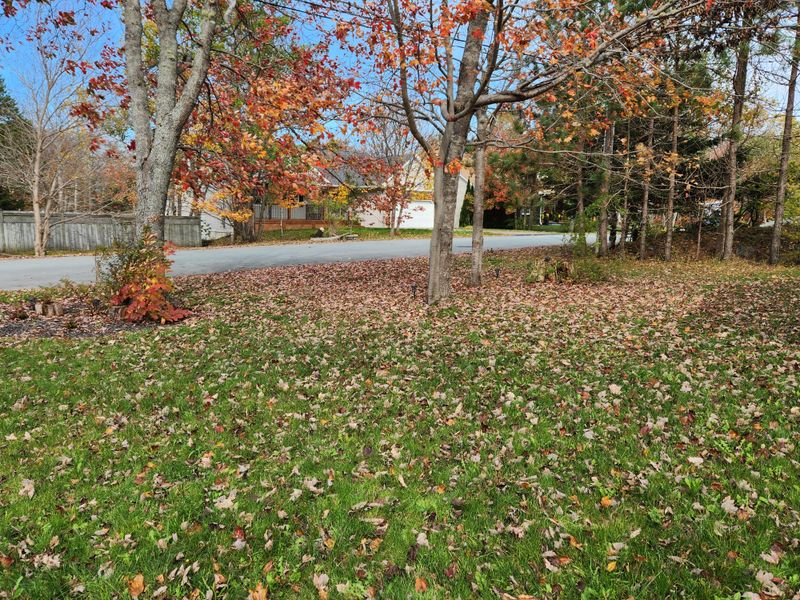
Not every leaf-covered lawn is a good candidate for mowing. A sparse scattering is easy, but a deep drift is another story.
Burke County Extension offers a handy local rule of thumb.
According to their guidance, a sparse layer, up to about 20 percent coverage, can simply be left alone. A lawn with around 50 percent coverage can be mowed.
These are practical local suggestions, not hard scientific cutoffs, so use them as a starting point.
The better decision rule is what you can see. If the grass still shows through the leaves, you are probably in good shape.
If a dense blanket hides the lawn, remove some of it first.
Why does that matter? A thick layer can block light and airflow and smother the grass underneath, as Iowa State Extension points out.
Leaving every fallen leaf where it lies is not a good idea.
Rake the heaviest spots, like areas under big oaks, into a pile. Then mow what remains.
Mow dry leaves into the fescue canopy
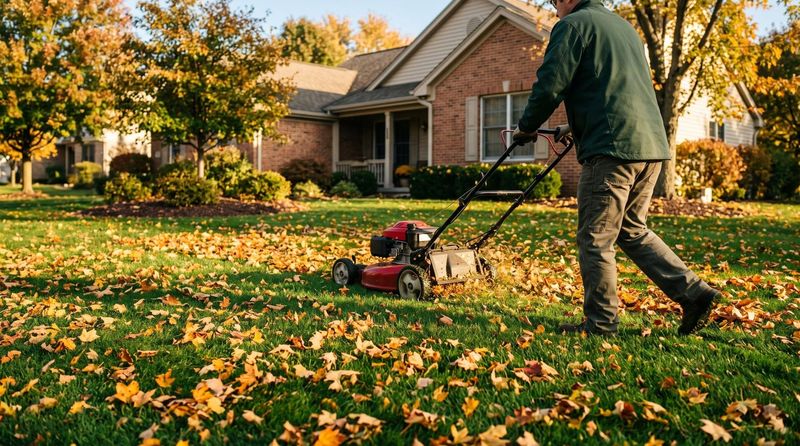
Timing comes first. Wait for an afternoon when both the lawn and the leaves are dry.
Wet leaves clump, and University of Florida guidance on mowing warns that wet material can clog the mower and cut poorly.
Walk the yard before you start and pick up stones, sticks, and other debris. Mowers can throw hard objects, and clearing them first lowers the risk of injury or damage.
Set the mower height for the season. NC State recommends keeping tall fescue at 2.5 to 3 inches from September through November, as laid out in its fescue calendar.
Follow the general rule from Carolina Lawns too: remove no more than one-third of the grass blade at a time.
Now mow slowly enough that the blade can chop the leaves finely. The goal is pieces small enough to fall down between the grass blades.
If the layer is on the heavier side, Burke County Extension notes you can make more than one pass or rake off some first, as described in its raking article.
A mulching blade or mulching mode helps, and a bagger can collect extra if you need it. These numbers apply to fescue, so skip them for warm-season lawns.
Check whether the grass still shows
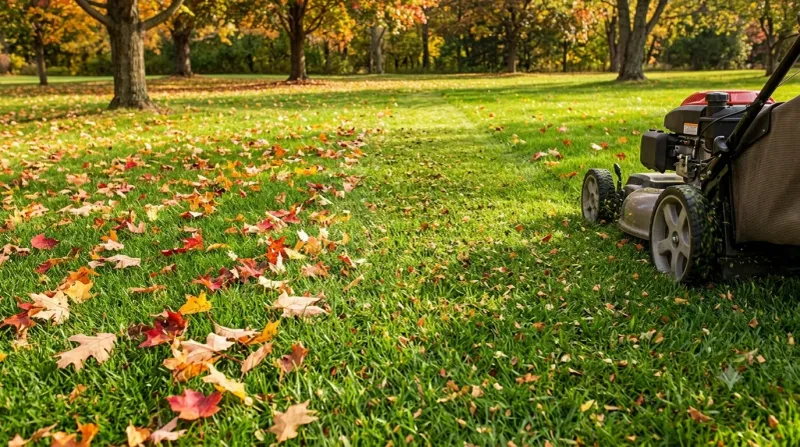
Once you finish mowing, take a slow walk across the lawn. Look down.
You should see green grass with only a little leaf debris left on top.
If leaves still cover the grass like a mat, the job is not done. A thick layer can smother turf, according to Iowa State Extension, so it needs another step.
Your options are simple. Make a second pass with the mower when the leaves are still dry and the pieces are shrinking.
Or rake off part of the layer and mow what is left.
Burke County Extension’s advice on raking follows the same idea: remove enough that the grass is not hidden.
Keep an eye on trouble spots after the next windy day or rain. Low corners and spots under big trees collect fresh leaves quickly.
A quick pass every week or so beats one huge cleanup in December.
Keep badly diseased leaves out of the mulch
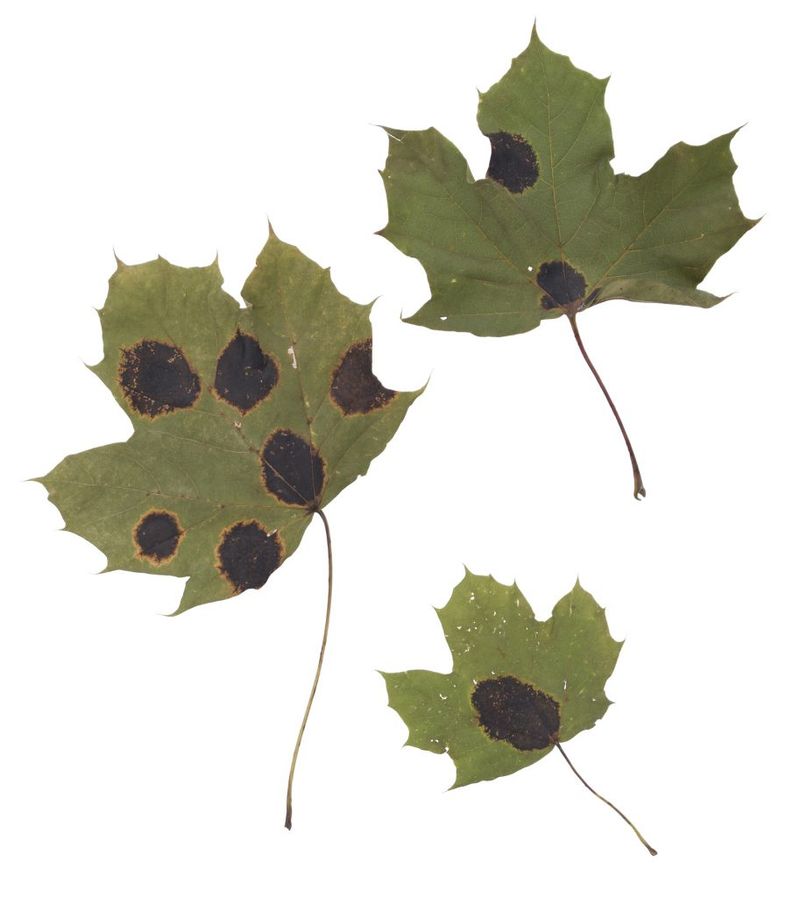
There is one clear exception to the mow-and-leave approach. If leaves are badly affected by foliar disease, an agent with NC Cooperative Extension advises removing them rather than mulching them back into the lawn.
You can read that point in the Burke County article.
You do not need to diagnose anything. Just notice whether a tree’s leaves look heavily blighted, spotted, or damaged across most of the foliage.
Those are the ones to bag, haul away, or send to a municipal yard-waste pickup.
A few small blemishes are normal in fall and are not a reason to rake. Leaves with minor spots or a little insect chewing can usually be mowed like the rest.
If you are unsure about a tree, contact your county Cooperative Extension office. They can look at samples and tell you what is going on.
Leaf mulch is one part of fall lawn care
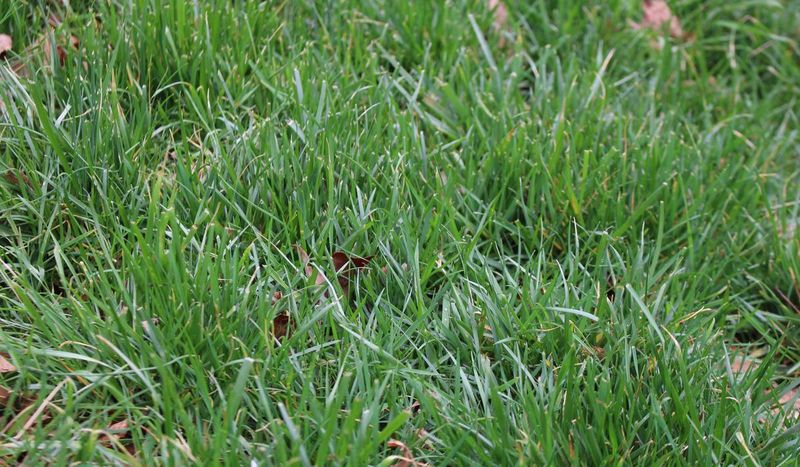
Mulched leaves feed the soil slowly, but fall is also when tall fescue gets its most important feeding. NC State’s fescue lawn calendar still calls for soil testing and gives a fall nitrogen schedule.
Leaf mulch is not listed as a replacement for either one.
That means you should not skip the plan just because you chopped up a few bags’ worth of leaves. Nobody can say how many nutrients your particular leaves supplied, so the soil test remains the best guide.
A soil test also covers questions leaves cannot answer. It tells you if the lawn needs lime or other nutrients, and how much to apply.
Do not assume leaves never affect soil pH, and do not assume they fix it. Test and follow the report.
NC State’s page on caring for your lawn and the environment explains why fertilizer use should match grass type, timing, and test results. Soil sample boxes and instructions are available through the NC Department of Agriculture and your county Extension office.
Likewise, leaf mulch is not a proven weed stopper. Keep up with your normal fall mowing, seeding, and feeding, and treat the leaves as an extra.
Keep some leaf litter beyond the lawn
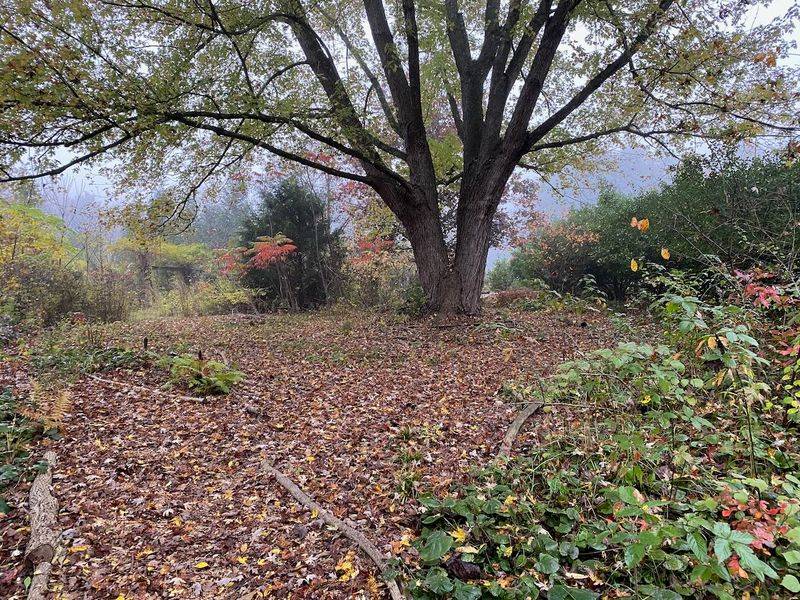
Mow leaves into the turf only when the pieces settle between visible grass blades. Rake off the extra and any badly diseased leaves.
That keeps the lawn healthy and your weekend short.
Then consider saving a share of leaves for places that are not turf. Intact leaf litter in beds or a quiet corner of the yard gives shelter to small creatures, and NC Cooperative Extension notes that leaf litter provides habitat for organisms.
A UGA Extension fall gardening note makes a similar point about leaving some leaves.
No one can promise exactly which animals will use your pile, but it costs you nothing. Keep the layer on the lawn thin and put the surplus where it can sit undisturbed.
Your lawn gets the shredded leaves and the garden edges get the rest.