

A porch mum that droops by mid-afternoon can make you feel like you are failing a plant that looked perfect at the store. Sometimes the cause is a packed root ball that dries out fast, but sometimes it is heat or soggy roots.
A few quick checks can tell you which one you are dealing with before you reach for the hose. Here is how to sort it out and give your mum a fair shot.
Check the root zone before watering
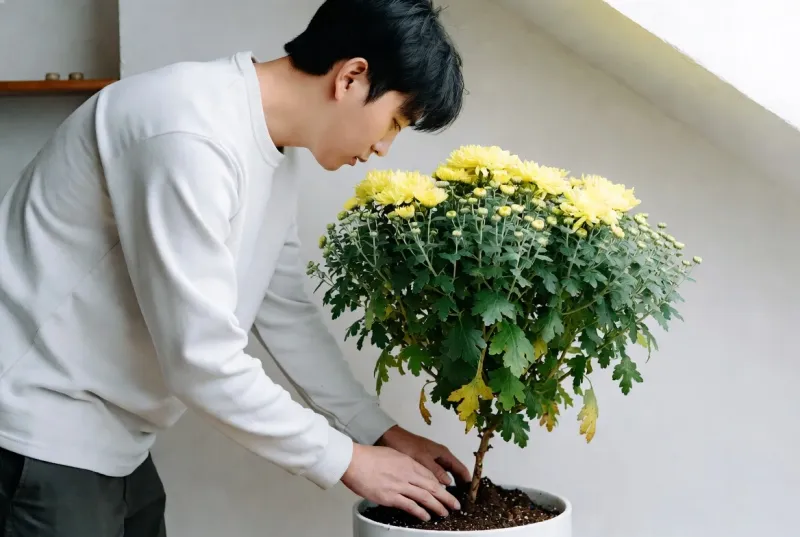
Before you water a drooping mum, find out what is going on below the surface. Push a finger two or three inches into the mix near the stem.
Dry and crumbly mix suggests the plant may need water, while cool, damp mix means more water is not an automatic answer.
Weight is another clue. Lift the pot right after a good watering and again when the mix feels dry, and you will learn how light a thirsty pot feels.
N.C. Cooperative Extension suggests checking moisture this way and watering when the root zone is dry, instead of following a set schedule.
If the finger test leaves you unsure, slide the plant partway out of its pot and look at the root ball. Pale roots in damp mix, tightly packed roots in dry mix, or a mushy smell each tell a different story.
Texas A&M AgriLife also stresses watering based on actual moisture needs. Make this check your first step every time, and decide on a remedy only after you know what you are looking at.
Afternoon wilting can have more than one cause
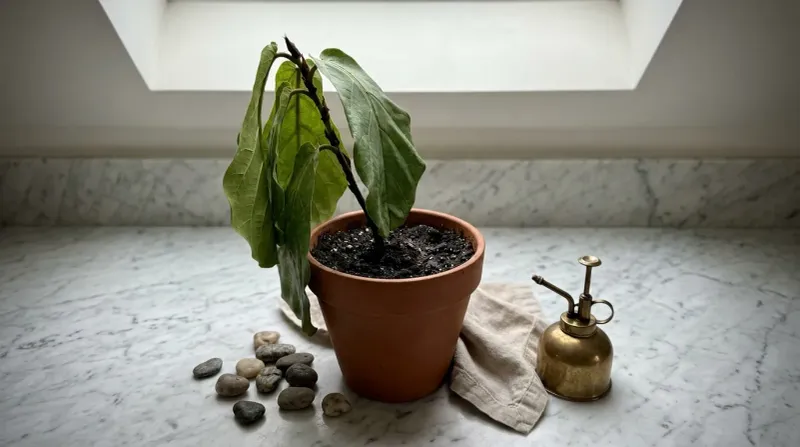
Wilting at 3 p.m. looks the same whether the mix is bone dry, the day is scorching, or the roots are in trouble. That is why the symptom alone does not prove a dry root ball.
Each cause calls for a different next step.
If the plant droops during the hottest hours and perks up as evening cools, heat stress may be the cause even when the mix still holds moisture. Oregon State Extension describes this kind of temporary heat wilting.
Check the mix first, because adding water to damp soil will not cool the plant.
A heavy, wet pot with a plant that stays limp all day points away from thirst. Saturated mix can starve roots of air, and UMass Extension advises against irrigating saturated mums even in hot weather.
Damaged or diseased roots can also cause wilting in wet mix, a pattern covered in UC IPM notes on chrysanthemum disorders. In that case, hold off on watering and look at drainage and the roots.
A crowded root ball may dry out quickly
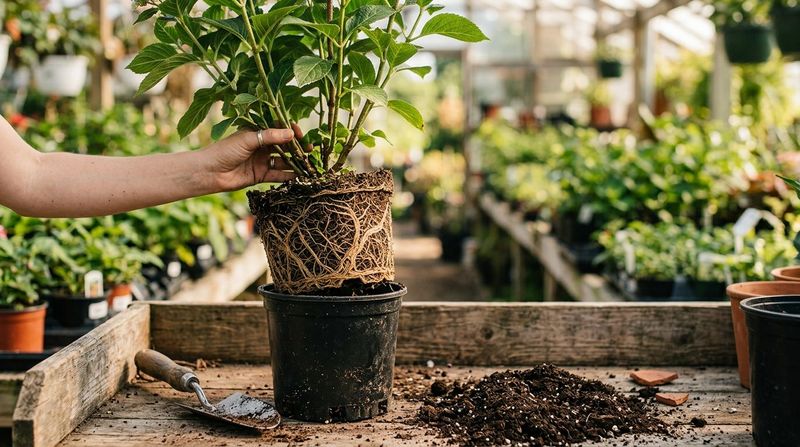
Garden center mums are grown fast and sold in small pots, so many arrive packed with roots and little mix. N.C.
Cooperative Extension notes that store-bought fall mums are often root-bound and can need water twice a day on hot early-fall days. Fewer ounces of mix hold fewer ounces of water.
Pot size and weather add to the demand. According to NC State Extension, small containers in hot, sunny, or windy spots lose moisture quickly, and daily checks work better than a calendar.
A dark pot against a sunny wall on a Florida or Texas porch may dry faster than the same pot in light shade.
Still, crowding is a possible reason, not a verdict. Container mix also behaves differently from garden soil, as UF/IFAS container media guidance explains.
Confirm with a moisture check before blaming the roots.
Rewet a dry pot slowly and let it drain
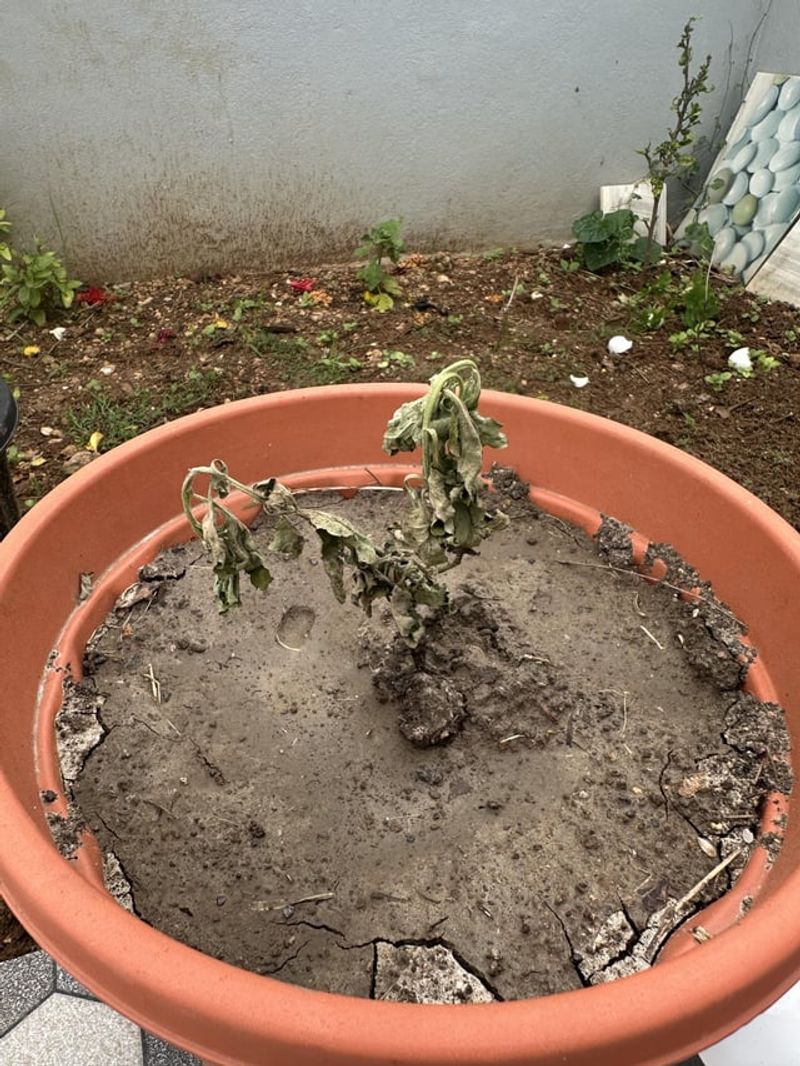
Sometimes a pot gets so dry that water races down the sides and out the bottom without soaking the root ball. If you have confirmed the mix is very dry and water is not soaking in, there are two options.
Pour water on slowly in several rounds, pausing so it can absorb, or briefly immerse the pot.
Iowa State Extension lists soaking a dry container as general container guidance. It is not a tested mum-specific treatment, and it will not fix heat stress or root disease.
Think of it as a way to get moisture back into mix that refuses water.
Timing matters. Lift the pot out once the mix is wet through, then let it drain fully and empty any saucer or outer pot.
Texas A&M AgriLife warns that bottom-watering can lead to root disease if a plant stands in water too long. Never leave a mum submerged or sitting in a pooled saucer.
Water by need, not by a fixed schedule
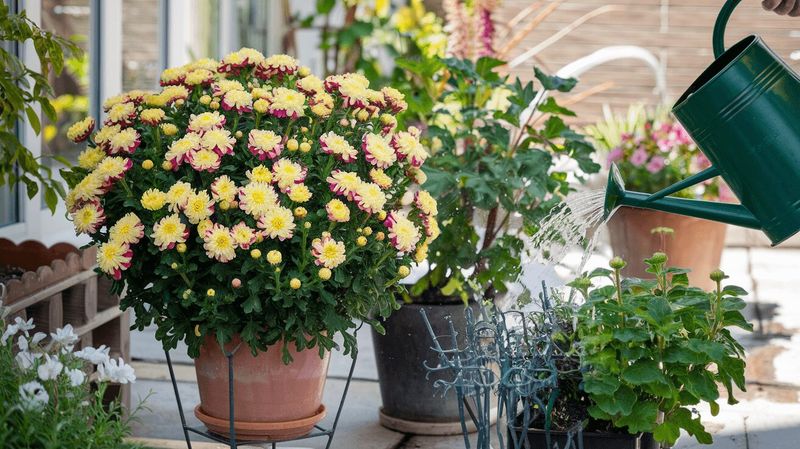
For routine watering, pour water onto the mix until it runs out the drainage holes. Then empty the saucer or decorative outer pot so roots are not sitting in a puddle.
Mums need well-drained soil, and UF/IFAS advises watering potted mums as needed rather than on a set routine.
Next, wait and check again. A mum on a breezy, sunny Texas porch might need checking daily during a warm spell, while one in shade after a rainy week may go longer.
NC State Extension describes container needs shifting with pot, mix, exposure, and weather.
Frequent checking is not the same as daily watering. Some small, crowded pots may need water very often in hot weather, as N.C.
Cooperative Extension observes, but a damp pot needs nothing. Let the mix, not the calendar, make the call.
Consider a larger pot when roots are crowded
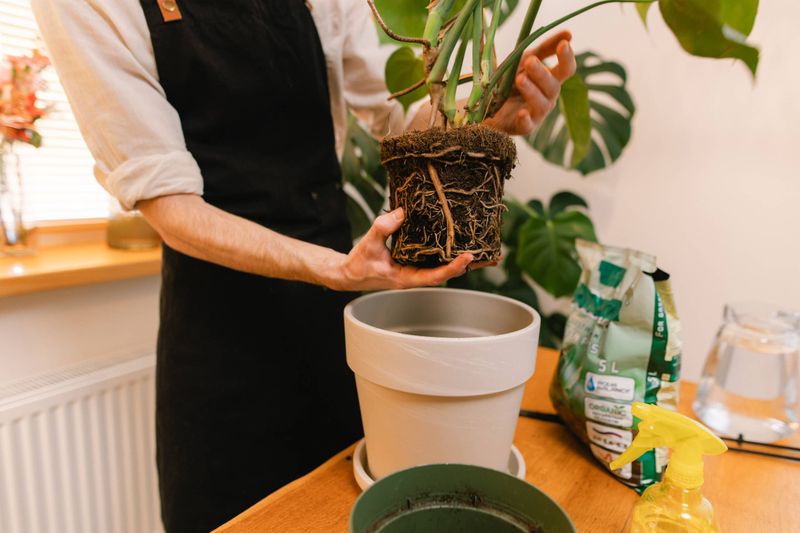
To see if roots are the issue, tip the pot and ease the plant out. A dense mass of roots circling the outside, with little mix left, suggests crowding.
Loose mix with plenty of room points elsewhere.
A bigger pot makes sense when a mum wilts repeatedly but perks up after you water. In that case, N.C.
Cooperative Extension recommends giving root-bound retail mums more soil. Choose a container only a size or two larger, with drainage holes, and use fresh container mix.
NC State Extension also describes moving a frequently wilting plant out of a pot that is too small for its roots.
Do not repot on wilting alone. If the plant stays limp in wet, heavy mix, more water is not the answer, and a fresh pot will not cure rotting roots.
Look at drainage and root color first.
A wilted mum is asking a question, and the roots usually hold the answer.