
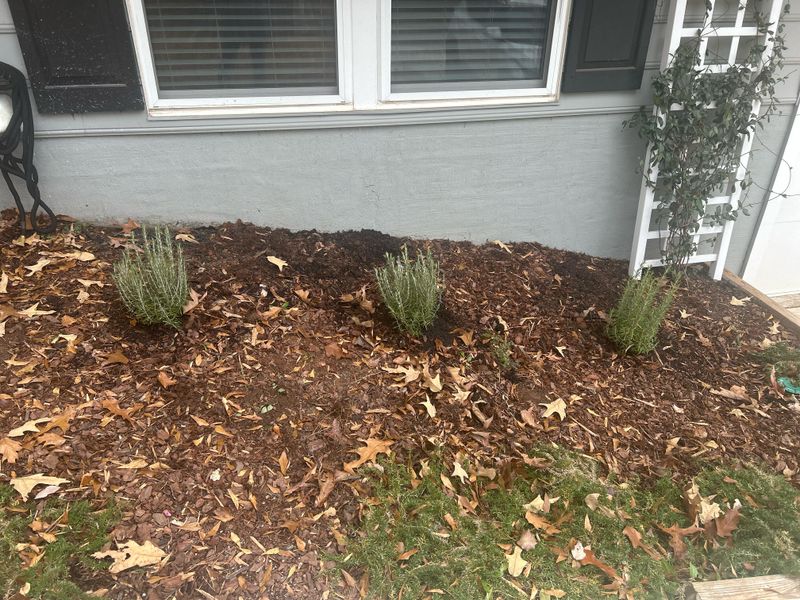
Rosemary looks tough, but a cold Texas winter can still leave it brown and unhappy. Many gardeners hear that one deadline at the end of October decides everything.
The real story is more useful, because it points to steps you can take all season long. Here is what actually helps your bush get through the cold.
October 31 Is Not a Rosemary Survival Deadline
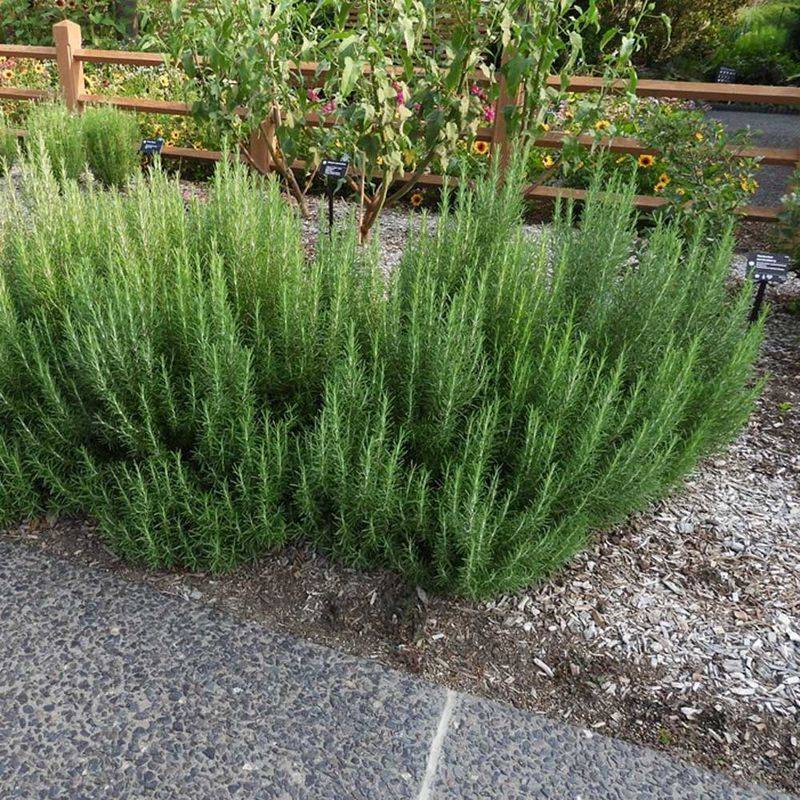
Nothing in the sources I reviewed shows that rosemary care finished by October 31 decides how a Central Texas bush handles winter. Seasonal preparation still matters, but the calendar date is not a cutoff.
What counts is the condition of your plant and the weather that actually shows up.
According to Texas A&M’s rosemary guide, rosemary is a perennial in most Texas areas in USDA Zone 7 and warmer, and healthy plants can tolerate a light freeze. That is encouraging, but it is not a promise.
A hard freeze can still injure a plant, and winter damage can happen even to a bush that looked fine in October.
The better habit is to prepare for real freeze conditions. Texas A&M AgriLife winter protection guidance points gardeners toward forecast-based action rather than a fixed date.
No single late-October chore can guarantee a green, undamaged bush.
The sections below walk through what is worth doing: sizing up your plant and its spot, watering by soil condition, skipping hard pruning, treating pots differently, and responding when a freeze is forecast. Think of it as ongoing care, not a last-minute sprint.
A Rosemary’s Site and Variety Shape Its Cold Risk
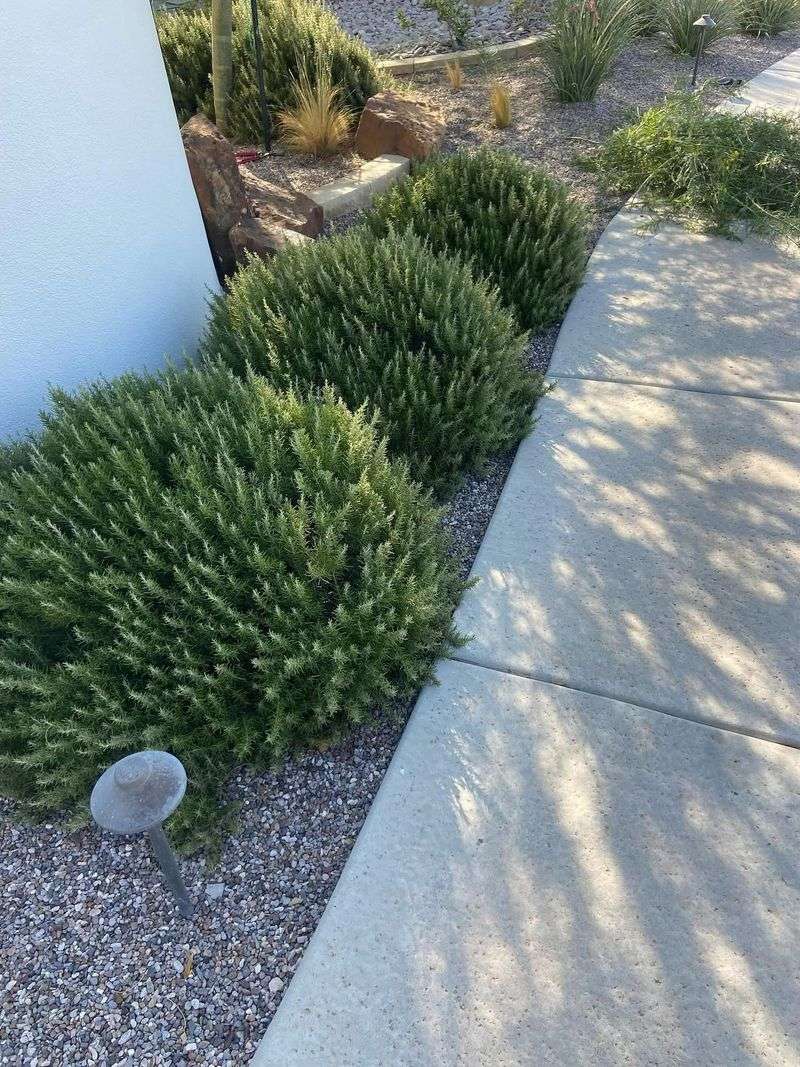
Walk out and look at your plant before changing anything. Two rosemary bushes on the same street can come through the same winter very differently.
Variety, age, soil, and exposure all play a part.
Drainage comes first. Texas A&M recommends well-drained soil for rosemary, and it lists ‘Arp’ among varieties suited to Texas.
That listing is a useful clue for shopping, not a guarantee that any ‘Arp’ will sail through every freeze. Other extension sources, such as University of Wisconsin Extension, also describe cold hardiness as varying among rosemary types.
Exposure matters too. A bush against a sunny south-facing wall is in a different spot than one in an open yard where north wind sweeps across it.
An older, established plant with deep roots has a different starting point than one that went in last month.
That last point is worth acting on. Central Texas Gardener notes that fall-planted rosemary may need protection, and it favors spring planting so a new plant has a full season to establish.
If you are shopping for a new bush, that timing is a better plan than a rush in October.
Let the Soil Dry Between Waterings
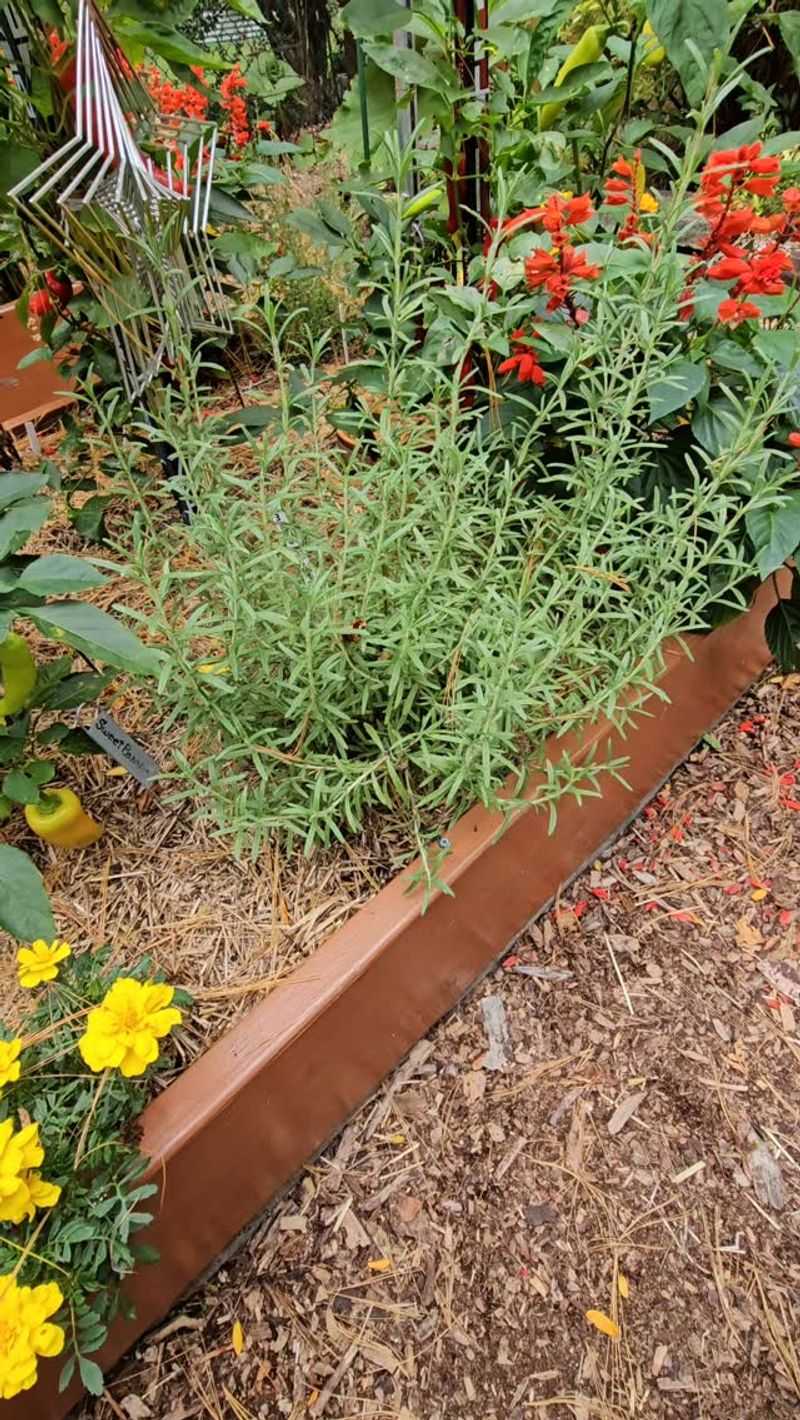
Rosemary comes from dry, rocky hillsides, and it holds a grudge against soggy roots. Water by what the soil tells you, not by what the calendar says.
Push a finger a couple of inches down, and wait if it still feels damp.
Texas A&M says rosemary needs well-drained soil, and that raised or slightly mounded beds improve drainage. It also says soil should dry thoroughly between waterings.
A plant may need water roughly every one to two weeks, but that is an average. Plant size, weather, and soil type change the answer, so treat the interval as a rough guide.
In Central Texas, heavy clay can hold water long after a rain. If your bed stays wet, mounding the soil or planting on a slope helps more than any watering schedule.
Overwatering can lead to root rot. That is why extra water is not dependable winter protection.
A wet, cold root zone can hurt rosemary just as surely as a dry spell, so skip the soaking and let the bed breathe.
Late Fall Is Not the Time for a Hard Haircut
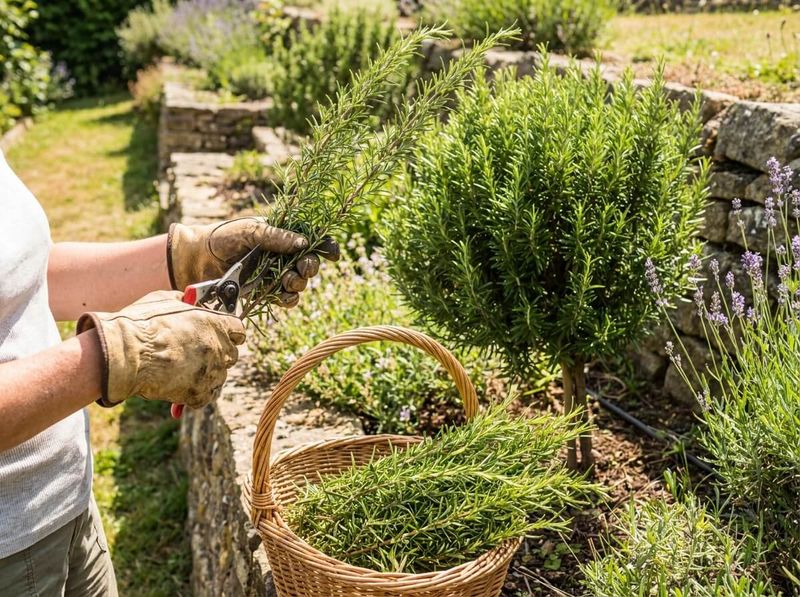
Cutting a rosemary back hard in late fall feels like tidy winter prep, but it is not a recommended step. The University of California Agriculture and Natural Resources rosemary fact sheet says late spring or early summer is the best time to prune.
Save the big shaping job for then.
Another caution comes from an Ask Extension response. It advises minimizing trimming around the time plants move indoors in late fall, and it warns against cutting hard into bare woody stems.
Old wood may not sprout new growth well, so a deep cut can leave a plant with holes.
A light tidy-up is a different thing. Snipping a few sprigs for the kitchen or removing a dead tip is fine.
Just keep cuts in the green, leafy growth.
No pruning approach guarantees a plant will survive winter. If the bush is leggy or overgrown now, make a note on your spring calendar and let it keep its foliage through the cold months.
Pots Need a Separate Winter Plan
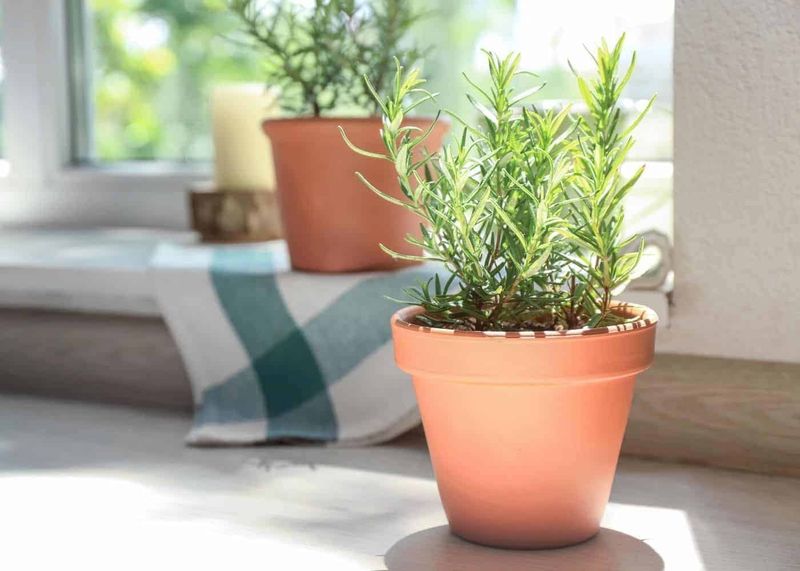
A rosemary in a pot lives by different rules than one in the ground. Roots in a container sit above the soil line, so cold reaches them from all sides.
Texas A&M AgriLife notes that container rosemary can be less cold-hardy than in-ground rosemary.
The state’s freeze damage guide adds that herbs such as rosemary growing in pots may need to be replaced after severe freezes. That is useful to know before you grow attached to a favorite planter.
One option is to bring a pot indoors. Texas A&M’s herb guide lists rosemary among herbs suited to pot culture indoors during winter.
Bringing pots inside is not required for every plant, and it does not guarantee survival. Indoor light and dry air bring their own challenges.
If you leave pots outside, you can group them near a house wall or move them to a sheltered spot when a cold night is forecast. Keep drainage holes clear so water never sits in the saucer.
When a Freeze Is Forecast, Respond to the Forecast
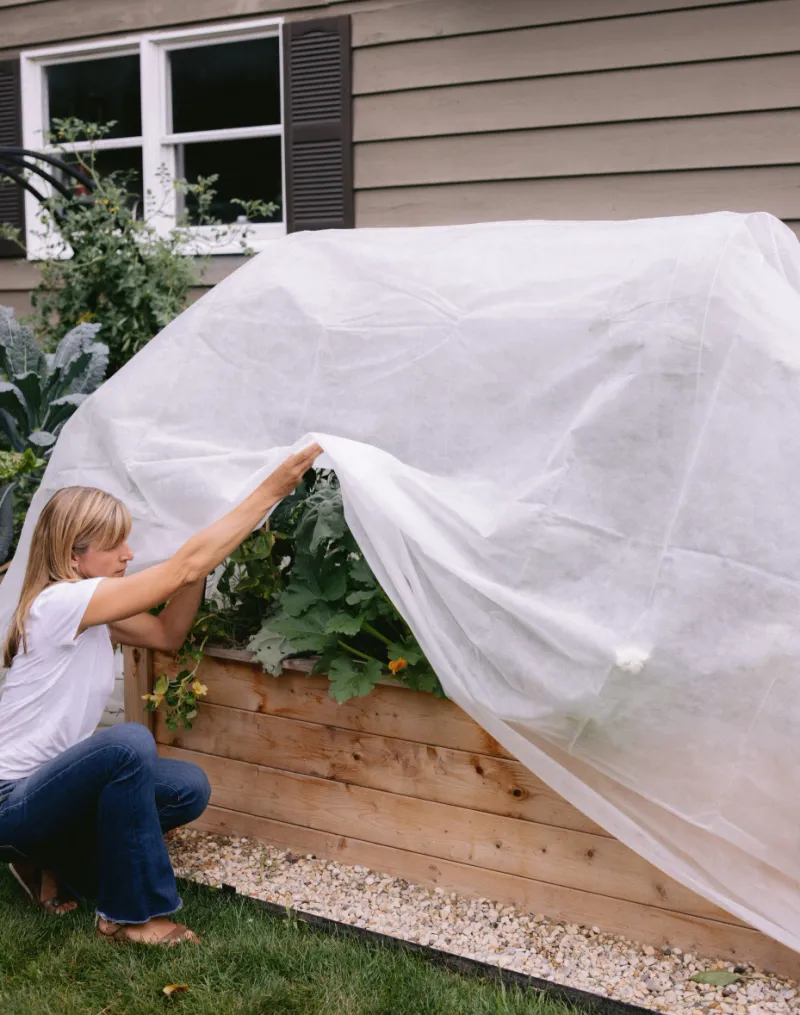
A freeze warning is the real trigger for action. Watch your local forecast, then act on the lows, the wind, and how long the cold is expected to last.
That matters more than the date on the calendar.
According to Texas A&M AgriLife, plants should not be drought-stressed going into a freeze. Cold-susceptible plants can be covered with frost cloth or blankets, and the covers should come off once temperatures rise above freezing.
Leaving them on in warm sun can trap heat and moisture.
Covers have limits. Texas A&M AgriLife’s frost and freeze protection guide says loose covers can help during a radiative frost, the calm, clear kind of cold night.
In a severe, windy advective freeze, lightweight covers alone offer little to no protection.
So a blanket is a helpful step, not a guarantee. Drape it loosely, secure it against wind, and keep expectations realistic for a hard, long freeze.
Local conditions count too. A low spot where cold air pools will fare worse than a sheltered corner.
Match your effort to how severe the forecast really is.
Brown Foliage Does Not Settle the Plant’s Fate
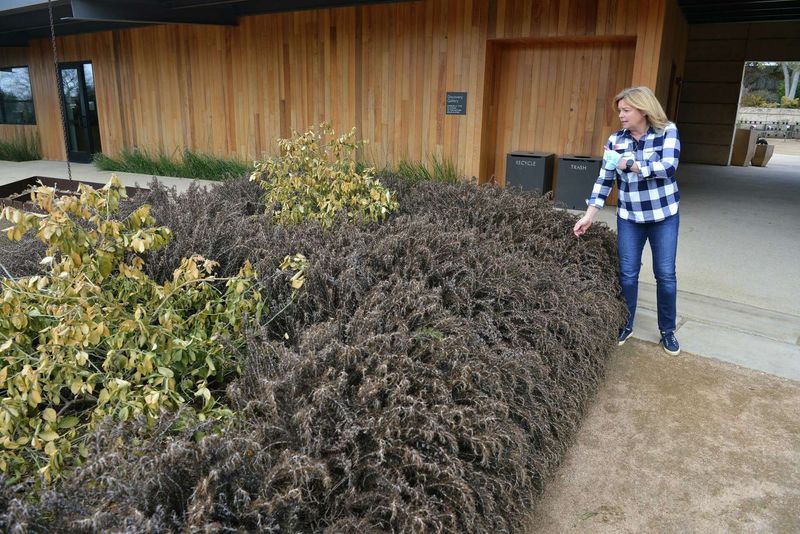
Brown rosemary after a cold snap is alarming, but it is not a verdict. Cold injury can show up as browned foliage or branch dieback, and wet soil can cause similar symptoms.
Both Ask Extension’s brown leaves advice and University of Wisconsin Extension treat these problems as possibilities to sort out, not proof the plant is gone.
The sources I reviewed also do not establish branch splitting as a typical or predictable outcome for Central Texas rosemary, so do not expect it.
Wait for spring growth before judging. Check drainage, then look for green at the base of stems.
Brown leaves only tell you something happened. Real freeze risk, not an October deadline, should guide what you do next.