
A cold snap can turn a healthy citrus tree into a worry overnight. Many Florida yard growers hear that there is a date to beat, but the real story depends on your tree, your location, and your forecast.
Knowing what to do and what to skip can save you effort, water, and heartache. Here is a practical plan built on UF/IFAS guidance.
Is November 1 Really the Deadline?
Plenty of gardeners hear that Florida citrus needs one special job done by November 1. The guidance we reviewed does not back that up.
Nothing from UF/IFAS sets a statewide cutoff date, and no single chore decides how a tree looks or fruits next spring.
What the guidance does describe is a set of conditions-based decisions. Those decisions follow how citrus grows through the seasons, how home trees are cared for, and what to do when a freeze is actually forecast.
UF/IFAS citrus cold protection guidance explains that cold injury depends on several factors at once, not on one missed deadline.
That is good news if you are reading this in December or even January. A Miami yard and a Gainesville yard face very different winters, so a single date makes little sense for both.
A tree in Homestead may sail through most winters, while one in North Florida may need attention several times.
For home landscapes, UF/IFAS advice on preparing the landscape for cold weather ties protection to the forecast. You watch the weather, then act when cold is truly on the way.
The rest of this article walks through the choices that can reduce avoidable cold risk: skipping late fertilizer, avoiding drought stress, covering trees at the right time, and waiting to judge damage. None of these promises a damage-free winter or a particular spring result.
They simply put the odds in your favor.
Why Late-Fall Fertilizer Can Backfire
It feels logical to feed a tree so it is stronger before cold arrives. With citrus, that instinct can work against you.
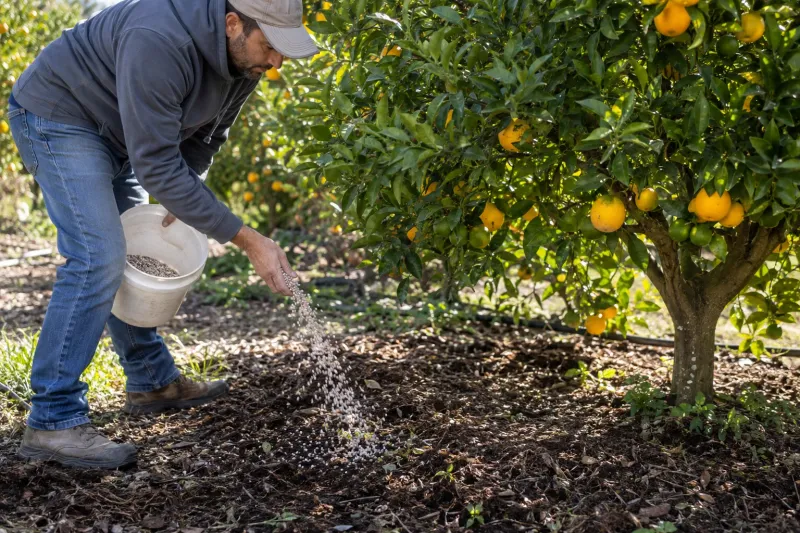
Fertilizer pushes new growth, and soft new shoots are the parts most easily hurt by cold.
UF/IFAS landscape guidance advises against fertilizing cold-sensitive plants in late fall or winter for exactly this reason. So fertilizer is not a freeze-prep treatment.
For yard trees, timing follows the growing season. The UF/IFAS home lemon growing guide gives March through September as the general window for granular fertilizer.
That is a helpful reference point, not a rule for every citrus type in every yard.
You may also come across commercial grove advice that includes fall applications. The UF/IFAS citrus nutrition guide describes crop- and variety-specific split timing, including some late-September and October applications.
Those schedules are built for large operations with soil testing and set production goals.
Copying a grove calendar onto a backyard grapefruit is not a good idea. If you missed a feeding, the tree will be fine waiting for spring.
Skipping fertilizer now is one of the easiest ways to avoid inviting tender growth right before winter.
Keep the Tree Hydrated Without Overwatering
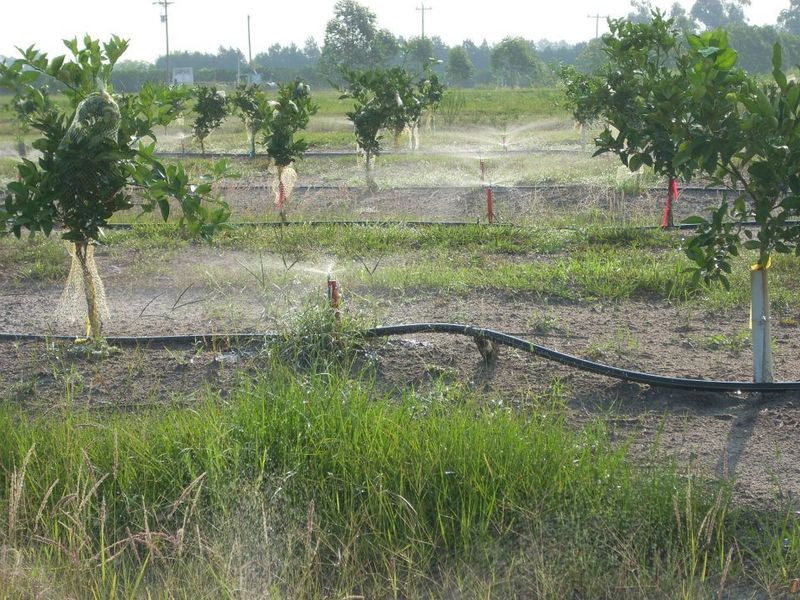
Dry roots and cold weather make a poor pair. UF/IFAS says drought-stressed citrus trees are more susceptible to freeze injury, so letting a tree wilt through a dry spell is a risk worth avoiding.
That does not mean soaking the yard all winter. The UF/IFAS home lemon guide recommends watering during prolonged dry periods and less during winter, when growth slows and the soil dries slowly.
Florida’s sandy soil drains fast, so a dry stretch can sneak up on you. Push a finger or trowel a few inches down near the drip line.
If it is dry well below the surface after weeks without rain, a deep drink makes sense. If it is damp, leave the hose alone.
Freeze forecasts are a separate situation. The UF/IFAS cold protection guide notes that increasing soil moisture during the day before a freeze can help the soil store heat.
Think of that as a one-time, forecast-driven step, not a new weekly routine.
Skip soggy conditions, too. Waterlogged roots cause their own trouble.
A moist but not saturated root zone is the goal, and no watering plan can promise a tree will escape cold injury.
When a Freeze Is Forecast, Cover What You Can
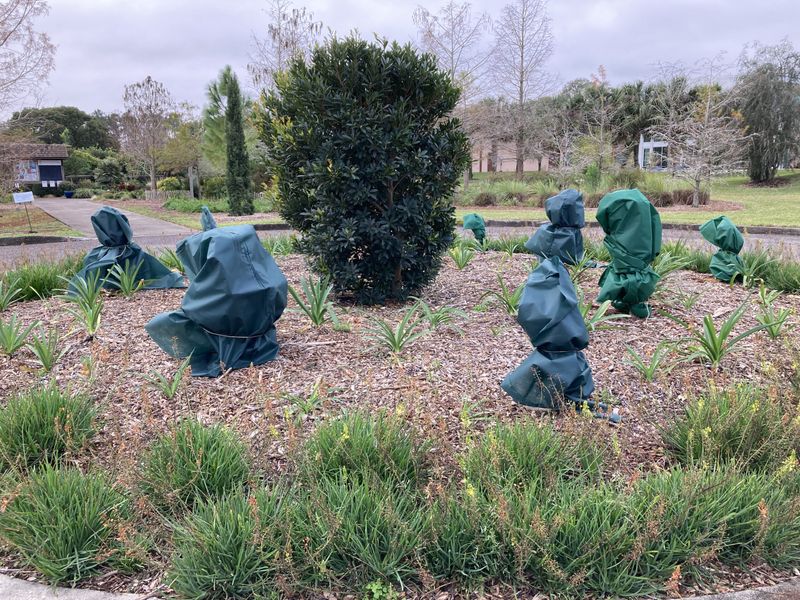
Cold-night protection works best when it starts with a real forecast. Watch your local National Weather Service outlook, and save your effort for nights when freezing temperatures are actually expected at your address.
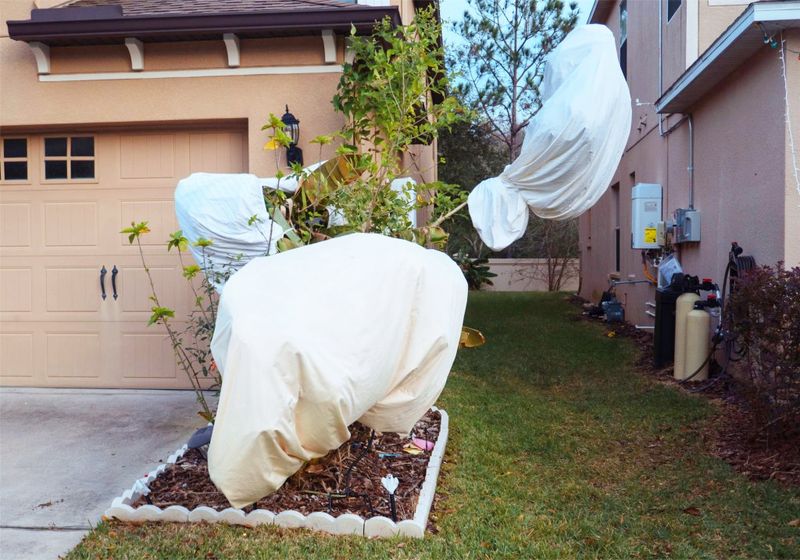
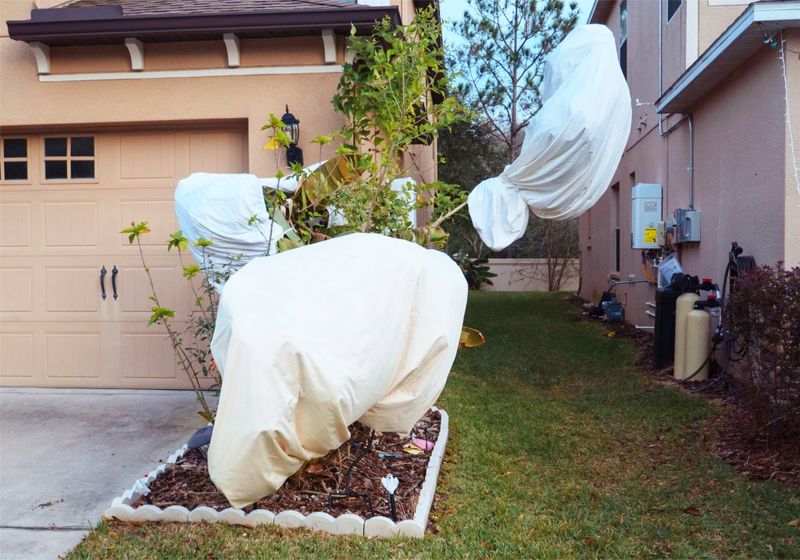
For smaller trees, UF/IFAS advises covering plants so the cover reaches the ground. That lets it trap warmth rising from the soil.
A cover that stops at the canopy edge lets that warmth escape.
Use cloth, a frost blanket, or a sheet. Drape it over a frame or stakes if you can, so the fabric is not crushed against the leaves.
Plastic can work in a pinch, but keep it off foliage when possible.
Timing the removal matters too. Take the cover off once temperatures rise above freezing the next day, so the tree does not overheat and can still get sunlight.
Large trees are tougher to cover. In that case, UF/IFAS says the trunk can be wrapped with several layers of cloth or newspaper.
That helps shield the lower trunk, though the canopy remains exposed.
Covers and wraps reduce risk. They do not guarantee a tree will avoid injury, especially in a hard or long freeze.
Tie each step to the forecast, not the calendar.
Why a Household Sprinkler Is Not a Safe Shortcut
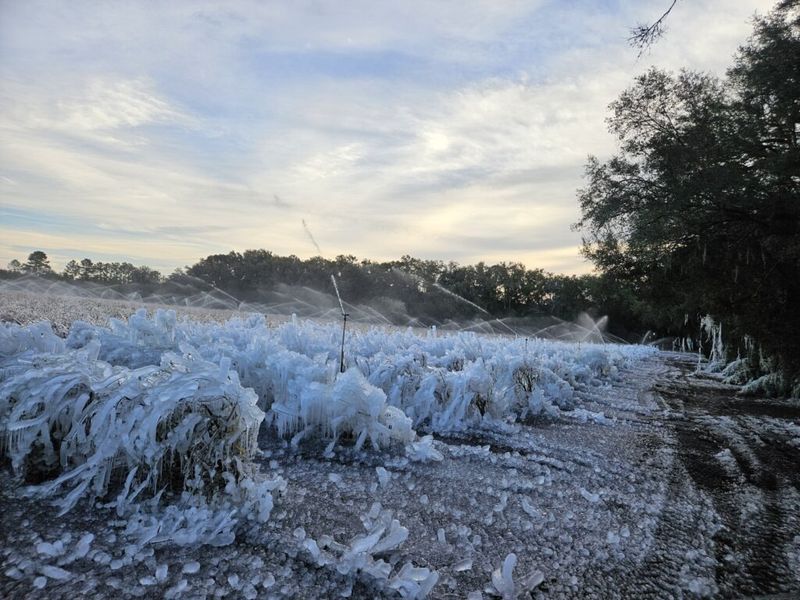
Stories of growers saving crops with running water are true, but the setup behind them is not a hose and a lawn sprinkler. Commercial freeze protection uses overhead irrigation designed for the job.
UF/IFAS says overhead irrigation protects only when the system is designed for that purpose. It must also run continuously from before the freeze until several hours after temperatures climb back up.
A typical home sprinkler rarely meets those conditions. Coverage is uneven, the flow may not keep up, and a pause in the water can leave a tree worse off than before.
Misapplied irrigation can waste water and add heavy, damaging ice to branches.
A UF/IFAS Extension Nassau County post, answering a question about running water over an orange tree, takes the same cautious view for home growers.
Picture a limb loaded with a thick ice sleeve at sunrise. The weight can snap branches, and the ice does not automatically keep tissue safe.
If you want a better plan, rely on covers, trunk wraps, and a hydrated root zone. Those steps are simpler and far less likely to backfire in a backyard.
Young Trees and Tender Growth Need Closer Attention
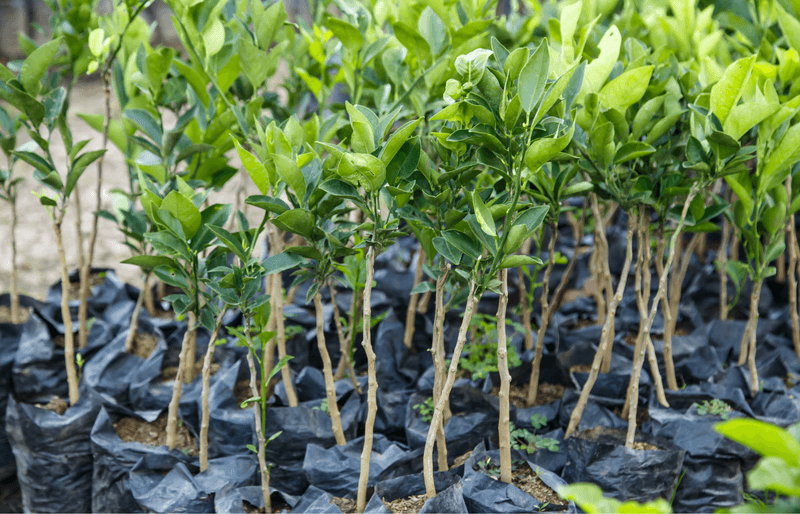
Not every citrus tree faces the same winter. Young trees are more susceptible to freezing than mature trees, according to the UF/IFAS citrus cold protection guide, and tender new growth is the first thing cold tends to hurt.
Think about which part you are protecting. It might be fruit, young shoots, the trunk, or the graft on a young grafted tree.
As the UC Statewide IPM Program describes, injury can show up differently on fruit, leaves, and wood.
Location matters a lot. UF/IFAS notes that places farther south are generally warmer, and the UF/IFAS cold-hardy citrus page particularly suggests cold-hardy varieties or movable containers for North Florida.
Variety counts too: mandarins and tangerines are generally more cold-tolerant than oranges, which are generally more cold-tolerant than grapefruit.
You may see one temperature quoted as the line where citrus gets hurt. Real thresholds shift with variety, rootstock, acclimation, location, and how long the cold lasts.
The UF/IFAS FAWN citrus leaf freezing tool shows how that critical temperature can vary.
A temperature that damages fruit or leaves is not necessarily one that kills a mature tree. For a new tree or a fresh flush, though, extra care on cold nights is a sensible habit.
After a Freeze, Wait Before Pruning
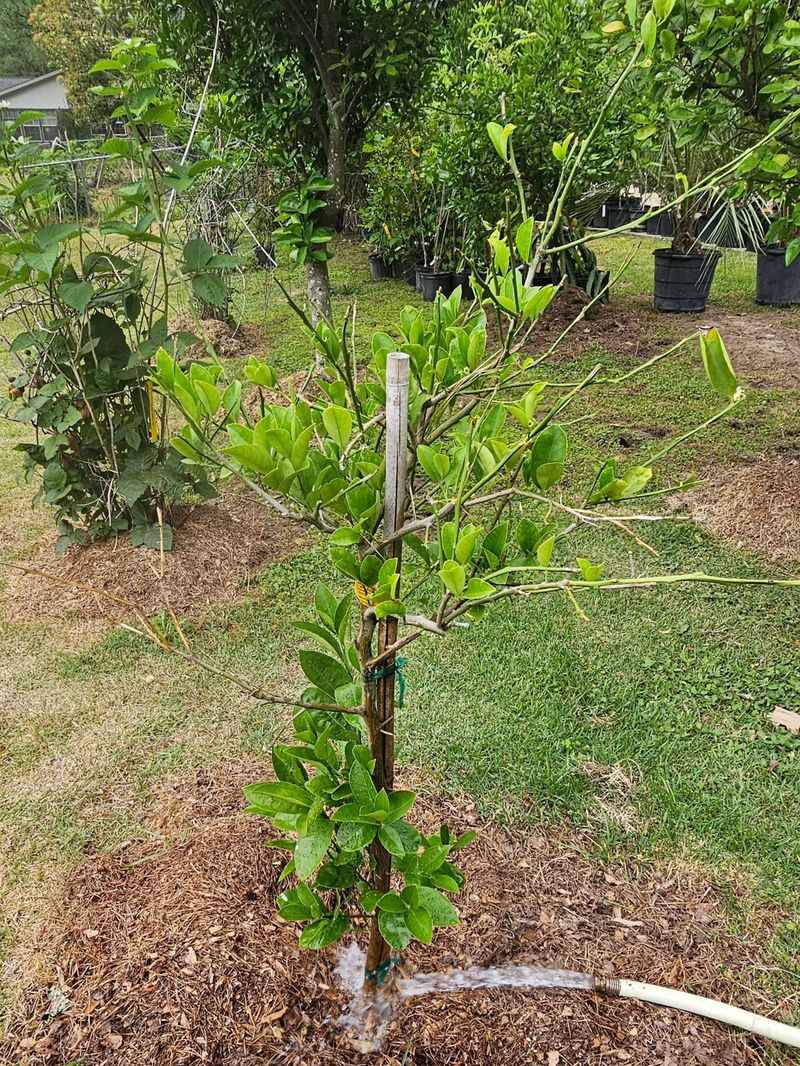
The morning after a hard freeze can look grim. Leaves curl, turn brown, or drop, and it is tempting to grab the loppers.
Resist that urge, because the tree’s final condition cannot be judged right away.
UF/IFAS freeze-recovery guidance, found in its freeze damage symptoms and recovery publication, recommends waiting to assess damage. It also says to delay pruning until new growth has developed.
New growth shows you where living tissue remains. Cut too soon and you may remove wood that would have recovered, or expose inner branches to the next cold night.
Waiting lets you prune back to healthy buds with confidence.
In the meantime, keep an eye on soil moisture and avoid heavy feeding. Damage to fruit or leaves does not automatically mean a mature tree will die, since injury depends on many factors, as the UF/IFAS cold protection guide explains.
Patience can be hard, especially if the tree sits by your front door. Be ready for a slow recovery over spring, with some trees bouncing back faster than others.
Winter in Florida rewards the grower who watches the forecast, not the calendar.