
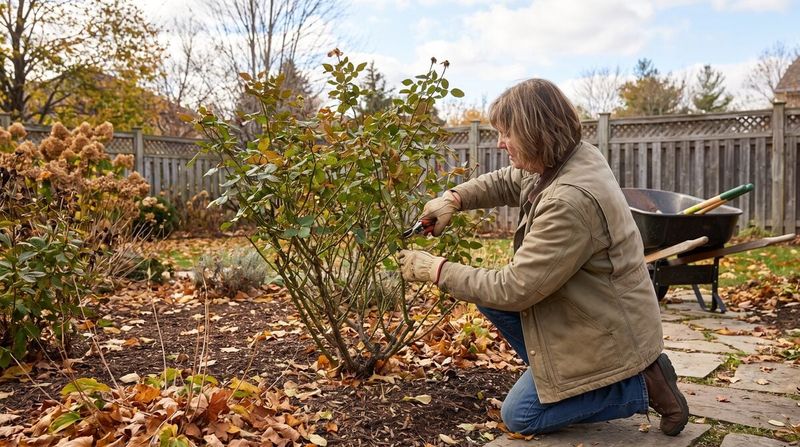
Fall in Texas feels like a signal to tidy up the garden, and roses often get the first round of clippers. But the cuts you make now, and the ones you skip, can affect how your plants get through winter.
Late-fall care can support healthy roses, though it cannot promise a particular spring show. Here is what actually helps, what can backfire, and how to match your plan to your region and rose type.
Late fall is not Texas’s default pruning window
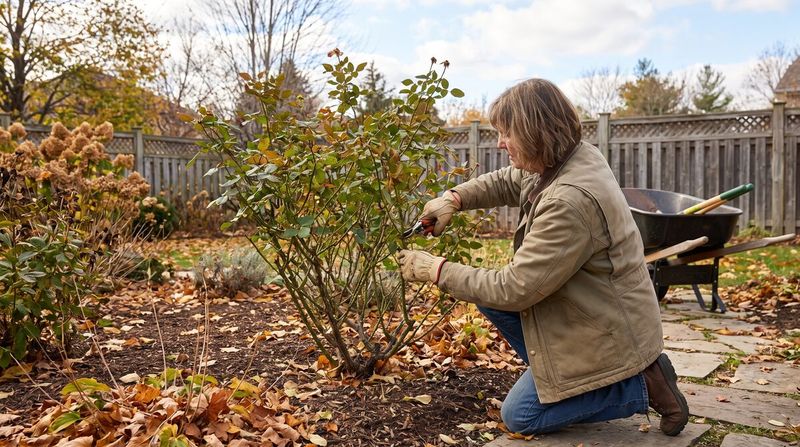
Many gardeners hear that fall cleanup sets up spring flowers. It is a tempting idea, but no single late-fall chore decides how abundantly a Texas rose blooms.
Bloom depends on the type of rose, your local weather, any winter damage, and whether pruning was timed well.
For major pruning, Texas A&M guidance points somewhere else. Texas A&M’s pruning guidance recommends scheduling it about three to four weeks before the average last killing frost in your area.
That puts the job in late winter or near the start of spring growth, not in November.
Timing matters because a heavy cut tells a plant to push out new shoots. If you prune too early, that tender growth can be exposed to a later freeze.
A hard frost in February can undo the work of a warm spell in December.
Treat the three-to-four-week rule as a guide, not a single date for the whole state. A gardener in the Panhandle and one in the Rio Grande Valley will land on very different weeks.
Look up your local average last frost date, count back, and mark that window on your calendar.
Until then, leave healthy canes alone. They help shelter the plant through winter, and you keep your options open if a cold snap arrives.
Why Texas pruning dates change by region
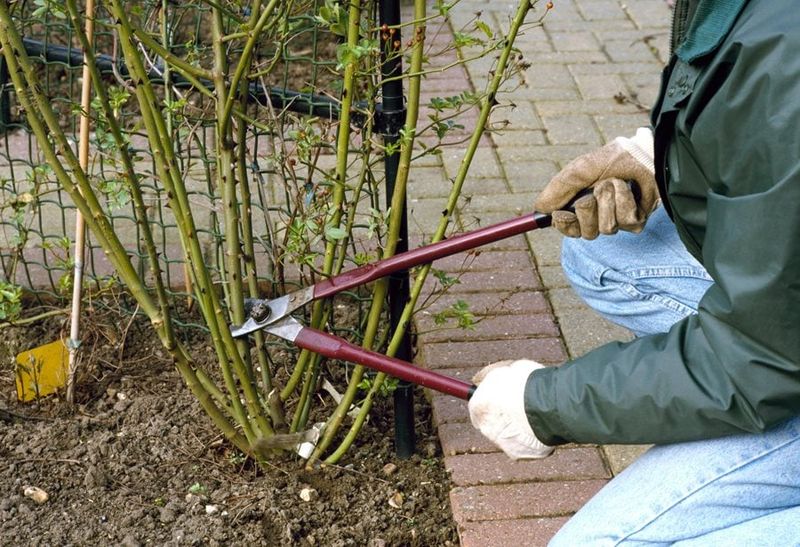
Texas is big enough that one pruning calendar cannot fit everyone. Texas A&M notes that timing differs among North, Central, and South Texas.
Local conditions shift the right week, sometimes by more than a month.
In Central Texas, Texas A&M AgriLife guidance for Travis County advises pruning most roses around Valentine’s Day if they are still dormant. The same source notes that warm, protected sites may keep roses from dropping all their leaves.
A rose next to a south-facing wall may still be growing when a rose in an open yard has gone fully dormant.
East Texas offers a different example. Smith County Master Gardeners recommend a fall trim for some roses, around Labor Day or soon after.
That is an early-fall task for certain roses in that area, not a late-fall instruction for everyone.
Do not swap these examples between regions. Valentine’s Day is a Central Texas rule of thumb, and the Labor Day trim is a Smith County recommendation for some plants.
Neither one replaces the statewide frost-based guide from Texas A&M’s pruning page.
Your best next step is to call your county Extension office or local Master Gardeners and ask what they advise for your town.
Choose pruning timing by rose type, too
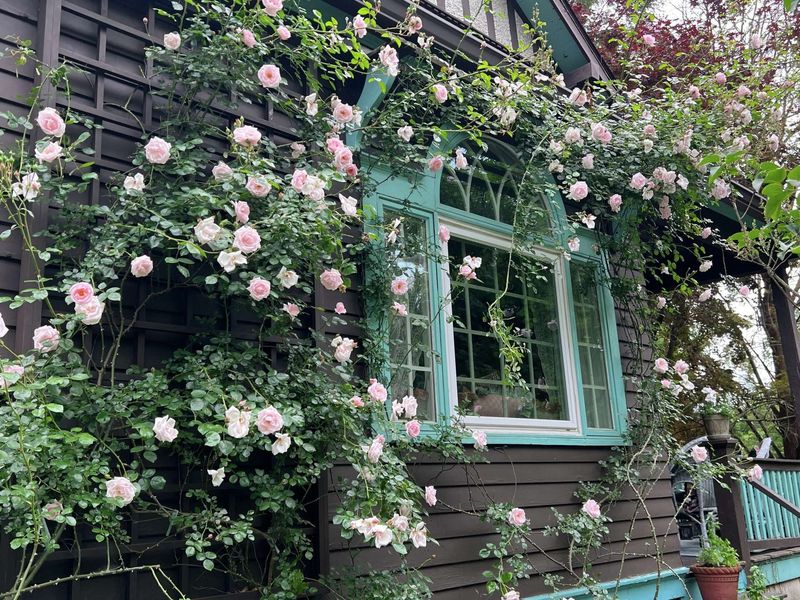
Before you pick up the pruners, figure out what you are growing. Repeat-blooming shrub roses, hybrid teas, floribundas, climbers, and old once-blooming antique roses do not all follow the same rules.
A cut that suits one can cost another its flowers.
Climbers are the clearest example. Texas A&M advises waiting until after they flower, as described in its guidance for Travis County roses.
Cutting them in fall or winter removes wood that is carrying next spring’s buds.
Once-blooming roses and ramblers need the same caution. They flower on old wood, so a fall trim can remove next spring’s flowers.
The Smith County Master Gardeners article specifically says not to fall-prune these types.
Repeat bloomers are more forgiving, and some can take a trim at the right local time. That does not mean healthy canes should never be pruned.
It means healthy-cane pruning belongs on a schedule that fits the rose and your region.
A simple habit helps. Write the name or type on a plant tag or in a phone note, along with when it blooms.
If you inherited a rose and do not know what it is, watch it through one full year before making big cuts.
Keep roots steady with mulch and need-based water
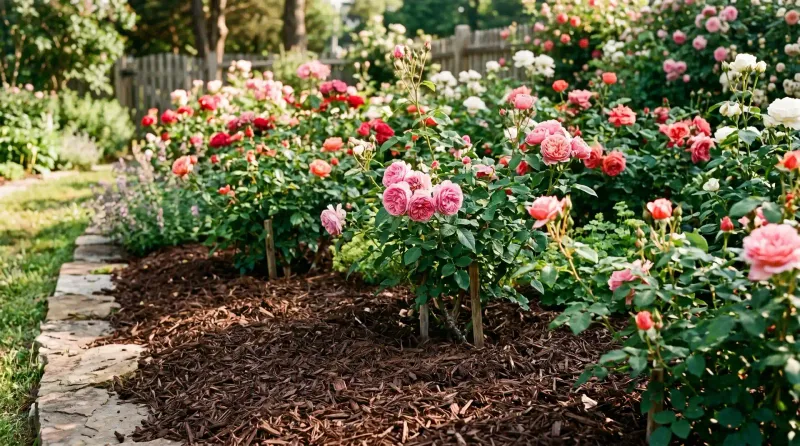
Roots keep working through the cooler months, and two simple habits help them. One is mulch.
The other is watering only when the soil asks for it.
For Earth-Kind roses, Texas A&M growing tips recommend about three inches of organic mulch year-round. It helps conserve water and moderate soil temperature.
Keep it a little back from the base of the canes, and top it up if it has thinned.
The same guide suggests watering thoroughly when the root zone is dry about an inch down. Push a finger or trowel into the soil to check.
If it is damp, skip the hose.
Winter watering follows the same logic. Dallas County Master Gardeners advise watering landscape plants as needed, not on autopilot, and warn that excess water can promote disease.
In poorly drained soil, frequent watering is a poor fit because the roots can sit wet.
These are plant-care habits, not bloom boosters. They keep roses from stressing, but they cannot promise extra flowers.
Fertilizer is similar, since timing depends on soil and region, so there is no blanket fall feeding rule to follow.
Separate cane cleanup from routine pruning
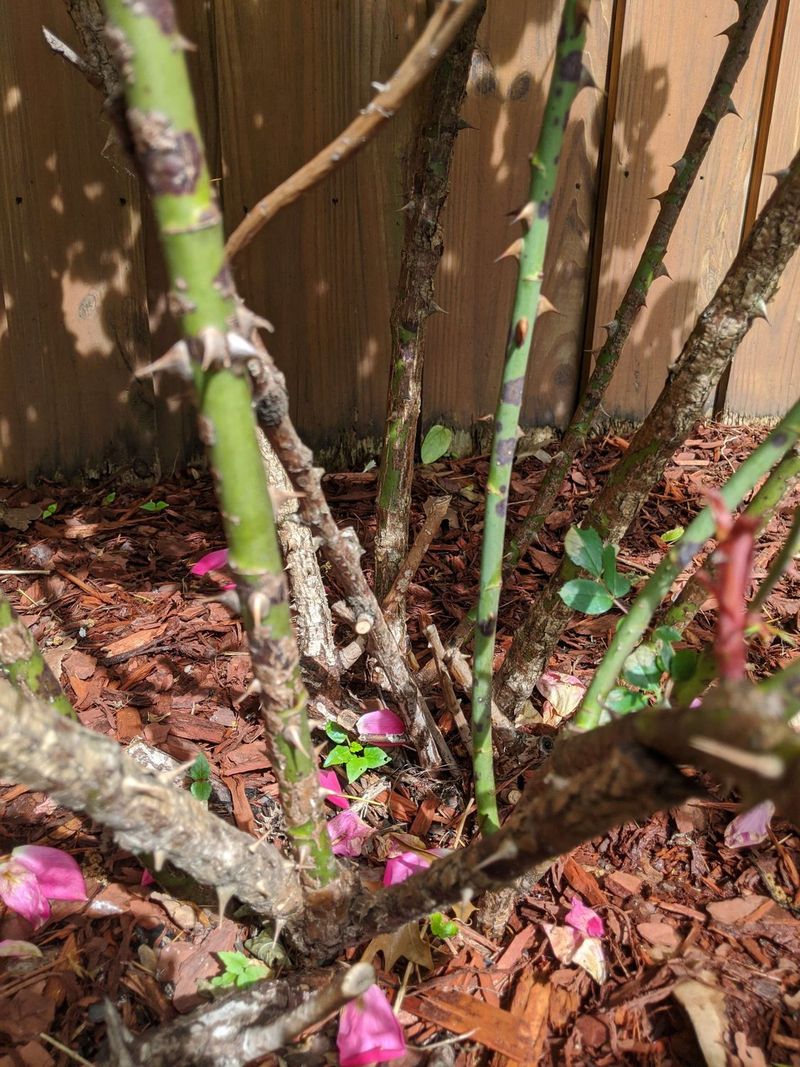
Cleanup and pruning are two different jobs. Late-fall cleanup is about removing what is already a problem: dead, damaged, or diseased canes.
A Texas A&M rose pruning handout lists these first in any pruning session.
Look for canes that are brown and brittle, broken by wind, or marked with spots or cankers. Cut back to healthy tissue, and clean your pruners between plants if disease is present.
Pick up fallen diseased leaves too.
Healthy canes are a separate question. They are not off-limits, but their pruning should be timed to your rose type and local guidance, as covered earlier.
When that time comes, the handout suggests cuts that encourage outward growth and good air circulation.
Winter hardiness adds another variable. Texas A&M freeze damage guidance notes that some rose groups are hardier than others and that Texas roses can suffer different degrees of freeze injury.
So skip the one-size-fits-all winter wrap. A tender rose in a cold pocket may need more attention than a tough shrub rose.
After a freeze, watch how your own plants respond before deciding what to cut, since there is no fixed schedule that fits every rose.
Support plant health without promising a spring display
A good late-fall plan is short. Match pruning to your region and rose type, skip unnecessary cuts, and keep mulch and soil moisture in line with conditions.
For timing, Texas A&M’s pruning guidance is the anchor, and its Earth-Kind growing tips cover mulch and watering.
These steps keep plants healthy, but they cannot guarantee a particular spring display. Roses answer to weather as much as to gardeners.
Do the steady work, then let the season decide the rest.