
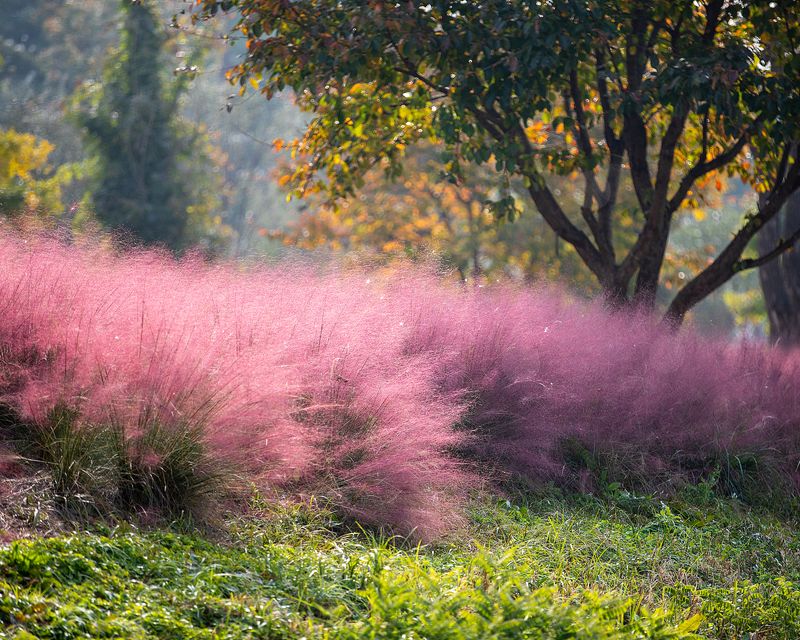
A bright grass along the driveway can make a plain curb look finished. But many North Carolina gardeners find themselves buying the same plant again each spring.
A native grass called pink muhly may be worth a look if you want a clump that returns and puts on a pink-purple show in fall.
Purple fountain grass is usually an annual in North Carolina
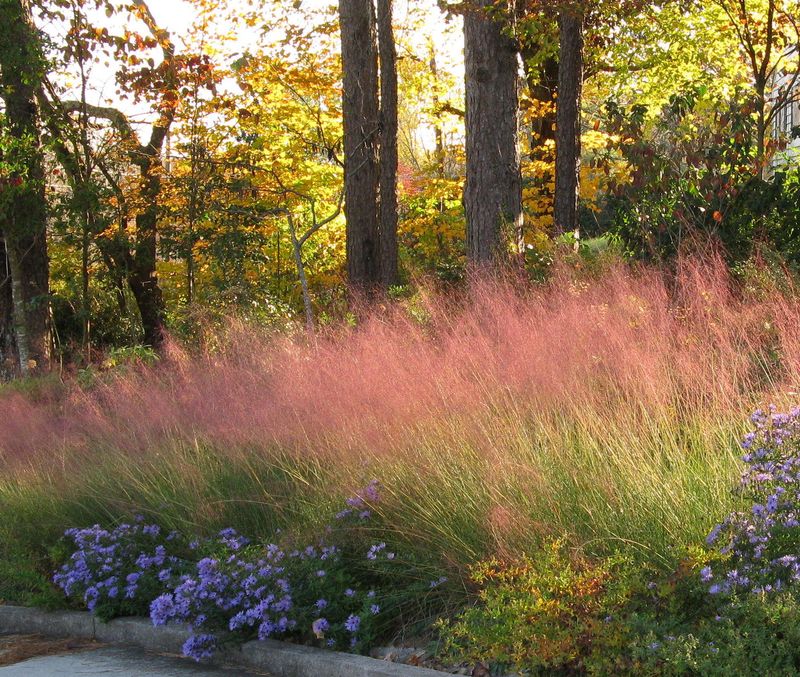
Plenty of gardeners assume purple fountain grass will vanish the moment frost arrives. The real picture is a bit more nuanced.
NC State Extension’s Plant Toolbox lists purple fountain grass as normally grown as an annual in North Carolina and places it in USDA zones 9a to 11b. Most of our state sits in colder zones than that.
That does not mean every plant dies at the first cold snap. UF/IFAS Extension describes the ‘Rubrum’ type as perennial in much of Florida but annual in cooler climates, with possible regrowth from the roots in north Florida.
Florida results cannot predict what will happen at your house, though. Frost timing, winter lows, and the warmth of a paved edge all play a part, so a universal first-frost claim is too strong.
The practical point is simple. If you plant it along a North Carolina driveway, you should expect to treat it as a seasonal plant and budget for replacing it.
Some homeowners are happy with that routine. Others would rather plant once and have the clump return, which is where a native perennial grass comes in.
The rest of this article looks at one such option, and at how to tell whether your driveway strip can host it.
Pink muhly is a native perennial option
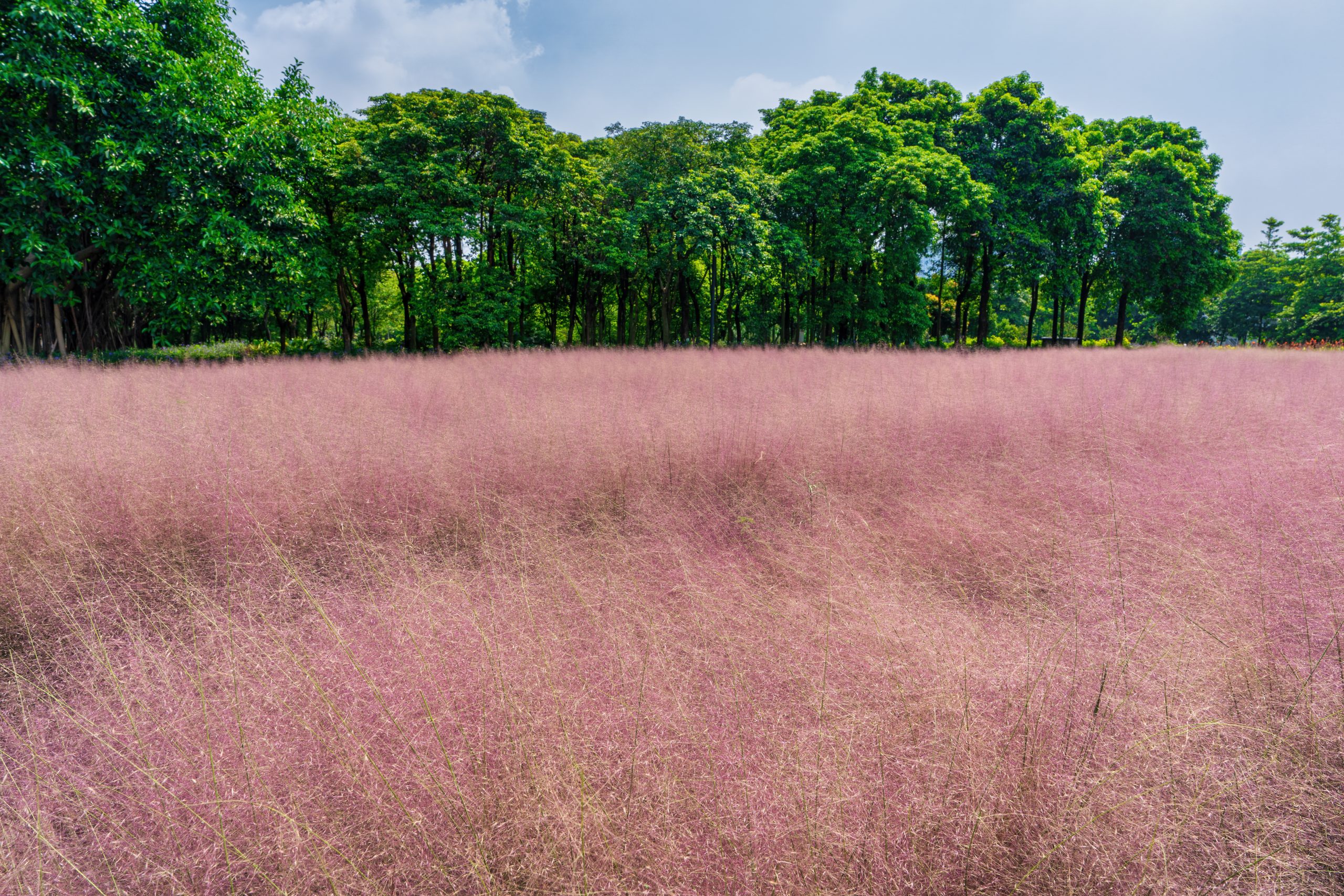
Muhlenbergia capillaris, known as pink muhly grass, is one perennial grass worth considering for a sunny driveway edge. NC State Extension lists it as a long-lived native perennial.
A second NC State listing notes it grows across the Coastal Plain, Piedmont, and mountains.
It is a clump-forming grass that returns each year when its needs are met. It is not a guaranteed match for every yard, and it is not the only reasonable perennial grass.
Think of it as a strong candidate to check against your own site.
Names can get tangled at the garden center. NC State’s Plant Toolbox includes Purple Muhly among the common names for this plant.
A UGA Extension guide, however, uses Purple Muhly for a different species, Muhlenbergia sericea, and calls M. capillaris Pink Muhly.
So read the plant tag closely. Look for Muhlenbergia capillaris, and do not assume every pot labeled purple muhly holds the same species.
Once you have the right plant in mind, the next question is whether your driveway strip suits it.
Check the driveway strip for sun, drainage, and room

Before you buy anything, walk out to the strip with a tape measure. NC State Extension gives pink muhly a mature size of about 4 feet tall and 3 feet wide.
It does best in full sun and well-drained soil.
The same listing says it tolerates heat, drought, humidity, poor soil, and salt. Those traits make it a possibility for some driveway edges, where reflected heat and road salt can be tough on plants.
They are not a promise that it will work in every spot.
Run through a few checks. Does the strip get sun for most of the day?
After a heavy rain, does water drain away or sit in puddles? Is there about 3 feet of width, so the clump will not lean into the pavement or lawn?
Then stand where a driver backs out and look at the spot. A plant that reaches 4 feet could block the view of a mailbox, a sidewalk, or oncoming traffic.
A very narrow strip or a blind corner may call for something shorter.
Hardiness zones can help, too, but only as a rough guide. The USDA explains that zones reflect average annual extreme minimum temperatures, and local microclimates can differ.
Your own site matters more than the map.
Pink-purple plumes are a fall feature
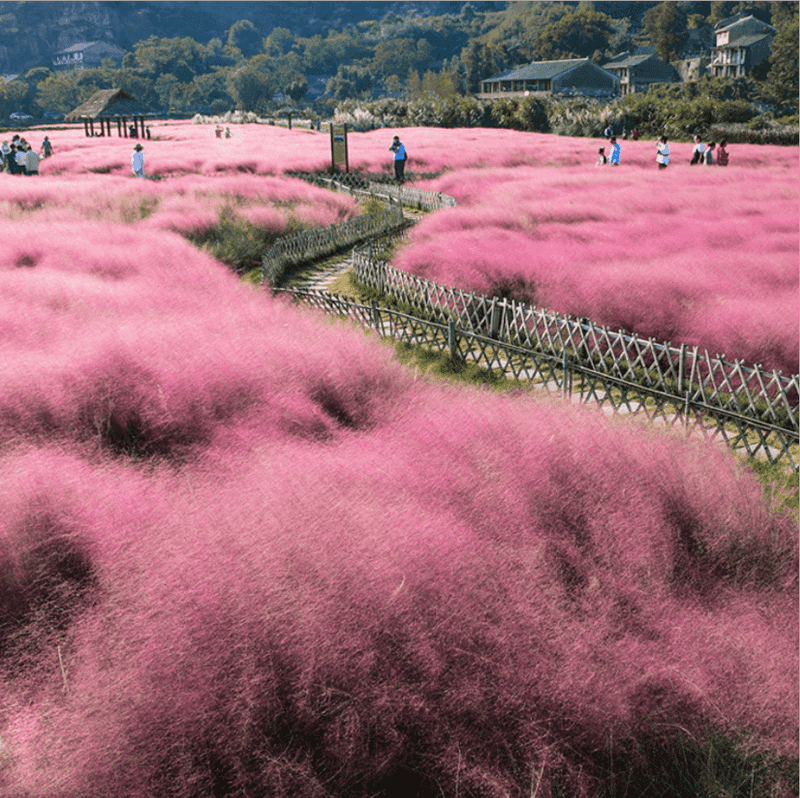
Color is where expectations need some care. Pink muhly’s show comes in fall, when it sends up airy flower plumes.
NC State Extension describes the flowers as showy and pink to purplish.
Through spring and summer, the clump is mostly a fine-textured green mound. The color arrives later in the season.
Exact timing and fullness can vary from year to year, so it is smart not to plan around a specific bloom date or an identical display every autumn.
After the flowers fade, the seed plumes turn tan and give the clump winter interest. A driveway edge that looked rosy in October may look more like soft straw by January.
That change is normal and part of the plant’s yearly rhythm.
Here is the difference to keep in mind. Comes back every year describes the perennial clump itself, which returns under suitable conditions.
It does not mean the plant stays purple all year, and its foliage is not purple at all.
If you want a color that lasts from spring through frost, you may need to pair it with other plants. If you enjoy a grass that changes with the seasons, pink muhly fits that style well.
Water during establishment and cut back in late winter
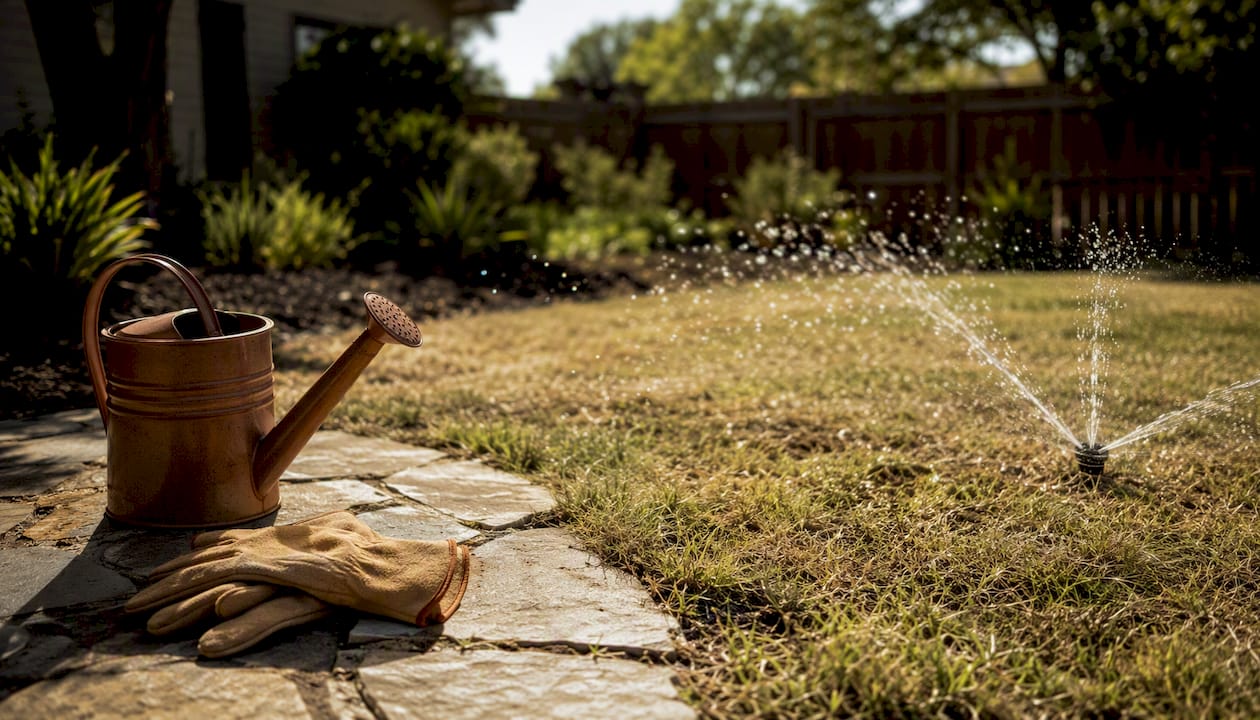
Low-maintenance still starts with a little attention. NC State Extension offers general guidance for newly planted ornamental grasses: give at least one inch of supplemental water during the first few weeks.
Roots need that time to settle into the soil.
A simple habit helps. Set a rain gauge or an empty tuna can near the plant, and measure what falls from rain or your hose.
If the week comes up short, water to make up the difference. This is general guidance, not a guarantee, so watch how your own plant responds.
Once a year, the clump needs a haircut. The same Extension source advises cutting ornamental grasses back to about 6 to 8 inches in late winter, which supports fresh spring growth.
Doing it before new shoots emerge keeps you from snipping them off.
A hedge trimmer works well for a clump this size. Gather the old stems with a bungee cord first, then cut through the bundle.
Wear gloves and long sleeves, since dry grass blades can be scratchy.
That is about all the yearly work involved: some water at the start, and one trim before spring.
Switchgrass has its own size and growth traits
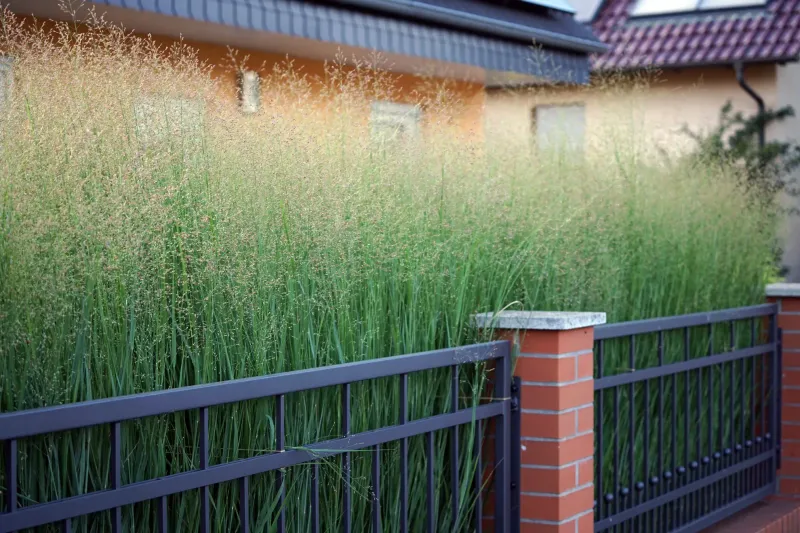
Switchgrass, Panicum virgatum, is another native perennial grass, and it deserves to be judged on its own traits. NC State Extension lists it at 3 to 4 feet tall.
Its flowering plumes can reach as high as 7 feet.
The same listing notes that switchgrass can spread slowly by rhizomes, which are underground stems. Over time, a planting may widen rather than stay in one tidy clump.
That is simply how this grass grows.
These facts help you picture where it might work. Consider how much height your sightlines can handle when the plumes are up.
Think about how much space you can give it to spread gradually, and whether you are comfortable with some change in the planting’s footprint from year to year.
Some driveway landscapes have the room for that. A wide bed set back from the pavement is a very different situation from a tight curbside strip.
Neither plant is automatically the better pick. Compare the documented size and growth habit of each against your own space, and let the site decide.
Choose pink muhly only if the site fits
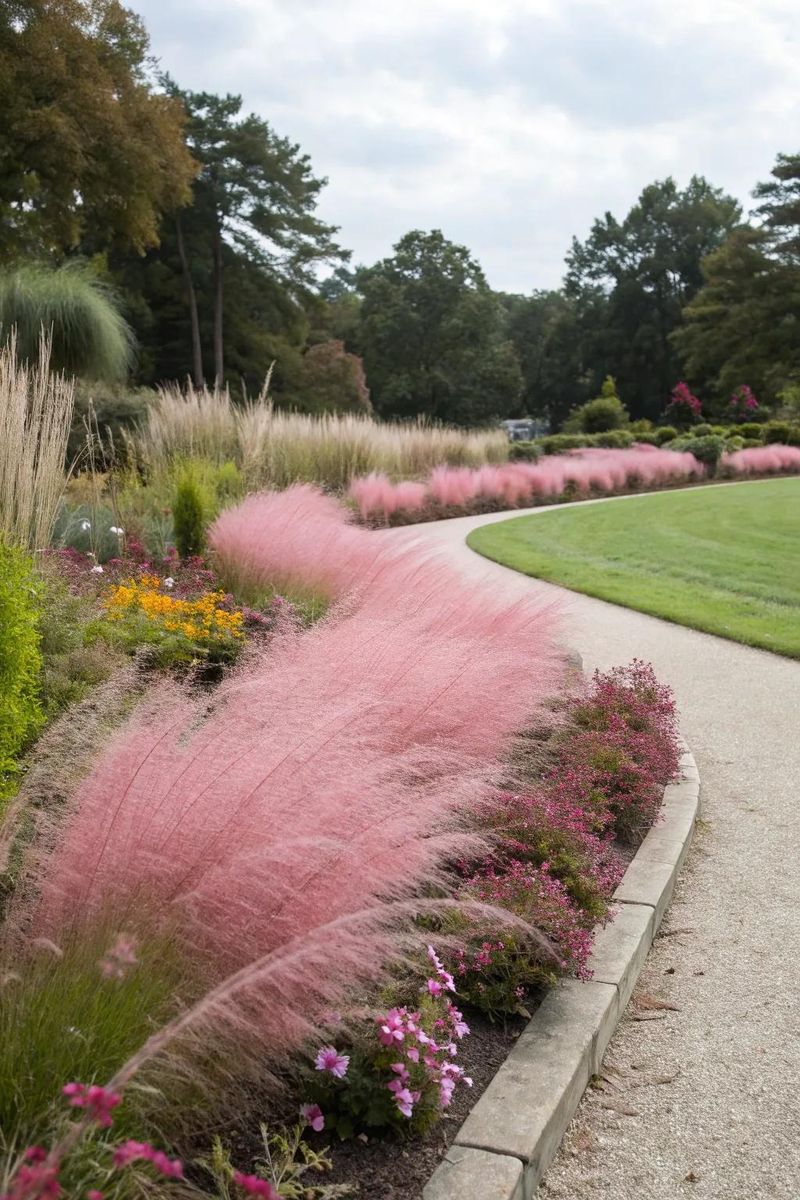
If you want a returning native clump with pink-purple plumes in fall, look for Muhlenbergia capillaris at the nursery. Then go back to the strip and confirm it has enough sun, drainage, and room.
The clump should return under suitable conditions, while its look shifts from green to pink to tan through the year.
A plant that fits its spot tends to be the one you stop thinking about. Pick the place first, and the grass will have a fair shot at showing off each autumn.