
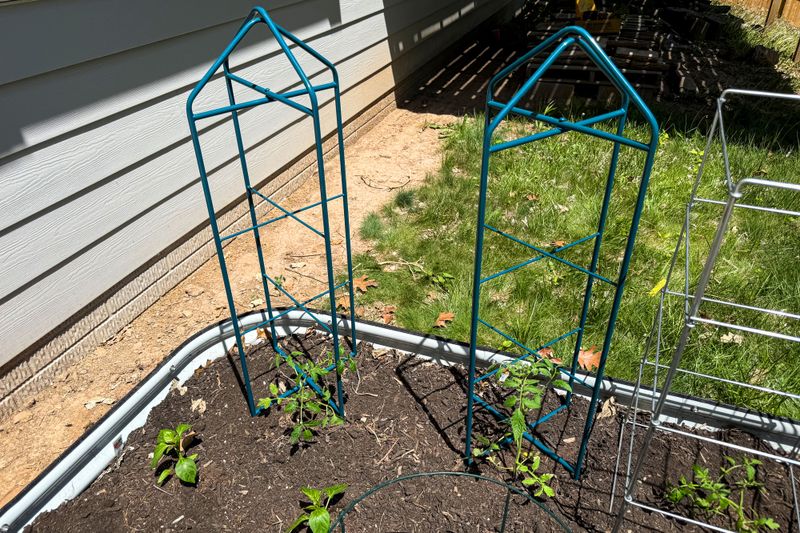
Those tomato cages and stakes leaning against the shed have been through a long season of leaves, soil, and humid weather. Before you tuck them away, a little cleanup is a sensible way to start fresh.
Some gardeners also use a bleach rinse, but whether you need one depends on how the supports were used and stored. Here is what experts actually say, and how to do it safely in a warm Southern garden.
Early blight has more established places to overwinter than a tomato cage
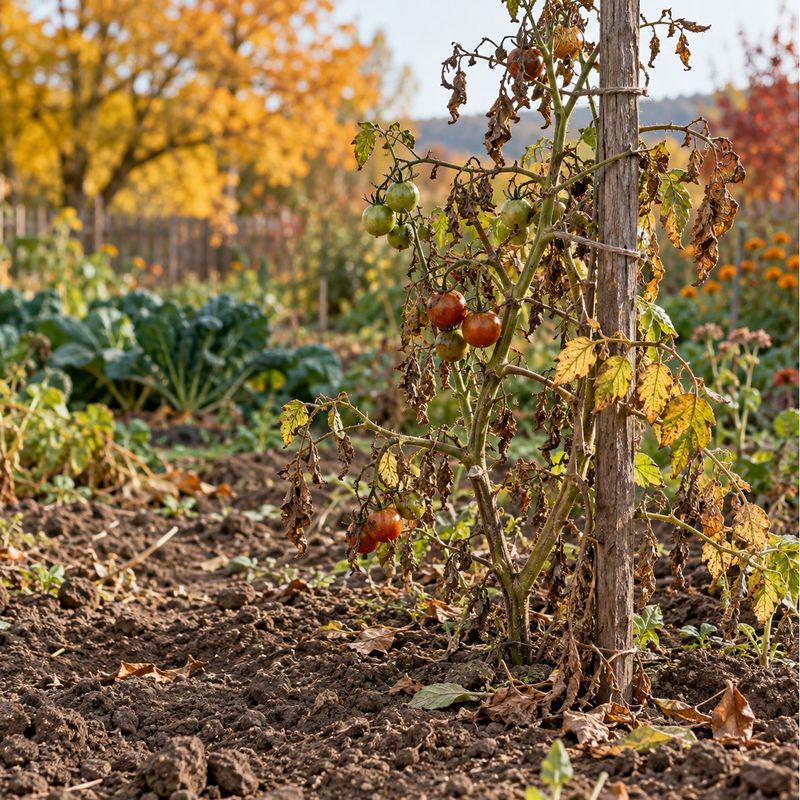
Early blight is a fungal disease that causes dark, ringed spots on tomato leaves. According to Colorado State University Extension, the fungus mainly carries over between crops in infected plant debris, soil, and nightshade-family weeds, and sometimes on seed.
Tomato cages and stakes are not the headline suspect. One extension source does advise treating reused supports as possibly contaminated, but that is a caution, not proof that supports are a major source of disease.
Other leaf diseases get mixed into the conversation, which adds to the confusion. A UMass Extension fact sheet lists debris, soil, weeds, and seed as the places early blight survives.
It separately says Septoria leaf spot, a different fungus, can survive on stakes and cages. That detail belongs to Septoria, not early blight.
So think of cleaning your supports as a reasonable precaution. It is worth doing, but it is not a hidden cause being fixed, and it cannot promise a disease-free crop next year.
When should you disinfect a reused support?
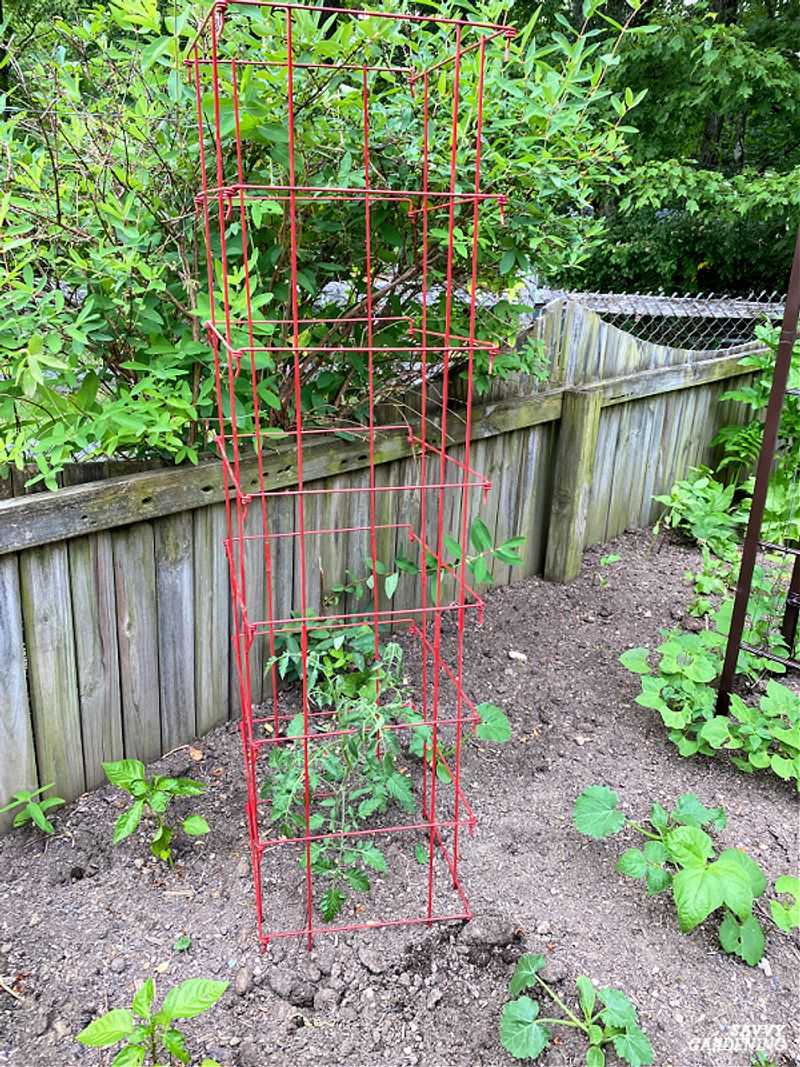
Basic cleaning is a good habit for every cage and stake. Going further with a disinfectant makes the most sense for supports that held plants with disease, especially if you plan to store them in a garage, shed, or other spot sheltered from the weather.
Extension advice is not identical, so it helps to know the difference. West Virginia University Extension advises treating reused supports as potentially contaminated with early blight.
K-State Extension puts more weight on supports used by diseased plants and on sheltered storage. It also considers outdoor weathering a form of sanitizing for cages.
Here is a practical way to sort your pile. Supports from healthy plants that sat outside in sun and rain probably only need a wash.
Supports from plants with spotted leaves, or ones you will keep indoors, are the better candidates for disinfecting. Bleach is not required for every cage or stake.
Wash off soil and plant debris first
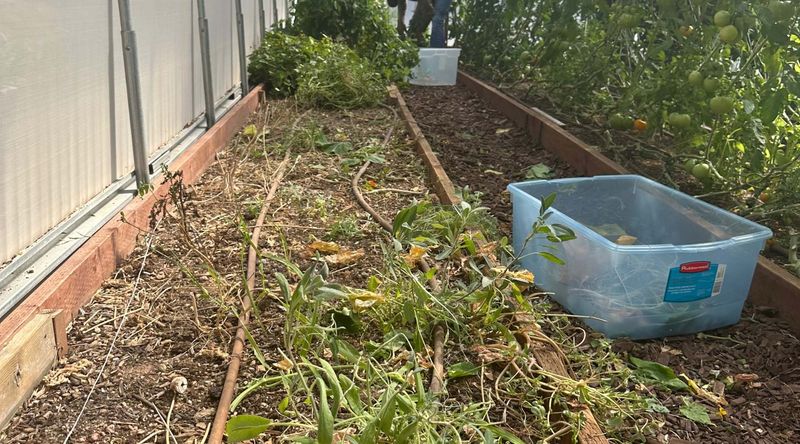
Start with a plain scrub. Knock off clumps of dirt, then use water, a little dish detergent, and a stiff brush to remove soil and any dried plant residue clinging to the wire or wood.
Pay attention to joints, hooks, and rough spots where grime hides.
This step comes before any disinfectant for a reason. University of Minnesota Extension notes that organic matter can reduce how well disinfectants work, and a UConn Extension IPM post on used tomato stakes also stresses cleaning first.
Wooden stakes can be tougher, since rough grain holds dirt. Give them extra brushing and replace any that are cracked, splintered, or rotting.
Rinse everything with clean water when you finish.
Set the supports where air can move around them, such as a sunny spot on the lawn or a fence line. Even if you stop here and skip bleach, you have removed the soil and debris that carry the most trouble.
Use diluted bleach only when disinfection makes sense
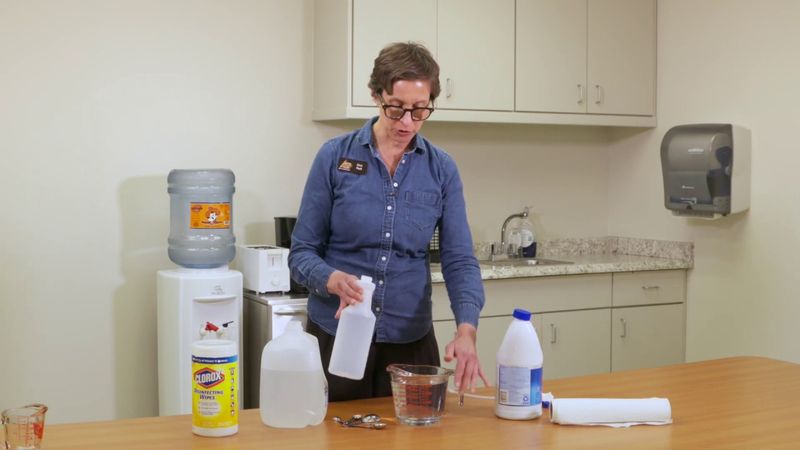
If your supports held diseased plants or stayed sheltered, an extension-backed option is a diluted household bleach solution. Wet all surfaces of the cleaned support, then let it dry completely before storing.
The recipes differ slightly, so pick one. University of Minnesota Extension gives 1 part household bleach to 9 parts water.
K-State Extension gives 1 part bleach to 10 parts water.
Those ratios are close but not the same. Follow one source’s instructions from start to finish, and read the label on your bleach bottle too.
Never use bleach undiluted.
Think of this as a precaution, not a cure. A bleach rinse may lower the chance that supports carry along disease, but it cannot guarantee a healthy crop, and plenty of supports do not need it at all.
Protect metal and handle bleach safely

Bleach does its job, but it has downsides. It can corrode metal, so a bleached cage that stays damp may rust faster.
Let every support dry fully before you stack it away.
University of Minnesota Extension suggests wiping metal afterward with a small amount of linseed, tung, or mineral oil to help protect it.
Safety matters just as much. CDC guidance on bleach says to follow the product label, work with good ventilation, and wear any protective gear the label calls for, such as gloves or eye protection.
Never mix bleach with vinegar, ammonia, or other cleaners or disinfectants, since dangerous fumes can result. Mix only what you need, work outside, and do not pour leftover solution onto garden beds, where it can harm plants and soil life.
Dispose of it as the label directs.
Support cleaning is one part of next season’s prevention
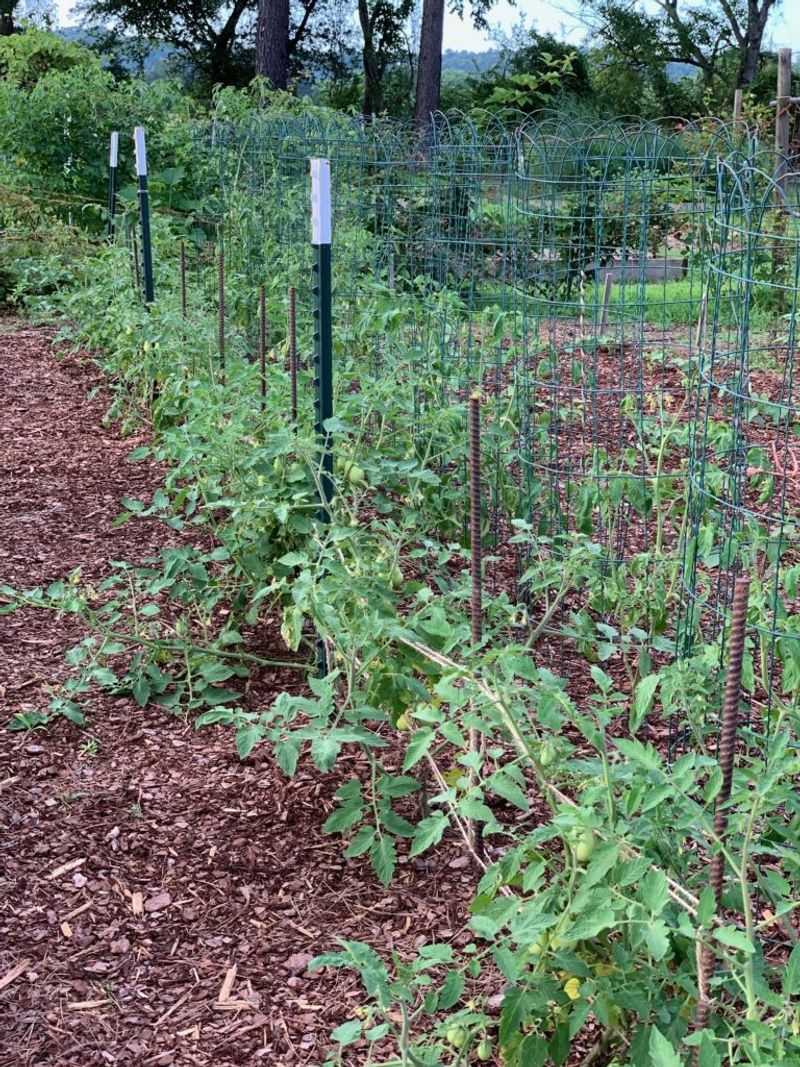
Clean supports are a small piece of a bigger plan. Early blight can develop quickly in warm, wet weather, as Texas A&M AgriLife describes, and UF/IFAS lists it as a common tomato disease in Florida.
Pressure varies from garden to garden, so yours may be lighter or heavier than a neighbor’s.
Several habits may reduce disease pressure, according to Colorado State University Extension. Clear out tomato and potato debris at season’s end, and pull volunteer tomatoes and nightshade-family weeds.
Mulch helps keep soil from splashing onto lower leaves. Water at the base instead of overhead where you can, and space plants so air moves through the canopy and leaves dry faster.
None of this guarantees a blight-free season, and disease can show up even when you do everything right. Still, a clean shed and a tidy bed give your next tomatoes a better start.