
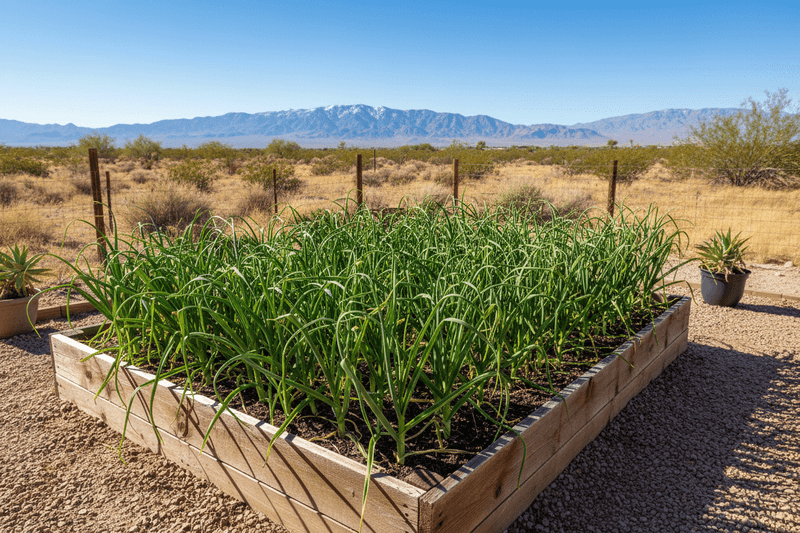
You walk out to the garden in late fall and spot green garlic tips already pushing through the soil. It feels too soon, and it is easy to worry that the whole planting is in trouble.
Most of the time, those shoots are not a warning sign at all. Here is what they mean, what a hard freeze can and cannot do, and the one simple step that helps most.
Why garlic can push up leaves before winter
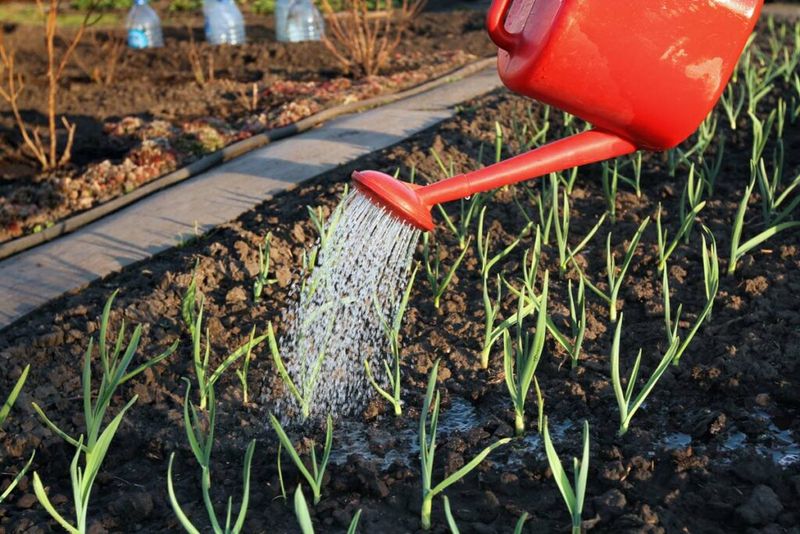
Garlic planted in fall is busy long before spring. In Georgia, UGA Extension describes roots and some top growth developing through fall and winter, and says tops may already be above ground by November.
So green tips in your bed can simply be normal garlic behavior.
Visible shoots do not mean the crop has failed. They also do not mean the plant has skipped the conditions it needs to form bulbs.
Garlic needs winter chilling followed by longer days and suitable temperatures to bulb normally, and fall leaves do not cancel that process. Iowa State notes that early emergence is not unusual after a warm spell.
Cold needs are not identical for every garlic. Oregon State points out that strains differ and that temperature works together with day length.
Because bulb formation varies with type and growing conditions, a few green leaves in November are not enough to predict how your harvest will turn out.
A freeze can injure foliage without killing the clove
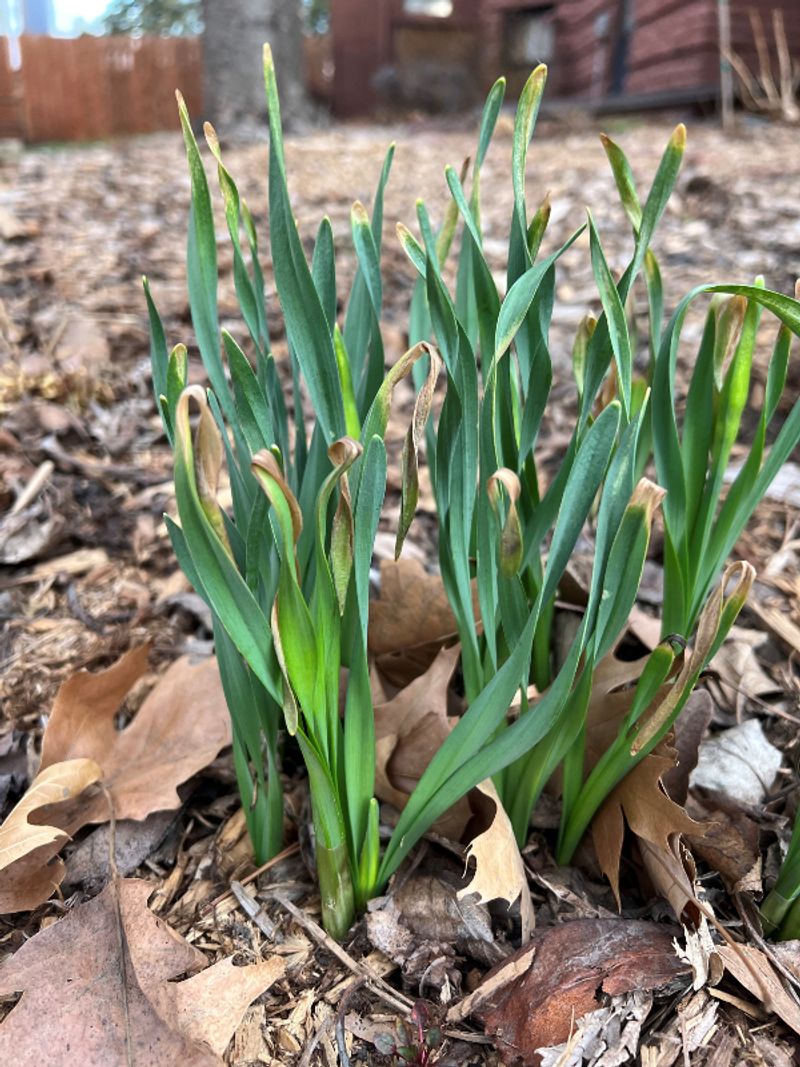
Think of garlic as two parts: the leaves above ground and the clove below. A hard freeze mostly threatens the exposed leaves, while the clove sits in soil that holds more steady temperatures.
Burned, floppy, or browned tips after a cold night are a sign of foliage injury, not proof the clove is gone.
Garlic leaves can handle some cold. For Iowa, Iowa State says foliage tolerates temperatures in the 20s °F, with damage likely below 20°F.
That is guidance for Iowa, not a cutoff for every variety, growth stage, soil, or Southern yard.
If leaves are killed back, plants may regrow. Still, the same source warns that the crop may be smaller.
Survival and final bulb size depend on how cold it got, how far along the shoots were, and the conditions in your bed, so neither panic nor total confidence is the right response.
Mulch the bed instead of resetting the planting
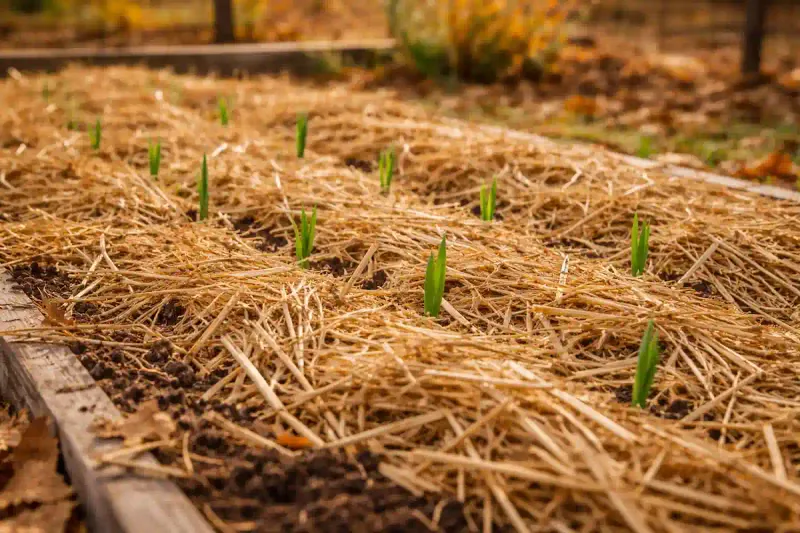
Here is the one step worth taking right now. If your bed is bare and colder weather is on the way, spread a loose layer of clean straw or leaf mulch around the shoots.
Iowa State recommends adding mulch when cold returns and snow cover is poor.
Mulch moderates winter conditions and can reduce the risk of injury. It does not guarantee survival, bulb size, or yield, so treat it as a sensible precaution rather than a promise.
Just as important is what to skip. Do not cut off healthy shoots, and do not dig up and replant cloves only because they sprouted in fall.
Digging disturbs roots that are already working, and the extension advice is to protect the planting and let damaged leaves regrow if a freeze burns them.
Use regional mulch guidance, not one universal depth
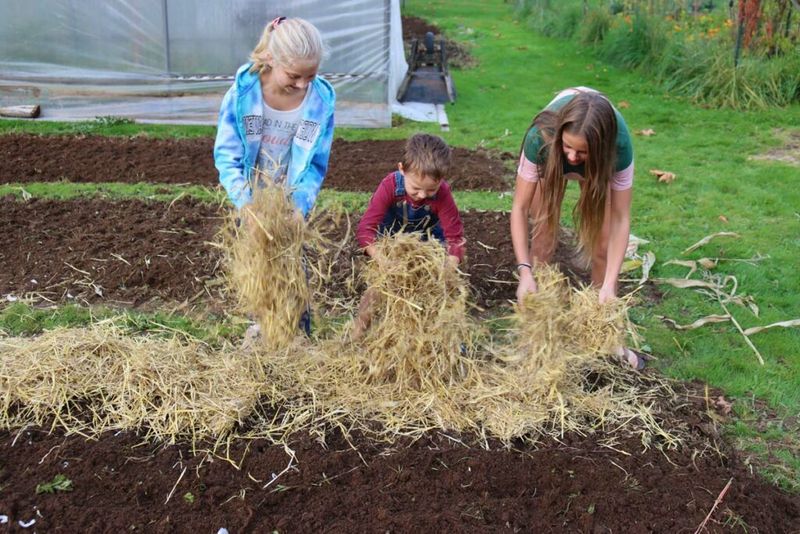
Ask three extension offices how deep to mulch and you may get three answers. Minnesota and Wisconsin advise about 3 to 4 inches, while Iowa suggests 4 to 6 inches of weed-free straw.
Those numbers come from northern winters, where soil freezes deep and stays cold for months. They are regional practices, not a rule for every Southern garden.
A bed in the Texas Panhandle faces a different winter than one on the Gulf Coast or in central Florida.
A good starting point is a loose, clean covering that blankets the soil without smothering the shoots. Use straw or leaves free of weed seeds, fluff it rather than packing it down, and check with your local extension office for what fits your area.
Adjust the mulch as spring approaches
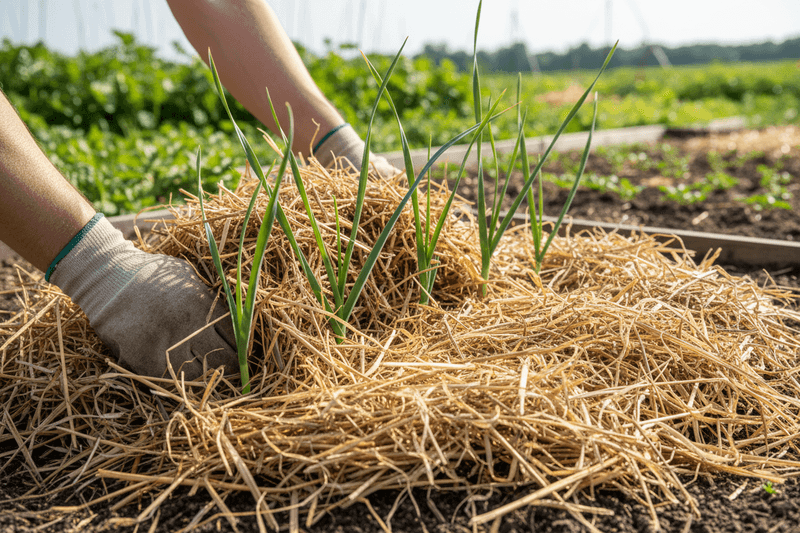
Winter mulch has a different job than spring mulch. Once the worst cold is behind you, leaving a thick blanket in place can hold the soil cool and slow growth.
Minnesota Extension suggests removing mulch after hard-freeze danger has passed so the soil can warm.
Watch the plants for clues. If growth looks pale, stalled, or squeezed under a heavy layer, thin it out or pull it back.
If leaves are growing strongly, a lighter covering can stay in place.
Timing depends on where you live. A Florida or south Texas gardener may reach this stage much earlier than someone farther north, so base the change on your last freeze risk, not a calendar date from another region.
Southern planting calendars depend on location
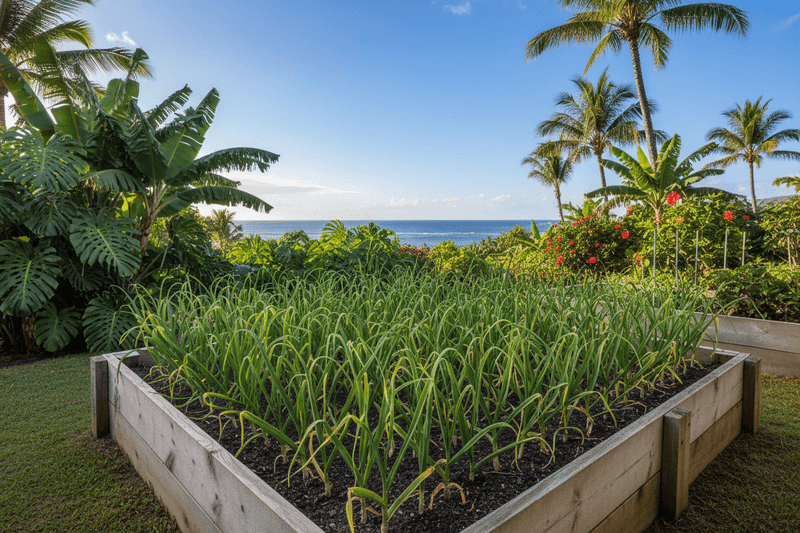
Late fall does not look the same in Miami, Dallas, and Amarillo. That is why planting advice has to stay local.
UF/IFAS recommends that Florida gardeners choose varieties suited to the state, including Artichoke and Creole softneck types, and describes planting from late fall into early winter.
Texas is just as varied. Texas A&M’s home garden guide gives planting timing by region instead of one date for the whole state.
If your garlic is already up, a northern calendar is not the thing to measure it against. Look up your county extension office, ask which varieties do well nearby, and compare your planting date to local timing.
Let the planting recover before judging the harvest
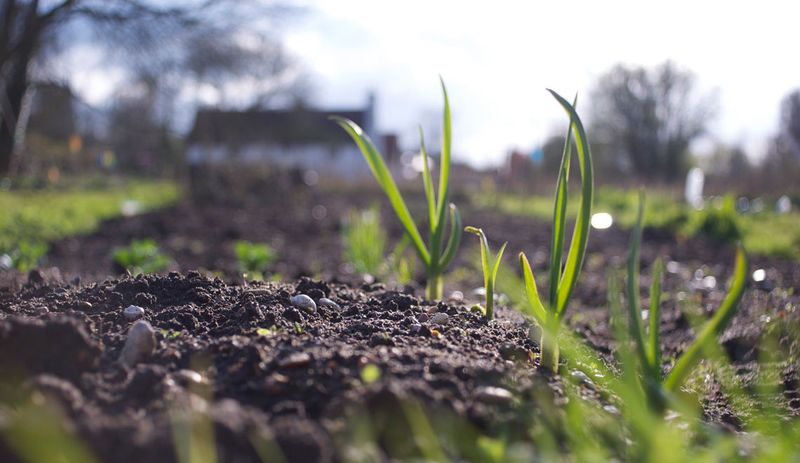
Green shoots in fall are not a reason to dig, replant, or trim. If a freeze burns the leaves, give the plants time, because damaged foliage may regrow.
Even so, a freeze can affect crop size, and Iowa State warns that foliage killed to the ground may mean a smaller harvest.
Keep a protective layer in place through cold snaps, then thin it as spring warms, following Minnesota’s advice to remove it after hard-freeze danger. Neither mulch nor regrowth is a promise about summer.
Garlic rewards patience more than fussing, and the bulbs get the final say in June.