
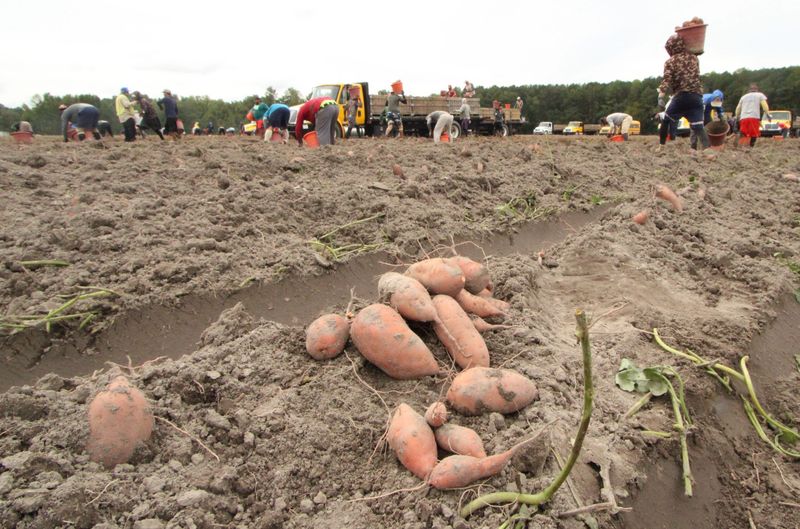
You dug up a bucket of beautiful sweet potatoes, and now the next few days matter more than you might think. Fresh roots can taste bland and starchy, and they can spoil faster if they are handled poorly.
One step after digging, giving roots warmth and humidity with plenty of fresh air, can help them heal and develop better flavor. Here is how North Carolina gardeners can get it done at home.
Dig by the plant’s cues, not the calendar
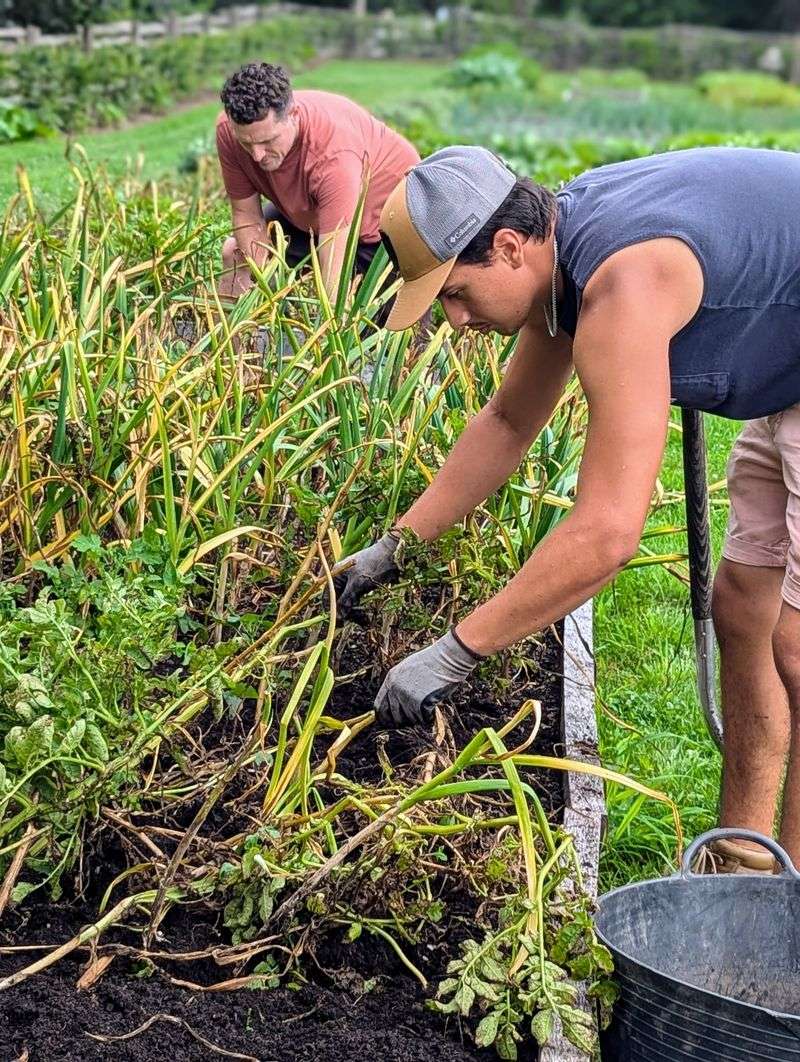
Plenty of gardeners circle late October on the calendar, but North Carolina is a long state with a lot of variation. The mountains, Piedmont, and coastal plain all see frost at different times, and each year plays out a little differently.
NC State Extension guidance gives a broad harvest window from late August to early November.
So let the plants tell you when to dig. Vines that begin to die back and turn brown are a good sign the roots are ready.
Check your own garden, your own weather, and your local forecast rather than a single date.
The big deadline is a hard freeze. Plan to get roots out of the ground before one arrives, since cold can injure them.
Once they are dug, do not leave them lying outside overnight, because NC State postharvest advice notes that cooling can cause injury.
Pick a dry day if you can, work slowly, and have a spot ready indoors. The skin on a fresh sweet potato is thin and easy to scrape, so the way you lift and carry the roots sets up everything that comes next.
Curing helps roots heal and develop flavor
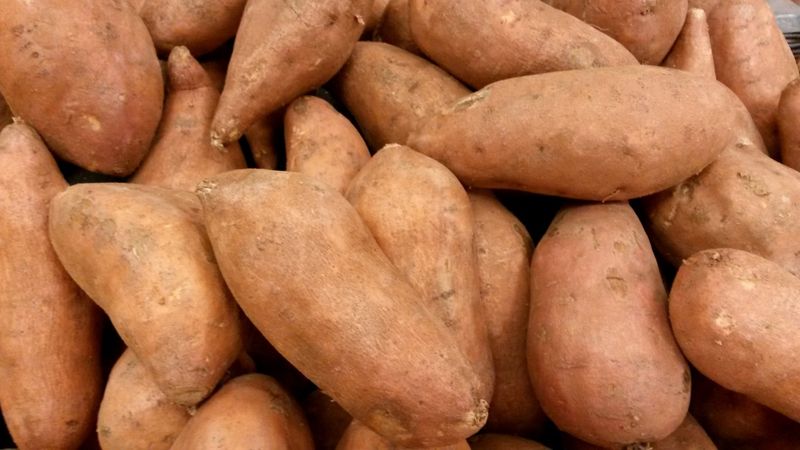
Think of curing as a short recovery period for roots that just got pulled from the ground. During that time, NC State Extension explains that curing can heal some injuries, and it helps the skin set so roots lose less moisture.
That tougher skin and better wound healing can improve how well roots keep.
Flavor changes too. USDA research describes shifts in starches and sugars during curing and storage that can make roots sweeter and moister.
Varieties also differ in flavor and texture, so two types from the same bed can taste quite different.
Still, curing is a helper, not a magic switch. A cured root is not guaranteed to be sweet, and curing cannot stop every kind of decay.
Some roots can be eaten without being cured, but they may not keep as long or taste as good.
Treat curing as a smart habit for roots you plan to store. It improves your odds without promising a particular result, and that is a good reason to do it carefully.
Ventilate roots during a warm, humid cure
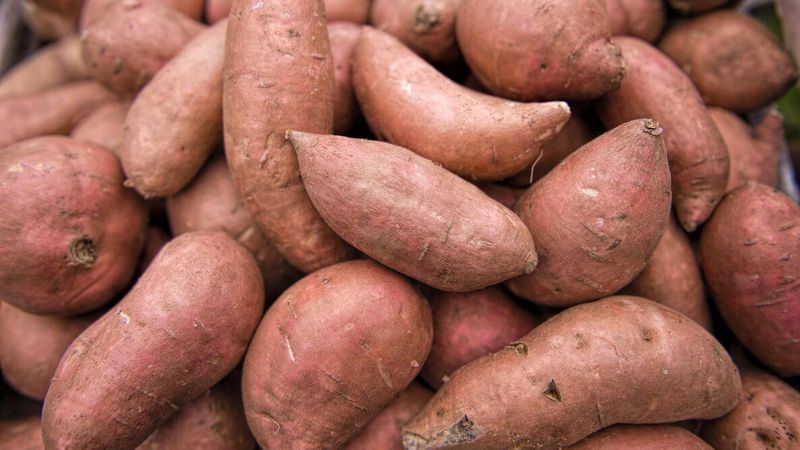
Airflow is the piece gardeners tend to miss. Warmth and humidity are what roots need to heal, but stale, wet air sitting around them is a problem.
The goal is a warm, humid spot where fresh air still moves.
For controlled curing, NC State Extension recommends about 85°F and 85 to 90 percent relative humidity, with ventilation, for three to five days. Poor ventilation can impair curing, and too much heat can damage roots.
Those numbers come from setups where temperature, humidity, and air movement are measured and controlled. Most homes cannot match them exactly, and that is okay.
Think of the numbers as a target to approximate, not a score to hit.
A practical approach is to pick a warm, shady, protected area and keep roots in a single layer. Avoid cramming them into sealed tubs or covering them tightly.
Do not let water sit on the roots, since free moisture can worsen some disease symptoms.
If you have a thermometer, a quick check of the spot can keep you from guessing. Skip any place that runs hot, like a closed car or a sunny shed, because excessive heat does harm.
Your curing time at home may differ from three to five days, so judge by how the skins feel and look.
Use a crate or perforated bag for a small harvest
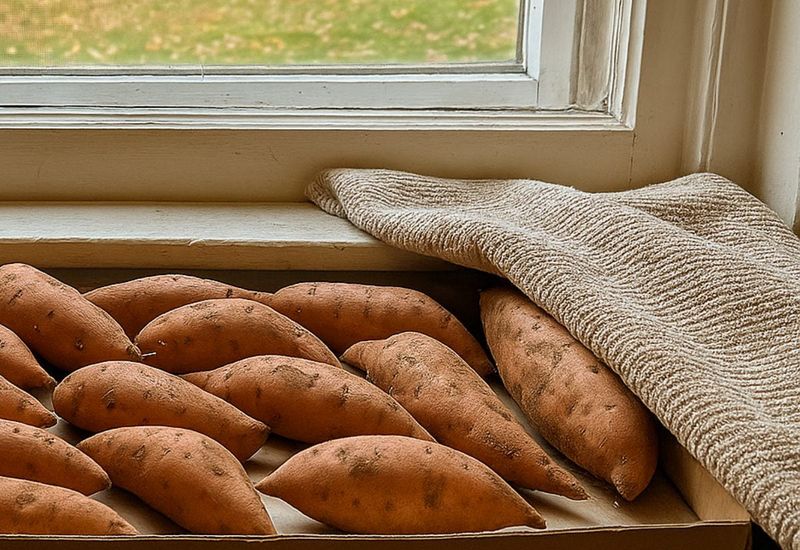
A small backyard harvest does not need a curing room. NC State’s Plants for Human Health Institute suggests placing roots in a single layer in a milk crate, leaving space between layers, and covering them with a damp towel.
The crate’s open sides let air move through, while the towel helps hold some humidity. Wring the towel out so it is damp, not dripping, and keep it from pressing water onto the roots.
Set the crate in a warm, dry, shady place.
Another option from the same guidance is a single layer of roots in a perforated plastic grocery bag. The holes matter.
Do not seal the bag, and do not wet the roots, because trapped moisture and still air work against you.
Remember that these are workarounds. They approximate curing conditions but do not reproduce a controlled room, so results can vary with your weather and your space.
Check the roots every day or two, and remove any that look soft or moldy so they do not affect their neighbors.
Handle roots gently before curing
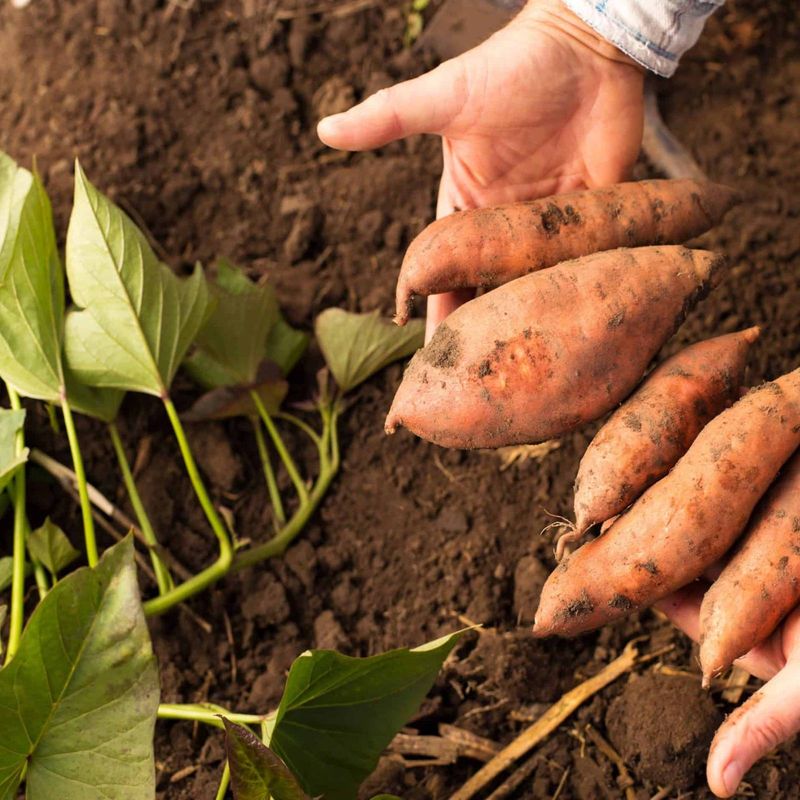
Fresh sweet potatoes bruise and scrape much more easily than they look. Lift them carefully, set them down rather than tossing them, and use a soft brush or your hands to remove loose soil.
Skip the hose for now.
NC State’s home-gardening guidance says not to wash roots before curing, since washing can damage the delicate skin. Washington State University Extension also advises washing shortly before eating instead.
Gentle handling matters because curing has limits. As NC State Extension notes, curing can heal some injuries, but a damaged root will not regain its original appearance.
A practical move is to sort as you go. Set deeply cut, gouged, or soft roots aside to eat first, and save the sound, unblemished ones for curing and storage.
Careful hands will not make rot impossible, but they give your best roots a better shot at keeping well.
Move cured roots to cooler storage
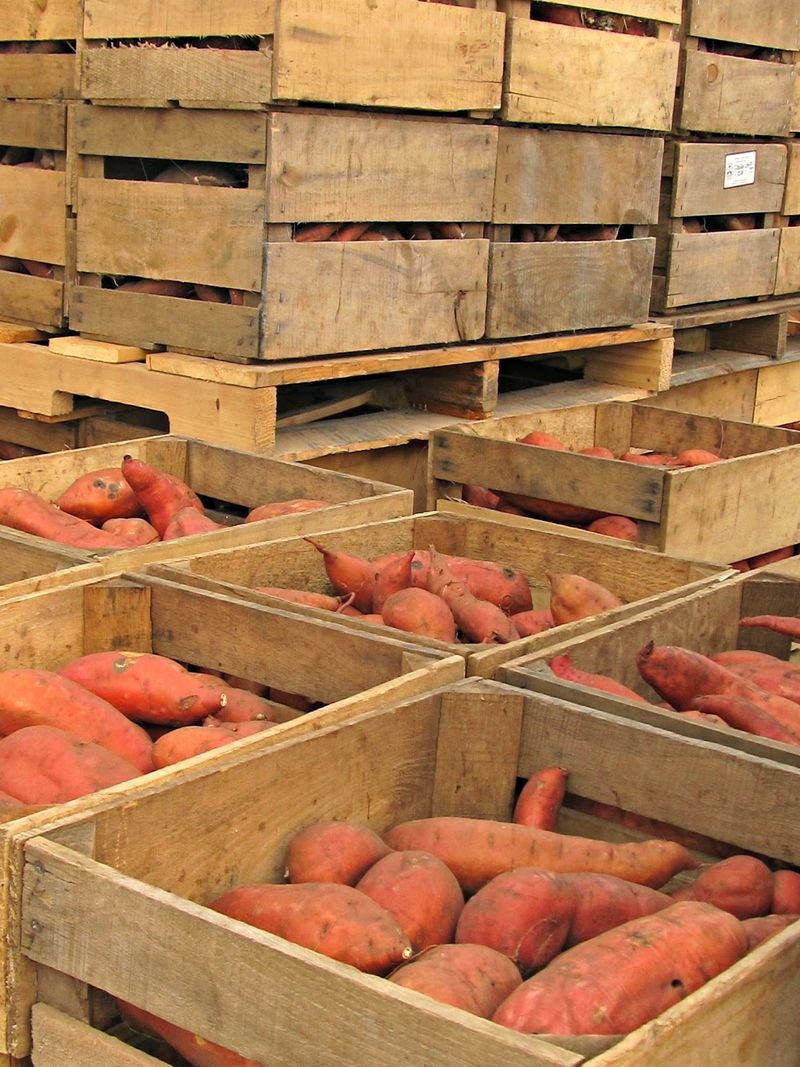
Once curing wraps up, the conditions change. Curing is warm and humid, while storage runs cooler.
Roots kept for later use do best at about 55°F with 85 to 90 percent relative humidity and ventilation, according to NC State Extension.
Few homes hit those numbers exactly. A cool basement, an insulated closet, or a quiet corner of a pantry away from heat sources may come close.
A simple thermometer helps you find the best spot in your house.
Do not put sweet potatoes in the refrigerator. Low temperatures can injure them, and the Texas Plant Disease Handbook lists chilling injury among the problems that affect stored roots.
Keep roots in a ventilated container, such as an open crate or a box with holes, rather than a sealed tub. Check them every week or two and pull out any that soften, shrivel, or show mold.
Using the questionable ones first keeps the rest in better shape.
Curing improves the odds, not the guarantee
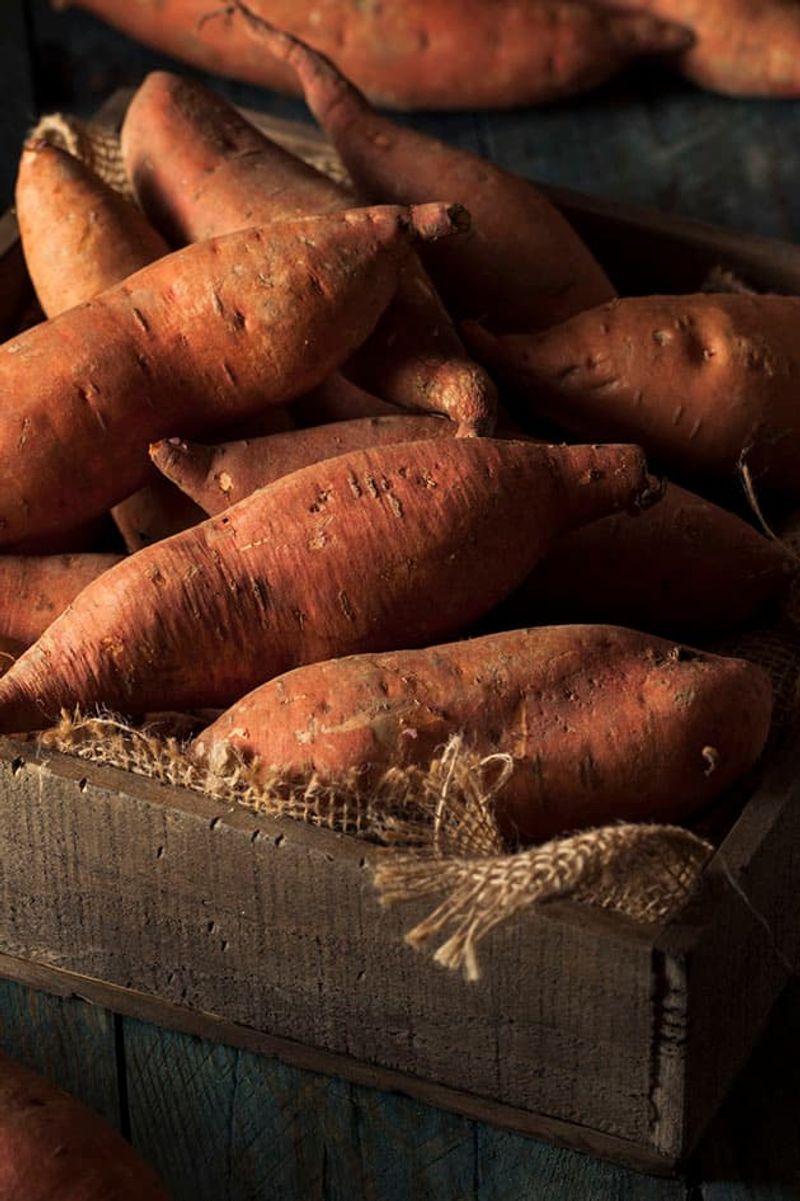
Cure sound roots with warmth, humidity, and fresh air, then store them in a cooler, ventilated spot. That routine gives your harvest a fair chance at better flavor and longer keeping.
It is a good habit, not a promise.
Variety and later handling still shape taste. Some rot also begins in the field or slips in through wounds, and a damaged root may never look the way it did before.
Plan to enjoy the best roots first and keep an eye on the rest. A little patience in the weeks after digging often shows up in the pan.