
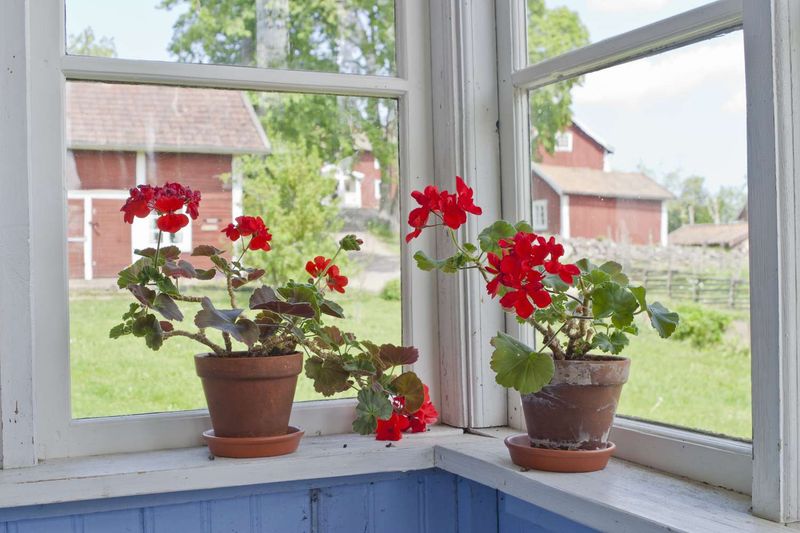
Those big, bright garden geraniums that fill your pots all summer do not have to end up on the compost pile when frost arrives. Many North Carolina gardeners can store them dormant in a cool, dry spot instead of fussing over them as houseplants all winter.
The method takes an afternoon in fall and another in late winter. Here is how it works, what can go wrong, and how to time the move back outside.
Know which “geraniums” this guide covers
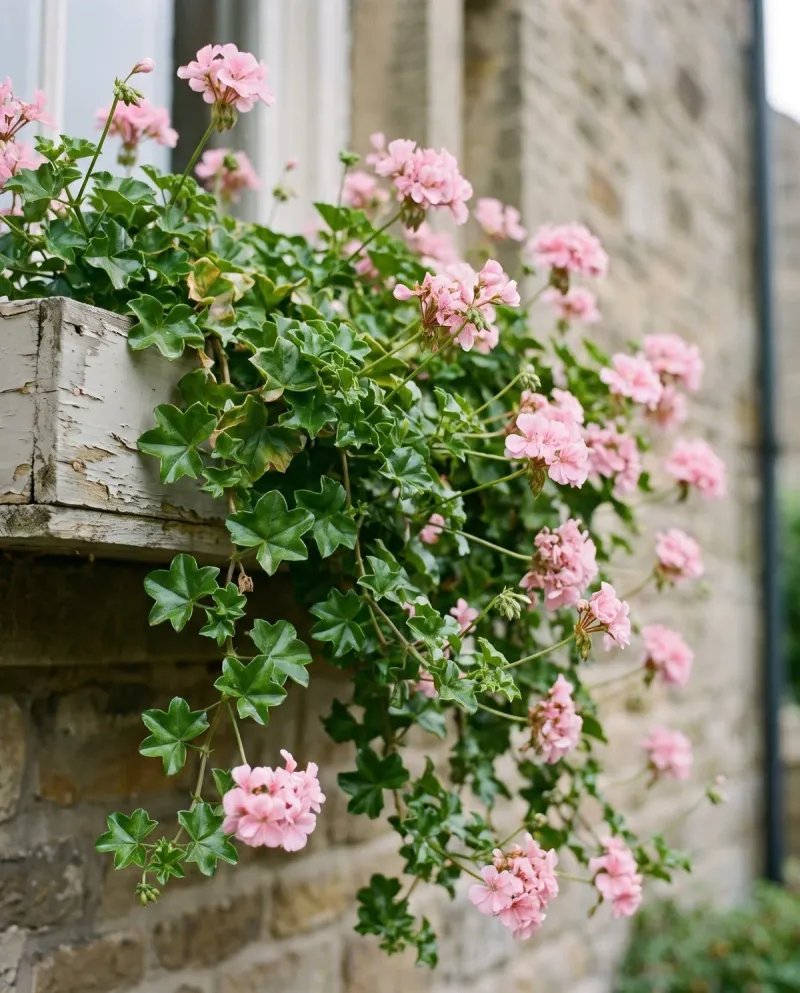
Walk through any garden center and the word geranium gets used for two very different plants. The bright, round-flowered plants sold for pots and window boxes are usually tender Pelargonium, as described in NC State Extension’s plant profile.
The perennial cranesbills in the genus Geranium are a separate group that handles cold on its own.
Everything in this guide applies only to tender Pelargonium, which this article calls garden geraniums. Hardy Geranium needs none of this treatment.
It can stay in the ground through winter without being lifted or stored.
Garden geraniums are often grown as annuals because frost damages them. Iowa State Extension’s guide to annual geraniums covers the plants gardeners treat that way.
Treating them as annuals is one choice, but not the only one.
Dormant storage gives you another path. Instead of keeping plants actively growing in a sunny window, you let them rest in a cool place and wake them up later.
It is a good fit if you have a spare garage corner or basement shelf and little patience for indoor plant care.
Keep expectations realistic, though. Some plants will not make it through storage, and some cultivars may handle it better than others.
Think of it as a worthwhile experiment, not a sure thing.
Choose a wintering method before frost arrives
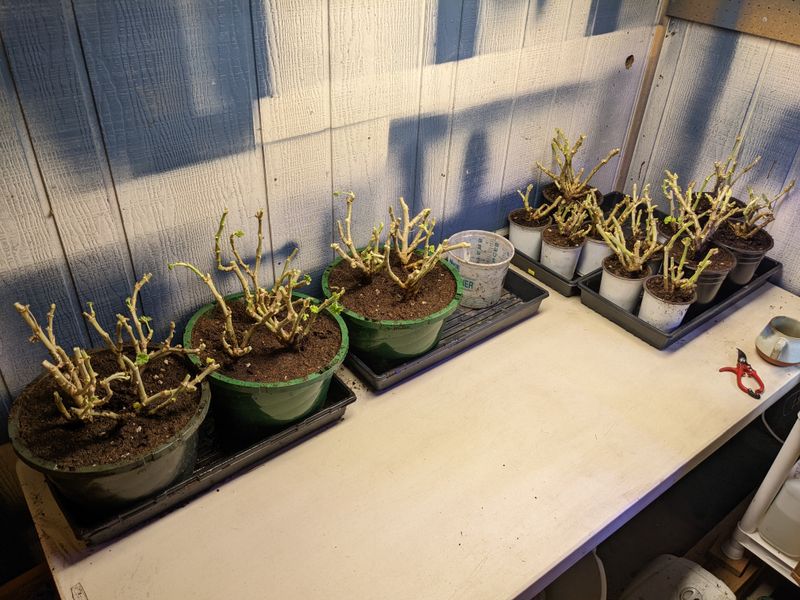
Frost can arrive faster than you expect, so decide on a plan while your plants are still blooming. Bare-root storage is the one that asks the least of you through winter.
You lift the plant, shake off the soil, and keep it dormant in a suitable cool spot, as outlined by Iowa State Extension.
Two other options exist. You can keep a plant in its pot and store it, or you can take cuttings and root them.
Iowa State describes both as alternatives to bare-root storage.
Bare-root storage does not work for everyone. University of Minnesota Extension cautions that it can be challenging and suggests taking cuttings as a backup.
That advice is useful anywhere, including North Carolina.
A simple way to choose is to match the method to your space and your favorite plants. If you have a cool spot that stays above freezing, bare-root storage is worth trying.
If you have one plant you truly cannot lose, take a few cuttings as insurance.
No single method suits every plant or every home. Mixing two approaches, such as storing most plants bare-root while rooting cuttings from your best one, spreads the risk.
Lift healthy plants and prepare them for bare-root storage
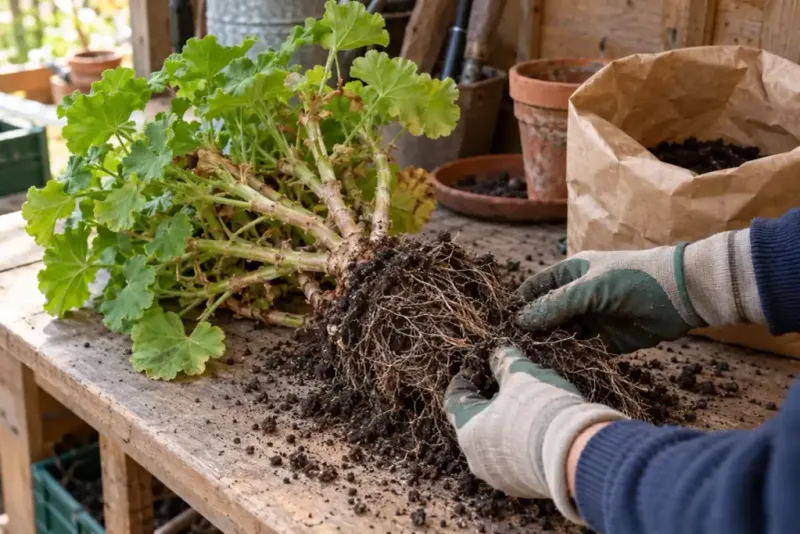
Start with plants that look strong. Wisconsin Extension advises selecting healthy plants for overwintering, since a diseased or weak plant has little chance of surviving months of rest.
Timing matters too. Iowa State recommends lifting plants before the first fall frost.
North Carolina has no single date for this. Mountain gardeners may be lifting plants in early October, while coastal gardeners may have weeks longer, so watch your own forecast.
Dig the plant out of the bed, or tip it out of its pot. Loosen the root ball gently and shake off as much soil as you can.
You want roots that are mostly bare, not a clump of damp dirt that could encourage rot.
Next, choose how to store it. You can place each plant in a paper sack, or hang it by its roots in a suitable spot.
Paper lets air move, which plastic does not, so skip plastic bags.
Label each bag with the plant’s color or name. In late winter you will be glad you did, especially if you have several similar-looking plants.
These steps prepare plants for storage. They do not guarantee survival, so expect that a few plants may not make it.
Choose a cool, dry, frost-free storage space
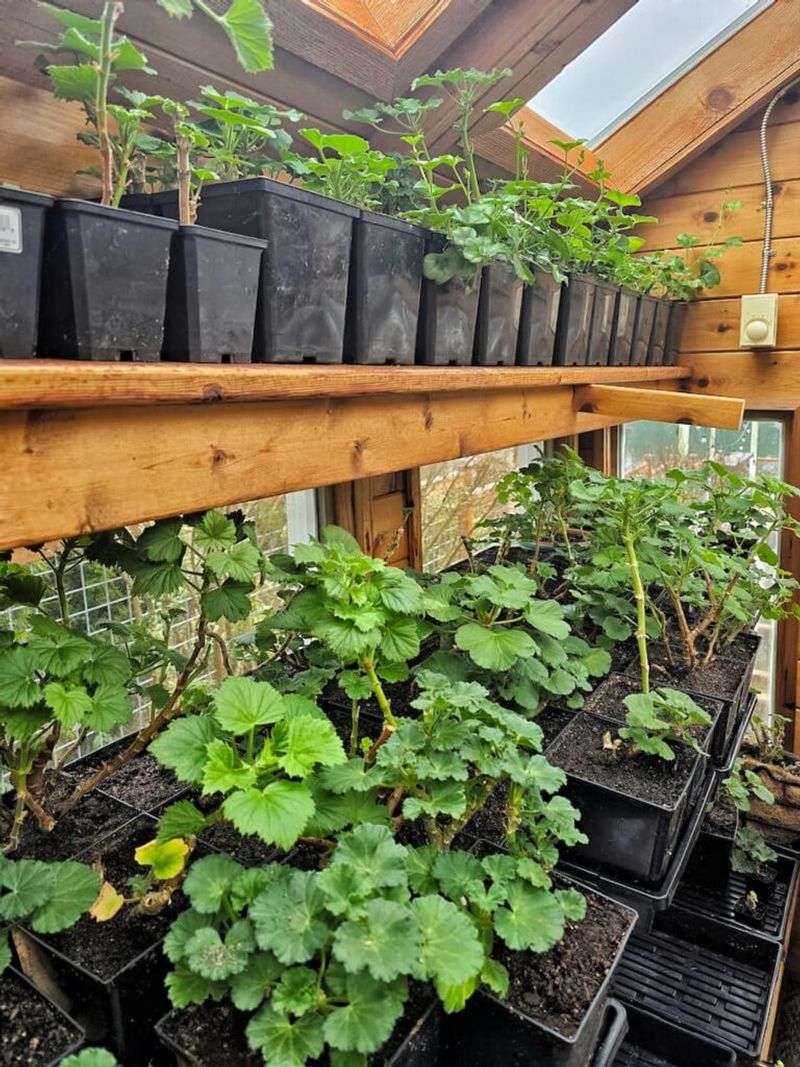
Where you store the plants matters as much as how you prepare them. A commonly recommended range for bare-root storage is about 45 to 55 degrees Fahrenheit in a cool, dry place, according to Iowa State Extension.
A garage or basement qualifies only if its real conditions fit. Put a thermometer there for a week or two before you commit.
A space that freezes is unsuitable, and a warm or damp one does not match the cool, dry method.
You may see a different number elsewhere. NC State Extension gives 40 degrees as a minimum in its broader indoor overwintering guidance.
That is a floor for a different setup, so do not treat it as interchangeable with the 45 to 55 degree bare-root range.
Watering advice varies, too. Illinois Extension describes cool, dry storage.
Minnesota Extension recommends periodically soaking the bare roots.
NC State says to keep plants very dry and to water sparingly if they show signs of wilting. Because the published protocols differ, there is no single schedule to follow.
Check your plants every few weeks, and if they look badly shriveled, a light watering is a reasonable response.
Pot surviving plants in late winter or early spring
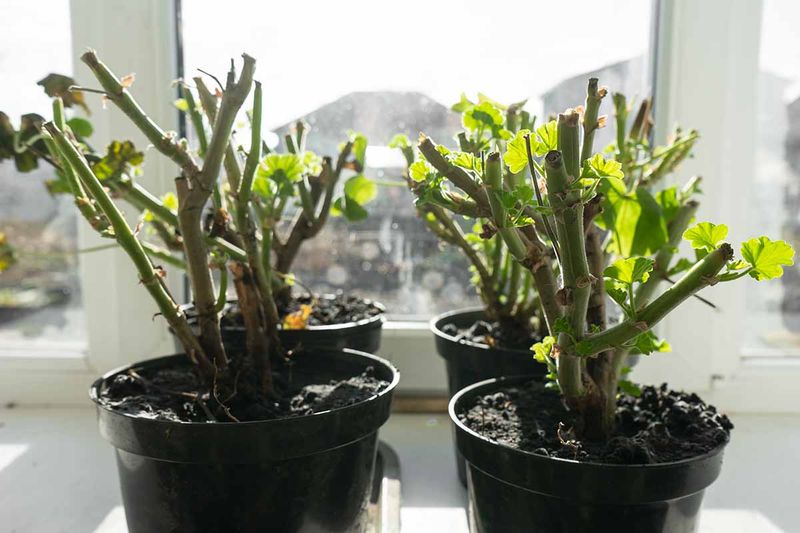
Around March, pull your bags out and take a look. Iowa State describes removing dead or shriveled material and cutting back to firm green tissue.
If a stem is soft, mushy, or hollow and dry, it is not coming back.
Pot each living plant in fresh potting mix, then water it thoroughly. Illinois Extension also describes this potting-up step as the way to restart growth.
Move the pot to bright light, such as a sunny window or under a grow light. Light helps new shoots stay compact instead of stretching.
Be patient. Wisconsin Extension notes that plants can take time to start growing, and some will not wake up at all.
Look for small green buds along the stems as a sign of life. These steps prepare plants for renewed growth.
They cannot promise blooms by a particular spring date, because flowering depends on the plant surviving and getting good light and care after potting.
Use local frost information to plan the move outdoors
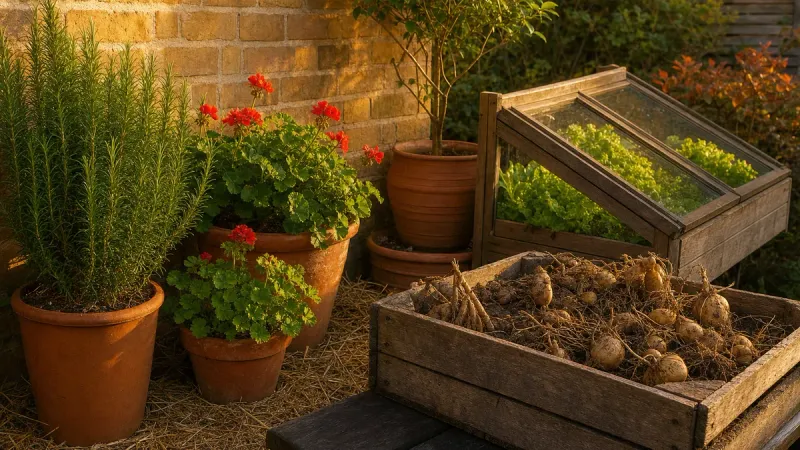
North Carolina spans coast, Piedmont, and mountains, so spring arrives on very different schedules. NC State’s freeze-date table lists average last spring freeze dates of March 17 for Wilmington, April 8 for Raleigh, April 11 for Asheville, and May 1 for Boone.
Those are historical averages, not guarantees. A late cold snap can still arrive after the average date, and your own yard may be colder or warmer than the nearest town.
Low spots and open hilltops often differ by several degrees.
So there is no one statewide date for putting geraniums out. Check your local forecast and watch overnight lows.
Keep plants protected until frost danger has passed.
A practical routine helps. Once nights look safe, set your potted plants outside for a few hours a day and bring them in at night.
Increase their time outdoors over about a week so leaves adjust to sun and wind.
If a surprise frost shows up in the forecast, cover plants overnight or carry pots back into the garage. Either step is easier with plants in containers, which is one more reason to pot them up in late winter.
Expect a chance at another season, not guaranteed spring flowers
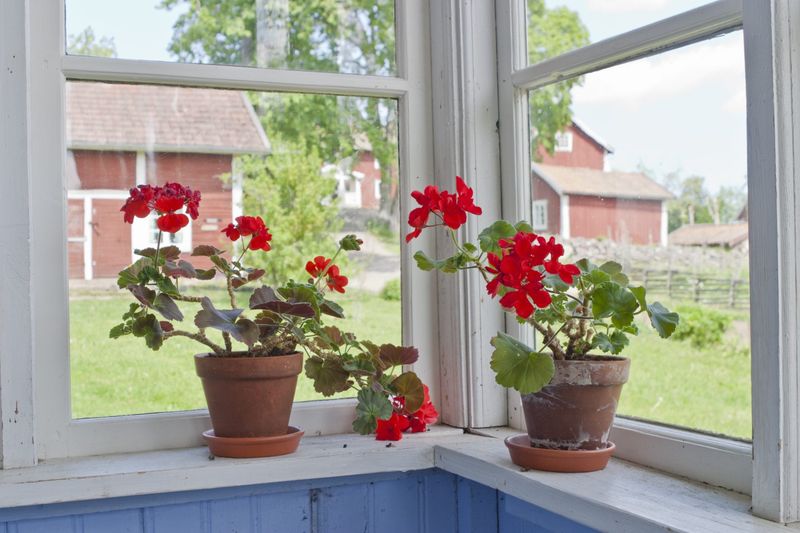
Dormant storage can preserve tender Pelargonium for another season and spare you from tending actively growing houseplants. It is still not a sure thing.
As both Minnesota Extension and Wisconsin Extension suggest, plants can fail and bloom timing varies.
The sequence is simple: store under suitable conditions, as Iowa State and Illinois Extension describe, restart growth in late winter or early spring, then wait for local frost danger to pass.
A geranium that survives the winter in a paper bag has already beaten the odds.