
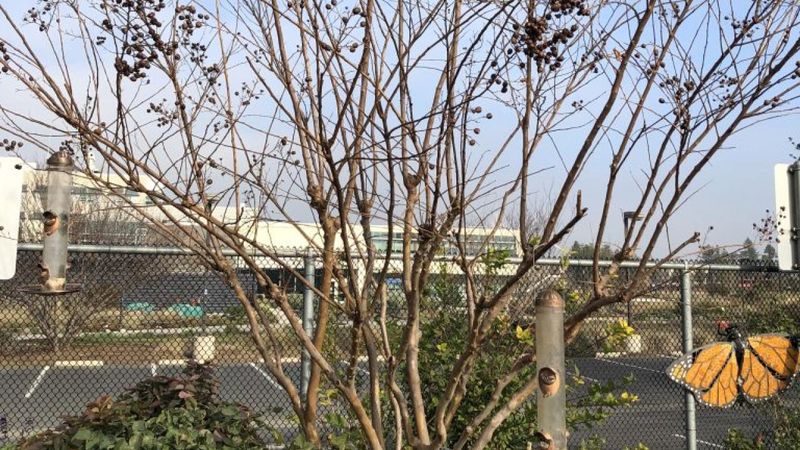
Walk past a crape myrtle in October and you will see rows of dry brown clusters where pink, red, or white flowers used to be. Many North Carolina homeowners wonder if those clusters need to come off before the cold arrives.
The answer is simpler than most yard advice, and it saves you a chore. Here is what those clusters are, what they do for birds, and when trimming makes sense if you want a tidier tree.
Those brown clusters are the tree’s seed capsules
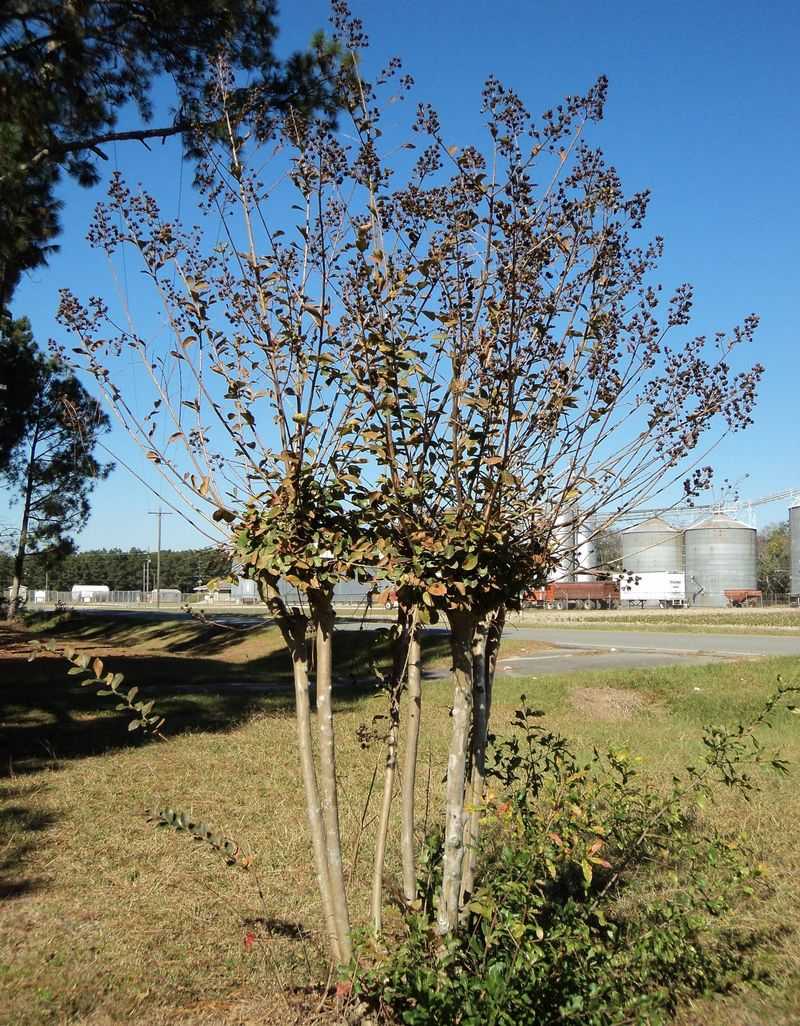
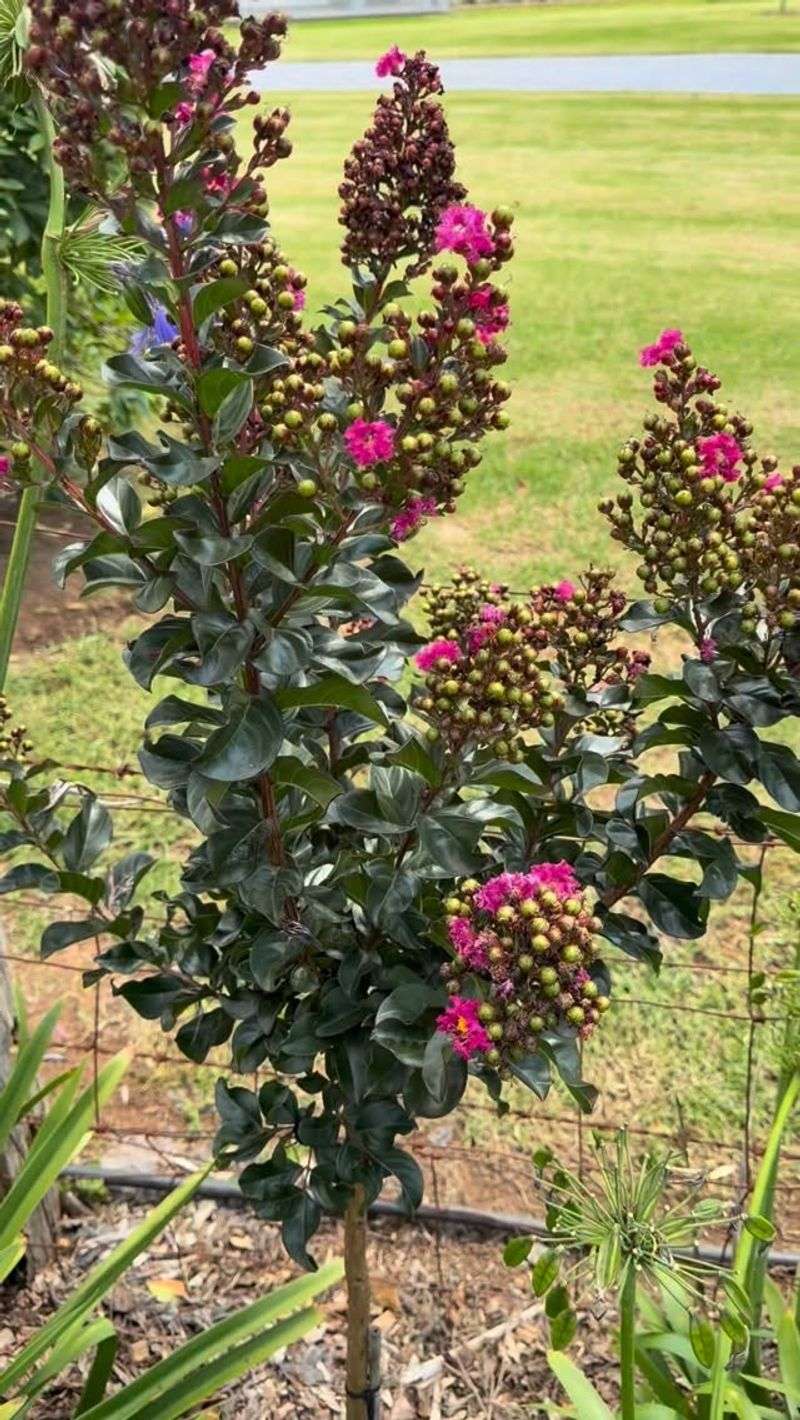
Once the last blossoms fade, a crape myrtle quietly switches jobs. Each flower cluster turns into a bunch of small, round, woody capsules that start green and dry to brown as fall moves along.
If you look closely, you may see the capsules split open into little sections, showing where the seeds sat.
The timing fits the plant’s calendar. According to the N.C.
State Extension Plant Toolbox, common crape myrtle typically flowers from July through September in North Carolina. That long summer show leaves plenty of time for seed to form, so the capsules are fully mature by the time leaves color up in the Piedmont, the mountains, or the coastal plain.
Those capsules often hang on well past leaf drop, which is why bare winter branches can look crowded with brown knobs. University of Maryland Extension describes the same pattern of capsules forming after bloom and lingering on the tree.
Seeing them in fall is a normal sign of a healthy plant finishing its season, not a sign of a problem.
Will leaving the pods hurt next summer’s blooms?

No. Leaving the capsules on through winter will not cost you flowers next summer. UF/IFAS Extension states that the seed capsules do not affect the next year’s bloom, so there is no need to rush out with pruners before the cold sets in.
The reason comes down to how the tree grows. Crape myrtles bloom on new growth, meaning the flower buds form on shoots that emerge in spring.
The old capsules sit on last year’s wood and have no say in what the fresh shoots will do.
Gardeners sometimes mix this up with a different task: snipping off spent flowers during summer. That is a separate situation from winter capsule removal.
Virginia Cooperative Extension notes that timely tip-pruning in the growing season may encourage another round of blooms on some cultivars.
Results vary by variety and timing, though, and summer deadheading is not a dependable way to improve next year’s flowers. So if you skipped it this year, nothing is lost.
Your tree is set up for its next flowering season whether the capsules stay or go.
Think of cleanup as a matter of taste. You can settle the bloom question right now and then decide about appearance on your own schedule.
Birds use the seeds, but the benefit has limits
Winter feeders are not the only place birds find a meal. Smithsonian reporting describes researchers documenting several species eating crape myrtle seeds, including American goldfinches, dark-eyed juncos, house finches, cardinals, and sparrows.
The details matter, though. The published observations, found in a research article by Gary R.
Graves, focused on wintering birds in Fairfax County, Virginia. That shows the seeds are a real food source.
It does not promise that these birds will visit your North Carolina yard, and the seeds are not essential food for any of them.
There is also a bigger picture. Crape myrtle is a nonnative plant, so bird use does not make it equal to native plants.
N.C. State Extension points out the value of plants that supply seeds, fruit, and insect food across the year, and native species do that job best.
If you like watching birds, leaving the capsules is an easy extra for the winter months. Just treat it as a small bonus, and keep native shrubs and trees on your planting list for lasting wildlife value.
Seedlings are possible, but a yard-wide problem is unproven
Seeds do what seeds do, and crape myrtle seeds can grow. The N.C.
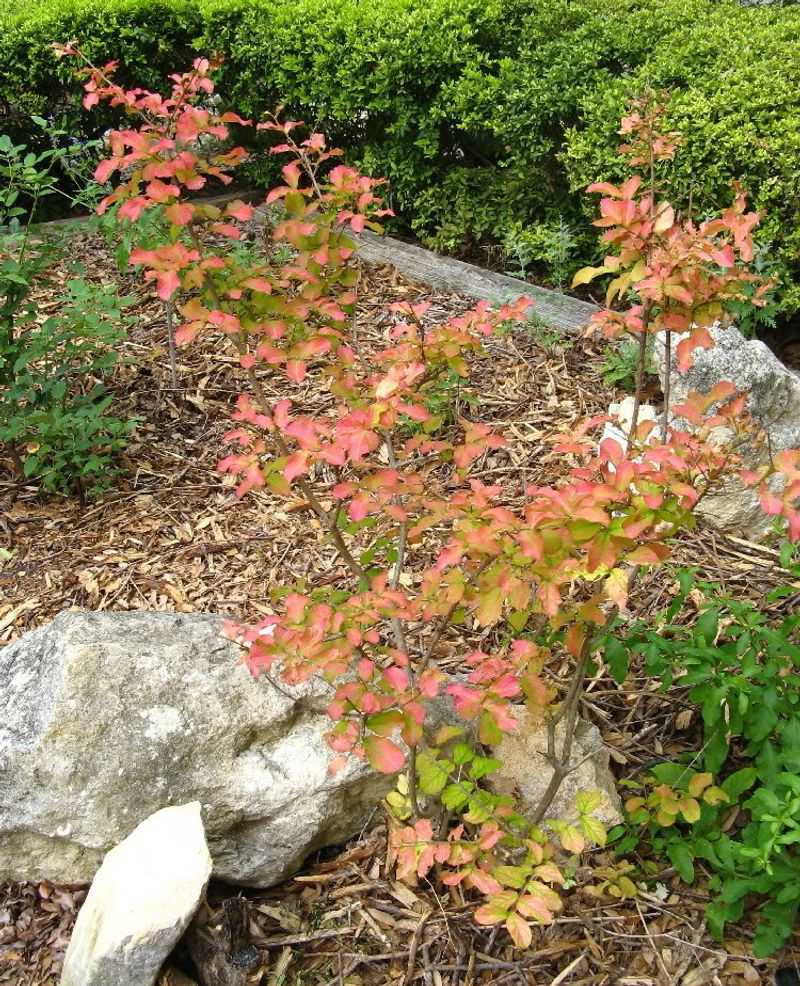
State Extension Plant Toolbox lists propagation by seed for this plant, so a volunteer seedling popping up near the parent tree is possible.
What that fact does not tell us is how often it happens. The sources reviewed for this article do not show that pods routinely create troublesome seedlings across North Carolina yards.
Seed propagation being possible is one thing, and a widespread nuisance is another.
So there is no strong reason to treat seedlings as a must-do cleanup trigger. If you spot a small crape myrtle sprout in spring where you do not want one, you can pull it by hand while the soil is soft and the roots are shallow.
That small, occasional task fits the situation better than clearing every cluster in the fall. Keep an eye on nearby beds, and act only if seedlings actually show up.
For a tidier look, wait and trim only reachable seedheads
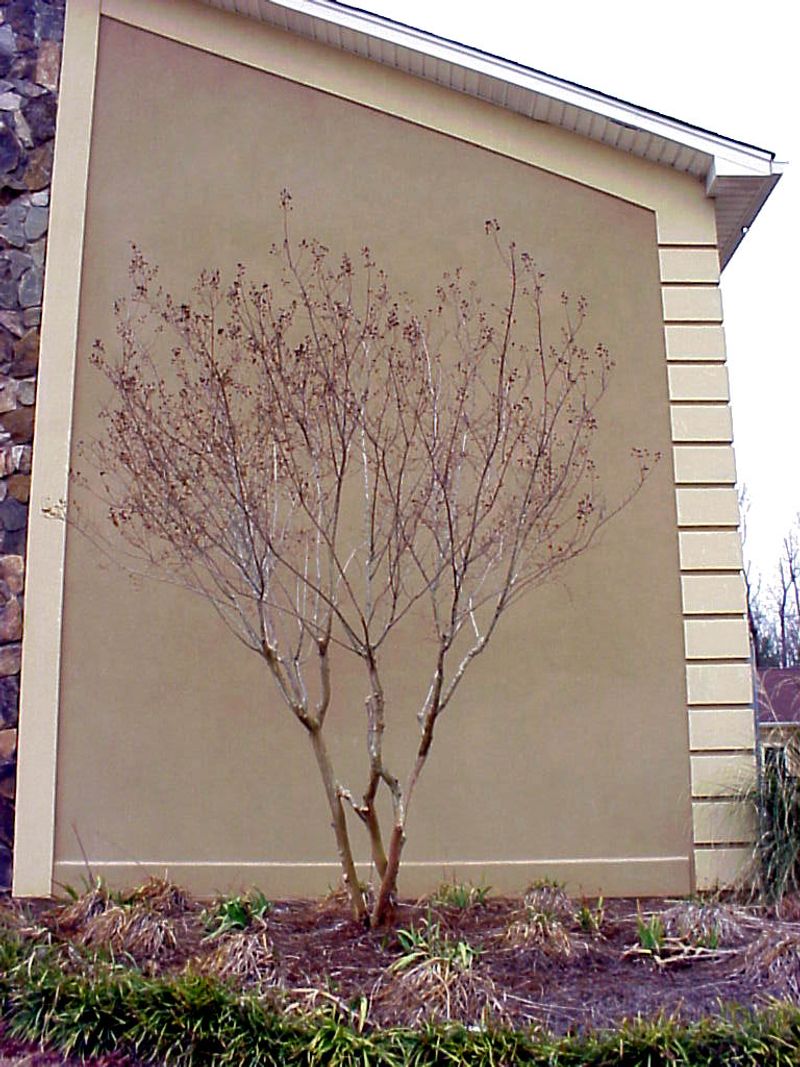
Some people simply prefer a cleaner silhouette, and that is a fine reason to trim. Just know that removing seedheads is an appearance choice, not a way to promote flowers.
UF/IFAS says it is not needed to make the tree bloom.
If you do want to tidy up, skip the pre-winter rush. Clemson Extension suggests removing reachable seedheads in late winter or early spring, before new growth begins.
In much of North Carolina, that points to roughly February into March, a bit earlier toward the coast and later in the mountains.
The technique is small and simple. Use sharp hand pruners and make a tip cut just above a lateral bud, taking off the cluster and little else.
Stay on the ground and work only on what you can reach comfortably.
Clemson’s advice is not to climb or go to extensive lengths to clear a mature tree. If the top clusters are out of reach, let them be.
Waiting also gives birds the whole winter to pick at the seeds first.
Keep the cleanup small and safe
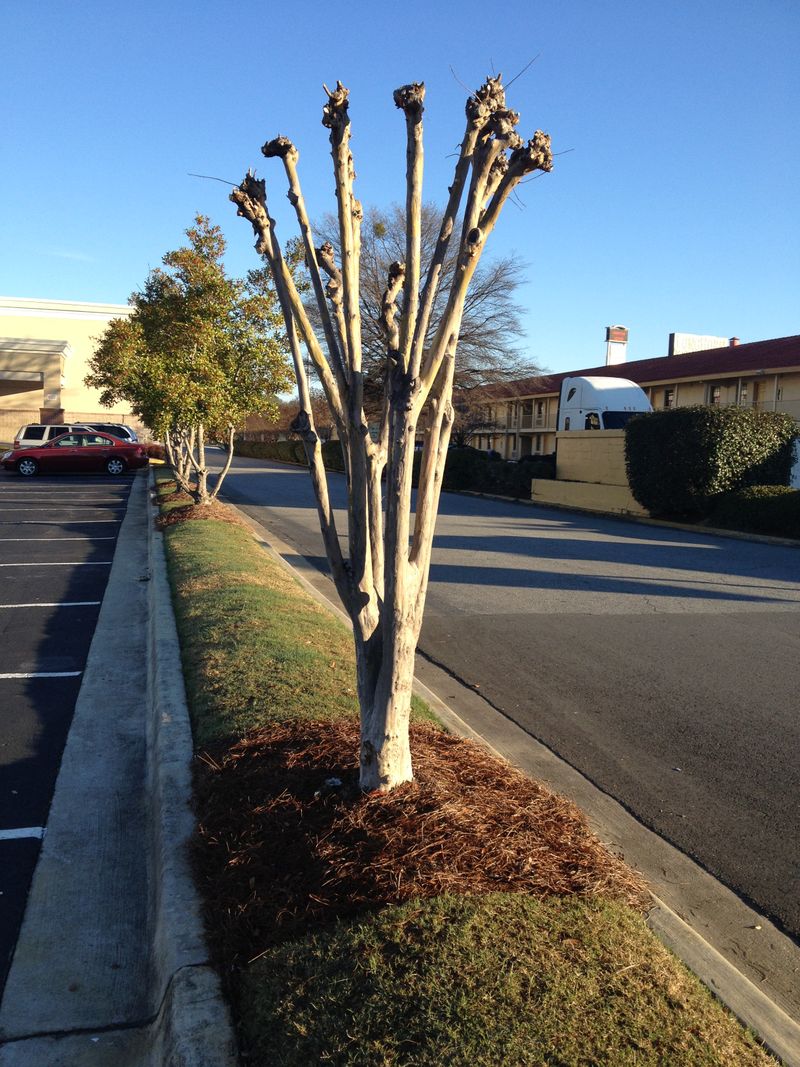
Clipping a few low seedheads and cutting back big limbs are two very different jobs. The first is light work.
The second is where trees get hurt, and where people do too.
Topping a crape myrtle just to get rid of capsules is a bad trade. UF/IFAS and N.C.
Cooperative Extension in Brunswick County both caution against severe pruning, which can distort the tree’s structure and may delay or shorten flowering.
Safety counts as much as tree health. An unstable ladder is a common cause of yard injuries, and Utah State University Extension advises leaving risky pruning to trained people.
Never cut near power lines, a point OSHA’s tree trimming guidance stresses.
If branches are high or close to wires, call a qualified arborist. Otherwise, leaving the pods alone remains a reasonable, no-effort choice.
Decide now; you do not have to cut before winter
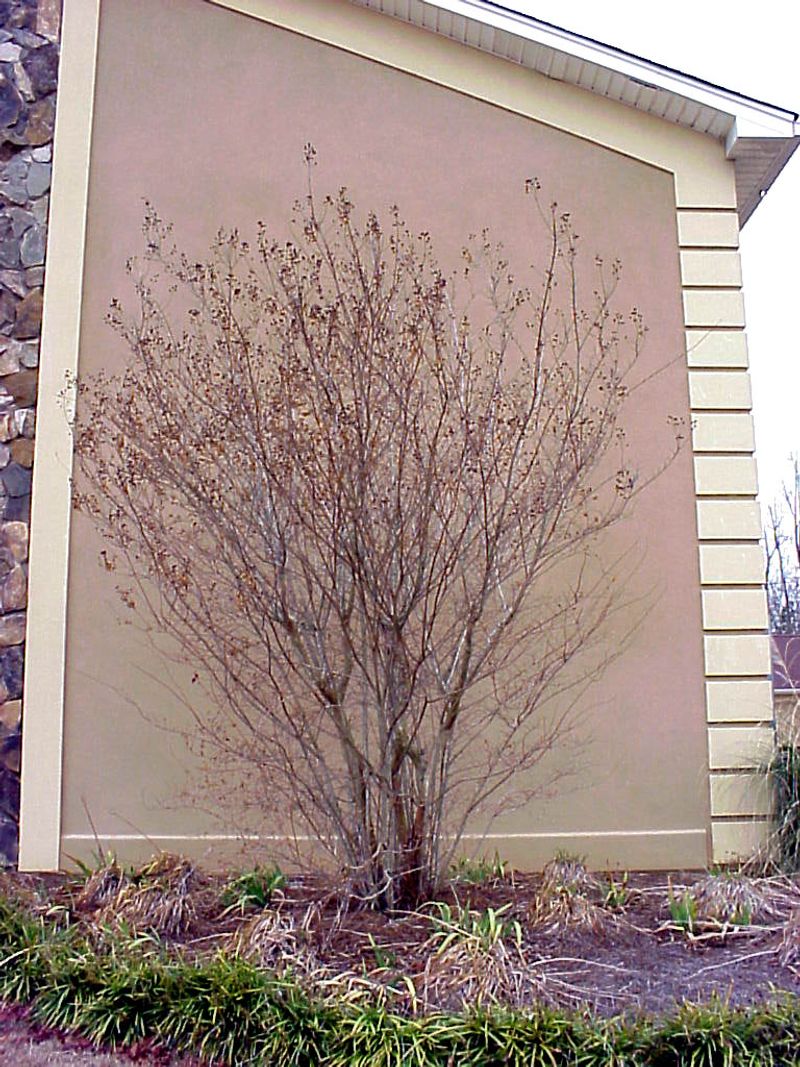
Here is the simple rule. If the look of the capsules suits you, leave them.
Birds may use the seeds, as Smithsonian reporting describes, though visits are not guaranteed.
If you want a neater tree, wait for late winter or early spring and clip only the seedheads you can reach from the ground, following Clemson’s timing. Neither choice is required to protect next summer’s blooms, which UF/IFAS confirms.
Either way, the tree will sleep through winter just fine.