
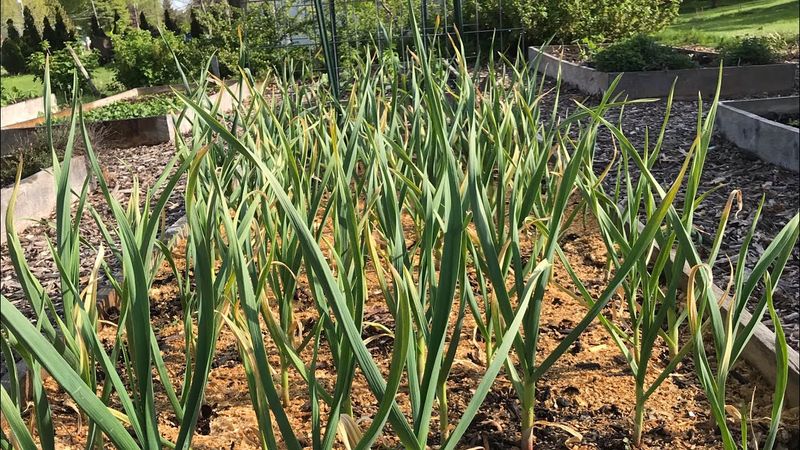
You walk out to the garlic bed after a chilly night and spot yellow tips on leaves that looked fine last week. It is easy to worry that the whole planting is in trouble.
The good news is that yellow tips are a clue, not a verdict. This guide helps you sort out what may be going on and what to do next to protect next summer’s bulbs.
Yellow tips after a cold snap suggest stress, not a certain diagnosis
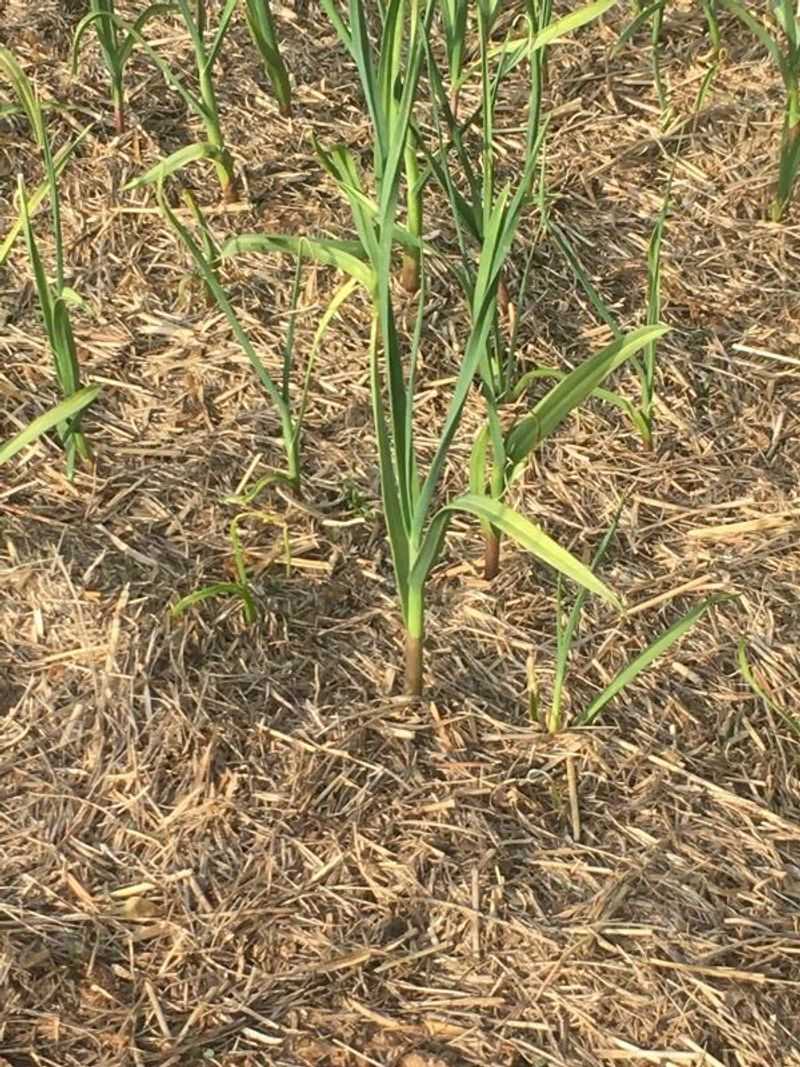
Cold nights followed by yellow tips make a tidy story, and it may even be the right one. Cold or wind stress is a plausible explanation, but timing alone cannot prove it.
A gardener who sees the symptom the morning after a freeze is likely to blame the weather, whether or not the weather did the damage.
According to Iowa State Extension, yellow tips can also come from water stress, nutrient deficiency, or disease. The tips look much the same in each case, so color alone will not tell you which one you have.
Wisconsin Extension adds that many garlic varieties develop yellow tips even when fertility is adequate, often tied to water stress. That is a good reason to look at the whole plant instead of just the tips.
Ask a few questions. Is the rest of each leaf green?
Is the new growth in the center standing upright? Is the soil dry, soggy, or evenly moist?
Plants that look otherwise healthy are usually better off with patience than with a quick fix.
Garlic tolerates frost, but exposure still matters
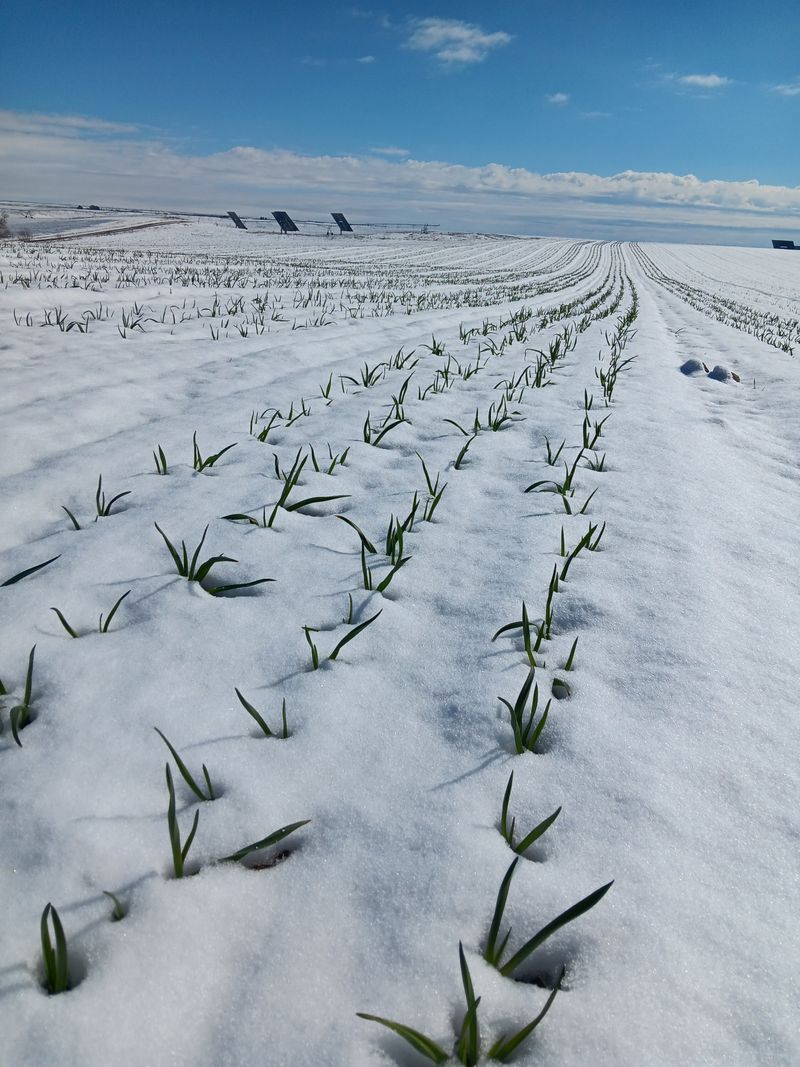
Garlic is known as a frost-tolerant crop, and Texas A&M AgriLife lists it that way in its Texas fall gardening guide. Tolerant does not mean damage-proof, though.
Every variety, planting spot, and hard freeze is a little different.
For a rough reference, Iowa State says garlic shoots can handle temperatures into the 20s degrees F, with possible foliage damage below 20 degrees F. That guidance comes from Iowa, not from Florida or Texas garlic trials, so treat it as context rather than a cutoff for your yard.
Injury depends on more than the lowest number on the thermometer. UC IPM notes that severity varies with how long the cold lasts, how fast temperatures drop, and the condition of the plant.
Damaged leaves may look scorched, and the signs can show up a few days later.
A freshly planted bed that was growing strongly before the cold may fare differently from one that was dry or crowded.
Check soil moisture before changing the care routine
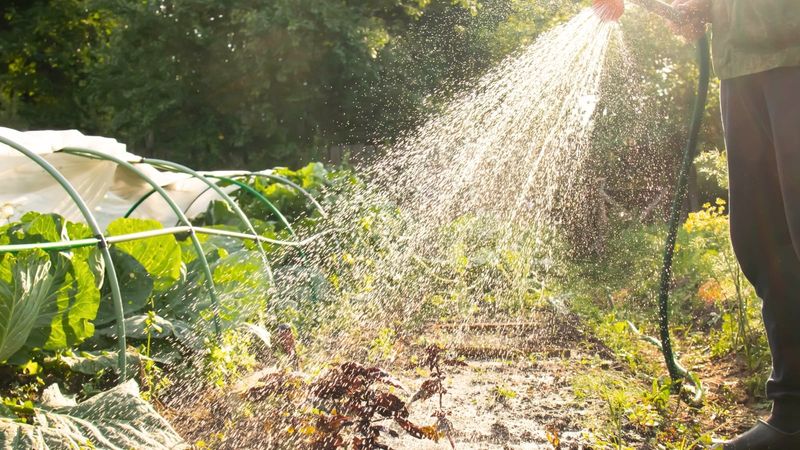
Before you reach for the hose or a bag of fertilizer, push a finger two inches into the soil. Is it dry and crumbly, evenly damp, or soggy and heavy?
That quick test can tell you more than the leaf color does.
University of Georgia Extension describes garlic as doing best with consistent moisture and good drainage. Dry soil can stress the plants, while overly wet soil can encourage bulb rots.
If the soil is dry, water slowly and deeply. If it is soggy, hold off and look for ways to improve drainage.
Fertilizer is tempting because yellow often suggests hunger. Iowa State lists nutrient deficiency as only one of several possible causes.
Wisconsin Extension points out that yellow tips can appear despite adequate fertility.
Unless a soil test or your planting history points to a shortage, skipping automatic feeding is a sound call.
Keep healthy leaves and watch what grows next
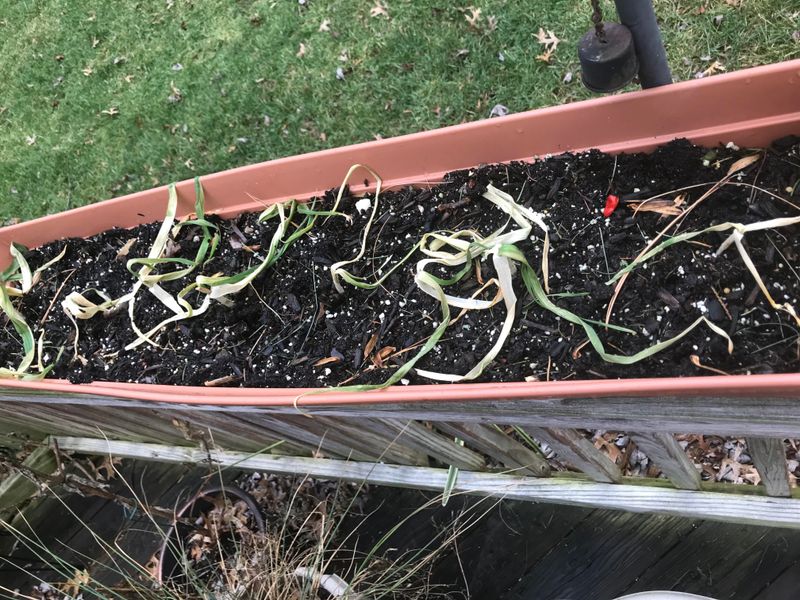
Green leaves are the plant’s solar panels. Each healthy leaf feeds growth that happens before bulbing begins, so it makes sense to leave the green parts alone.
A few yellow tips are far less worrying than widespread leaf loss.
University of Georgia Extension explains that yield potential depends partly on early leafy growth. That is why substantial or early loss of foliage can limit bulb size later.
Trimming the damaged tips is not a proven remedy, and there is no good basis for saying it sends energy to the bulb. Leaving the leaves in place keeps as much working leaf area as possible.
Instead, watch. Over the next one to two weeks, look for fresh green growth from the center of each plant.
Iowa State notes that garlic may regrow even after foliage is killed back, though the crop can be smaller. If symptoms keep spreading, that is the time to look harder at moisture, drainage, or disease.
Use loose mulch only if more severe cold is forecast
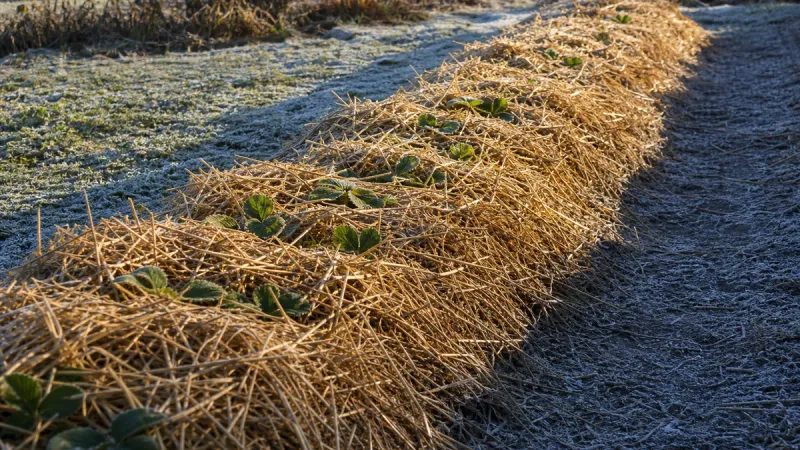
Mulch is a tool for the next cold night, not a cure for the last one. If your local forecast calls for harder cold than the plants have already seen, a light covering of loose material such as straw may add some insulation.
Check local extension guidance before you commit, since Southern winters vary widely.
Keep the layer light. Wisconsin Extension warns that heavy mulch can hold soil too wet or slow spring warming.
Iowa State Extension also covers mulch timing in its guidance on early garlic growth.
A soggy blanket packed around the stems is the thing to avoid, especially since garlic bulbs can rot in wet soil.
Also keep expectations realistic. Mulch will not turn yellow tips green again.
Its job is to reduce the chance of more damage if colder weather arrives.
Once the threat passes, you can pull the mulch back so the soil can breathe and warm up.
Early yellow tips are not a harvest signal
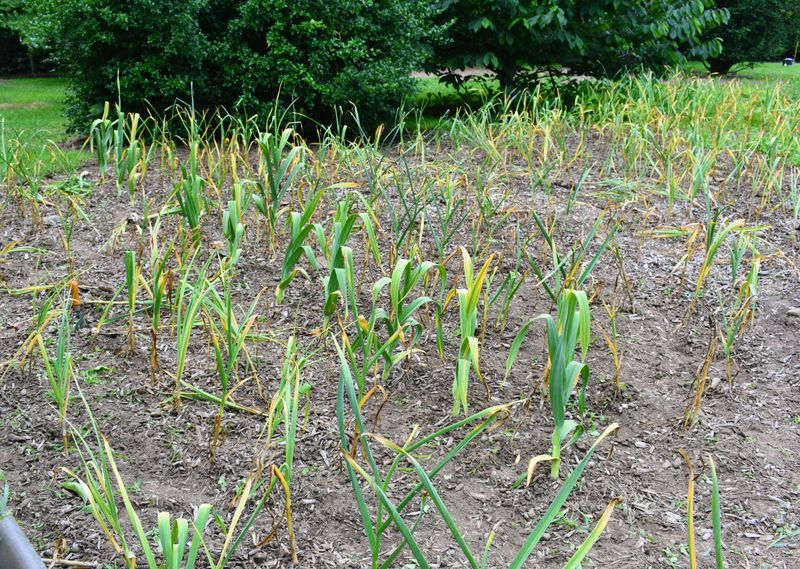
Garlic does turn yellow and brown, but that happens at the end of its life cycle. University of Georgia Extension describes leaves browning as garlic matures in early summer.
That is when harvest becomes a topic.
Yellow tips on young plants soon after planting are a different matter. Iowa State warns that early-season yellow tips can have other causes and may reduce yield, so they are no sign the bulbs are ready.
So what should you do now? Check whether the soil is dry, moist, or waterlogged.
Leave healthy green leaves in place. Then watch for fresh growth over the coming weeks, without assuming the bulbs are lost or that harvest is near.
Mark your calendar for early summer, when the real browning starts. Until then, a yellow tip is just a question worth answering calmly.