
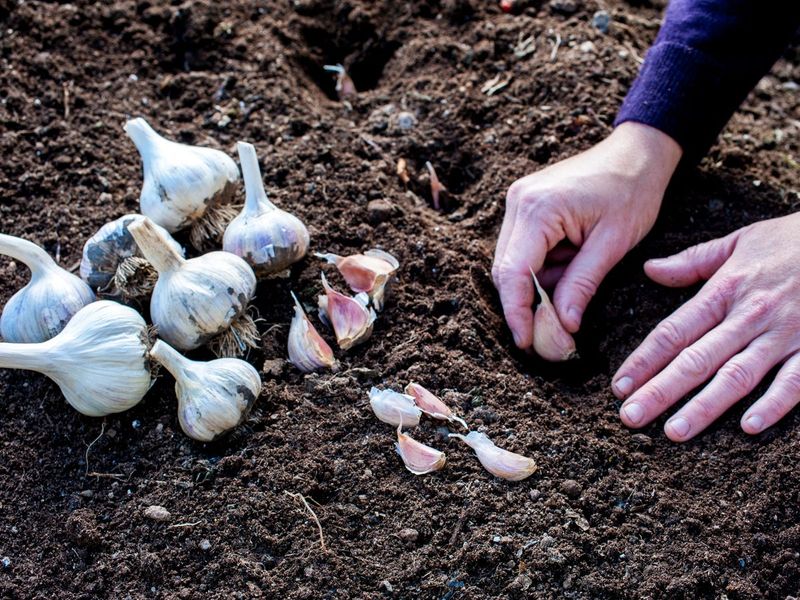
You tuck garlic cloves into the ground in fall and expect green shoots later. Sometimes you dig one up and find it soft and mushy instead.
Soggy ground is one common suspect, but it is not the only one. A few simple checks of your bed, your cloves, and your local calendar can help you plant with more confidence.
When wet soil can contribute to garlic rot
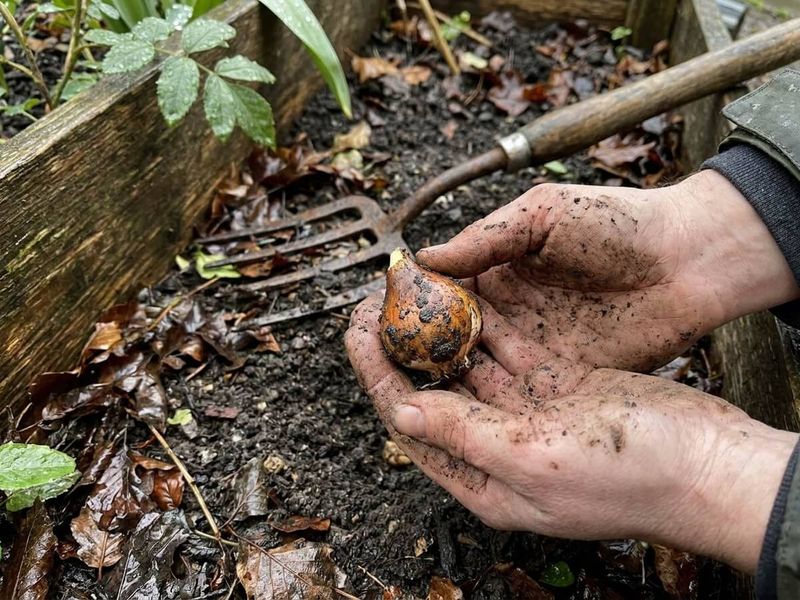
Garlic likes soil that stays evenly moist but drains well. University of Georgia Extension guidance points out that steady moisture helps garlic grow, while too much water can lead to rot.
Soil that stays saturated for long stretches can raise the risk for cloves and bulbs.
Wet ground is a risk, though, not a guaranteed cause. A soft clove can also come from disease.
UC IPM information on Fusarium basal rot notes that the fungus can arrive on seed cloves and persist in soil.
So why start with drainage? It is the part of the planting job you can check and adjust before the cloves go in.
The next sections cover how to do that, and where drainage fixes stop helping.
Clay does not rule out growing garlic
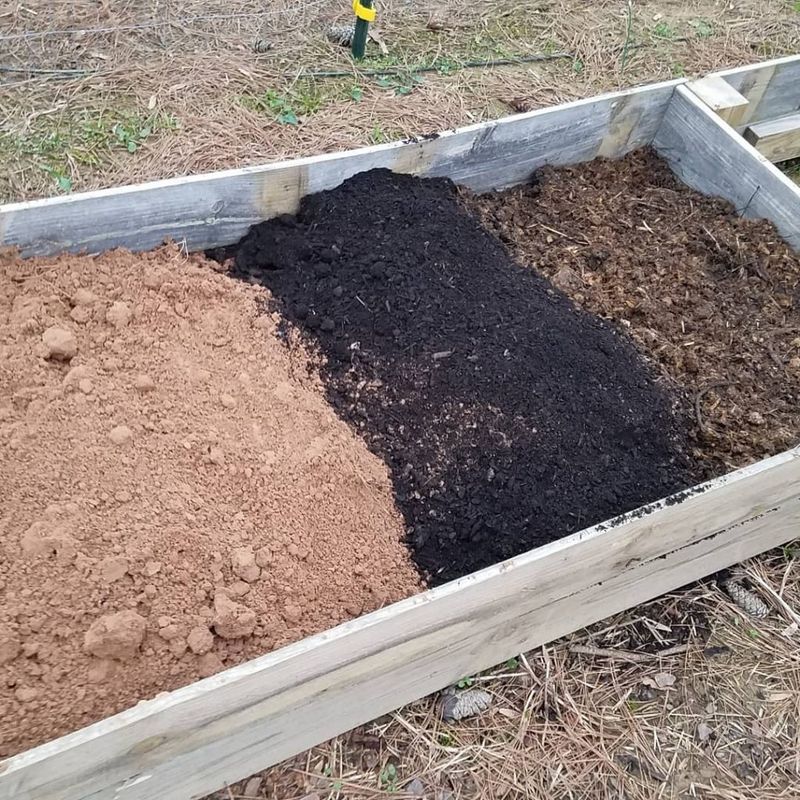
Heavy clay and waterlogged soil are not the same thing. Clay can hold water and pack down, but it can also be managed.
UGA Extension says garlic can grow in clay when organic matter improves the soil structure.
Instead of blaming a soil label, test your bed. After a good rain, see whether water pools for long periods, and check whether the soil crumbles in your hand or stays in a tight, sticky lump.
Loose, crumbly soil that drains is what you want.
If the soil needs help, work in well-rotted compost or other suitable organic matter. Skip the old tip about mixing in sand.
A 2026 UGA Extension soil guide warns that sand or gravel in clay can create layers that drain poorly, and recommends thoroughly incorporating amendments instead.
Raise the planting area where water lingers
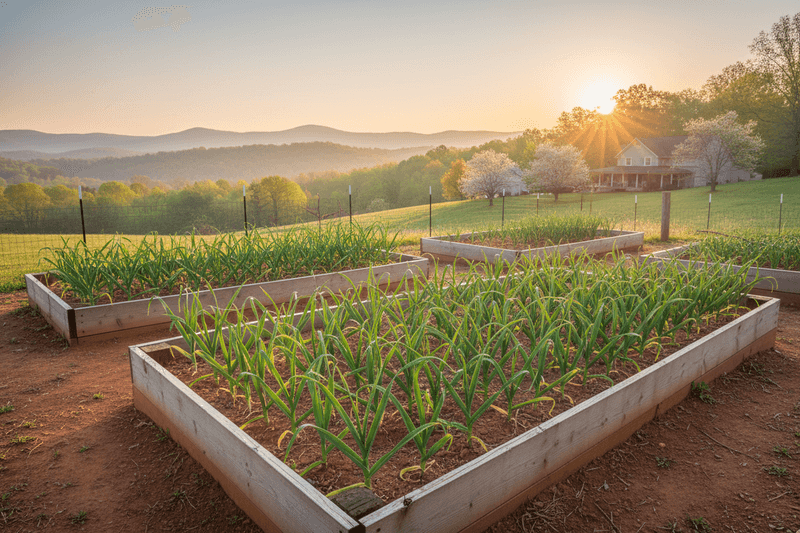
Some spots stay soggy even after you add compost. In that case, a raised bed or slightly raised row can help water move away from the cloves.
UGA guidance supports raised or slightly raised beds where drainage is a problem.
There is no single height that works everywhere. Sources for home gardeners describe raised beds in general terms, so adjust to your own yard and watch how water behaves after storms.
Think of a raised row as a drainage tool, not a cure-all. It will not fix a clove that already carries disease, and it will not clear pathogens already in the soil.
UGA’s garlic production publication is a useful reference for bed setup and management.
Choose firm, healthy planting cloves
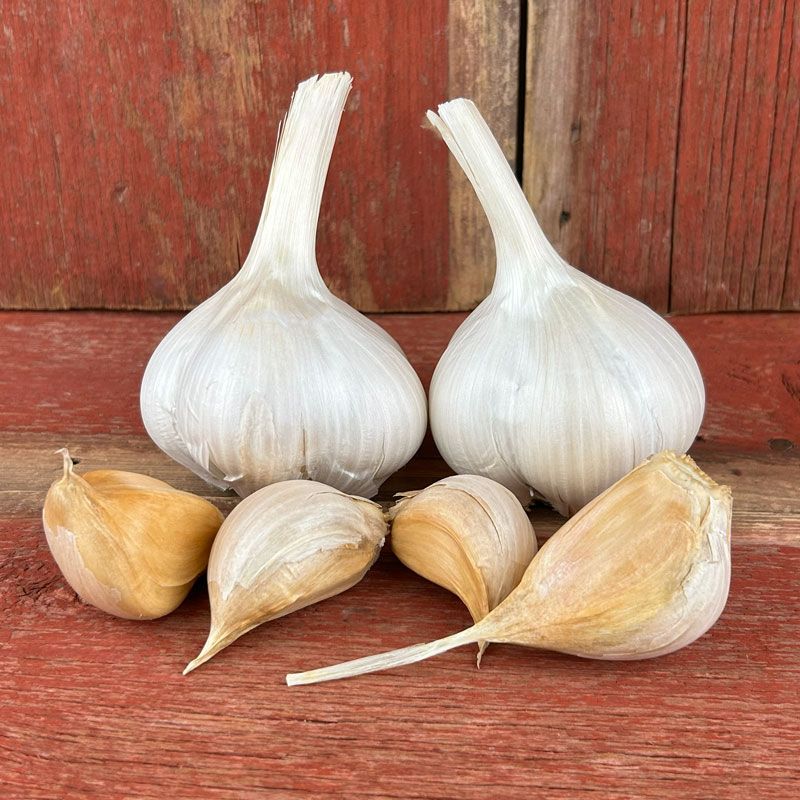
A perfect bed can still fail if the cloves are the problem. Buy seed garlic from a reputable source, and sort through it before planting.
Keep firm, plump cloves and toss any that are damaged, discolored, or already soft.
Looks can fool you. UC IPM says Fusarium can be carried in seed cloves, and even cloves without symptoms may be infected.
Disease can also show up as fuzzy growth. University of Minnesota Extension notes that cloves infected with Penicillium can rot before they emerge.
Good drainage lowers one risk, but it cannot make an infected clove safe.
Softness or delayed emergence is not a diagnosis
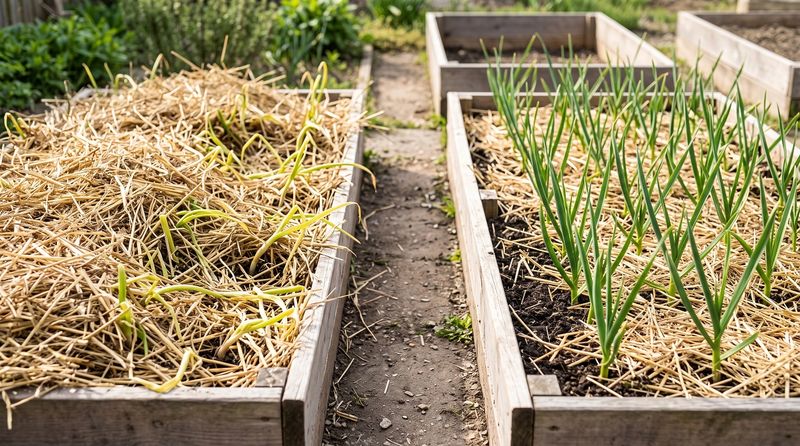
Found a soft clove? Hold off on blaming the soil.
Softness alone does not tell you the cause. Disease, damage, and other problems can all produce rot.
Signs vary by disease. Minnesota Extension describes Fusarium basal rot as often starting at the base, sometimes with watery brown decay or white growth.
White rot can bring white fluffy growth and tiny black structures, according to its home garlic guide.
A missing shoot is not proof of rot either. UGA notes that garlic emergence can be uneven.
If you are unsure what you are seeing, your local extension office can help you sort it out.
Follow your local garlic planting calendar
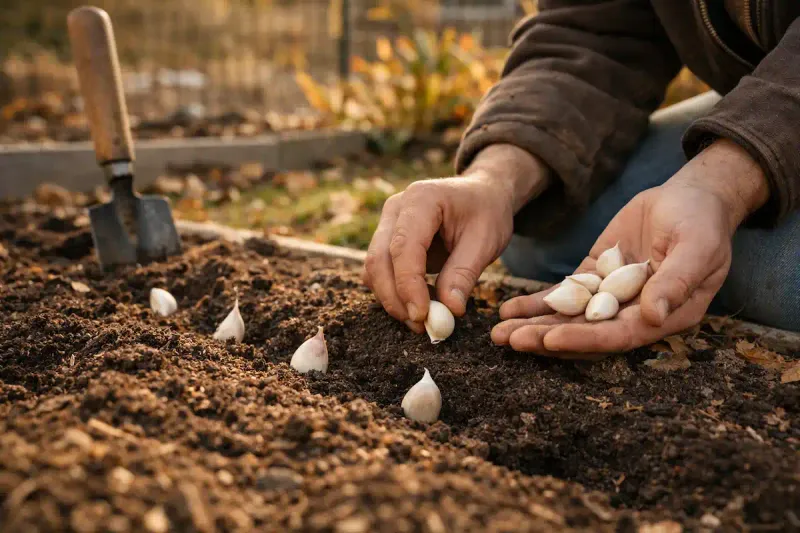
The South is big, and garlic timing changes across it. Georgia Extension gives a window from late September through November.
Texas is more varied. Texas A&M AgriLife’s fall guide lists garlic planting by region, anywhere from July through December.
In Florida, UF/IFAS Pasco County describes garlic as a late-fall or early-winter crop.
Timing and drainage are separate jobs. A well-drained bed planted at the wrong time can still disappoint, so check your own state or region’s extension calendar before you set a date.
Check the bed and cloves before planting
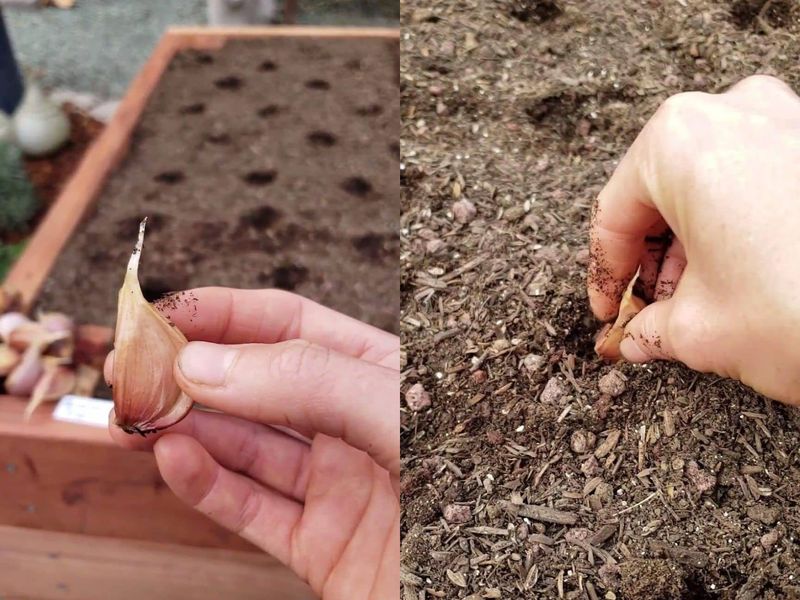
Start by seeing whether your bed stays saturated after rain. If it does, improve the soil structure or raise the planting area.
Then choose firm cloves and confirm your local planting window.
These steps can reduce rot risk, but they cannot guarantee a perfect crop. Good drainage and healthy cloves work together.