
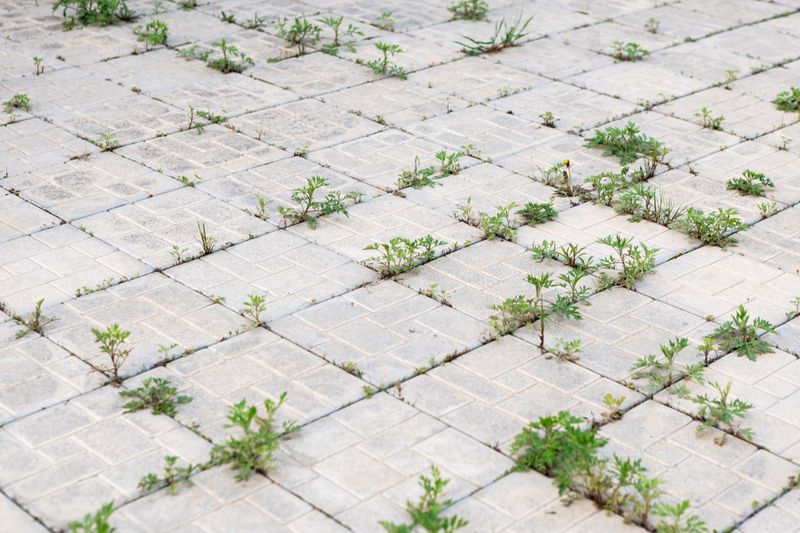
You pull every weed from your patio on Saturday, and by the next rainy week the gaps look fuzzy and green again. The cause is usually a mix of things, and the joints between your pavers play a big part.
Once you know what is feeding the weeds, you can choose steps that cut down repeat growth. Here is how to read the clues and make a plan that fits your yard.
Paver joints can become footholds for weeds
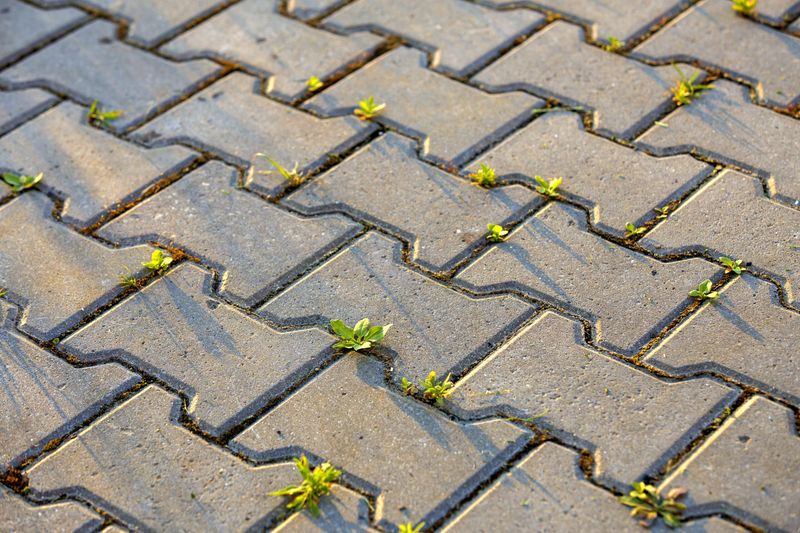
Take a close look at a weedy walkway and you will notice the weeds rarely grow from the paver itself. They sprout in the narrow joints, where fine silt, dust, and leaf bits settle over time.
Texas A&M Transportation Institute research on weed management describes how seeds can land in settled silt and dust, and how openings and low spots collect soil and debris.
In Florida and Texas, heavy rain and long growing seasons make this easier. Storms wash grit into the gaps, and wind drops seeds right on top.
Joints that have eroded or sunk below the paver surface hold even more of this material, so they turn into tiny planters.
Debris-filled joints are a common route for weeds, but they are not the only one. Cornell turfgrass weed guidance for hard surfaces points out that nearby weeds can also send in seeds and spreading plant parts.
Think of the joints as the foothold, and a mix of seeds and nearby plants as the supply.
Some weeds spread beneath the paving
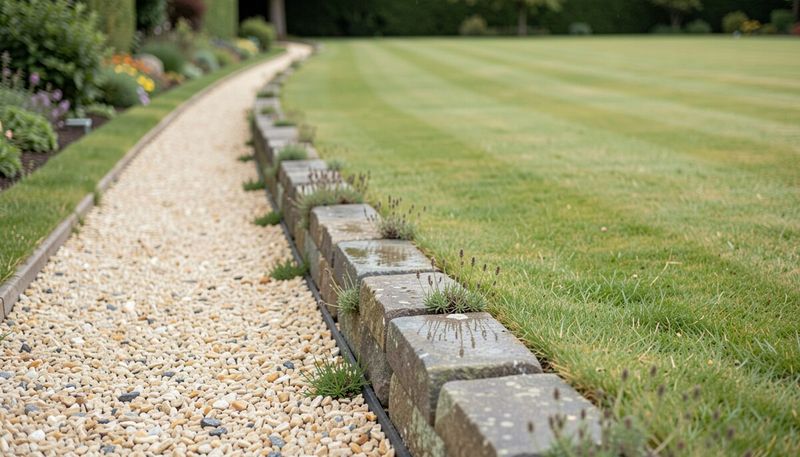
Picture two patches of green in your patio. One is a scatter of tiny seedlings in a joint full of dust.
The other is the same grass or vine popping up again and again along one edge. They look alike at first, but they behave very differently.
Seedlings rooted in joint debris tend to pull out fairly easily and show up in random spots. Spreading plants are another story.
Cornell notes that some weeds spread by runners or underground stems, which can travel under pavement and come up through the joints.
Here is a simple diagnostic clue. If the same aggressive plant keeps returning near a lawn edge or flower bed, trace it back.
Look for runners crossing the border, and check whether the plant also grows in the nearby bed.
In that case, refilling the joint alone may not solve the problem. You may need to manage the growth beyond the joint, such as cutting back runners, installing or repairing an edge barrier, and removing the plant at its source.
Clear worn joints before refilling them
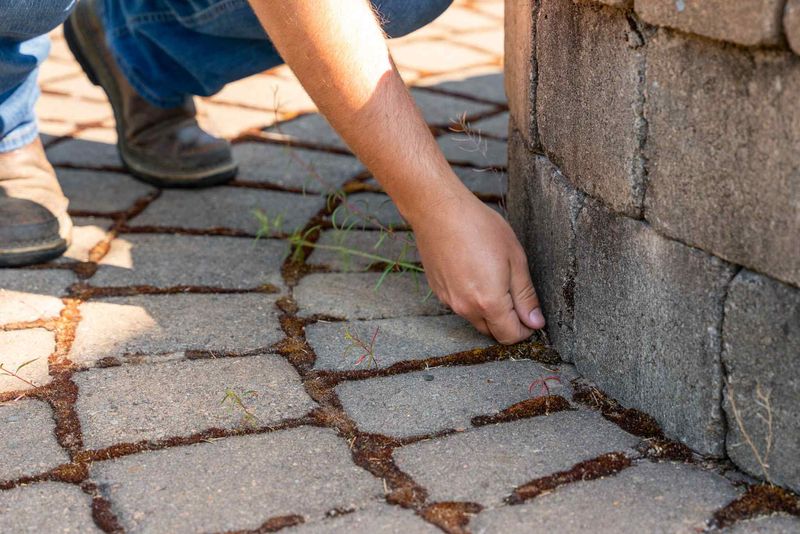
A good reset starts with removing what is already there. Pull established weeds, roots included, and scrape out old, crusty, or contaminated joint material where it has broken down.
Fresh filler on top of dirt and roots tends to fail early.
How you prepare the joints depends on the product you choose. Techniseal’s step-by-step polymeric sand guide calls for empty joints and a minimum fill depth, and its EZSAND data sheet lists its own requirements.
Treat those as examples of one brand’s rules, not universal settings. Another product may ask for something different.
Skip the idea that blasting everything with a pressure washer is always step one. Aggressive cleaning can knock out joint fill and damage paver surfaces.
UC IPM guidance on weed control for pavers points readers toward careful work that does not disturb the pavers.
Read the label, follow its prep steps, and work in a dry window so you can refill properly.
Choose joint material with drainage in mind
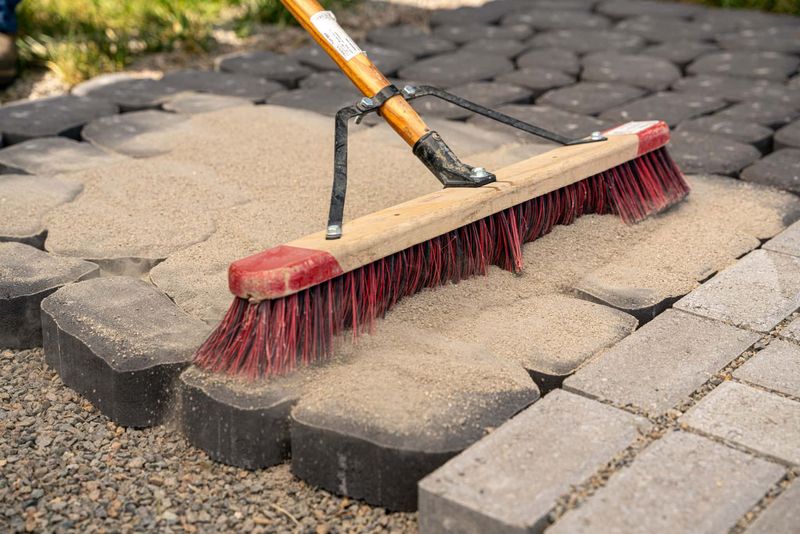
Picking filler is where drainage matters most. Polymeric sand hardens after it is activated with water, and that firmer surface can help reduce weed establishment.
Even so, UC IPM cautions that it is not a 100 percent fix.
Drainage is the tradeoff. UF/IFAS Extension in Hillsborough County explains that polymeric sand is not porous, while permeable paver sand lets water pass through but may need topping off now and then.
In Florida’s downpours, that difference affects where the water goes.
If your pavers were designed as permeable pavement, slow down before buying a standard polymeric product. Those systems use specific stone and joint materials and have their own upkeep, covered in UF/IFAS technical guidance.
Texas readers with clay soil and flash storms should check drainage too.
Joint width, current joint condition, and the product’s own instructions all count. When unsure, ask the paver installer or manufacturer which filler suits your system.
Keep debris and seed heads under control
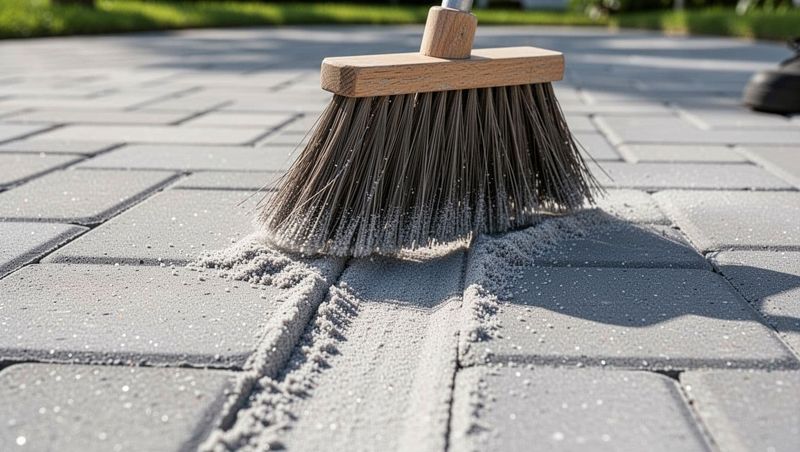
Once joints are refilled, a few small habits carry the load. Sweep the surface on a regular schedule so silt, grass clippings, and leaf litter do not pile up in the joints.
Less buildup means fewer places for seeds to settle.
Timing matters with weeds too. Cornell’s hard-surface guidance recommends pulling or cutting them before they form seed heads, since one flowering weed can scatter plenty of seed.
In Southern yards, where growth runs for most of the year, a quick walk-through every week or two during the warm months keeps things manageable.
A few handy spots to check are corners where leaves collect, edges beside mulch, and the low area under a downspout. Those spots build up debris first.
These habits work alongside a suitable joint filler, not in place of it. Seeds can still blow in, and plants outside the paved area may keep sending runners across.
Think of sweeping and snipping as upkeep that lowers the odds, not a shield.
Treat weeds carefully and expect ongoing maintenance
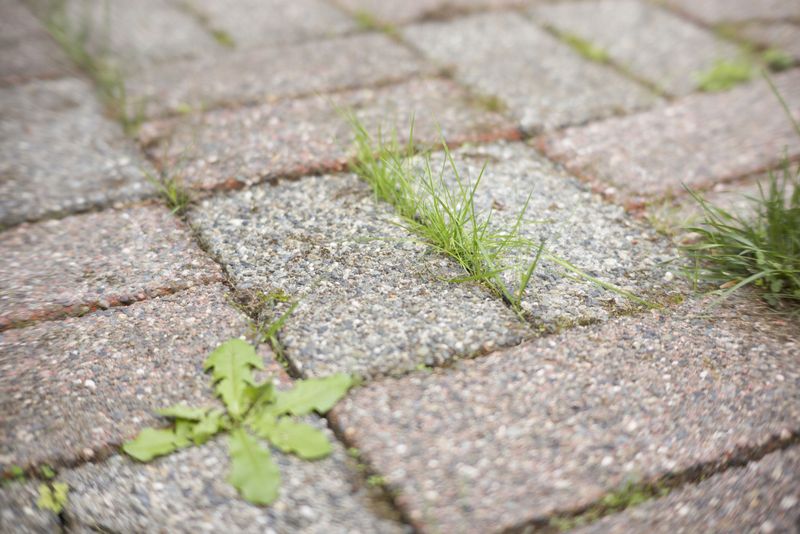
A realistic plan has three parts. Remove established growth, restore worn joints with a compatible material, and keep up the surface with sweeping and quick weed removal.
Do those well and you can cut down repeat growth, though no joint treatment can promise weeds will never return.
Be careful with quick chemical fixes. Salt lingers and can hurt nearby plants, and Penn State Extension warns against homemade salt, bleach, and vinegar mixes.
Household vinegar may only burn very young seedlings, and bleach can harm soil and create hazards.
If you choose an herbicide, use only one labeled for the site you are treating. EPA explains that pesticide labels are legally enforceable, and some hard-surface labels, such as this example label, include directions about runoff reaching drains or water.
Read the label of your own product.
Even polymeric sand is described by UC IPM as not a complete fix. A paver patio is a bit like a lawn edge, and it stays neat with small, steady care.