
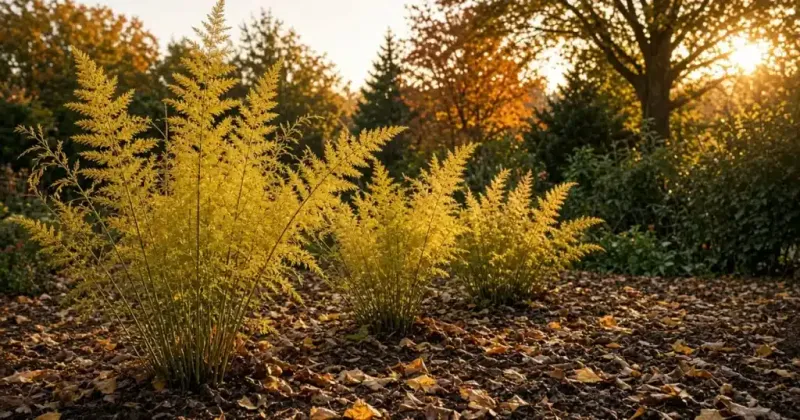
Those tall, feathery asparagus ferns can start to look messy by fall, and it is tempting to grab the pruners. But what you do with them can shape how many spears you pick next spring.
The right answer depends on the color of the foliage and on where you garden. Here is how Southern gardeners can sort out the timing and decide what fits their own bed.
Wait until green ferns turn fully yellow or brown
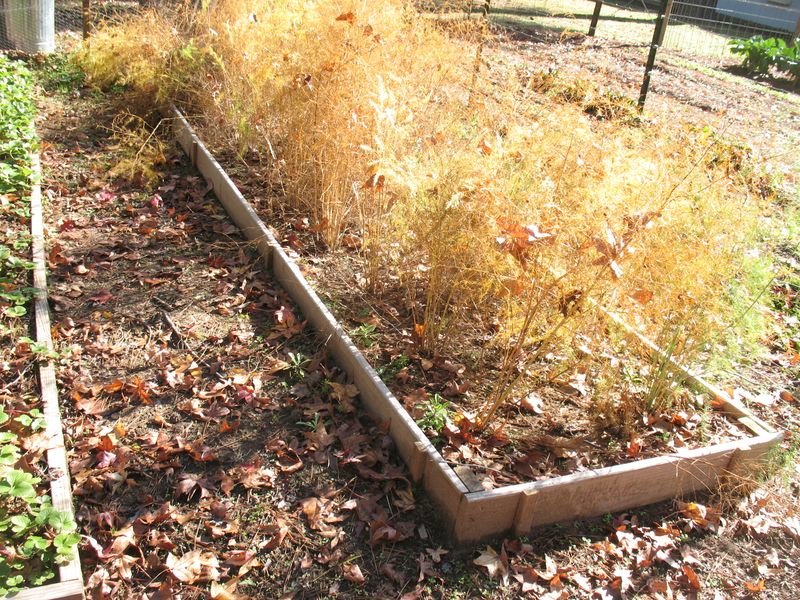
Leave green ferns standing. Once they have turned fully yellow or brown and gone dormant, they are ready to be cut if your regional guidance calls for removal.
Color is the plant’s signal, and University of New Hampshire Extension advises waiting for that change before cutting.
Dormancy tells you when cutting is possible, but it does not settle whether every Southern gardener should do it. Some regions and growing situations favor cleanup, and others favor leaving the dead tops in place.
The next sections explain the difference.
Texas A&M offers one regional example. In its asparagus guide, the advice for southern Texas is to remove tops in late November once they turn yellow, when frost has not killed them.
After a hard freeze, it says to cut the tops at ground level. That late-November date is for that part of Texas, not for the whole South or for Florida.
Green ferns help replenish the crown
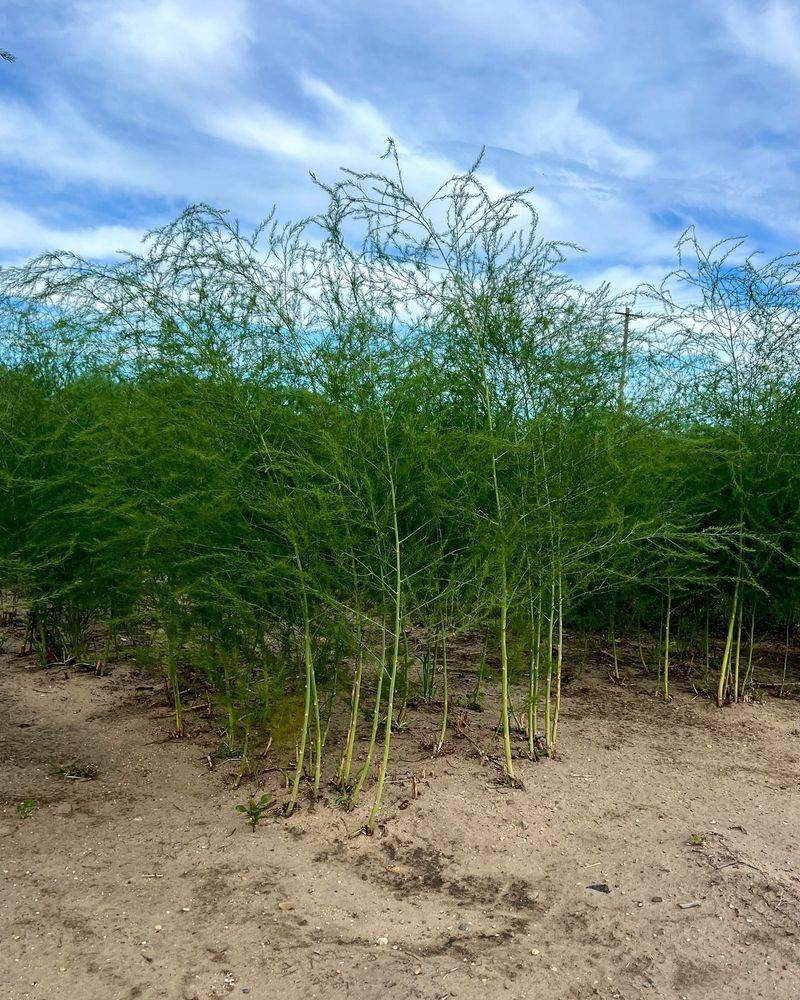
Think of the ferns as solar panels for the crown. While they are green, they capture sunlight and make food that gets stored in the roots below.
As the foliage dies back in fall, nutrients also move down from the fading fronds into the crown.
Cutting green ferns for tidiness interrupts that process. According to UNH Extension, removing foliage too early may weaken the crown and reduce the size or number of spears the next spring.
A practical example: if a warm spell keeps part of the patch green in December, leave those stems alone, even if a neighbor’s bed looks neater. A slightly shaggy bed now can mean a better harvest later.
Treat dormant-foliage cleanup as a regional choice
Cleanup is an option, not a rule for the whole South. Texas A&M recommends cutting tops at ground level after a hard freeze.
In parts of southern Texas where frost has not killed them, its guidance points to late November, once the tops are yellow.
If you take this route, clear the cut stems out of the bed rather than leaving them in a pile beside it. Minnesota Extension notes that burning depends on local ordinances, so skip burning as a routine step.
Bag the stems, compost them if your local rules allow, or use your municipal yard waste pickup.
Another regional recommendation takes a different view, and the section on Southeastern production guidance explains it. Check which advice fits your location before you reach for the shears.
Dead-fern removal may reduce beetle shelter
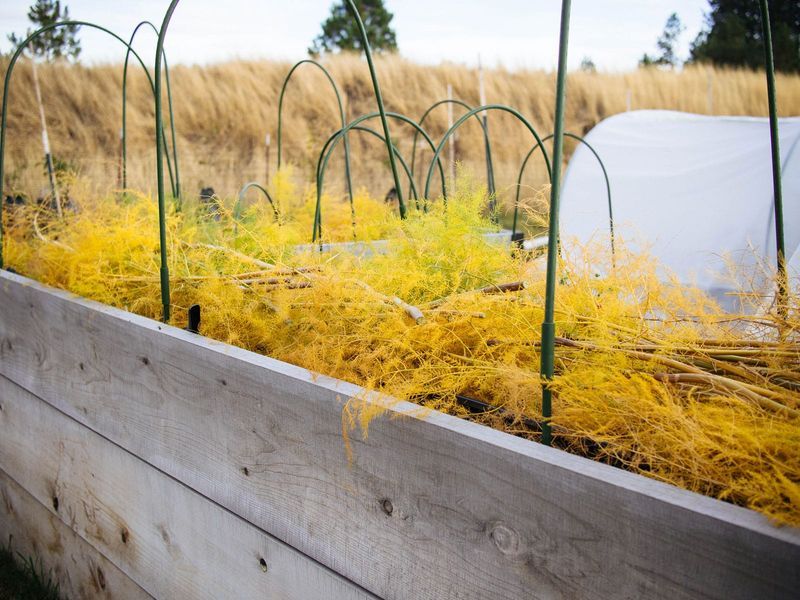
Common asparagus beetles can spend the winter on old fern material and in debris nearby. Clearing dead tops may remove some of that shelter, which is one reason late-fall cleanup is recommended in some guidance.
Minnesota Extension lists it as a way to help hold beetle numbers down.
Still, a tidy bed is not a beetle-free bed. Beetles can also shelter in other dead plant material, so removing ferns alone cannot guarantee control.
For a home garden, the UC Statewide IPM Program offers a useful picture of the pest. Treat fern cleanup as one small step, and check nearby weeds and plant litter too if beetles were a problem last season.
Southeastern production guidance may favor leaving dead ferns
Not every expert says to cut. The 2025 Southeastern U.S.
Vegetable Crop Handbook advises against fall fern cutting in its production guidance. You can read it in the handbook posted by Mississippi State Extension.
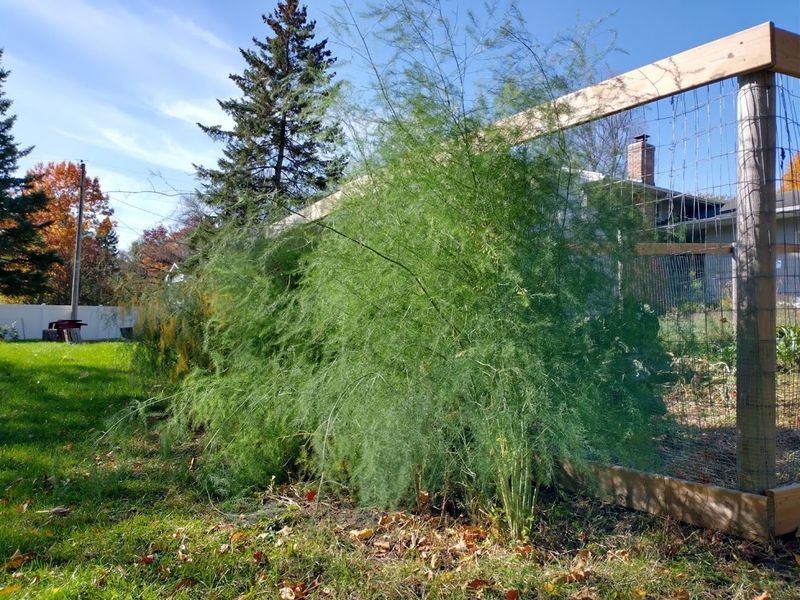
The reasoning is about soil and frost. Dead ferns left standing can keep the soil cooler, which may delay early spear emergence.
Spears that come up later are less likely to be hit by a late frost.
Compare that with the late-fall cleanup advice from Texas A&M, which is regional guidance for its own area, as covered in its asparagus publication. The two recommendations come from different places and goals, so neither one is automatically right for every bed.
The handbook speaks to production growing, not backyard patches in particular. If your spring frost risk is high, leaving the tops may help.
If beetles were a headache, cleanup may help. Weigh your own local conditions.
Check that the plant and climate fit the advice
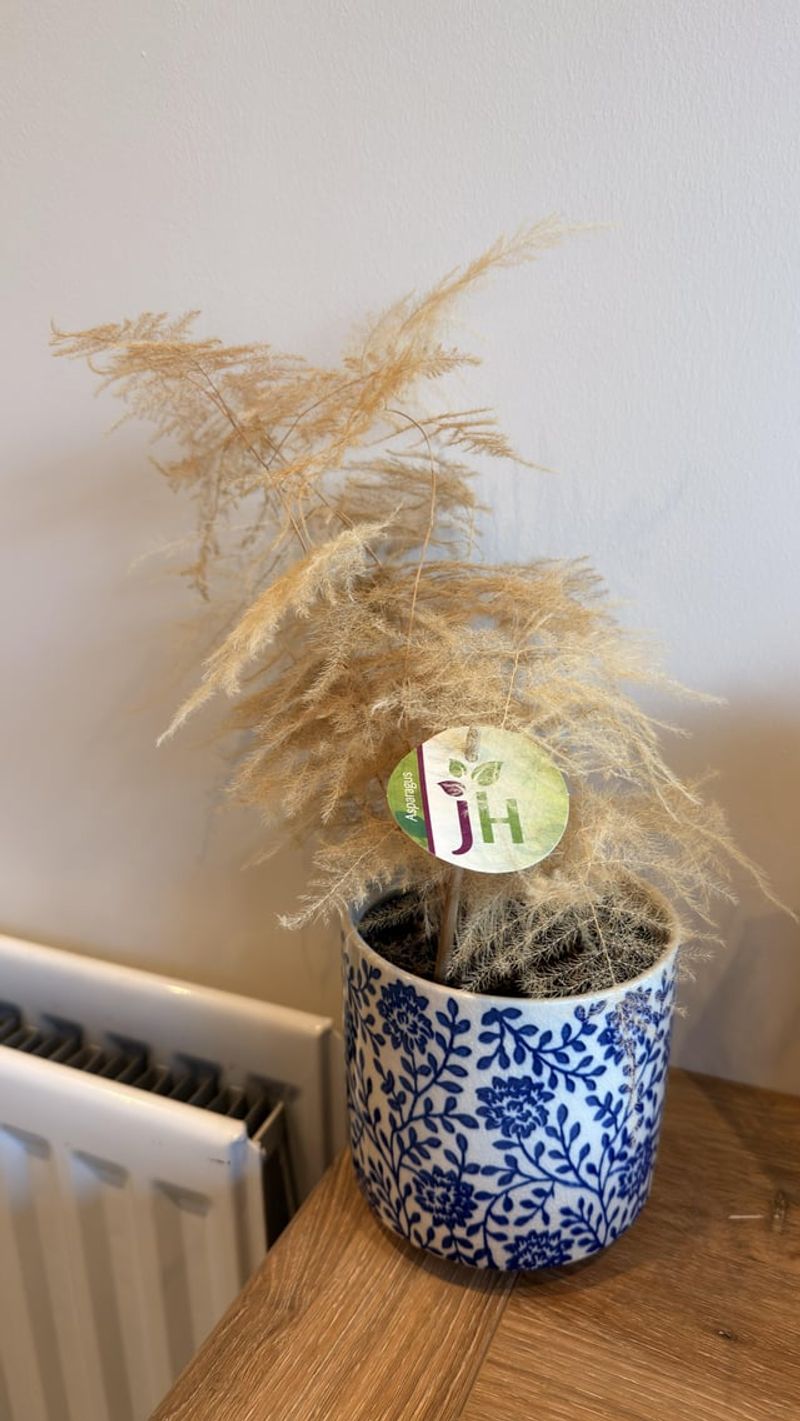
This advice covers edible asparagus, Asparagus officinalis. Ornamental plants sold as asparagus fern are different, and you should not assume they follow the same seasonal care.
Florida readers need one more check. UF/IFAS says asparagus generally grows best in colder climates and may be weak or spindly without enough dormancy.
It does not give a specific Florida cutback date.
Here is the decision path. Keep green ferns in place.
Wait for full yellowing or browning before you consider cutting. Then follow guidance suited to your region, whether that is cleanup as in Texas A&M advice or retaining dead ferns as in the Southeastern handbook.
Dormant foliage has no single Southern fate, so the plant’s color tells you when, and your local guidance tells you whether.