
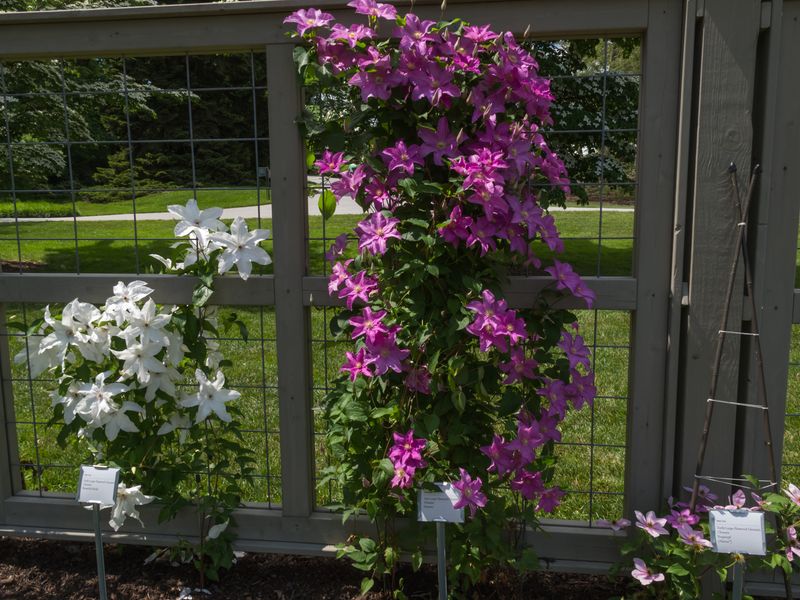
A messy clematis can make you want to grab the shears the moment the weather cools. But some clematis vines are already carrying next year’s flower buds on the stems you would be cutting.
In the South, where vines grow fast and stay green for a long time, a wrong fall cut is easy to make. A quick check of your vine’s group tells you whether to cut now, wait, or leave it alone.
Let the clematis group—not the tangle—guide your fall decision
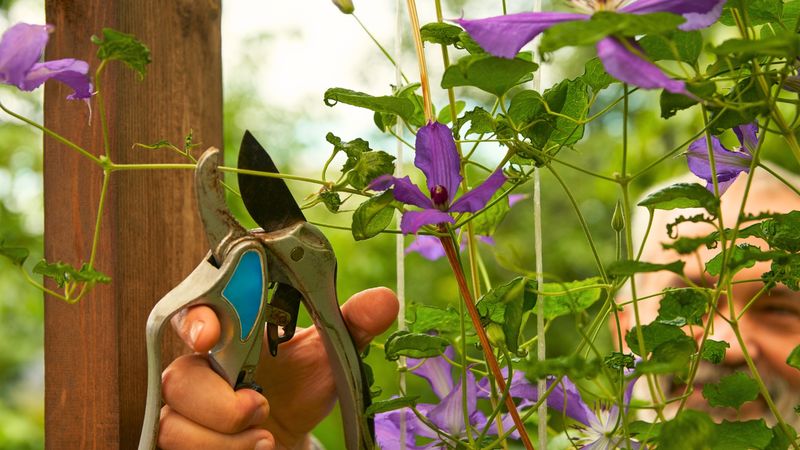
A tangled clematis looks like it needs a haircut, but the mess alone does not tell you what to cut. What matters is whether the plant flowers on old growth, new growth, or both.
Royal Horticultural Society pruning guidance sorts clematis into groups for exactly this reason.
Some clematis carry next season’s flowers on stems that already exist. A hard fall cut on those vines can remove the very wood that would have bloomed.
Others flower only on fresh growth, so they handle a hard cut much better, and that cut usually comes later in the year.
Nor does leaving a vine alone this fall mean it will bloom thinner next summer. That outcome depends on the group.
Until you know yours, keep the main stems in place, and Iowa State Extension and University of Illinois Extension both point to identifying the vine first.
Check the label, then use bloom timing as a clue
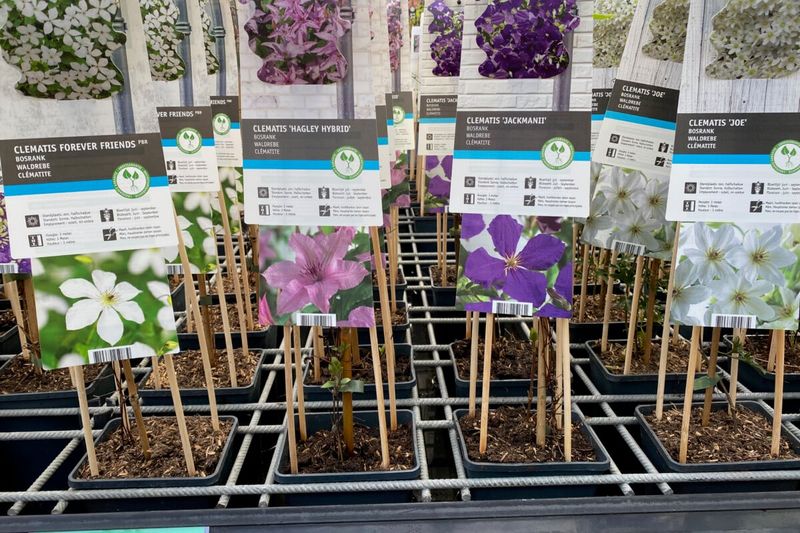
Start with the paper trail. Look for the original plant tag, your purchase receipt, or the nursery’s online listing, and watch for a pruning group shown as a number from 1 to 3 or a letter from A to C.
University of Illinois Extension notes that both labeling styles are in use.
No tag? Think back to when the vine blooms.
Flowers in early spring suggest Group 1. A first flush in spring or early summer, followed by a second round, often points to Group 2.
Blooms from mid to late summer often suggest Group 3, a pattern described in RHS guidance.
Treat timing as a clue, not proof. Weather, shade, and a plant’s age can shift bloom dates, so confirm against a variety description when you can.
The University of Arkansas Extension also builds its advice around groups.
Group 1 keeps the stems that carry its spring flowers
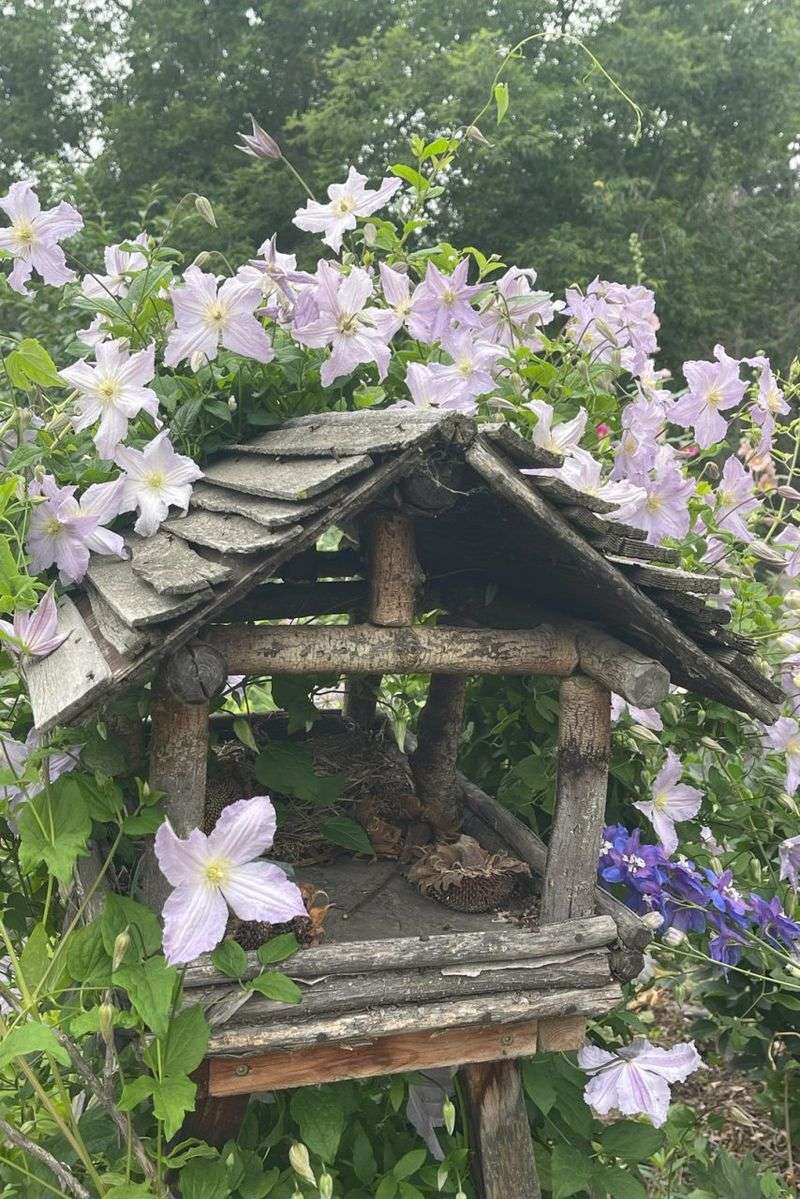
Picture a clematis smothered in blooms before the weather turns hot. Those early-spring flowers usually open on stems grown the previous season, which is the hallmark of Group 1.
Cut those stems in fall and you remove the flowers before they form.
So the winter plan is simple: leave them be. University of Illinois Extension advises keeping this old wood through the cold months.
If the vine has outgrown its spot, prune lightly right after the flowers fade. That timing gives new stems the whole growing season to mature and carry next spring’s show.
The University of Arkansas Extension describes this same light, after-bloom approach for size and shape.
A tidy-up here means trimming stray growth, not cutting the whole vine back.
Group 2 calls for selective pruning
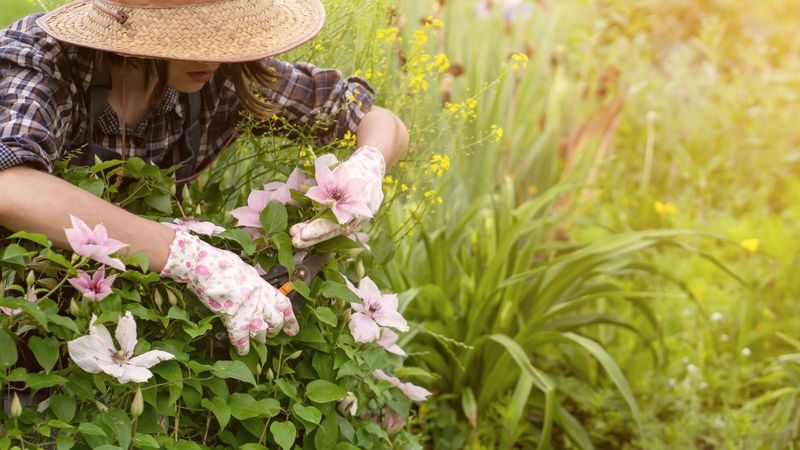
Group 2 plants play a double game. Many are large-flowered clematis that bloom first on last year’s growth and may bloom again on new growth later.
That makes a hard fall cut risky, since it can wipe out the first round of flowers.
Wait until late winter or early spring, when buds start to swell. Then remove stems that are dead or weak and keep the healthy growth.
University of Illinois Extension describes this selective approach for Group 2.
After the first flush finishes, you can prune a bit more. Trimming selectively at that point can help encourage later flowers, as outlined in RHS pruning guidance.
Think of it as editing rather than cutting down. Take out what is clearly dead or feeble, and leave the strong stems that already hold buds.
Group 3 gets its hard cut before new growth starts
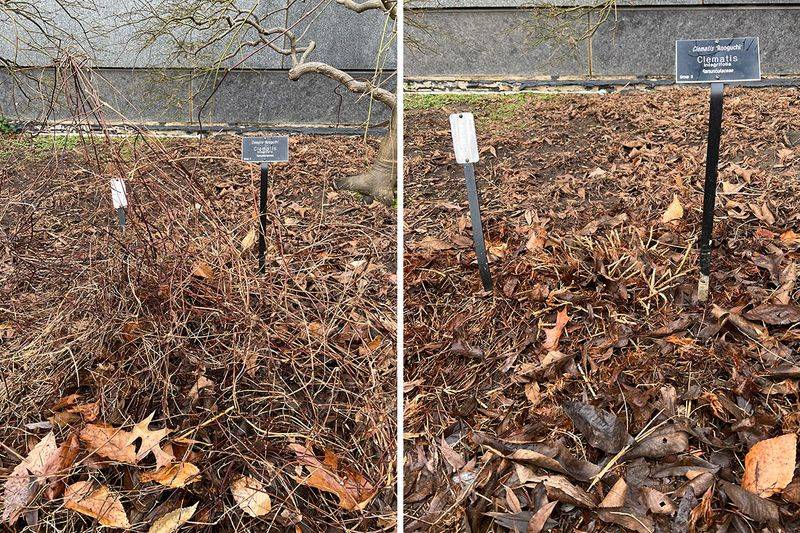
Group 3 is the group that can take the big cut. These clematis flower on current-season growth, so they are generally pruned in late winter or early spring rather than fall.
The vine then rebuilds from low buds.
A common extension recommendation is to cut stems back to healthy buds about 6 to 12 inches above the ground. Iowa State Extension gives this range, and University of Illinois Extension backs the same group-based timing.
The payoff may be cleaner, fuller-looking growth with flowers lower on the vine instead of high up in a bare tangle. That is a possible result, not a promise of more blooms overall.
In Florida and Texas, spring growth can start early in some areas and later in others. Watch your own vine for swelling buds and let local conditions guide the date, as the University of Arkansas Extension group-based approach allows.
A tangled vine does not diagnose every flowering problem
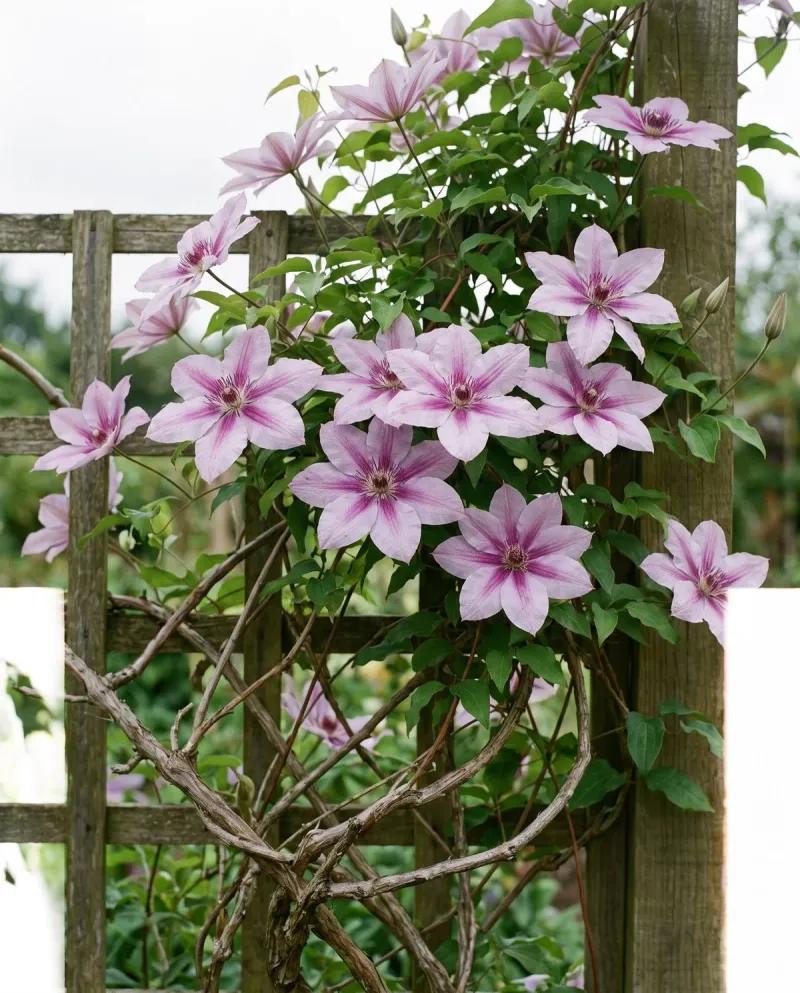
A bare-bottomed vine with flowers way up high is a familiar sight. Some unpruned Group 3 clematis do end up tangled, bare near the base, and flowering higher up, as RHS guidance suggests.
That does not mean every unpruned vine will have fewer flowers.
Pruning is also not the only lever. Iowa State Extension lists too little light and too much nitrogen as other causes of poor flowering.
If your vine sits in shade or gets heavy lawn fertilizer, fix those first.
There is one exception to the leave-it-alone rule. If disease has hit the vine, remove the clearly diseased stems and clean up fall debris, as University of Illinois Extension advises.
Targeted removal of sick growth is a different job from hard-pruning healthy stems.
If the group is still unknown, keep the main stems for now
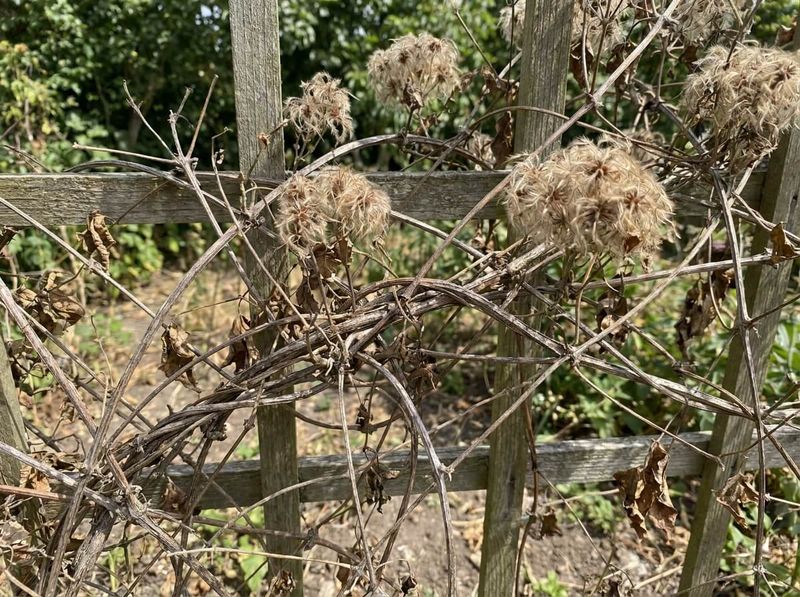
Check the label, or match your vine to a variety description. If the group still stays a mystery, skip the hard fall cut and keep the main stems, as Iowa State Extension and University of Illinois Extension advise.
Watch when it blooms next year, and you will have your answer. A vine you leave alone can wait, while one you cut cannot be uncut.