
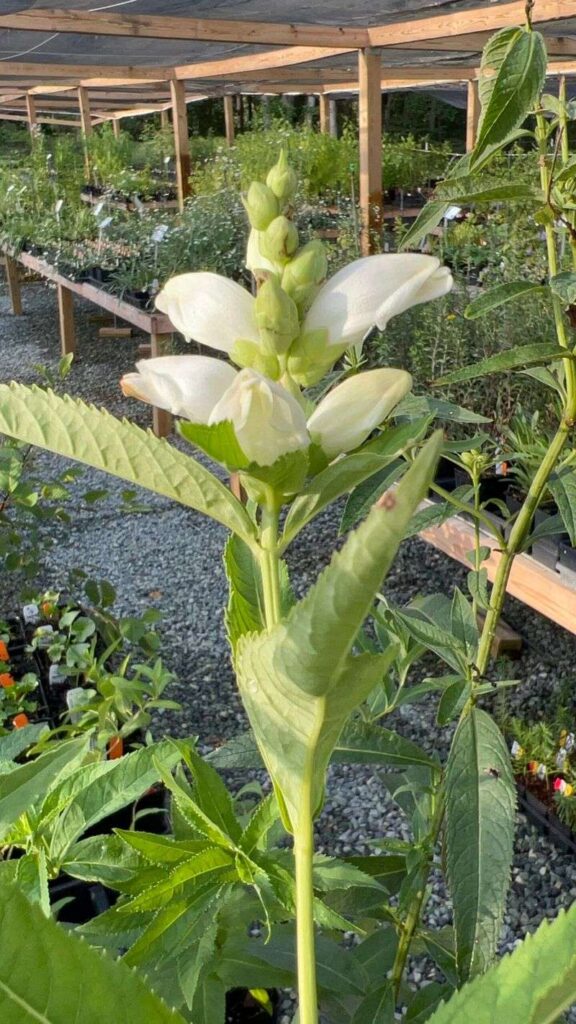
Almost every North Carolina yard has one: a corner that stays damp and gets only part of the day’s sun. Most plants sulk there, and the spot ends up as bare mulch or weeds.
White turtlehead is a native perennial that can fill that space with late-season flowers from August into October. Here is how to tell whether it fits your yard.
Choose white turtlehead for a North Carolina native planting
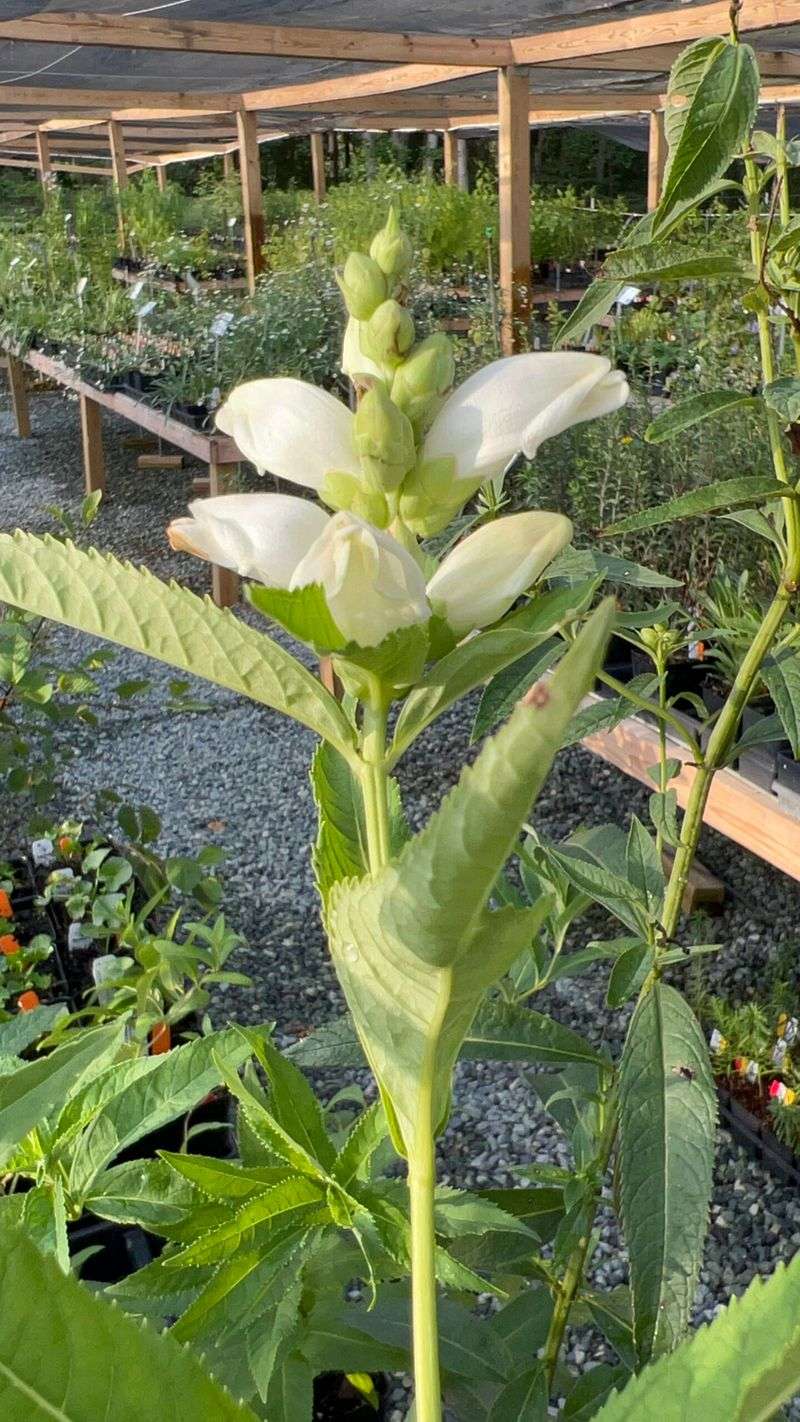
Start with the name, because “turtlehead” covers more than one plant. The one this guide recommends is white turtlehead, Chelone glabra.
Its flowers are shaped a bit like the head of a turtle with its mouth slightly open, which is how the plant got its common name.
White turtlehead is a true North Carolina native. According to the Vascular Plants of North Carolina species account, it grows naturally in the Mountains, the Piedmont, and much of the Coastal Plain.
That last phrase matters. It does not cover every corner of the coast, so a gardener near the beaches should think of it as a plant to try, not a sure thing.
Other turtleheads can look similar at a glance, so check the label before you buy. Pink Appalachian turtlehead, Chelone lyonii, is also native in parts of the state.
NC State’s Plant Toolbox describes its range as the Mountains and Piedmont. It is a lovely plant, but it is not the statewide pick.
White turtlehead’s flowers are mostly white, and some plants show a pink blush. If you want a native that fits across most of North Carolina, look for Chelone glabra by its scientific name.
NC State’s white turtlehead page is a handy reference to bring along when you shop at a native plant sale.
Match its moisture and light needs

Picture the soil first. White turtlehead likes fertile ground that stays consistently moist, and NC State lists moist or occasionally wet soil as suitable.
A low spot where a downspout drains, or the edge of a seep that dries out slowly after storms, fits that description well.
For light, partial shade is the sweet spot for this guide. NC State lists a range from full sun to partial shade, and plants in full sun need extra attention to moisture.
Deep shade is a different story. Too much shade can make the stems flop, and you may end up staking them.
Here is a quick test: if the area gets a few hours of direct or bright dappled light, it is a candidate. If it stays gloomy all day, look elsewhere.
Moist soil is not the same as a pond. Standing water that lingers for long stretches is a risk, and no source supports promising success in that situation.
A spot that is squishy for a day after heavy rain is very different from one holding water for weeks.
You may also see wetland ratings on plant lists. NC State’s wetland plants guide includes white turtlehead, and the U.S.
Army Corps of Engineers explains that a rating such as OBL means a species almost always occurs in wetlands. It describes where the plant is found in nature.
It does not tell you how much flooding a garden plant will put up with, so use it as a clue about moisture-loving habits, not a flood guarantee.
Enjoy its late-season flowers
By late summer, many shady beds have gone green and quiet. That is when white turtlehead starts to show its buds.
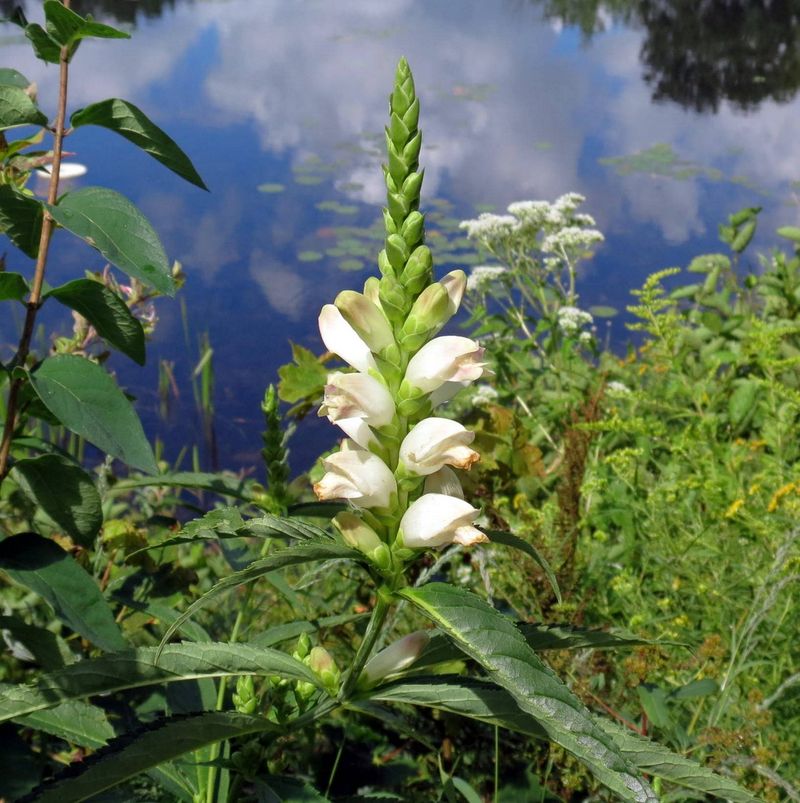
The flowers are white, sometimes brushed with pink, and they gather in dense clusters at the tips of the stems.
Look closely and you will see the blooms open from the bottom of each cluster upward. That means a single flower spike keeps changing for days, with open blossoms below and tight buds above.
The thick, rounded petals form a hooded shape, and the leaves below are dark green with toothed edges that make a tidy backdrop.
NC State’s wetland plants guide gives a bloom period of August through October. The NC State Plant Toolbox describes the flower form in more detail.
Exact timing shifts with your region and the weather, so expect the Mountains to run on a slightly different schedule than the Piedmont.
Think of it as late-season color, not the only show in town. Plenty of other plants flower in early fall.
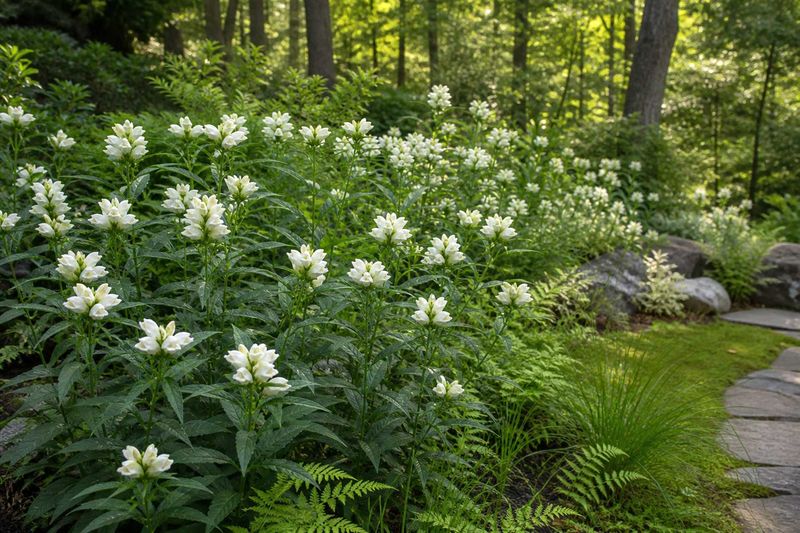
What turtlehead offers is bloom in a damp, partly shaded spot where flowers can be hard to come by. Pair it with ferns or sedges for texture, and let the white blooms stand out against the green.
Maintain moisture and make room for gradual growth
Care for turtlehead mostly comes down to water. Keep the soil from drying out, especially during hot, dry spells in summer.
A layer of mulch helps hold moisture, as NC State notes. Shredded bark or leaf mulch works well, kept a little back from the stems.
Plan for a plant about 1 to 3 feet tall and up to about 2 feet wide. That is big enough to anchor the middle of a border but not so large that it takes over.
Give each plant room so air can move through the leaves.
If you want a sturdier, bushier shape, NC State suggests pinching the stems in spring. Snip off the growing tips once, and the plant tends to branch more.
This can also help if your spot is on the shadier side and the stems tend to lean.
Turtlehead does spread, but slowly. Penn State Extension describes slow spread by rhizomes, which are underground stems.
Over several seasons, a single plant can grow into a modest colony, not a runaway patch.
To get more plants, NC State lists seed or division. Divide a clump when you want to share it with a neighbor or fill another damp spot.
It is an easy way to extend the planting without spending more.
Bumblebees are the clearest supported wildlife benefit
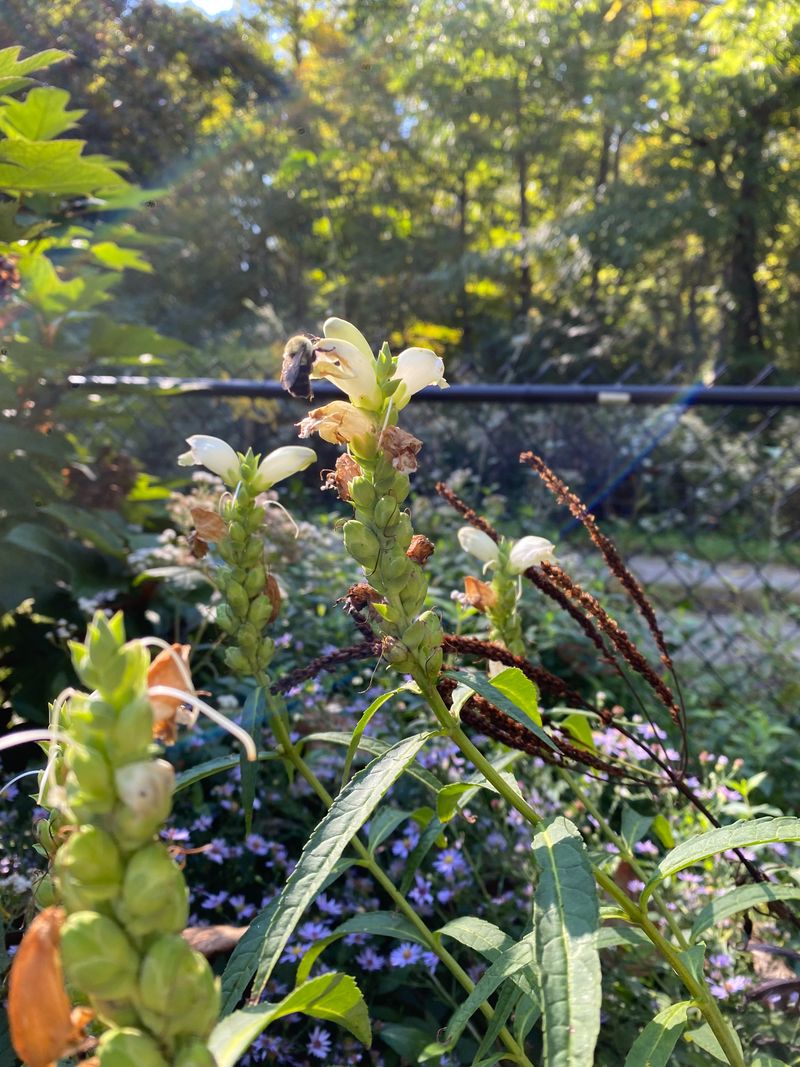
The hooded flowers look made for a strong visitor, and research backs that up. A study in the Journal of Pollination Ecology looked at Chelone glabra and found bumblebees were the most effective pollinators in the population it studied.
Bumblebees are strong enough to push inside the closed-looking blossom.
That finding comes from one studied population. It does not mean every garden will see bumblebees on its turtlehead every day.
Your results depend on the bees nearby, the weather, and what else is blooming around your yard. Planting a small group instead of a single plant makes the flowers easier for bees to find.
Butterflies are a murkier story. Some gardeners hear that turtlehead hosts the Common Buckeye caterpillar.
NC State says the Common Buckeye rarely uses white turtlehead as a host plant in North Carolina. So do not plant it expecting a butterfly nursery.
Also keep in mind that no source here says the plant is deer-proof, edible, medicinal, or safe for pets. Treat it as a garden flower, and expect that animals may still nibble or ignore it.
The bumblebee connection is the benefit with the best backing.
Decide whether the site is a good fit
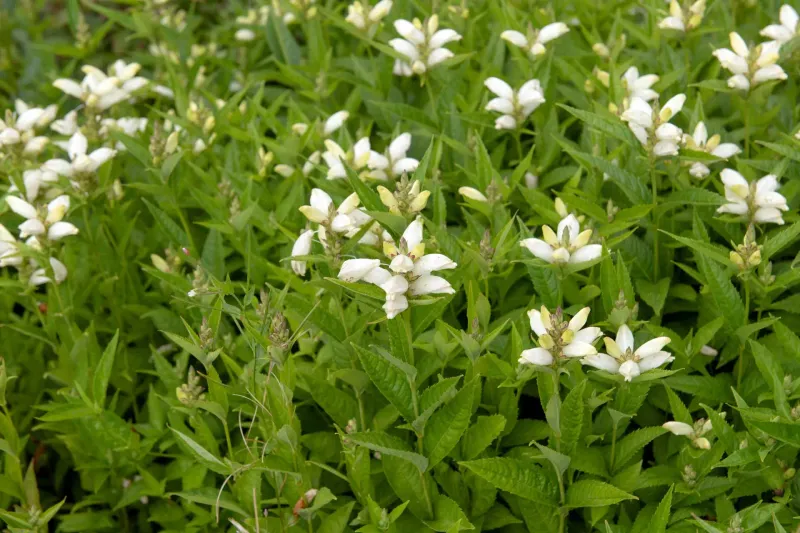
White turtlehead makes the most sense where the soil stays moist, the light is partial, and you want flowers from August to October. Check your own spot for those three things before you buy, and look for the label Chelone glabra.
NC State’s plant page is a good checklist to carry along.
Skip it for deep shade or for ground that holds standing water for long periods. Pick the right corner, and a quiet patch can turn bright just as the garden winds down.