
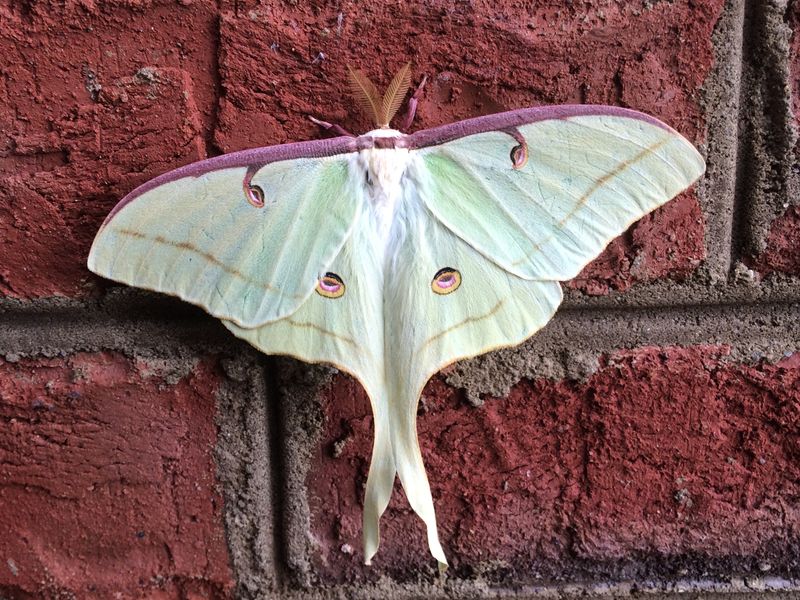
A pale green Luna moth resting under your porch light looks almost unreal. It is easy to wonder what brought it there and whether it means something about your yard.
The answer involves nearby trees, a bright bulb, and a few things a single sighting cannot tell you. Here is what to know, plus simple changes that make your lighting friendlier to night wildlife.
Luna moths are part of North Carolina’s wooded neighborhoods
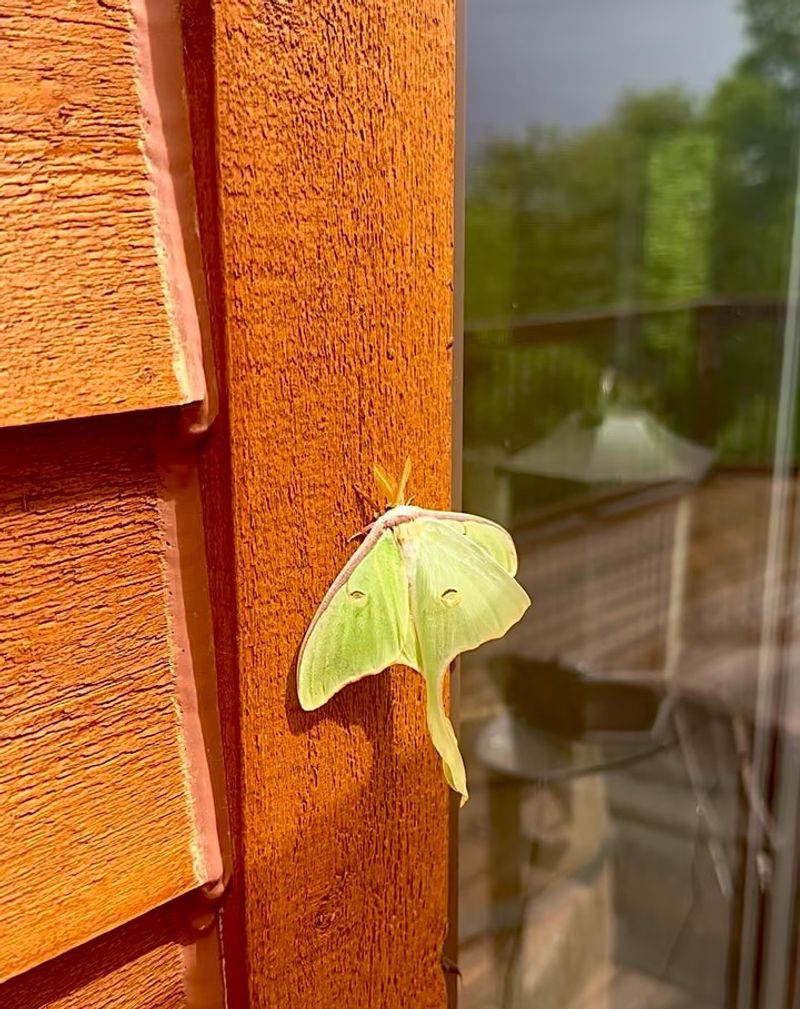
Luna moths are native to North Carolina, and the state’s moth account says they occur statewide. They live in hardwood forests and in wooded residential areas, which describes a lot of neighborhoods from the mountains to the coast.
So a Luna moth showing up at a porch light fits what is already known about the species here. That does not mean every yard will see one.
Whether you do depends on the trees around you, the weather, and plain luck.
Timing also varies. The state account describes two distinct broods over most of North Carolina, which means adults can appear in more than one stretch of the warm season.
In the high mountains the pattern is less clear, so there is no single date that applies to every county.
If you live in a leafy subdivision in the Piedmont, a house near a coastal forest, or a cabin in the foothills, a visit is plausible. Treat a sighting as a pleasant clue about the neighborhood, not a promise that moths will return on a schedule.
Keeping a simple note of the dates you see them can show you your own local pattern over a few seasons.
Their caterpillars use familiar hardwoods
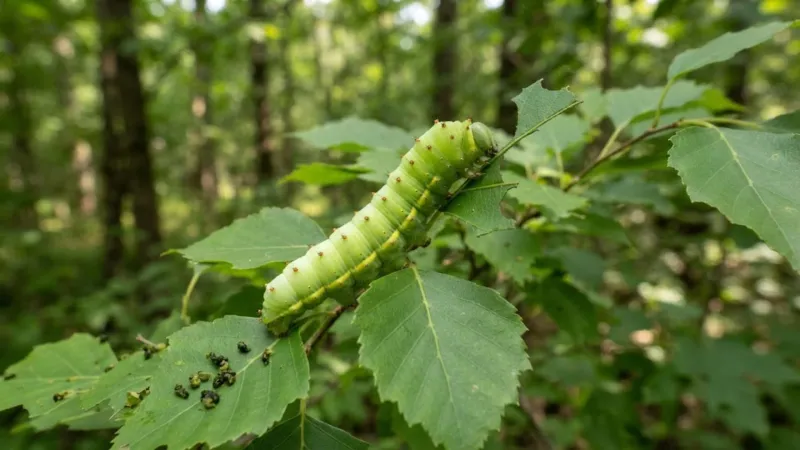
Adult Luna moths and their caterpillars live very different lives. Caterpillars eat leaves and do the growing.
UF/IFAS Extension notes that adults do not feed at all, so there is no reason to offer them food, and a bowl of fruit or sugar water will not help.
That is why trees matter. North Carolina’s records list sweetgum, American persimmon, hickories, black walnut, and pecan as host plants, according to the state account.
These are common trees in yards, fence lines, and woodlots across the state.
Think of the list as a set of locally documented plants, not a checklist your yard must satisfy. Many properties have one or two of these trees.
Others have none but sit near woods that do.
If you are not sure what is growing around you, check the leaves. Sweetgum has star-shaped leaves, while hickory, walnut, and pecan have long compound leaves made of many leaflets.
Persimmon has simple, glossy oval leaves. Knowing what is there is a good first step before you change anything.
What can a porch-light sighting tell you about trees?
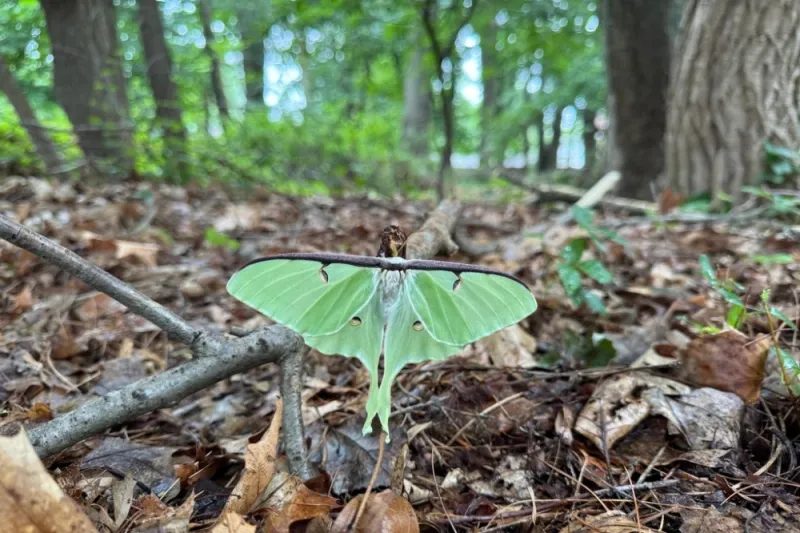
Host trees somewhere in the surrounding landscape are plausible when a Luna moth appears. The species depends on hardwoods like the ones listed by North Carolina’s moth account, and wooded neighborhoods are full of them.
But the moth cannot point to a specific tree. Adults fly, and UF/IFAS reports they are drawn to light.
The sources do not say how far the moths at your porch traveled, so the nearest host tree could be in your yard, next door, or farther away.
A single adult also does not tell you a caterpillar population is living nearby. It may have come from a tree you never see.
For a better clue, look at your own trees. Check the leaves for chewed edges in summer, and see whether any sweetgum, hickory, walnut, pecan, or persimmon stands on your lot.
Even then, treat what you find as a possibility, not proof of breeding.
Porch lights draw the attention of light-attracted adults
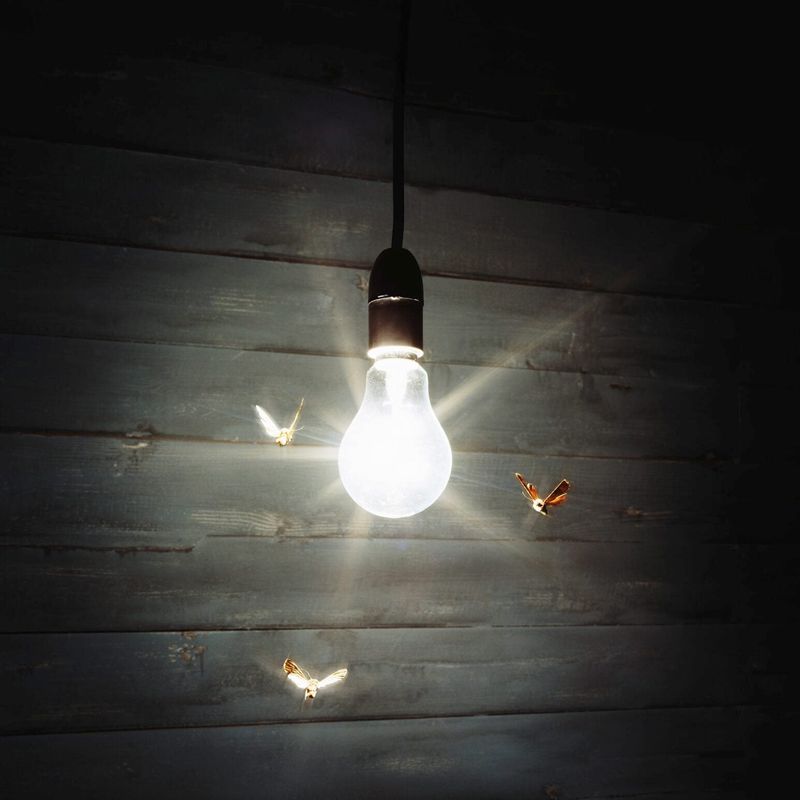
Under the glow of a porch fixture, a Luna moth is doing what the species is known for. UF/IFAS reports that adults are attracted to light, particularly ultraviolet wavelengths.
Many outdoor bulbs give off some of that light, which helps account for the visits.
Why moths head toward lights is less tidy. Brightness alone does not explain it.
A 2024 study in Nature Communications looked at why flying insects gather at artificial light, and its findings show that insect behavior around lamps is varied and still being worked out.
So there is no single settled answer, and it is wise to avoid a simple story such as moths flying straight at any bright bulb.
What you can say is practical. A lit porch in a wooded area can pull in moths that might otherwise stay in the dark, and a Luna moth resting on your siding in the morning is often a sign it spent the night near the light.
Artificial night lighting can disrupt moth behavior
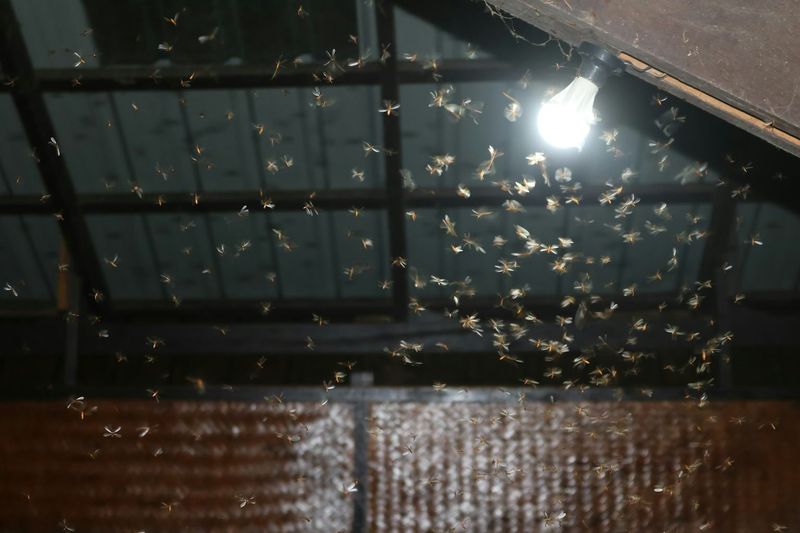
Researchers have found that light at night can affect moths. A review in Conservation Science and Practice pulls together studies showing that artificial light can change how moths behave and move, along with other parts of their life cycle.
Field work points the same way. A Science Advances study found that street lighting had harmful effects on local insect populations, including moth caterpillars in the places it examined.
And the Nature Communications study mentioned earlier adds to the picture of how insects gather around lamps.
There is an important limit. This work covers moths broadly or other species, not Luna moths at North Carolina porches.
It does not show that your bulb harms every Luna moth that lands there, and it does not mean the moths are being killed by your light.
The fair takeaway is modest. Unneeded light is a cost to night wildlife, and cutting it back is a reasonable step.
One porch fixture is a small piece of a larger pattern of lighting across a neighborhood, yet small pieces add up when many households make the same change.
Use outdoor light only where and when it is needed
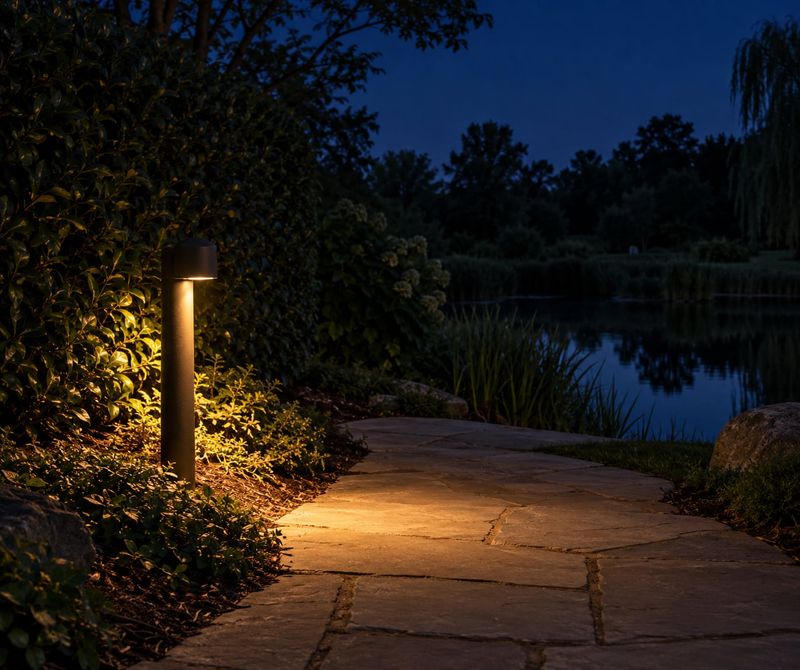
Start with the easiest fix: turn the light off when nobody needs it. A porch that is empty at 2 a.m. does not need a glowing bulb.
Next, aim fixtures downward and keep the beam on the steps or door, not the trees and yard. Choose the lowest brightness that still lets you see safely.
A timer or motion sensor handles the rest, so the light comes on only when someone is there. DarkSky International and the Illuminating Engineering Society include these steps in their principles for responsible outdoor lighting.
Those principles also recommend warmer-colored light where possible. Treat that as one extra measure, not a cure.
Color alone does not guarantee less insect attraction or fewer ecological effects, a point made in the moth literature review.
A simple weekend plan works well: swap in a warm, lower-output bulb, add a shield or angle the fixture down, and set a timer. If you still want to see a Luna moth, enjoy the ones that visit during the hours you are awake and then switch off the light.
Keep suitable hardwoods and make the porch light purposeful

Two steps fit together well. Keep suitable hardwoods when it is practical, since North Carolina’s documented hosts include sweetgum, hickories, black walnut, pecan, and persimmon.
Saving a tree you already have is better grounded than planting one just because a moth showed up.
Then make your porch light purposeful with the responsible-lighting steps you have already seen. Neither change guarantees more moths.
Still, a dim porch and an old hickory make a quiet kind of welcome.