
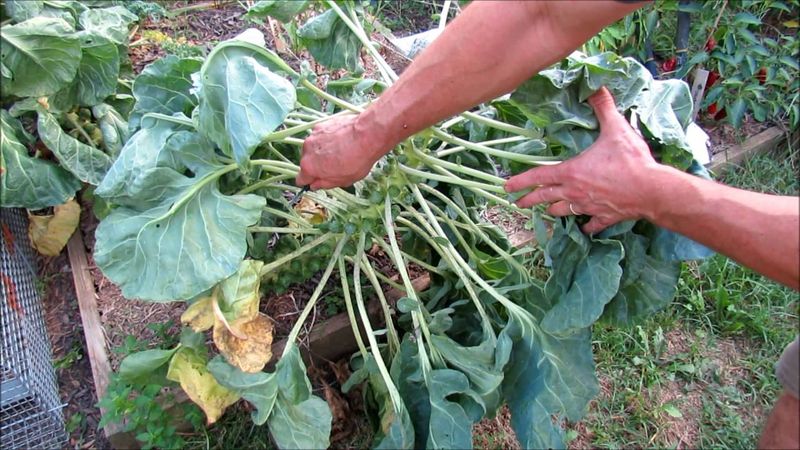
Few things are more frustrating than a Brussels sprout stalk covered in fluffy, open sprouts instead of tight little cabbages. Topping the stalk gets mentioned a lot as a fix, but it is not a magic switch.
Used at the right stage, it may help the sprouts finish more evenly and make harvest easier to plan. Here is how to tell whether your plants are ready, what the cut can and cannot do, and how timing differs between Florida and Texas.
Loose sprouts can have more than one cause
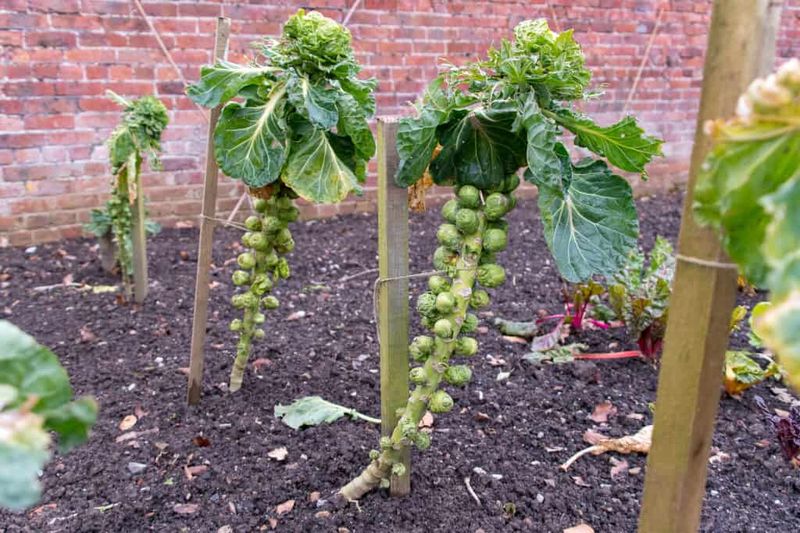
Open, leafy sprouts tell you something went sideways, but not always the same thing. Before reaching for pruning shears, look at the weather your plants lived through while the sprouts were forming.
Maryland Extension links hot, dry conditions during maturation with sprouts that fail to form compact heads. Illinois Extension notes that development in warm weather can produce loose tufts.
If your fall crop matured through a stretch of Southern heat, that is a strong clue.
Other possibilities are on the table too. The Royal Horticultural Society points to poor soil, lack of growth, and non-hybrid cultivars as common reasons for loose-leaved sprouts.
It also says excess nitrogen is not implicated, so skip blaming your fertilizer.
Ask a few simple questions. Was it hot and dry?
Did the plants stall or look stunted? Is this a variety you have not grown before?
No single answer is certain, and loose sprouts do not automatically mean the plant needed topping.
Topping may concentrate growth, not reverse looseness overnight
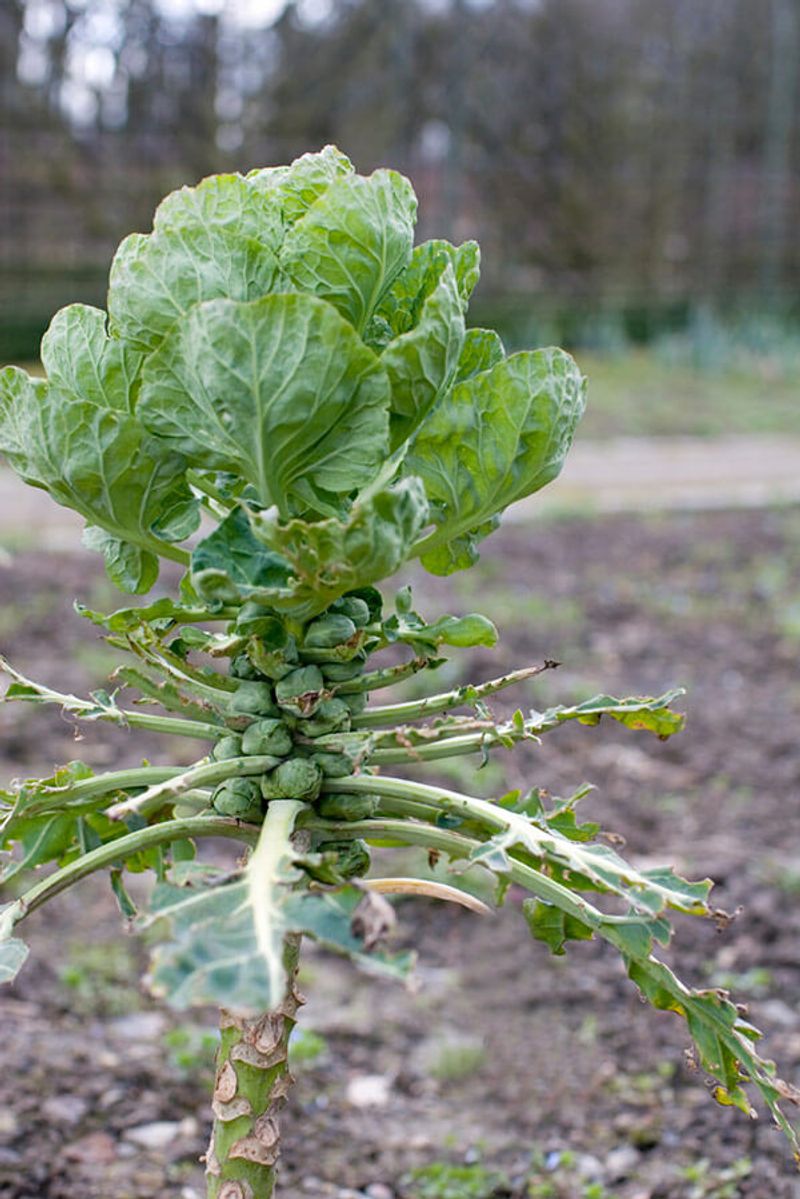
Topping means removing the growing point at the top of the stalk. The idea is that the plant stops pushing energy into upward growth, so sprouts along the stem can develop more evenly.
Iowa State says topping can make it possible to harvest the stalk more uniformly. A University of New Hampshire trial found it has potential to increase yield when the plan is a once-over harvest.
Notice what is missing from that list: a promise to firm up sprouts that have already opened. Open sprouts will not snap shut after a quick cut.
Think of topping as a way to help the rest of the stalk finish together.
That makes your harvest plan matter. If you want to pick the whole stalk in one session, topping fits.
If you prefer picking a few sprouts at a time from the bottom up, the benefit is less clear.
Check the crop’s stage before topping
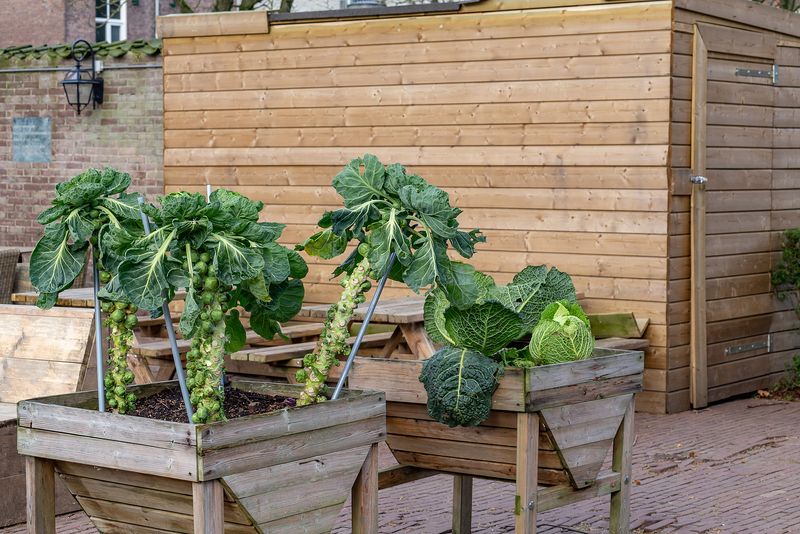
Start at the bottom of the stalk. Lower sprouts form first, so they tell you where the plant stands.
Iowa State recommends topping when lower sprouts are about 1/2 to 3/4 inch across and less than 60 days remain before harvest. Maryland Extension gives about 1/2 inch for those lower sprouts.
Treat these numbers as guides, not guarantees.
Authorities use different cues. Illinois Extension mentions topping about three weeks before harvest or when plants reach 24 to 36 inches tall.
A New Hampshire trial cautions against relying on a calendar alone, since variety, timing, and harvest plans change results. Topping too far ahead may reduce yield.
An approaching hard frost is not a reason to top by itself. If your sprouts are still tiny, wait.
If they have already opened, topping will not undo that.
Remove the growing point and leave the sprouts in place
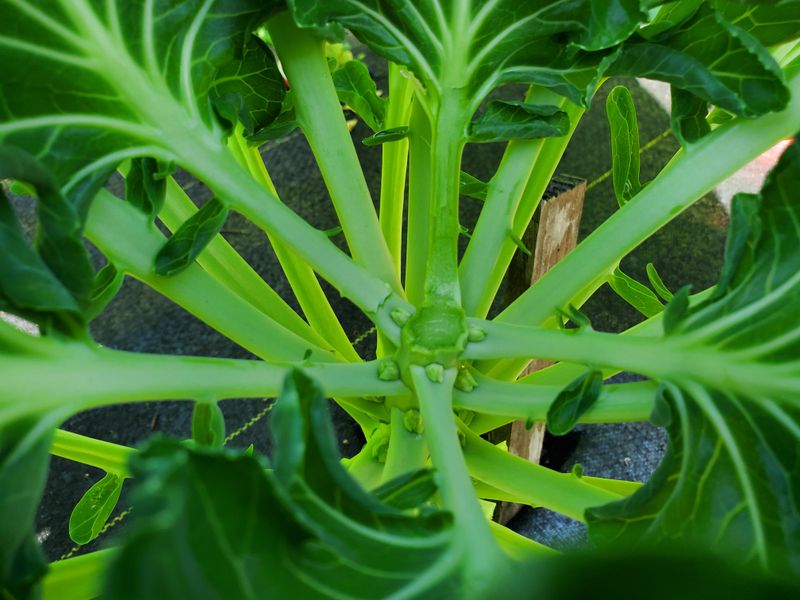
Once your plants pass the stage check, the job takes about a minute per plant. Find the growing point, which is the cluster of new leaves at the very top of the stalk.
Pinch it out with your fingers or snip it with clean pruners, as Iowa State describes. Take only that top tip and the newest small leaves around it.
Leave everything below alone. The developing sprouts in the leaf joints need to stay right where they are, and the larger leaves beneath them keep feeding the plant.
Be realistic about the result. A clean cut does not guarantee compact sprouts, and it does not stand in for the timing check.
If the lower sprouts were not yet sizing up, the cut may come too early to help.
Keep developing plants watered through hot, dry weather
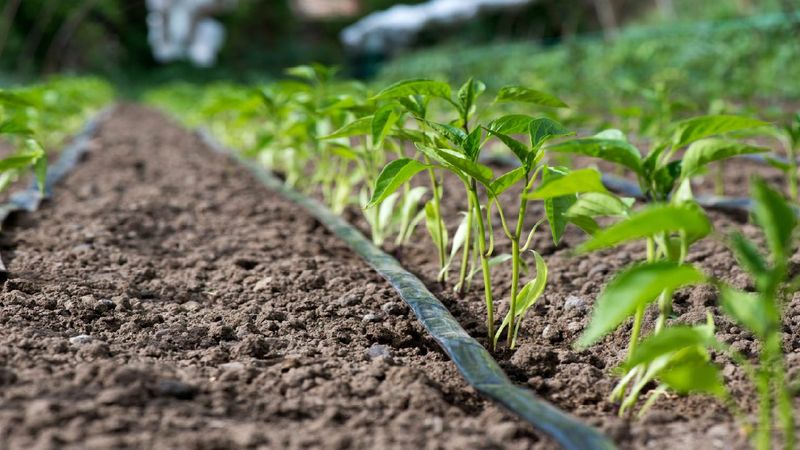
Dry spells are hard on Brussels sprouts. Maryland Extension says hot, dry conditions may cause bitterness or prevent sprouts from forming compactly.
Steady moisture helps plants keep growing while sprouts develop. Iowa State recommends weekly irrigation when rainfall does not supply about an inch of water.
In much of Florida and Texas, sandy or fast-draining soil and warm spells may mean you need to check more often than that.
A soaker hose or slow drip at the base works well, and a layer of mulch slows evaporation. Stick a finger a couple of inches into the soil.
If it feels dry, water deeply.
Watering supports growth that is still happening. It will not tighten sprouts that have already opened, so think of it as protecting the ones still forming.
Harvest by maturity, not by a universal frost countdown
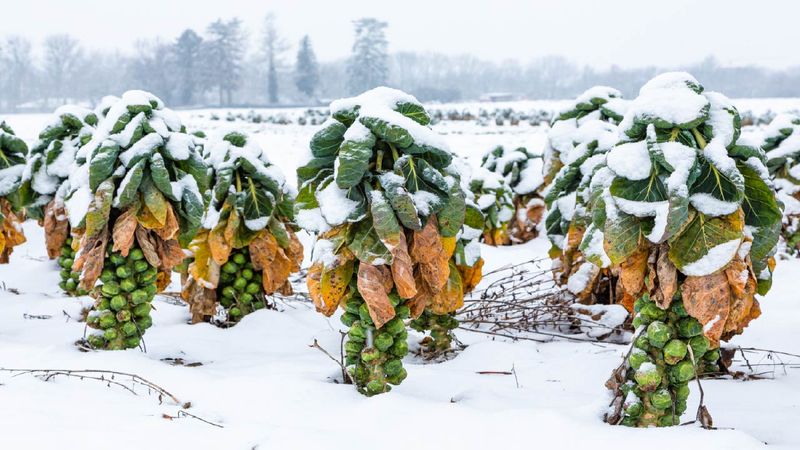
Let the sprouts set the schedule. Lower ones mature first, so you can pick individual sprouts once they feel firm and compact.
Maryland Extension and Iowa State describe this as commonly about 1 to 1 1/2 inches across.
Frost is not a deadline. Brussels sprouts tolerate it, and light frost may improve flavor.
So skip the panic over the forecast and keep checking your plants.
Your local window matters more than a shared Southern calendar. Texas A&M AgriLife gives different planting dates by region of the state, so look up your area.
UF/IFAS treats Brussels sprouts as a cool-season crop for Florida, with growing in late fall or winter.
Sprouts that open early are still edible, just less tidy. Pick what is ready and keep the rest growing.