
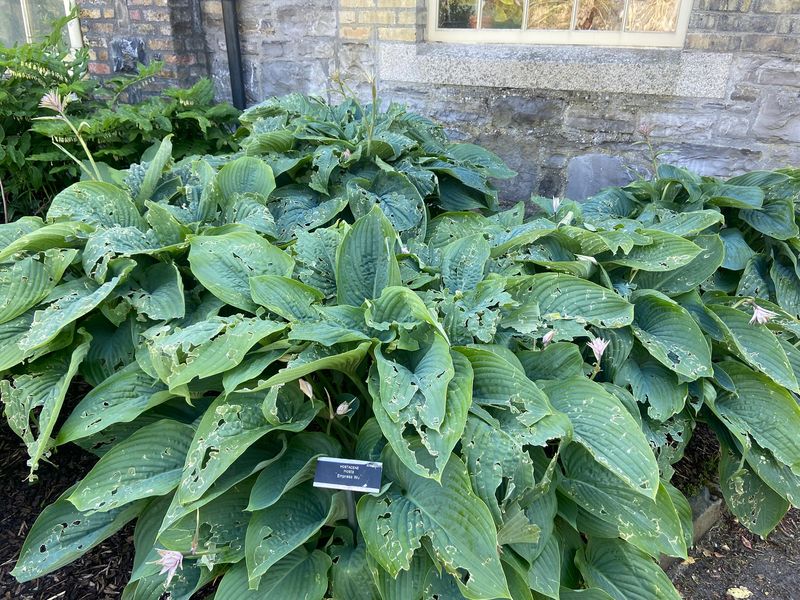
Ragged, lacy holes in hosta leaves can make a lush shade bed look chewed up by midspring. Slugs are a common suspect, and they love damp, sheltered spots.
A little cleanup around the plant in fall may take away some of that shelter. Here is how to time it, what it can and cannot do, and what to try if the holes come back.
Wait until hosta foliage has died back
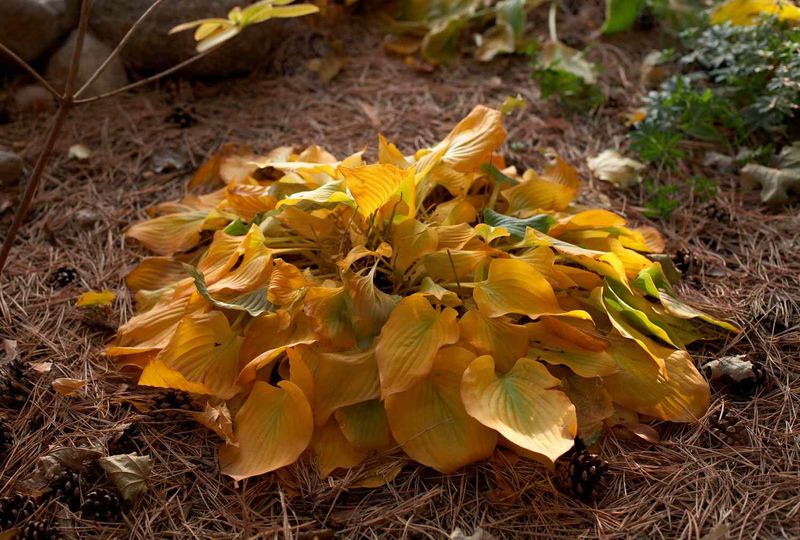
Let the plant set the schedule. Hostas are herbaceous perennials, and their leaves yellow, flop, and turn mushy when the plant is finished for the season.
Clemson Extension’s hosta guidance points to cleanup after the leaves have died back, which is a better cue than a date on the calendar.
That matters across the South. In Florida and south Texas, hostas may hang on to green leaves long after gardeners farther north have cut theirs down.
A hosta that still has healthy green foliage is still feeding its roots, so cutting it early gains you nothing.
A simple check works well. If the leaves are yellow or brown, floppy, and easy to pull away, the plant is ready.
If most of the foliage is still firm and green, leave it and check again in a couple of weeks.
Later sections cover what cleanup can and cannot do. For now, the only job is to pick the right moment, and your plant will tell you when it arrives.
Slug damage leaves clues
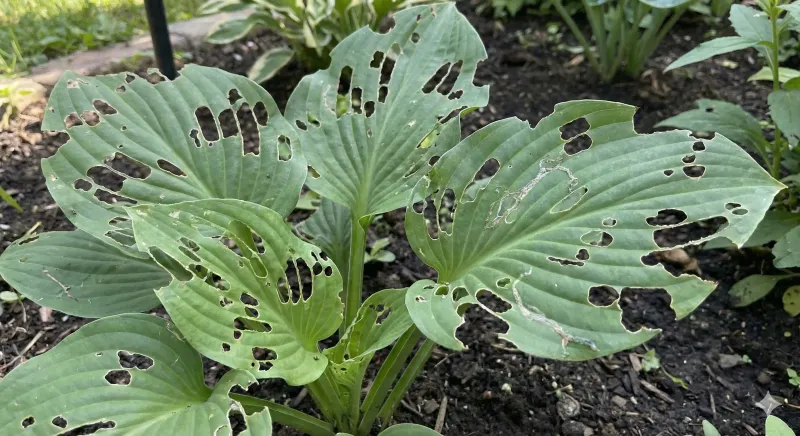
Before you blame slugs, look for proof. Slugs tend to chew ragged, irregular holes in hosta leaves, often between the veins, and they leave shiny slime trails that dry to a silvery streak.
Clemson’s hosta factsheet lists slugs among the pests that chew hosta foliage.
Slime trails are a strong hint, but they are not final proof. Other things can chew holes too, such as caterpillars, beetles, or hail.
A quick flashlight check an hour or two after dark can catch slugs feeding and settle the question.
Florida readers have one more reason to look closely. UF/IFAS notes that not every slug or snail in the state is a plant pest, since some feed on decaying material or prey on other snails.
Identify what you have before you start any broad control.
A few nibbled leaves do not always call for treatment. Hostas can tolerate light damage, so save your effort for plants that are really getting shredded.
Clear dead foliage and nearby debris
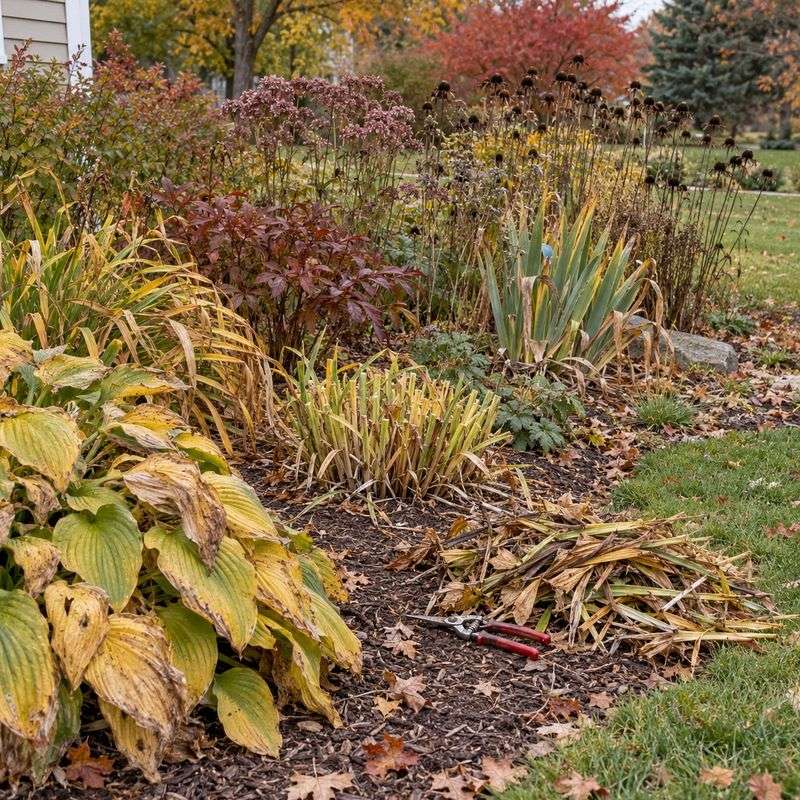
Here is the main fall job. Once the leaves have died back, cut or pull the dead hosta foliage and carry it away.
Then rake out excess leaf litter and other debris piled right around the plant.
Why bother? UF/IFAS identifies plant debris as a place where slugs shelter, and Clemson Extension recommends fall cleanup after hosta leaves die back to help control them.
Taking away that cover may reduce the number of cozy hiding spots near the plant.
Keep the cleanup local. Focus on the hostas that were chewed up this year and any other slug-prone plants nearby.
There is no need to strip every bed or the whole yard.
Bag the old foliage or add it to a hot compost pile instead of tossing it back beside the bed. Leave the crowns and a thin layer of mulch in place so the roots stay protected.
Cleanup reduces shelter, not every source of slugs
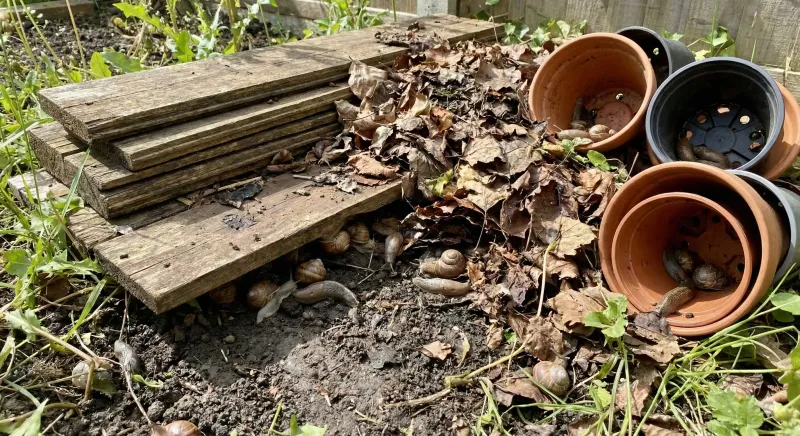
Raking up hosta leaves is a smart step, but it is not a force field. The old idea that rotting hosta foliage hides the exact slugs that will shred next spring’s leaves is too simple.
Slugs have plenty of other places to wait out winter.
Penn State Extension explains that slugs can overwinter as eggs, juveniles, or adults. They shelter in the soil, under boards, and beneath decaying vegetation, not only in hosta leaves.
So a targeted cleanup may reduce nearby shelter, but it cannot break the slug cycle or promise damage-free leaves next spring. Slugs that spent the winter in a flowerpot saucer or under a stepping stone can still crawl over to your hostas.
Warm, damp Southern conditions add to this. UF/IFAS points out that slugs favor moist, protected spots, which are easy to find in many yards.
Treat cleanup as one useful step among several.
If damage returns, check at night and reduce shelter
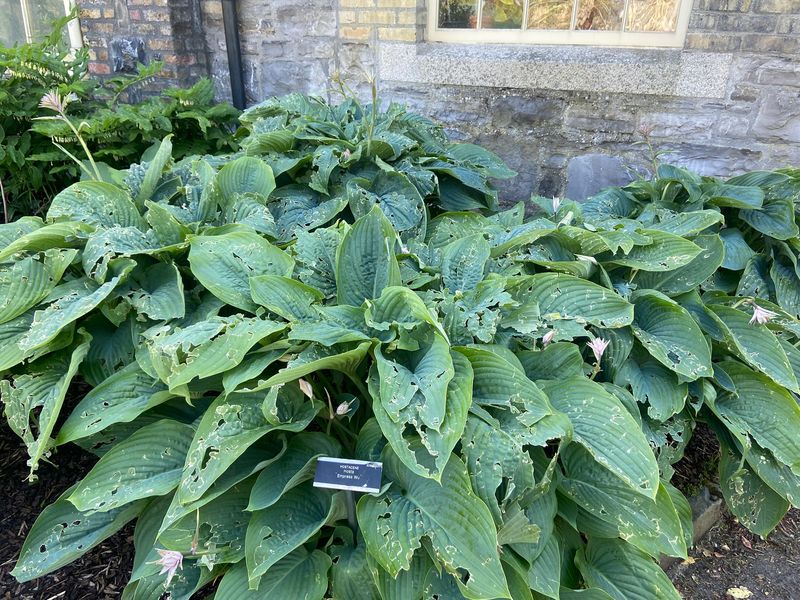
Suppose new leaves come up with holes anyway. Grab a flashlight and head out in the evening, when slugs are active.
Look under the leaves, along the bed edge, and beneath pots, boards, or debris close to the plant.
Hand-picking is simple and cheap. Drop the slugs into a container of soapy water.
Penn State Extension also describes damp refuge traps, such as a board or overturned pot set out as a hiding place. Slugs gather underneath, and you collect them each morning.
Check traps regularly so they do not become permanent housing.
Moisture matters too. Where practical, water in the morning, trim back crowded growth, and ease off irrigation that keeps the soil soggy all night.
UF/IFAS suggests starting with cultural and mechanical measures like these.
None of these steps is a guarantee, and they work best together. Confirm that slugs are the cause first, then keep checking through the season.
Use slug bait cautiously and skip unreliable fixes
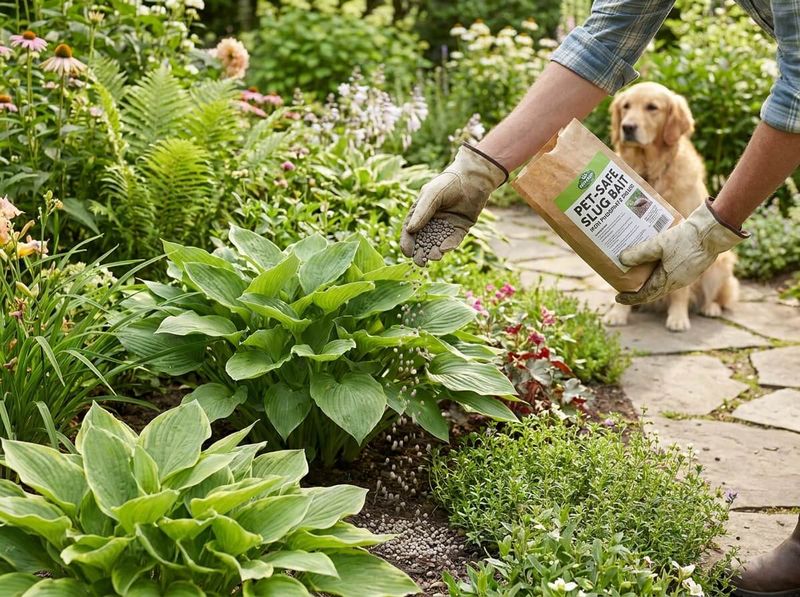
If cleanup, hand-picking, and moisture changes are not enough, bait is an option. Use it only if needed, and follow the product label on amounts, placement, and timing.
A product being sold for gardens does not make it harmless.
Pet safety deserves special attention. Penn State Extension notes that metaldehyde bait is particularly hazardous to pets.
If dogs or cats roam your yard, read the active ingredient before you buy.
Some popular home fixes are not worth your time. UF/IFAS says research does not support crushed eggshells, and its Florida slug publication reports no scientific evidence that diatomaceous earth controls slugs.
Do not sprinkle salt on garden soil either. Salt can injure plants and damage the soil, which costs you far more than a few chewed leaves.
Keep the cleanup targeted
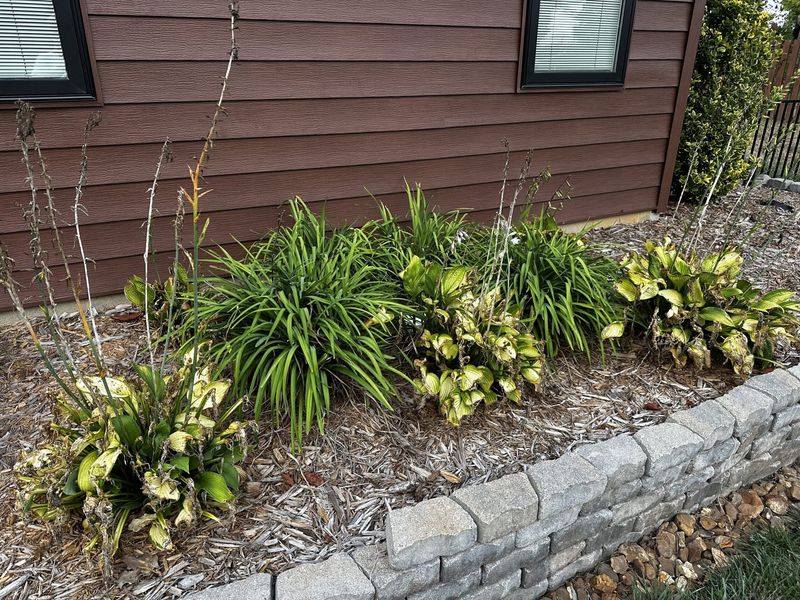
Think of fall cleanup as a spot treatment. Remove the dead hosta foliage and the excess debris piled close to plants that slugs have bothered before.
Leave the rest of the yard alone.
Leaf litter does real work. University of Illinois Extension notes that it provides overwintering habitat for beneficial insects, so stripping every bed can cost you helpful allies.
Clearing around slug-prone hostas, as Clemson Extension advises once leaves have died back, strikes a sensible balance.
A clean hosta bed is a good sanitation step, not a promise. Some slugs will still turn up in spring, and that is a cue to check at night, not a sign you did it wrong.