
You check the pea row and see plenty of pretty flowers, but the pods just are not showing up. It is easy to blame the first chilly night, yet the real cause may be something else.
Peas like cool weather, so the answer depends on frost, heat, water, and even fertilizer. A few quick checks can tell you where to start, and a row cover may help in the right situation.
Flowers without pods are a symptom, not a diagnosis
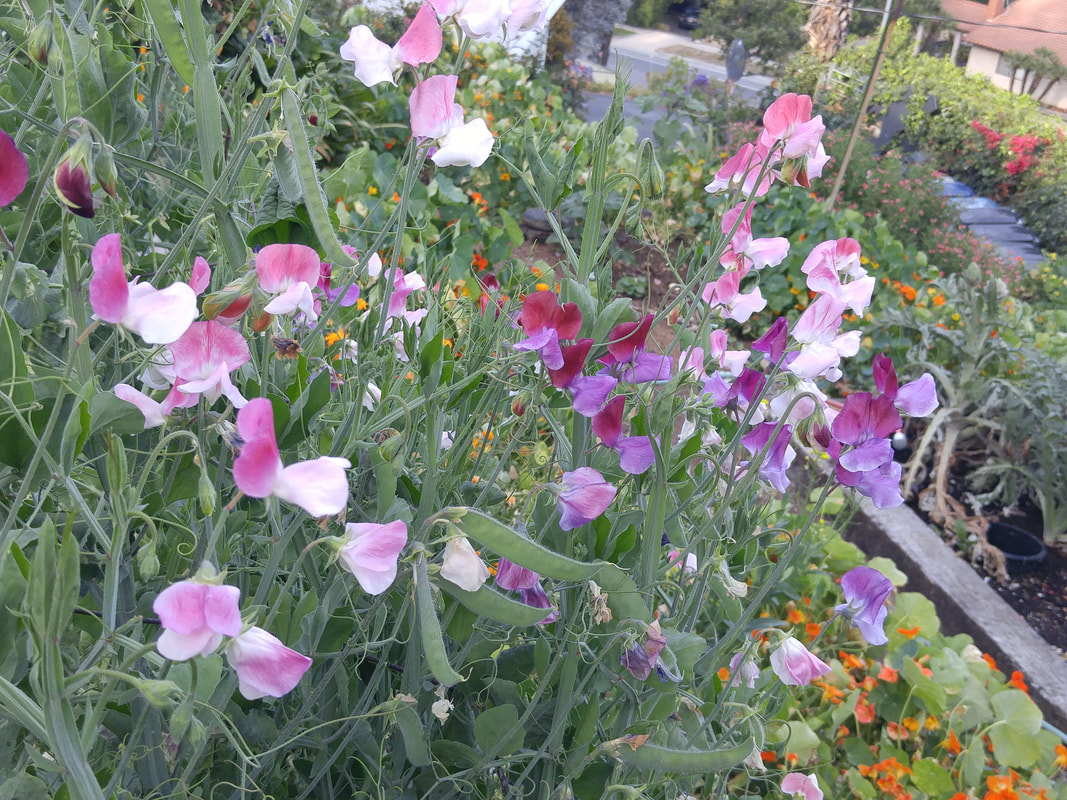
Rows of blooms with no pods behind them can feel like a puzzle. The trouble is that many different problems leave the same clue.
Flowers alone cannot tell you which one you are dealing with.
Start by looking back over the last couple of weeks. Did a frost or freeze reach your garden while the plants were in bloom?
Were there hot afternoons? Heat and drought are both documented causes of flower drop and pod abortion in garden peas, and too much nitrogen can also reduce pod set.
Next, look at the soil. Is it bone dry a few inches down, or has it been soggy?
Think about fertilizer too. A rich, leafy vine that is putting out lots of green growth tells a different story than a thin, stressed one.
Jot down what you find. An ordinary cool night, by itself, does not explain why flowers failed to set pods.
Matching the symptom to the actual conditions in your garden is how you find the likely cause, and it keeps you from fixing the wrong thing.
Peas tolerate cool weather; frost is different
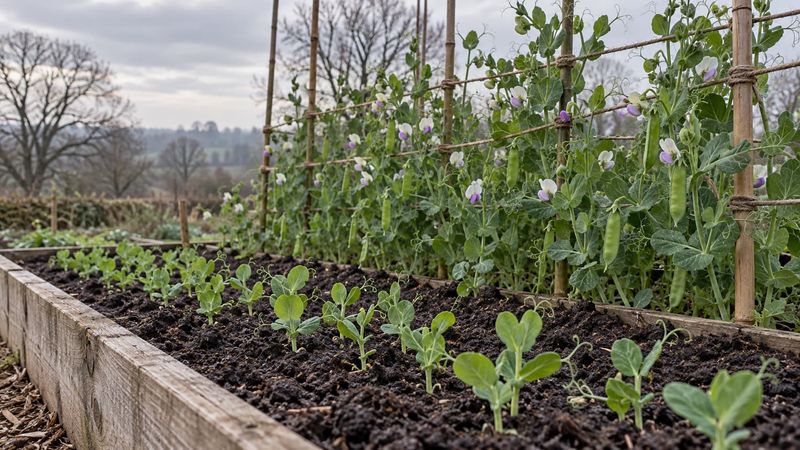
Garden peas are cool-season plants. A research-based extension guide lists about 55 to 65°F as a favorable growing range, and says peas do poorly when it climbs above 80°F.
So a crisp fall evening is not a warning sign on its own.
Frost is another matter. A peer-reviewed field study on green peas points to frost, and to temperatures above about 86°F during reproduction, as conditions that can cause flower or pod abortion.
Stress during bloom can change what happens to a flower days later.
Treat those numbers as general guides, not strict nighttime cutoffs. Your microclimate, plant age, and the length of a cold spell all matter.
A cool night with no frost is a very different event from a hard freeze at flowering.
If your garden saw a real frost while blooms were open, that is a strong suspect. If it stayed cool but frost-free, look at other causes first.
A row cover may buffer frost, but it cannot reset flowers
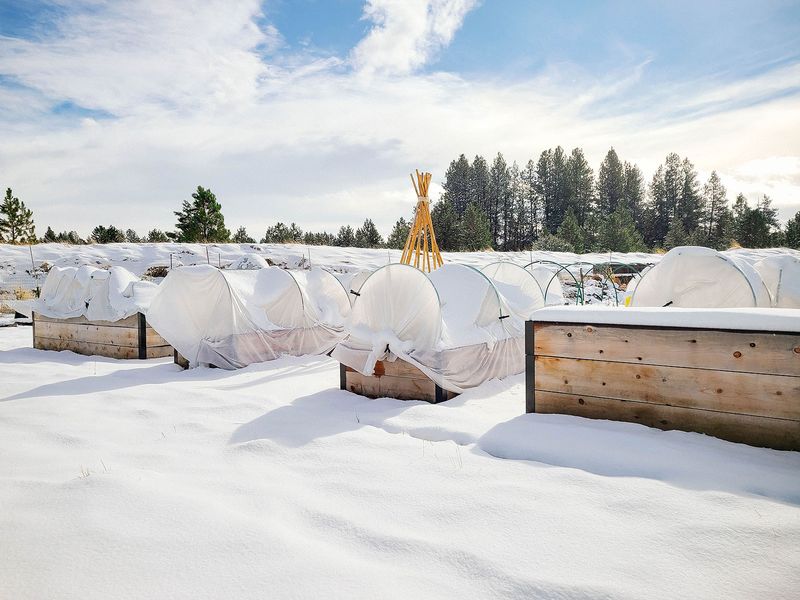
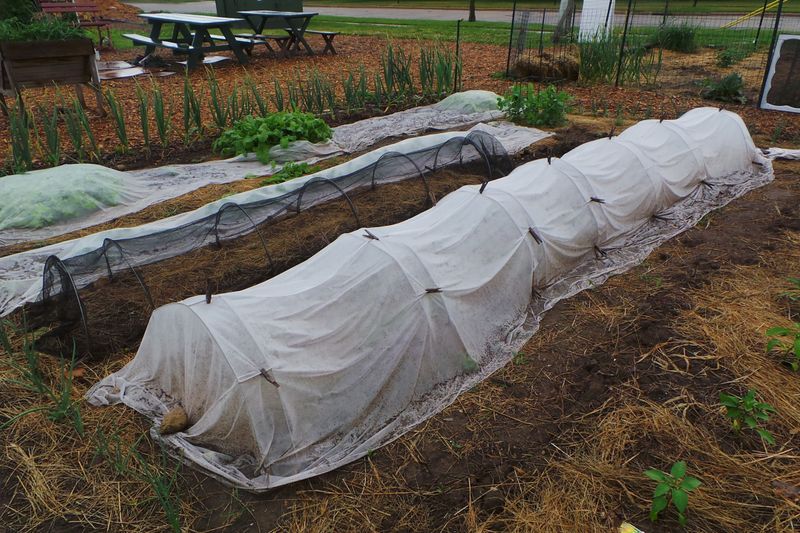
Fabric row covers can help protect plants when frost threatens. Utah State University Extension reports that covers can raise nighttime air temperature by roughly 3 to 5°F.
That is a general estimate, and your results will vary with fabric weight, wind, and weather.
A cover has limits. It cannot bring back flowers that have already dropped or been damaged.
It also does nothing about drought, heat, or too much nitrogen, so it is not a cure for every case of missing pods.
There is a catch on warm days. The same source warns that covers can raise daytime temperatures substantially, and heat can make flowers abort.
A cover left on through a sunny afternoon could cause the very problem you are trying to avoid.
Think of a cover as insurance for a specific frost night. It may protect what is still healthy, and new flowers may have a better chance, but it is no promise of renewed production.
How to cover the row when frost threatens
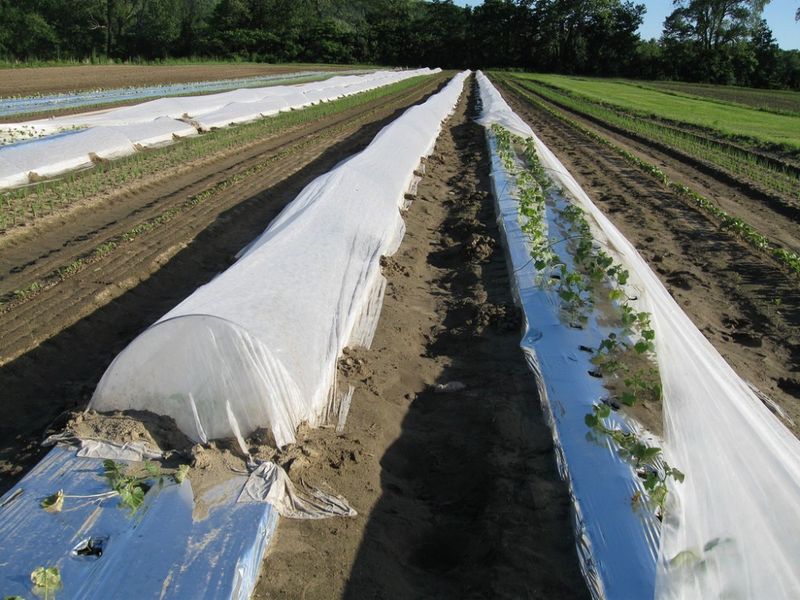
Wind is the first enemy of floating fabric. Weigh the edges down with soil, boards, or clips so the cover stays put, as Colorado State University Extension advises.
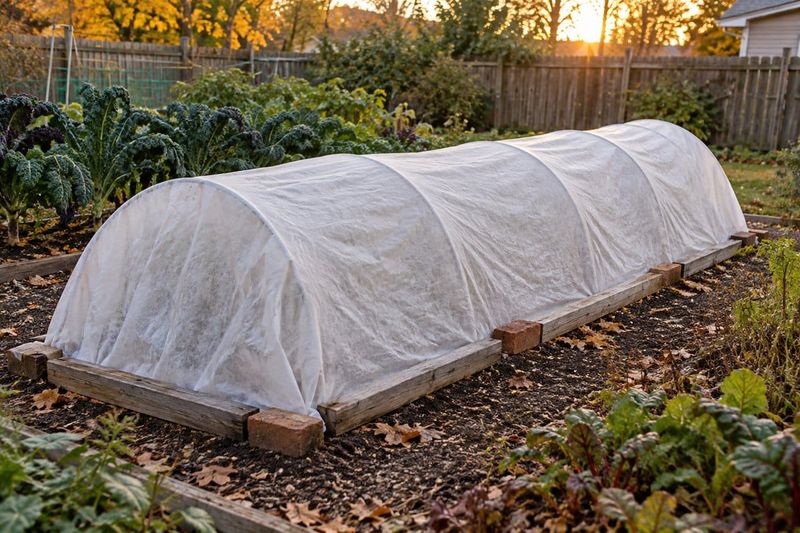
Hoops help too, because they keep fabric from rubbing the plants and can give more frost protection.
Put the cover on in the afternoon before a frost is forecast, while the day still holds some warmth. Check the forecast low rather than guessing.
Not every cool night needs a cover.
Peas are self-fertile, so they do not need insects to set pods. That means a cover will not block pollination.
Remove or vent the fabric the next morning once temperatures rise. Because covers can substantially raise daytime heat, do not leave them sealed on warm days.
A cheap thermometer under the fabric tells you what is really happening.
Even a well-installed cover may not protect every garden from every frost, so keep expectations realistic.
Check water and fertilizer before blaming the weather
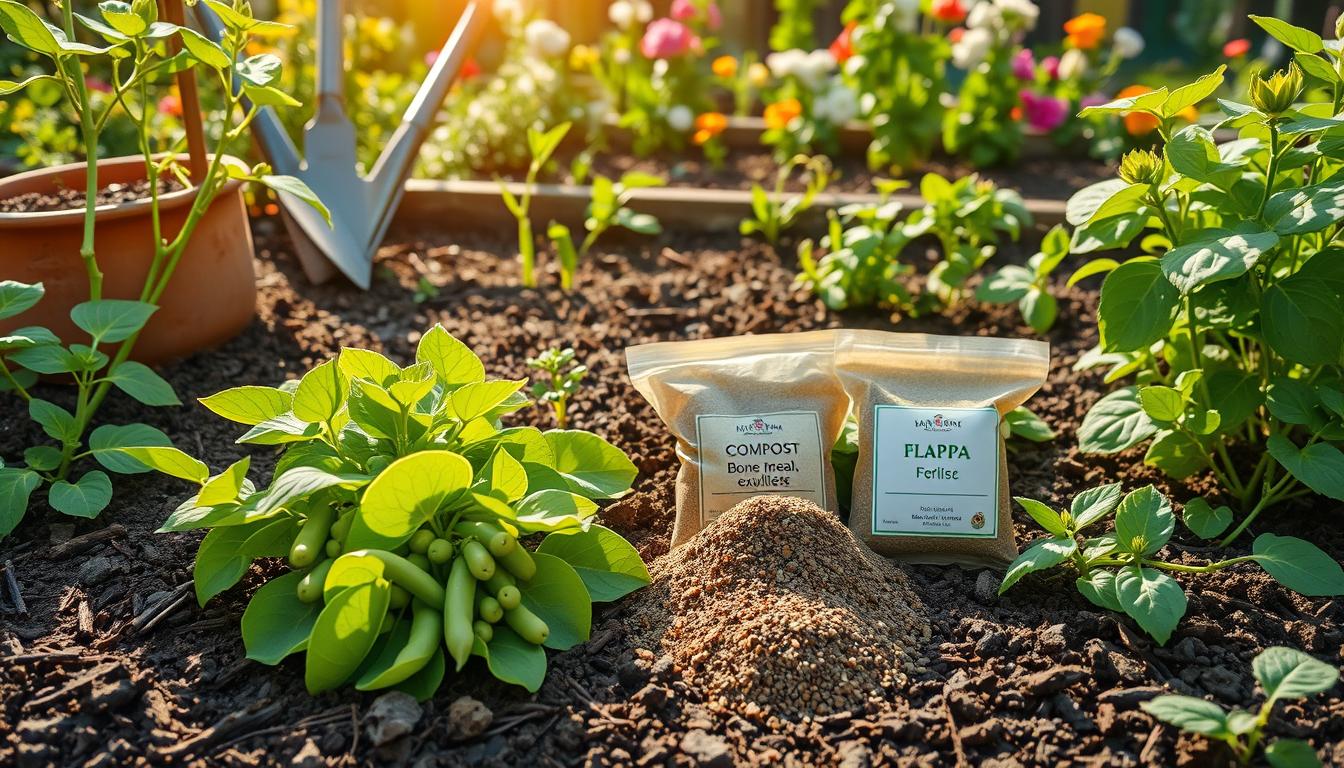
Sometimes the fix is under your feet. Dry soil after flowering can cause pods to abort, according to Utah State University Extension.
Push a finger a few inches into the soil near the roots. If it is dusty, water deeply and keep moisture steady.
Mulch can help hold moisture, but keep it from piling against the stems. Soggy soil causes its own trouble, so aim for evenly damp, not wet.
Now think about feeding. Peas make much of their own nitrogen, and extra can push lush leaves at the expense of pods.
If your vines are deep green, thick, and leafy with few pods, a past dose of high-nitrogen fertilizer could be involved.
Skip adding more nitrogen unless a soil test or clear need shows it is lacking.
Treat these as troubleshooting steps. Fixing water or feeding may help future flowers, but it will not guarantee that existing blooms turn into pods.
Confirm that your crop is a garden pea
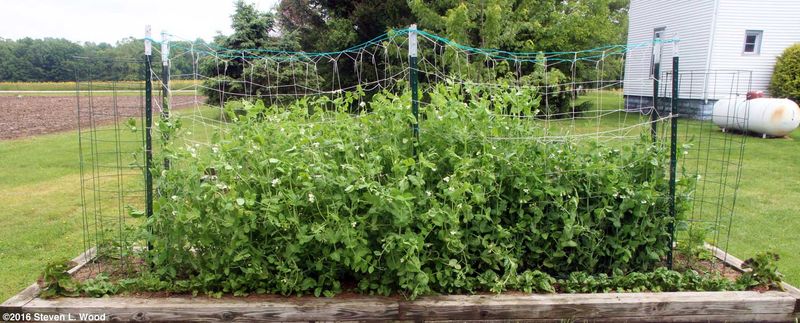
Before you act on any of this advice, make sure you know which pea you are growing. English, snap, and snow peas are all garden peas, Pisum sativum, and they are the plants this article covers.
Southern peas, also called cowpeas, are a different warm-weather crop. Black-eyed peas and crowder peas fall here.
Mississippi State University Extension treats Southern peas as their own crop, so do not apply cool-season pea advice to them.
Timing also depends on where you live. UF/IFAS lists English peas for September through February in Central and South Florida, but January through March in North Florida.
Texas varies as well. A Texas A&M AgriLife Lubbock calendar shows outside sowing in early February to early March and again in early July to early August.
Use your local extension office for a schedule that fits your area.
Choose the next step from the forecast and the plant
Work through it in order. Confirm you have garden peas, then look at actual forecast lows rather than the season.
Review the last week or two for frost, hot afternoons, dry spells, and any recent fertilizer.
If frost is coming, a secured cover can be a targeted step. Utah State guidance on covers reminds us to watch daytime warmth too, so vent or remove the fabric when the sun heats things up.
Keep an eye on soil moisture, and hold off on nitrogen unless it is clearly needed, as Utah State pea guidance suggests.
A cover protects what frost could harm. It will not promise pods from flowers that have already failed.
The vines are telling you something, so read the forecast and the soil before you reach for the fabric.