
Every fall, oak leaves pile up on California lawns, and most of us grab a rake without thinking twice. Some of that leaf litter may shelter bumblebee queens waiting out the winter, along with other helpful insects.
Fire safety still comes first, so the goal is not to leave everything alone. A few smart choices about what to rake, what to keep, and where can help wildlife and keep your yard safe.
Some bumblebee queens use leaf litter; most native bees do not
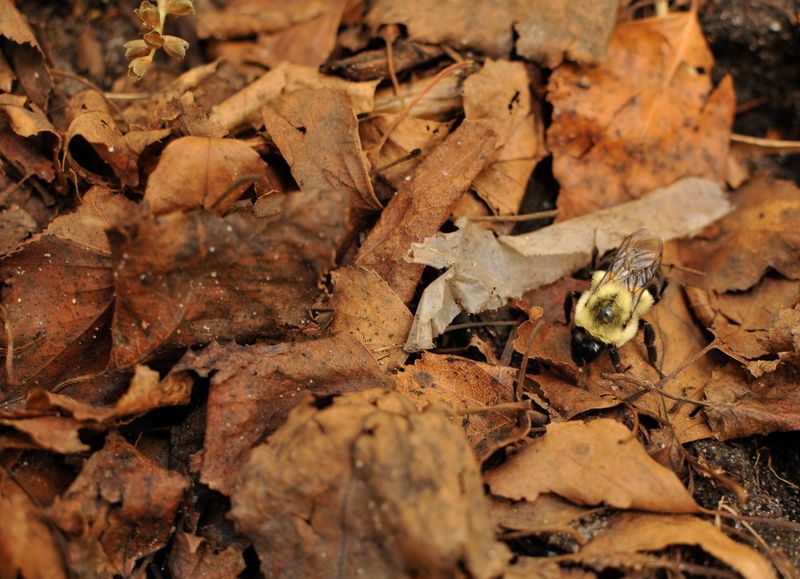
Here is the part of the story that is true. After mating in fall, a young bumblebee queen goes off alone to find a quiet spot for winter.
The rest of her colony dies off. According to Xerces Society overwintering guidance, queens often tuck into shallow soil or plant litter, and a loose layer of leaves can give them shelter.
That does not mean native bees in general sleep under oak leaves. Most native bees are solitary, with no hive and no colony.
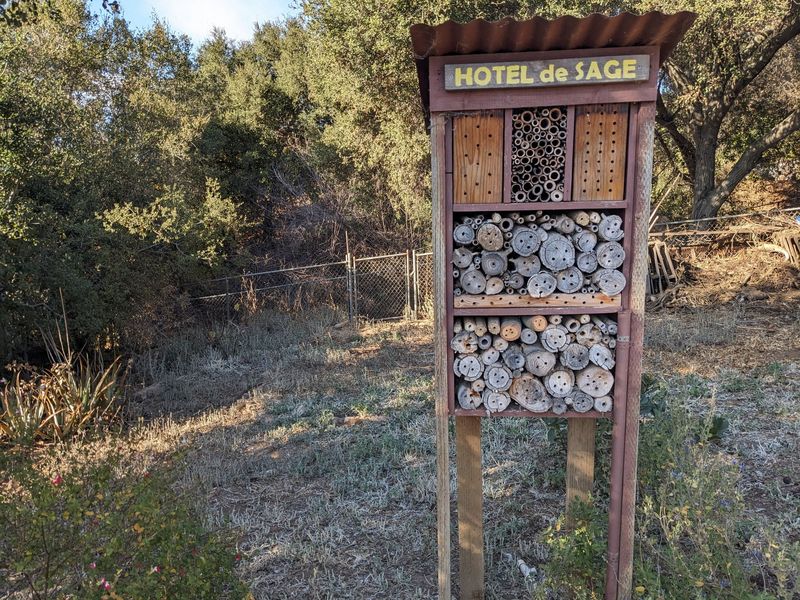
Roughly 70 percent nest in the ground, digging small tunnels in bare, well-drained soil. Others raise their young inside hollow or pithy plant stems, old beetle holes in wood, or other small cavities.
UC Master Gardeners of San Luis Obispo County describe this wide range of nesting styles.
There is also plenty we still do not know. Researchers have not worked out where every species spends the winter, and the Xerces Society notes that the precise preferences of many bees remain poorly known.
So it is fair to say leaf litter helps some bees, but it is not where most of them are.
For a homeowner, that means you do not need to feel guilty about every raked leaf. You also do not need to treat your yard as a single giant bee bedroom.
Different bees need different things, and a yard with a mix of habitat features serves more of them than any one habit could.
Leaf litter may help overwintering wildlife, but bee-specific evidence is limited
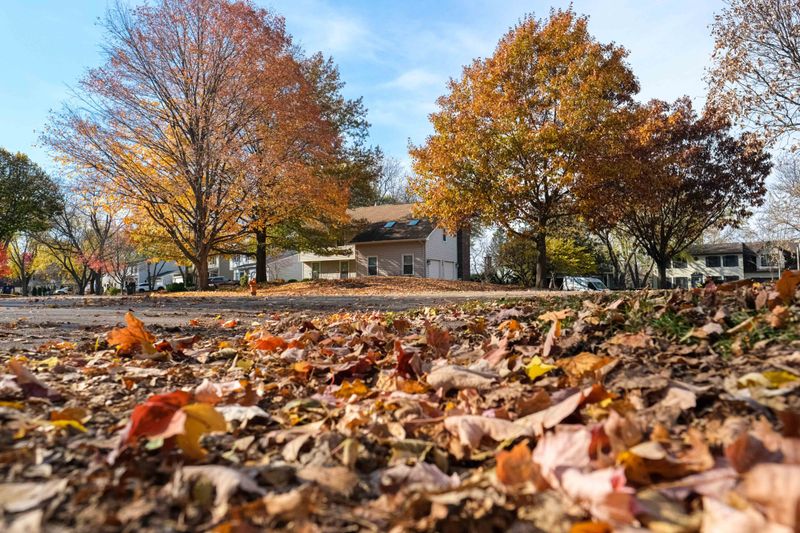
Leaf litter is a small habitat of its own. Moths, beetles, spiders, and other insects spend the cold months in it, and many birds later forage there for food.
Keeping some of it in suitable places is a reasonable way to give those creatures a hand.
One recent study gives a useful look at the bigger picture. In a 2025 Maryland experiment in residential yards, leaf removal reduced the spring emergence of the measured arthropods by 17 percent overall.
Some groups, including moths and butterflies, dropped more than others.
Keep the limits in mind. The work was done in Maryland, not California, and it counted a broad set of insects rather than focusing on bees.
It did not show that raking kills native bees. Think of it as a hint that leaves matter to yard insects, not as proof about our local species.
The bee-specific picture is thinner still. Bumblebee queens are the clearest case, since the Xerces Society notes they may overwinter in plant litter, and the habits of many other species are still unknown.
That uncertainty is a reason for moderation, not a reason to stop all cleanup.
A practical takeaway: save leaves where they are safe and useful, and do not feel pressure to keep every last one. A few well-chosen patches do more good than a yard buried end to end.
Keep an oak’s own leaf drop beneath it when conditions allow
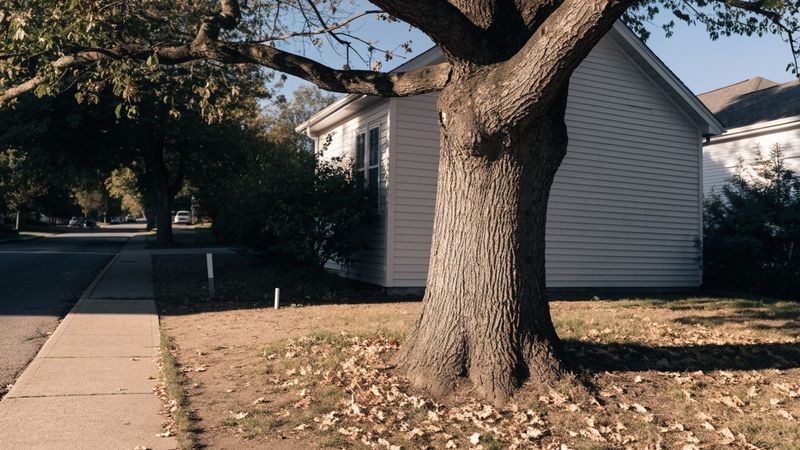
Oaks have been dropping leaves onto their own roots for a very long time. UC Master Gardeners of Sonoma County recommend leaving that natural leaf drop undisturbed under the tree.
It is guidance for typical oak plantings, not a rule that fits every yard.
Leaf drop is different from mulch you bring in. If you add wood chips or other mulch, the same UC guidance says to keep it about a foot away from the trunk.
A pile pushed against the bark can hold moisture where you do not want it.
Your own site decides how far to take this. A steep hillside, a spot near the house, or a stretch beside a fence may call for a lighter touch.
Fire safety comes first, and local fire authorities may have instructions that limit where leaves can stay.
A simple test helps. Stand at the edge of the canopy and ask whether the leaves sit on bare ground, away from buildings, decks, and walkways.
If so, leaving them in place is usually a fine, low-effort choice. If the leaves are heading toward a structure, they are better moved.
The payoff is less work for you and a more natural floor for the tree and the small creatures that live around it.
Move excess leaves from lawns and paths into suitable beds
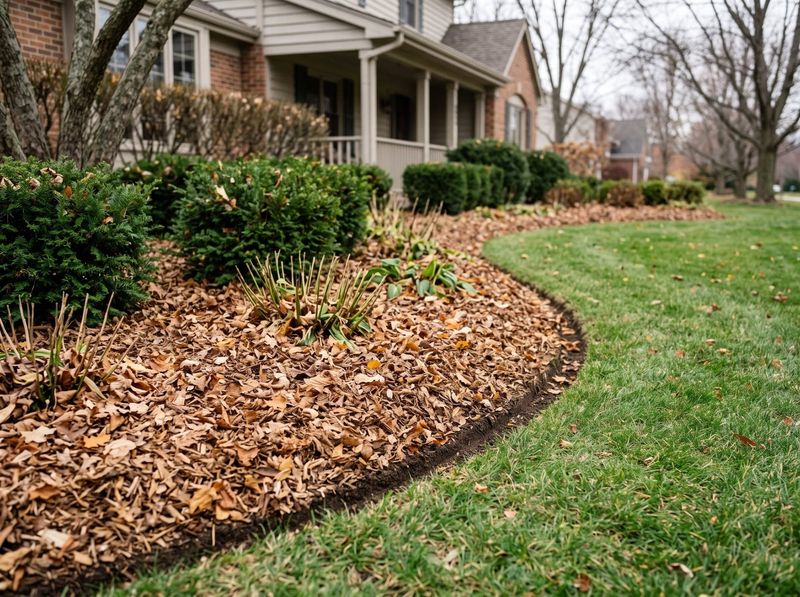
Raking can still be part of a wildlife-friendly yard. The trick is to move leaves instead of bagging them.
UC Master Gardeners of Butte County suggest shifting leaves off lawns and walkways and into beds beneath trees, shrubs, and perennials.
Keep them back from trunks and plant stems. Leaves piled against a stem can hold damp against it.
Oak leaves are large and stiff, so they can blow around. Breaking them up a bit, such as with a mower pass over a pile, helps them stay put.
Not every bed wants a thick blanket. Small plants, young seedlings, and low perennials can be smothered by a heavy layer, and the same goes for a lawn.
A loose, modest layer works better than a deep mat. Check after a few weeks of rain to see whether things are matting down.
Walking surfaces matter too. Wet leaves on steps, paths, and driveways get slick, and drifts can hide uneven ground.
Clear those areas first, then use what you gather in the beds that can handle it.
Done this way, a cleanup takes the same effort as bagging but keeps the leaves working in your yard.
Clear leaves from home-adjacent fire-risk areas
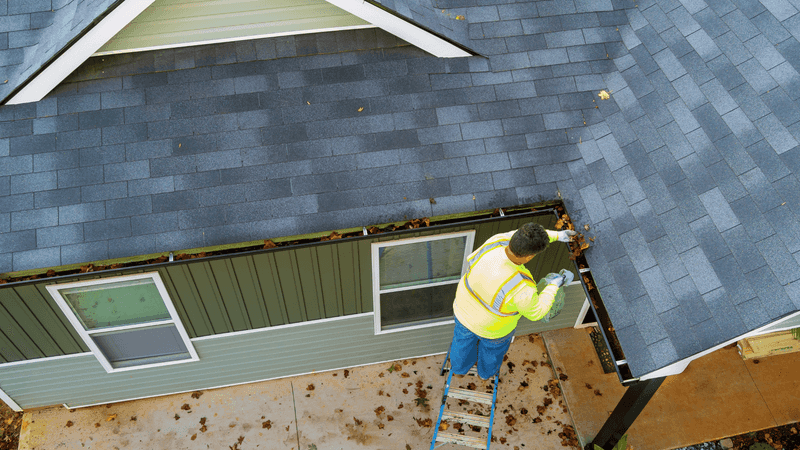
Habitat goals stop where fire risk starts. CAL FIRE defensible space guidance says to keep dry leaves off roofs, out of gutters, and away from decks, porches, stairs, and the areas under structures.
It also recommends removing dry leaves in the first 30 feet around your home.
Farther out, the advice loosens a little. For the 30-to-100-foot zone, CAL FIRE guidance says fallen leaves and similar debris may be permitted up to three inches deep.
That is a ceiling, not a target, so a thinner layer is often the safer pick.
It helps to know what kind of rule you are reading. CAL FIRE recommendations are guidance.
Binding requirements can come from your city, county, or local fire district, and they can differ from place to place. When you are unsure, call your local fire authority and ask what applies to your lot.
Rules around the home are also in flux. The Board of Forestry page on defensible space zones described the Zone 0 regulation package, which involves a five-foot ember-resistant zone, as under final review when checked.
Do not assume a final regulation has been published, and verify the current rules before you plan your fall work.
The safe habit is simple. Clear the roof and gutters, sweep the deck and steps, and keep the nearest zone clean before you think about habitat.
Leave both some leaf cover and some open soil
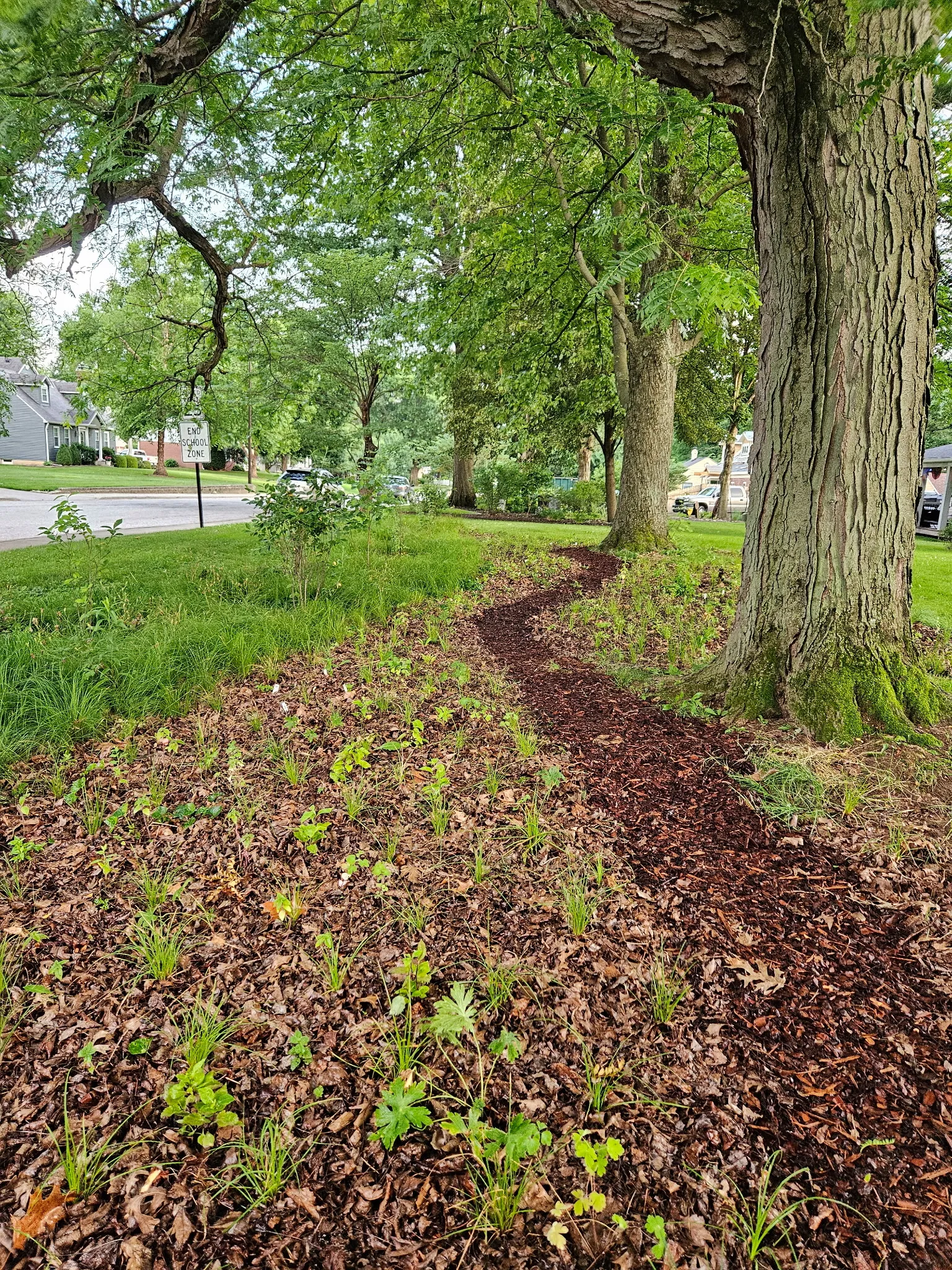
A bee-friendly yard is a patchwork, not a blanket. Where fire safety allows, keep a few areas of undisturbed leaf-covered ground.
Bumblebee queens and other overwintering insects can use those spots, and you will not have to do a thing to maintain them.
Right next to them, leave some bare soil. Since most native bees nest in the ground, they need open, sunny patches where they can dig.
UC Master Gardeners of San Luis Obispo County note that many solitary bees nest this way. A thick mulch or leaf mat can block them, so a dry, lightly vegetated slope or a corner of unmulched ground can be valuable.
Stems and wood count too. UC Master Gardeners of Butte County encourage leaving some stems on the ground, since some bees raise their young in them.
The Xerces Society also points out that many species have overwintering needs we still do not fully understand, which is a good reason to offer variety.
A practical layout might be a leafy strip under an oak far from the house, a patch of bare soil in full sun, and a tidy, cleared zone beside the structure. You get a safe yard and a range of nesting options without leaving every surface untouched.
Use a selective cleanup rule for each part of the yard
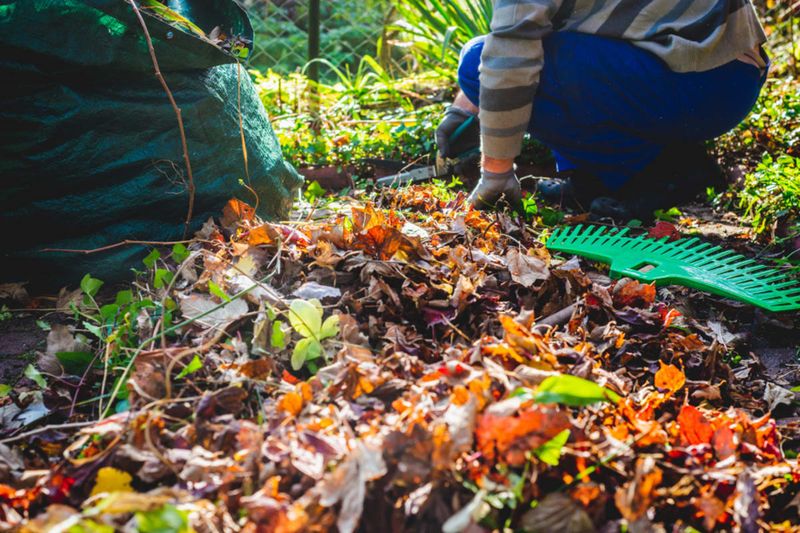
Think zone by zone. Beneath healthy oaks in a suitable, fire-safe spot, UC guidance favors leaving the tree’s own leaf drop.
On lawns, steps, and paths, move the excess into beds that can handle it, as UC Master Gardeners suggest.
Where it is safe, keep some leaf cover and some open soil. Near the house, on roofs, in gutters, and wherever fire guidance applies, clear the debris, and check CAL FIRE guidance and local rules for your property.
Winter care is about picking your spots, not banning the rake.