
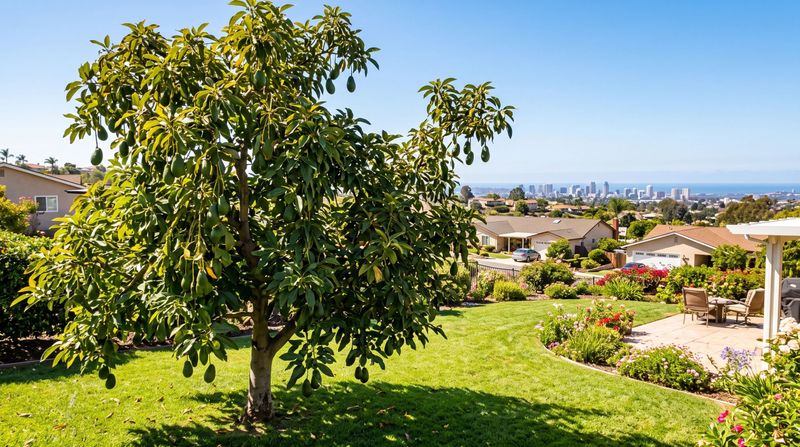
A forecast low can turn a happy new avocado tree into a worry before bedtime. Young avocado leaves and shoots are tender, and a cold night can scorch them or make them drop.
The good news is that a few simple steps done ahead of time can lower the risk for your tree. Here is how to prepare, what to skip, and how to judge the damage once the cold passes.
Cold risk depends on more than the forecast low
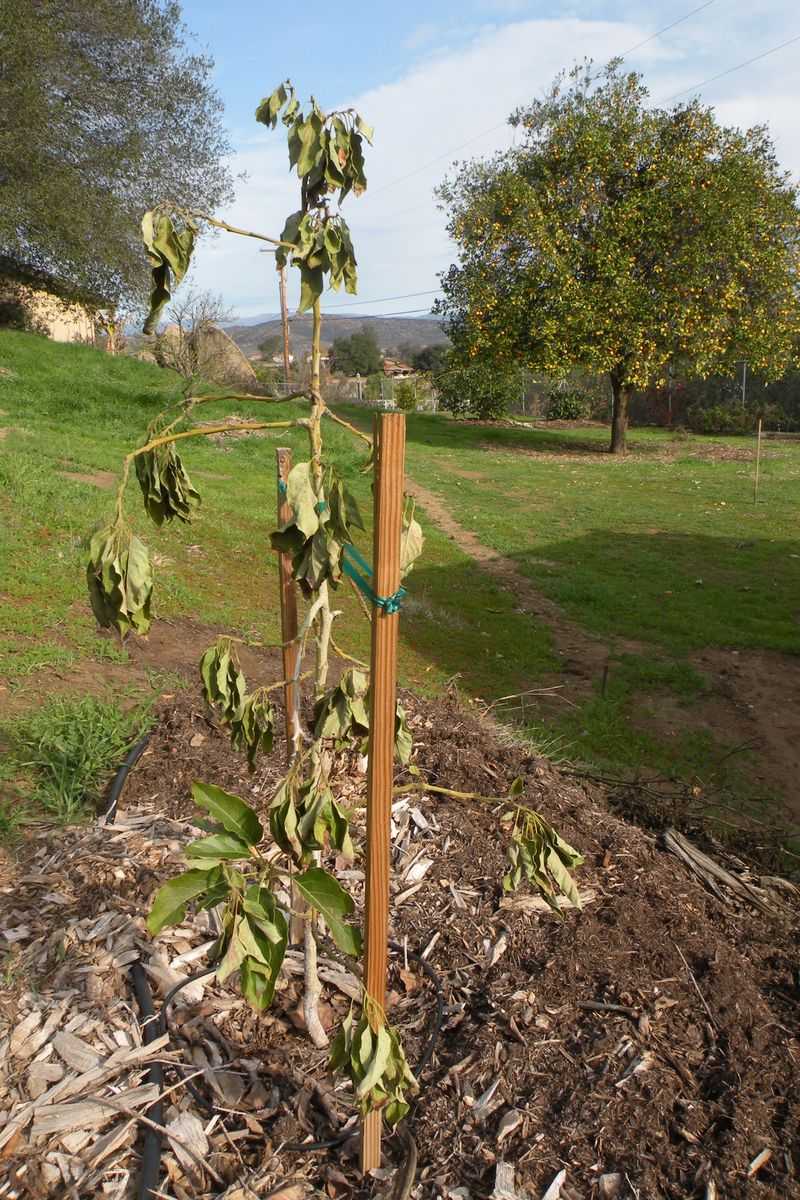
Avocado leaves and shoots are sensitive to cold, and the newest, softest growth is the first to suffer. Cold can scorch leaf edges, turn tips brown, or make leaves go limp.
How much harm shows up depends on the temperature, how long it stays cold, the variety, the age and health of the tree, and how exposed your yard is.
Three terms get mixed up, so it helps to separate them. UC Integrated Pest Management explains that frost can form on plant surfaces even when the reported air temperature is above 32°F, while a freeze means the air itself is 32°F or colder.
A low spot in your yard or a clear, still night can be colder than the forecast for your town.
Chilling injury is a third problem. UC IPM notes that chilling injury can happen at temperatures above freezing, so a night in the mid-30s can still stress a tender plant.
You may see numbers for when avocados get hurt. UC Cooperative Extension in Ventura County lists approximate thresholds, from about 25°F for some Mexican types to 29 to 30°F for more tender types, and says sensitivity varies with tree health and rootstock.
Treat those as rough guides for mature, healthy trees, not a safe cutoff for a first-year tree. Protection can lower your risk, but it cannot promise every leaf stays put.
Cover the tree before the cold night arrives
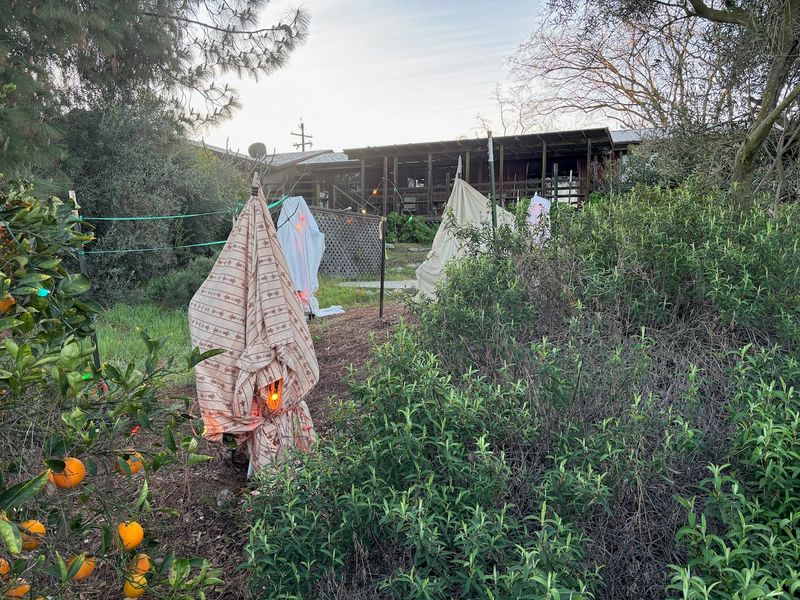
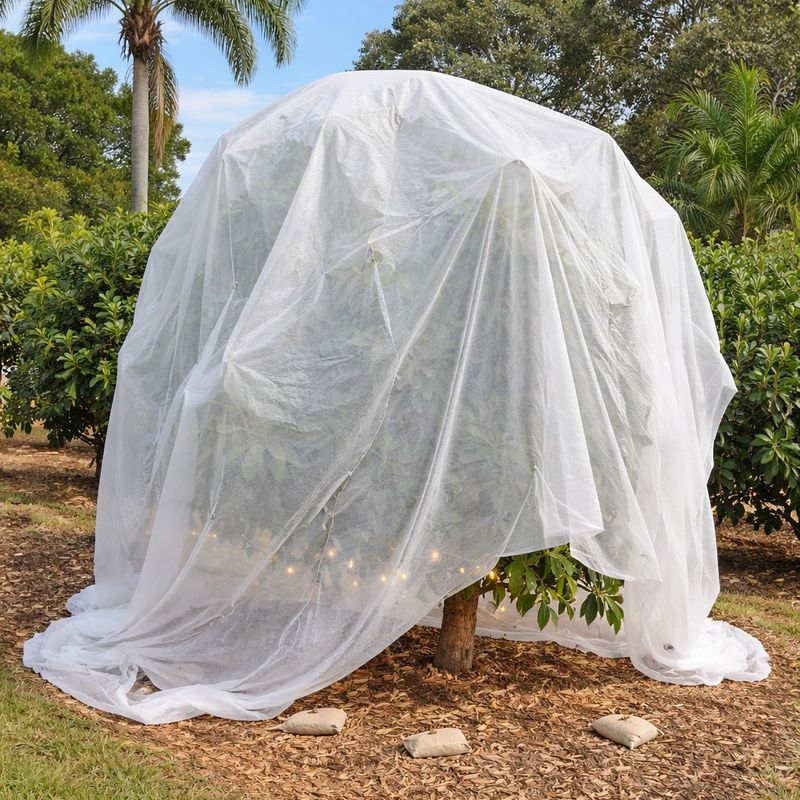
Late afternoon, before the temperature drops, is the time to cover a small tree. Use frost cloth or a light blanket, and hold it up on stakes or a simple frame so the fabric does not rest on the leaves.
Where cloth touches foliage, cold can pass straight through to the leaf surface.
On a clear, calm night, the ground gives off heat it stored during the day. UC IPM advises leaving the bottom of the cover open for this kind of radiative frost so that ground heat can reach the plant.
Skip sealing the cover tight to the soil, and take it off in the morning so the tree gets daytime light and warmth.
Fabric weighs more when damp, so anchor the cover with stakes or clips, not heavy objects pressed on the branches. Texas A&M AgriLife guidance also stresses using covers that are properly supported.
What can you expect? UC guidance for avocados estimates that a supported frost-cloth frame around a small tree may add about 5°F of protection.
That is an estimate, and it may fall short in a hard or long freeze. Think of the cover as a way to soften the night, not a shield.
Prepare dry soil and consider the young trunk
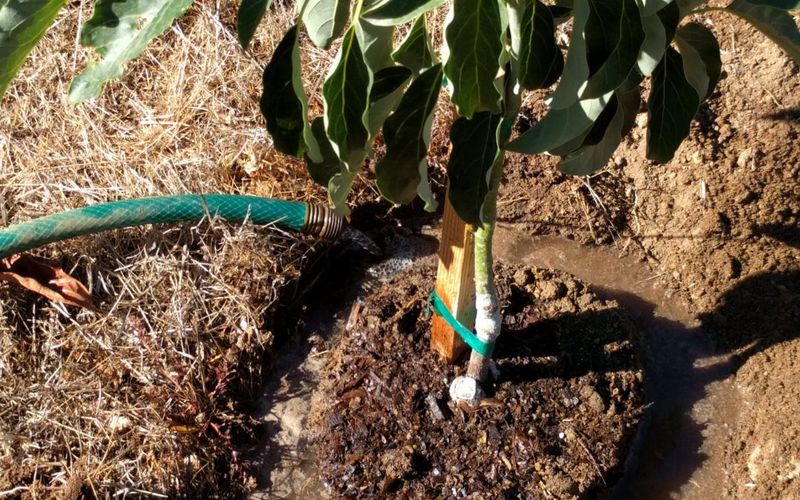
Several days before the cold arrives, push a finger into the soil near the tree. If the top few inches are dry, a good watering then may help.
UC IPM says moist soil can hold and release heat better than dry soil overnight.
Timing matters here. Water the soil ahead of the cold, then let it drain.
Soaking the ground in the middle of a freeze is a different thing and not what this step means. If the soil is already damp, leave it alone, since soggy roots cause their own trouble.
The trunk and graft union deserve a thought too, because a young tree has thin bark and little wood to spare. Texas A&M AgriLife recommends mounding soil around the trunk for added protection in severe freezes, and its avocado publication also mentions deeper planting for graft protection.
That advice is written for Texas winters. It is not a general California planting rule, and burying a graft union or piling soil against bark can create problems of its own, so do not copy it without local guidance.
If you are curious about your own yard, a local UC Cooperative Extension office or avocado grower can tell you how cold your area tends to get.
Avoid freeze fixes that create new risks
Some popular fixes cause more harm than good. Plastic sheeting laid right on the leaves is one.
Texas A&M warns that clear plastic touching plants can injure them, and UC IPM recommends cloth or similar material for landscape covers instead.
Sprinklers are another trap. A quick rinse of the leaves, a flooded root zone, or an ordinary sprinkler left on overnight is not a safe freeze remedy.
Flooding can damage roots, and a short spray can leave wet leaves that chill further.
Continuous sprinkling does exist as a protection method, but it is a specialized system. The California Avocado Commission’s freeze guide describes it for groves, where equipment and uninterrupted water delivery are planned in advance.
UC IPM says it is generally not appropriate for home landscapes.
One more safety point: never combine sprinkling with outdoor electrical lights. Water and electricity do not mix.
Advance soil watering is the homeowner step, and that is where the water should stay.
What do drooping or fallen leaves tell you?
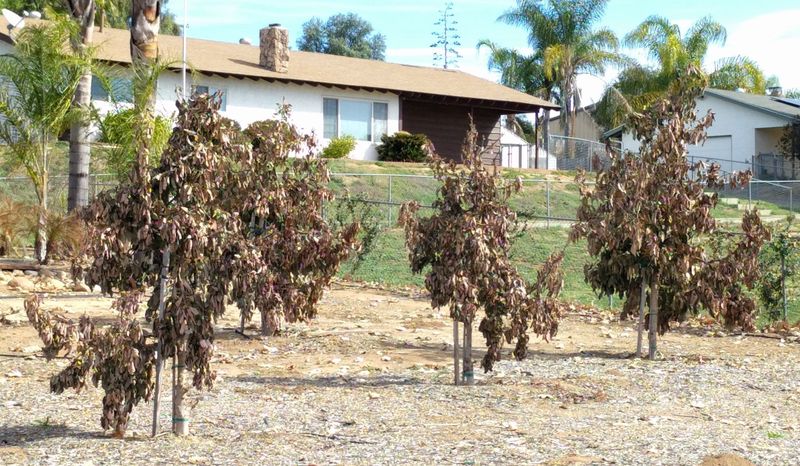
A droopy tree the morning after a cold night looks alarming, but it is not always a bad sign. UC Cooperative Extension in Ventura County says leaves can turn flaccid in low temperatures and recover if the injury is limited.
Give the leaves a few days. Ones that perk back up as the day warms were likely chilled, not frozen through.
Leaves that were severely frozen tend to collapse, then turn dry and brown.
Leaf drop deserves the same patience. A tree can shed many leaves quickly and still have living wood and healthy buds underneath.
What you see on the leaves does not tell you the condition of the branches or the roots, so a bare tree is not proof the tree is lost.
Simple clues can help while you wait. Scratch nothing yet, and instead note which branches have leaves that are crisp, which are limp, and which are still green.
Take a few photos each week. That record will help you decide what to do once spring growth shows what is alive.
Wait for spring growth before pruning
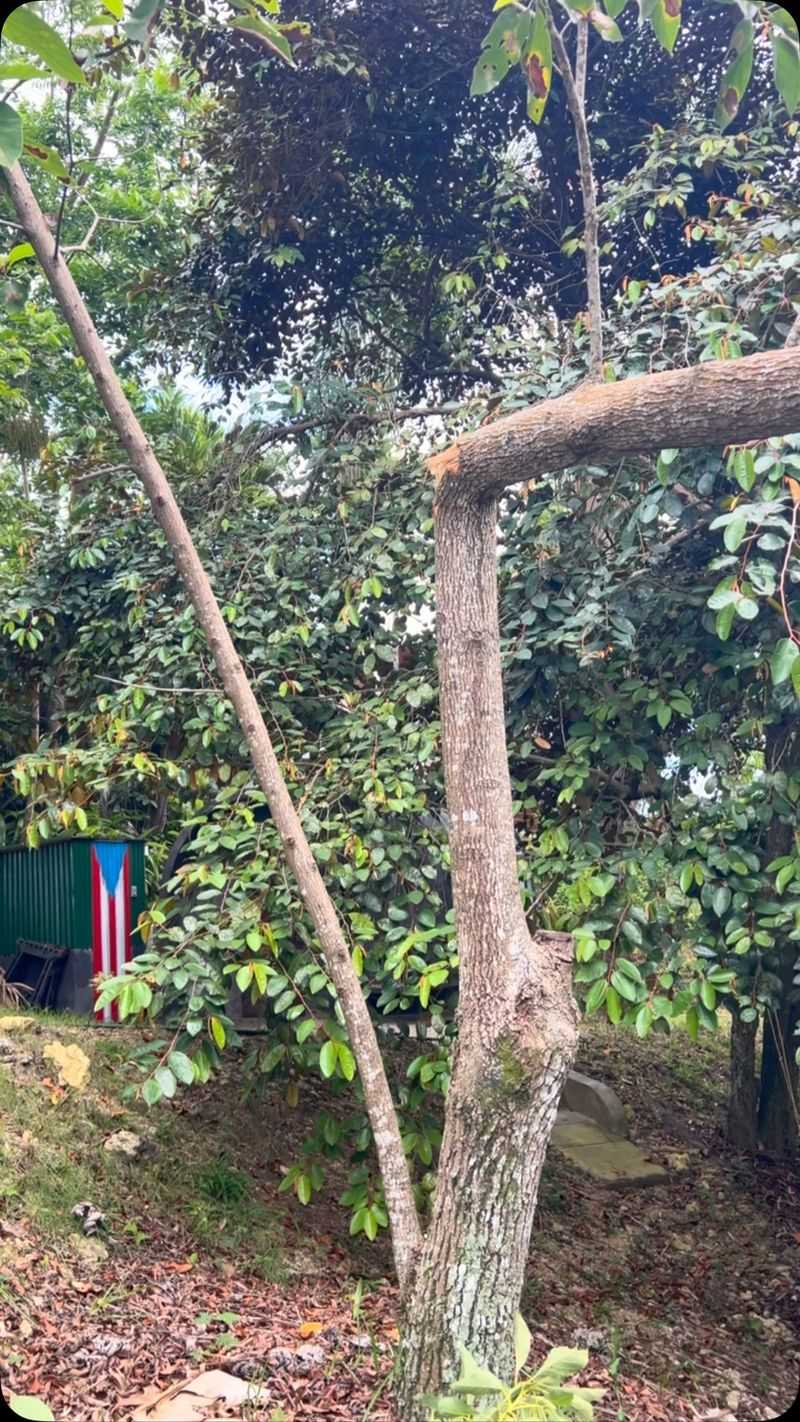
Cut nothing in a hurry. Damaged wood can take months to show its true condition, and branches that look dead in January may sprout in April.
Pruning too early can remove wood that would have recovered.
Wait until spring growth starts and you can see where new leaves appear. Branches that stay bare after the tree has pushed growth elsewhere are the ones to consider cutting.
UC ANR’s guide to caring for a frost-damaged tree supports this slow approach.
If many leaves fall and the branches are suddenly exposed to sun, sunburn becomes a concern. UC avocado guidance recommends whitewashing exposed wood to reduce that risk.
Watering needs change too. A tree with fewer leaves uses less water, so check the soil moisture before each irrigation and adjust to the smaller canopy.
Heavy watering is not a recovery fix, and soggy soil can hurt a stressed root system. Extra fertilizer is also not part of the plan.
Steady, modest care and patience are what the tree needs.
Reduce risk without expecting a guarantee
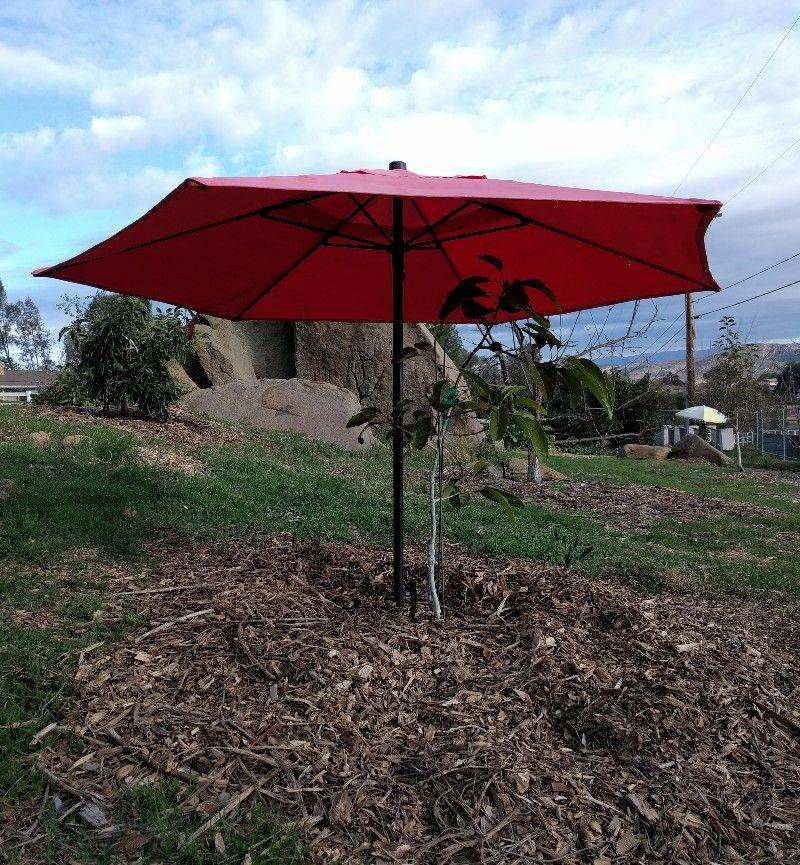
Check the forecast, water dry soil days ahead, set up a supported cover before dusk, and skip plastic and sprinklers. Afterward, give the tree time before judging it, as UC IPM’s frost guidance and UC Ventura avocado advice suggest.
These steps help, but they cannot promise every leaf will stay. A tree that loses its leaves can still grow back strong.