
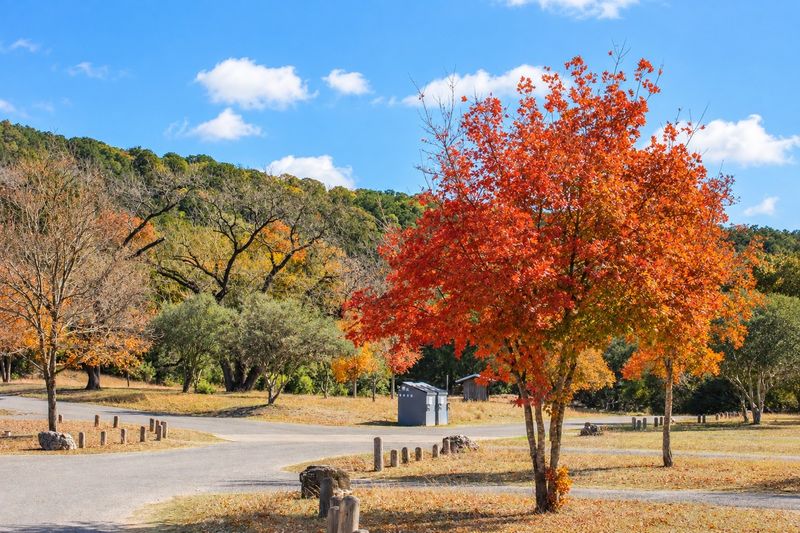
Most Texas yards go from green to brown with barely a pause for color. One native tree can break that pattern, flaming orange, red, or yellow in the right place and the right year.
It is the Texas bigtooth maple, a Hill Country favorite with a following in western Texas. Here is where it shines, where it may struggle, and how to give one a good start.
The bigtooth maple is a Hill Country color standout
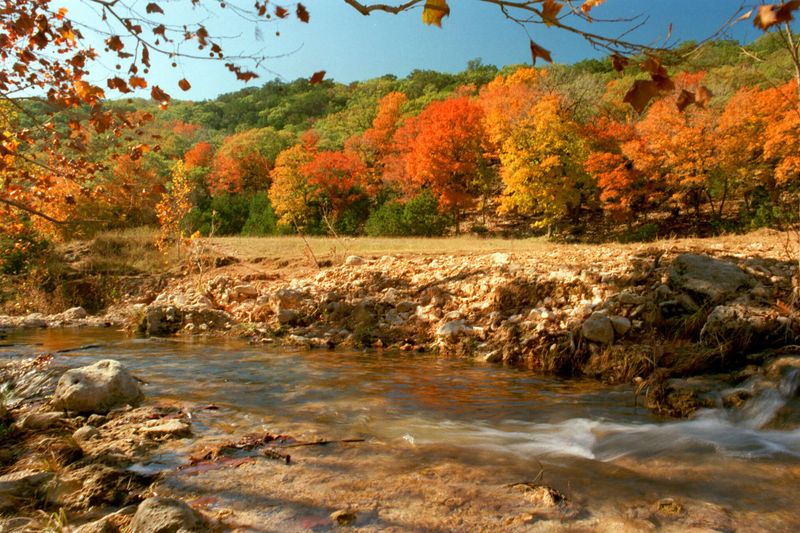
Picture a limestone canyon in the Texas Hill Country in late fall, with leaves glowing orange, red, and yellow against gray rock. That scene belongs to the Texas bigtooth maple (Acer grandidentatum), a native, medium-sized deciduous tree.
Texas A&M’s tree selector lists it as a Hill Country native with reliable fall color in shades of orange, red, or yellow.
Its reputation is regional. Texas Parks and Wildlife describes the bigtooth maple as the best native fall-color show in western Texas under favorable conditions, and it points to Lost Maples State Natural Area as a premier place to see it.
That is a narrower claim than calling it the most brilliant tree in the whole state, and it is the claim worth trusting.
Texas displays vary a lot by region and by species. Texas A&M Forest Service notes that East Texas hardwood forests and central and west Texas woodlands put on different shows.
Other trees, including Shumard oak, red maple, sweetgum, and bald cypress, also carry fall color in parts of Texas.
So think of the bigtooth maple as a strong candidate, not a promise. In a yard that suits it, in a year with cooperative weather, it can deliver a canopy worth stepping outside to see.
In a yard that does not suit it, it may simply turn dull or struggle.
Why can the same tree show different fall color?
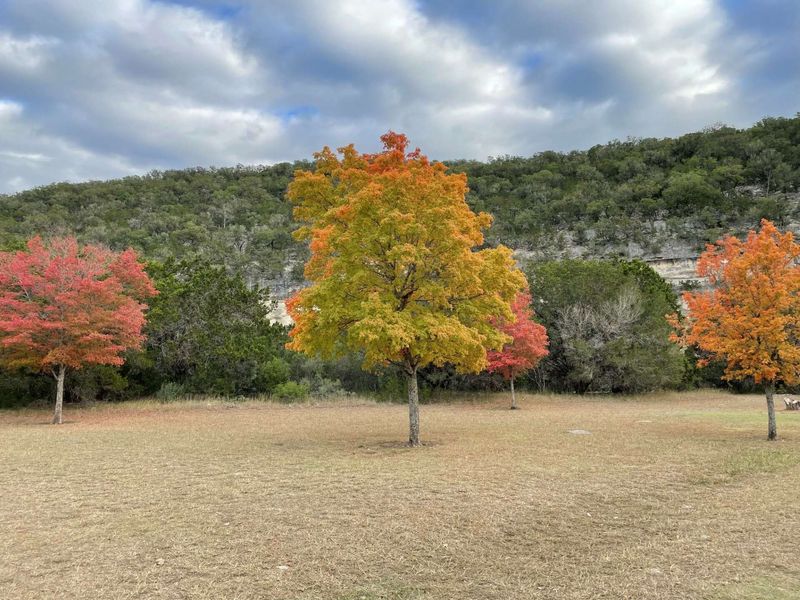
Two maples planted a few miles apart can look nothing alike in November. Weather and setting do much of the work.
Texas A&M Forest Service explains that temperature, light, and water all affect foliage color, and that cloudy or rainy stretches can dull the intensity.
Texas Parks and Wildlife also ties the bigtooth maple’s display to growing and weather conditions, as noted in its profile of the tree. Sunny days and cool nights tend to help.
Still, favorable conditions make a stronger show possible, not certain.
Location matters too. A tree in a sheltered canyon pocket, one on an exposed hillside, and one in a hot paved front yard each face different light, heat, and moisture.
Expect some year-to-year change even on the same tree.
Severe drought is a different story from normal seasonal variation. Texas A&M Forest Service reports that after a harsh dry spell, trees can show muted fall colors, browning, and early leaf drop.
Do not count on a dry year to sharpen the color.
A practical clue: if leaves crisp and brown at the edges in September while the soil is bone dry, that is stress, not early color. Water deeply when the soil is dry and watch what the leaves do next.
Would a bigtooth maple suit your part of Texas?
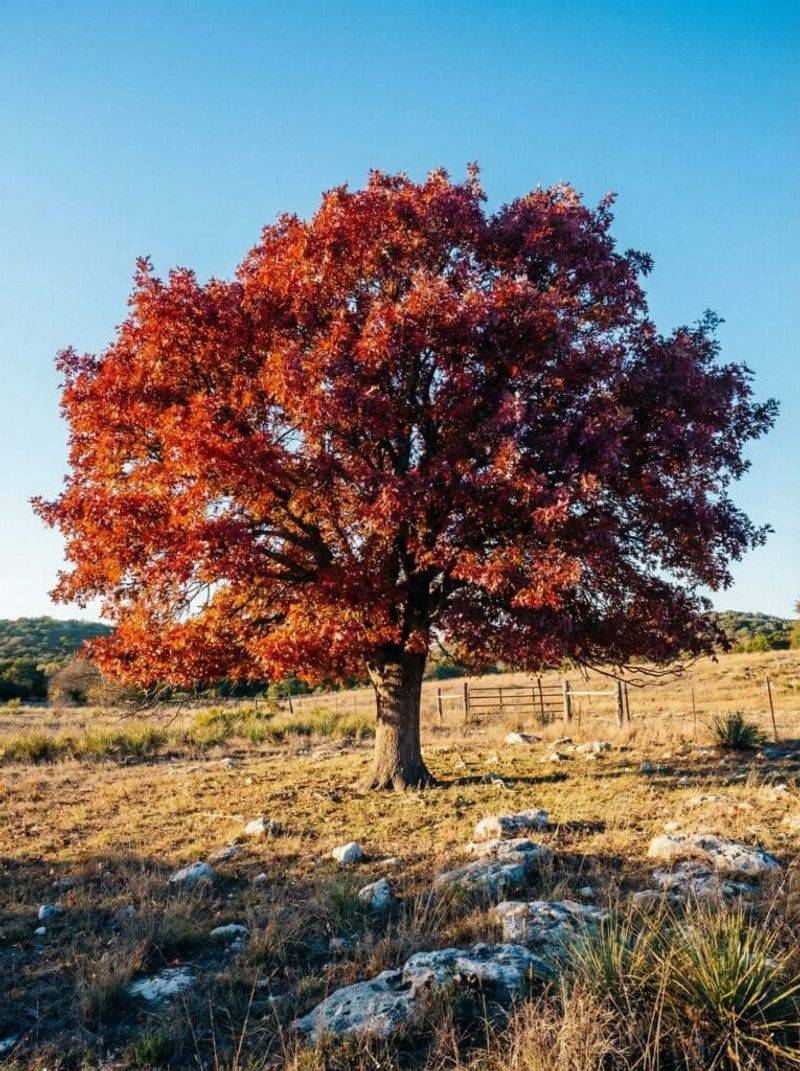
Native to Texas does not mean right for every corner of Texas. The bigtooth maple is tied closely to the Hill Country, and Texas A&M recommends moist, well-drained limestone soils.
The same listing says it tolerates shade, is drought-tolerant, and is sensitive to salt.
Those traits are a starting point, not a verdict. Check what your yard actually offers: how the soil drains after a hard rain, how many hours of afternoon sun hit the spot, and whether irrigation water or road salt reaches it.
A heavy clay yard on the coast is a very different place from a rocky hillside near Vanderpool.
For a local answer, use Texas A&M’s county-based tree selector. It narrows options to what is recommended where you live.
Shumard oak is one credible alternative if you want orange to deep red color. Texas A&M describes it as a native with reliable fall color that is large, widely available, and happiest in well-drained soil.
It also flags fruit drop and oak wilt concerns in parts of Texas, so seed source and local conditions matter.
The size difference is the big call. A bigtooth maple suits a smaller space, while a Shumard oak needs room to spread and grow tall.
Give the young tree a sound start
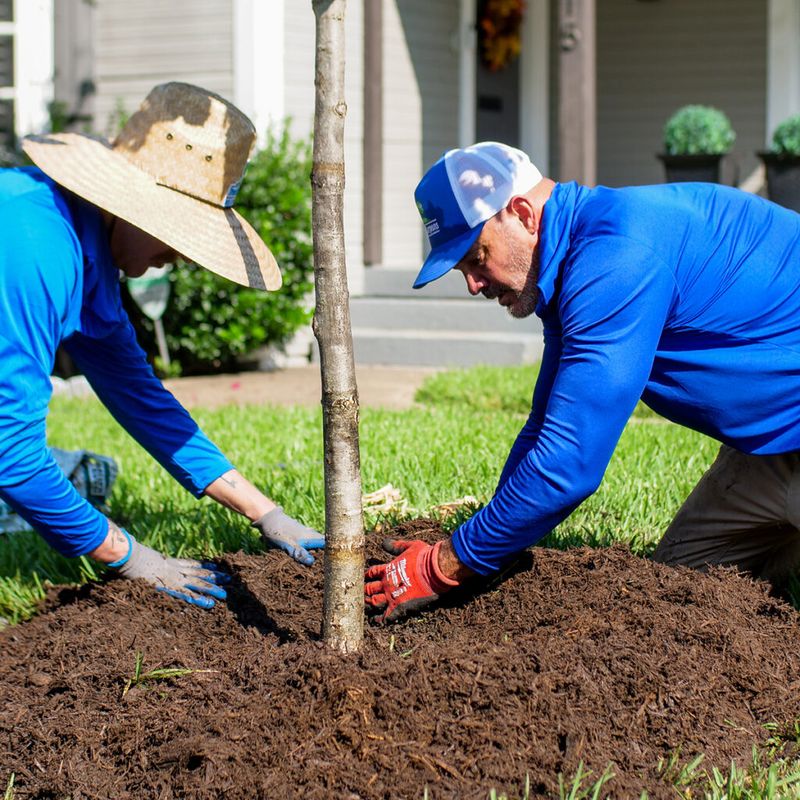
Planting day sets the tone for the next decade. Texas A&M AgriLife advises digging a hole twice as wide as the root ball and no deeper than the root ball.
Set the tree so the top of the root ball sits level with the surrounding ground.
Fill the hole with the soil you dug out, not bags of amendments. Roots then grow outward into the native soil instead of circling in a rich pocket.
Water thoroughly right after planting to settle the soil around the roots, and add mulch over the planting area, keeping it off the trunk.
Follow-up watering is where people slip. Any schedule you find is a guideline, so check the soil first.
If the soil under the mulch is still cool or moist, hold off.
Drought-tolerant does not mean a new tree can fend for itself. The tree selector rates the bigtooth maple as having moderate water needs, and a freshly planted root system is small.
Push a finger or trowel into the soil near the root ball every few days at first, and water when it feels dry.
During a hot, dry Texas spell, a deep soak now and then beats frequent light sprinkling. Adjust to rain, temperature, and how fast your soil drains.
Use Lost Maples reports as dated local snapshots
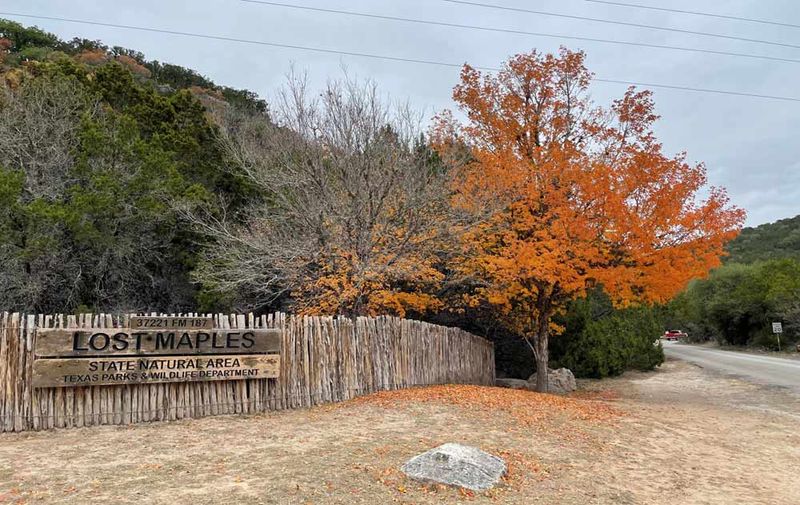
If you want a reality check on how the maples are doing, Lost Maples State Natural Area posts fall foliage reports through the season. On October 27, 2026, the park reported that most of its bigtooth maples were still green, with slight color change in some.
That is one dated observation, not a forecast. The park updates its page as the season moves, so check it right before you plan a trip or share the information.
Only call an entry the latest if it truly is the newest one posted.
It also covers one place. A canyon in Bandera County does not tell you what a maple in San Angelo, Dallas, or your own backyard is doing.
Elevation, shade, and recent weather all shift timing from site to site.
For your own tree, watch the leaves instead. Notice whether nights have cooled, whether the leaves are changing at the tips or edges, and whether rain or clouds have hung around.
Peak color is a window that moves from year to year, so no one date fits every tree in Texas.
Choose for your yard, not a statewide superlative
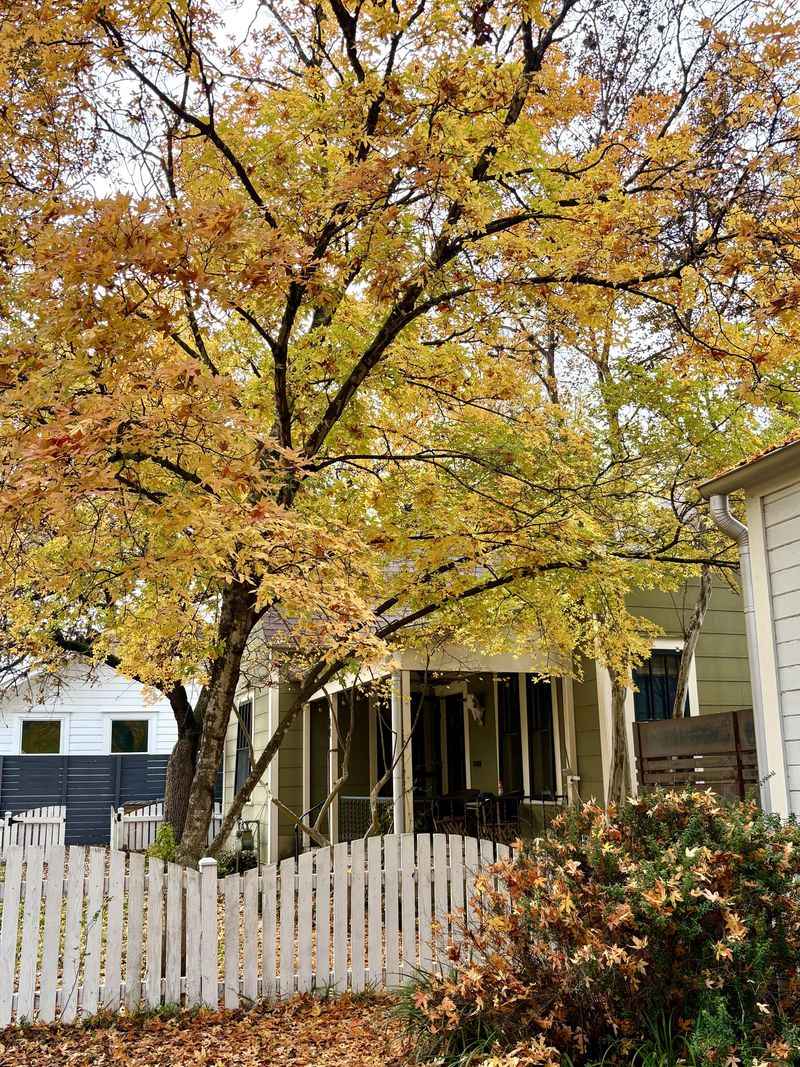
A bigtooth maple is worth a serious look if you live in the Hill Country or western Texas and your soil drains well. Start with the county-based tree selector, then match the tree to your light, soil, and water.
Treat color as a seasonal possibility. Weather, light, and moisture shape each year’s show, and the tree’s best display is tied to western Texas under favorable conditions.
The best tree is the one that fits its spot. A maple in the right canyon pocket may outshine everything on the block, and in the wrong yard, a different tree will do better.