
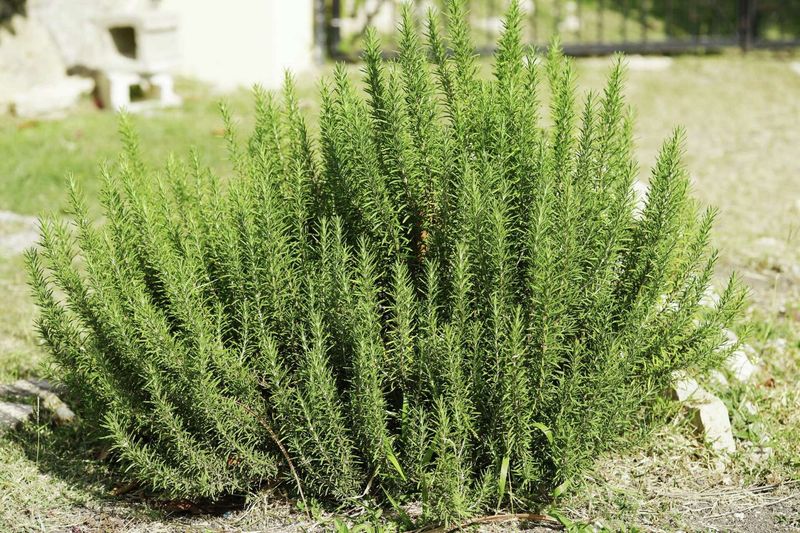
Rosemary looks tough, but wet feet can cause trouble for its roots when winter rain arrives. Many gardeners also worry about the bare, woody stems that show up on older plants.
Those two things are not the same problem. A quick look at your soil and pots in late fall can help you spot soggy trouble early.
Woody rosemary does not prove a November mistake
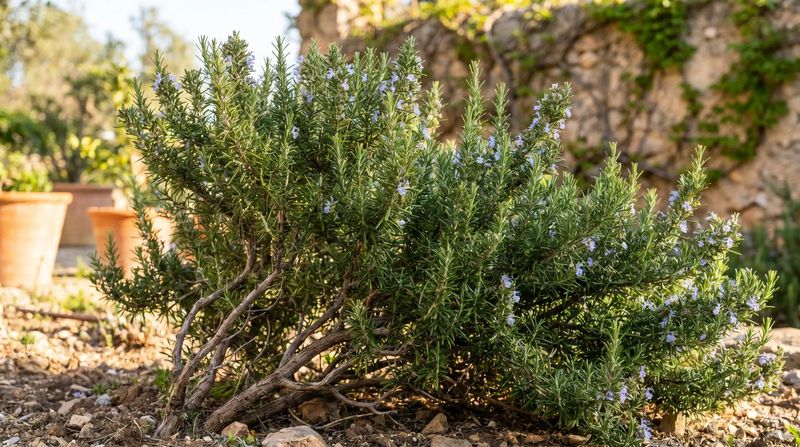
Woody stems on rosemary are not a sign that you missed one chore last November. Rosemary is a woody subshrub, and UC Master Gardeners of Santa Clara County notes that its lower stems naturally become bare over time.
That change builds slowly as the plant ages, season after season.
The sources reviewed do not connect one skipped November task to a woody, sparse plant by spring. A catchy headline might suggest otherwise, but a single missed step is not shown to cause it.
If your rosemary has a bare base, that alone does not mean poor care or winter damage.
Sparse growth is a different matter, because it can have other causes. Wet soil, winter injury, pests, and plain age can all play a part, and you cannot tell which from a quick glance.
Long-term habits, such as never trimming the plant, can also add to a leggy look.
So why bother with a November check at all? Because there is a real, separate risk this time of year.
Winter rain and extra irrigation can leave rosemary sitting in soggy soil, and that is hard on roots. Looking for persistently wet ground before the rains settle in is a small job with a clear payoff for plant health, even though it will not turn back the clock on woody stems.
What does the November check actually protect?
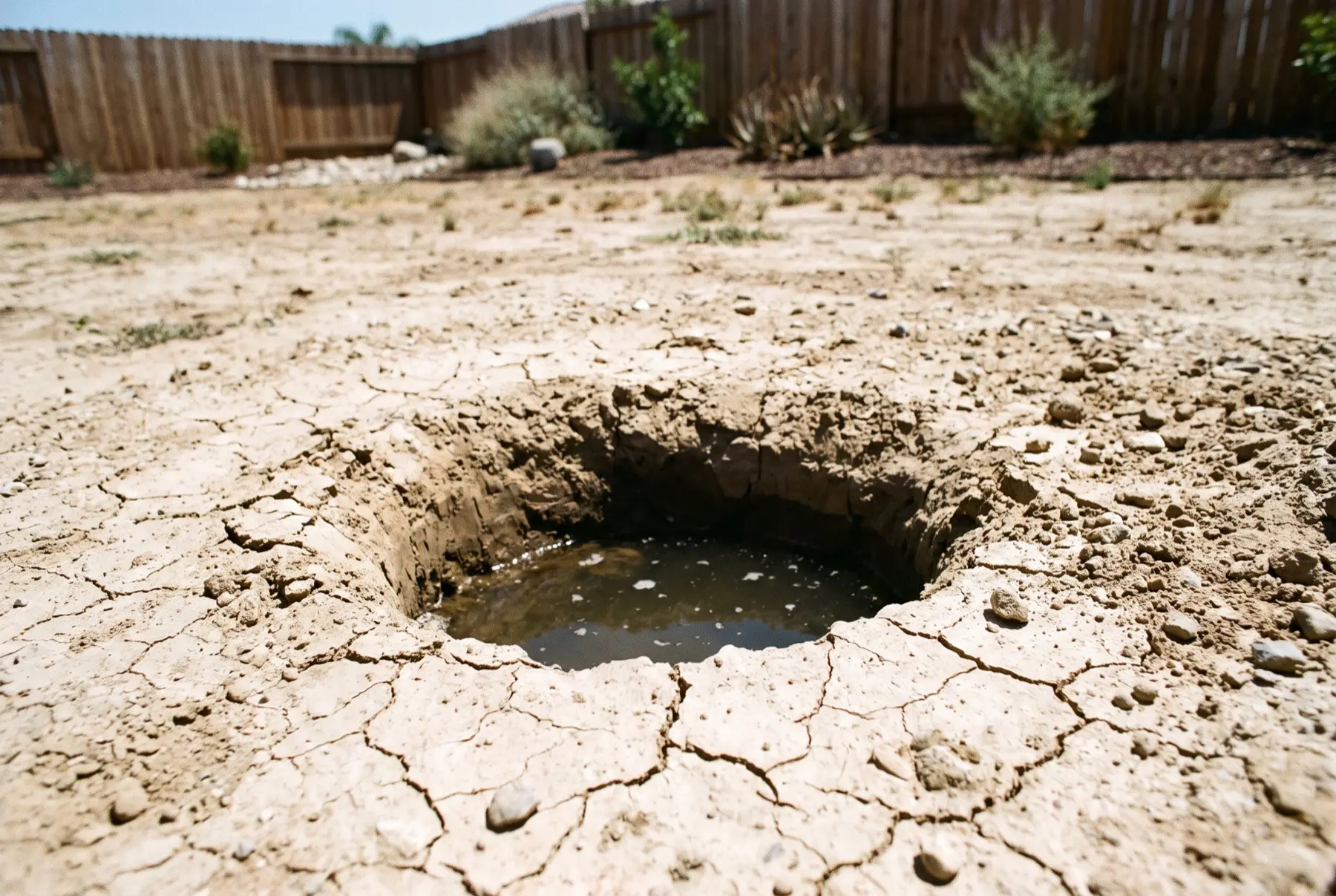
The late-fall task is simple: inspect the root zone. Look for standing water, or soil that stays wet long after rain or irrigation.
UC’s November garden guidance suggests checking whether plants and pots are sitting in water as the wet season begins.
What this check protects is the root system. Rosemary does best in full sun and well-drained soil, and the UC rosemary fact sheet warns against prolonged soil saturation and standing water.
Roots that stay soaked can struggle or rot. The check does not protect against woody stems, which come with age.
Timing should follow your site, not the calendar. In some parts of California, November brings the first real rain, while in others it comes earlier or later.
UC IPM points out that local climates vary greatly, so its dates are only approximate.
A good trigger is the forecast. If a storm is coming, walk the yard the day before and look at low spots, heavy clay, and shaded corners.
If you water by hand or by drip, notice whether the area stays muddy between cycles. A dry, sunny hillside may need nothing at all, and that is a perfectly good result.
Check beds and containers differently
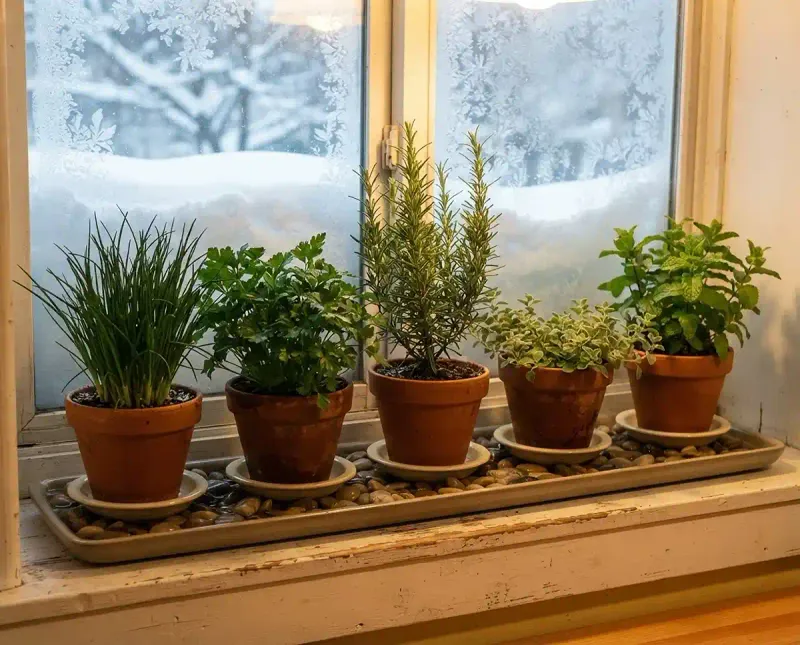
Garden beds and pots fail in different ways, so inspect each on its own terms. For rosemary planted in the ground, walk around after a rain or a watering.
Puddles that linger, soil that feels soggy a few inches down, or a plant tucked into a low spot are all clues that water is collecting around the roots.
Beds with heavy clay or compacted soil deserve extra attention. If water pools, consider where it comes from.
A downspout, a sprinkler head, or a slope that funnels runoff can send more water to the plant than it needs. Adjusting the source or planting on a mound can reduce the problem.
Containers are more direct to check. Poke a finger or a stick into each drainage hole to be sure it is not blocked by roots or soil.
Then lift the pot and look under it. UC’s November tips recommend making sure exposed pots drain well in heavy rain, and that means no water trapped in a saucer.
Pots left out in open storms catch a lot of water. Consider tilting them slightly, setting them on pot feet, or moving them under an eave if they stay soggy.
The UC fact sheet stresses avoiding standing water for this herb.
Keep expectations realistic. A drainage fix lowers the risk of soggy roots.
It will not make bare stems leafy again or reverse the natural woodiness of an older plant.
Let soil and rainfall guide watering

Once you have looked at the soil, let what you found shape your watering. UC IPM says established rosemary is drought tolerant and needs little water.
That fits well with California’s wet winters and long dry summers, and it fits with water-wise yards too.
Too much water is the bigger worry. Texas A&M AgriLife Extension cautions that overwatering can cause root rot and advises letting the soil dry thoroughly between waterings.
Rain counts as watering, so a stormy week may mean your irrigation can pause.
A fixed interval, such as every Saturday, rarely fits every yard. Sandy soil drains fast, clay holds water for days, and a pot on a sunny patio dries differently than one in shade.
Coastal fog and inland heat change things too.
Try the finger test instead. Push a finger a couple of inches into the soil near the plant.
If it feels damp, wait. If it is dry and the plant is in a pot, a light drink may be fine.
If you use drip irrigation, check that emitters are not soaking the root crown, and consider turning down the timer during the rainy season. These adjustments are about avoiding soggy roots, not about changing how the plant ages.
Save shaping for after flowering

Drainage checks belong to winter, while pruning runs on a longer schedule. The UC rosemary fact sheet recommends pruning in late spring or early summer, once flowers begin to fade.
Treat that as a California baseline, since bloom time shifts with the variety and the local climate.
Keep the cuts light. The Royal Horticultural Society suggests a gentle annual trim after flowering and warns against cutting into old wood.
Take off the leafy tips and shape the plant, leaving plenty of green growth behind.
A hard fall cutback is a poor idea. Rosemary may not regrow well from lower, leafless stems, and UC Master Gardener guidance on Ask Extension notes that old stems can become bare with age.
A bare, aged plant can be hard to rejuvenate by chopping it back.
A handy rule is to cut only where you can see leaves just below the cut. If a stem is all brown wood, leave it alone.
Regular light trims over the years can help keep a plant compact, but they work gradually and are not a guarantee.
Wait for spring growth before judging bare stems
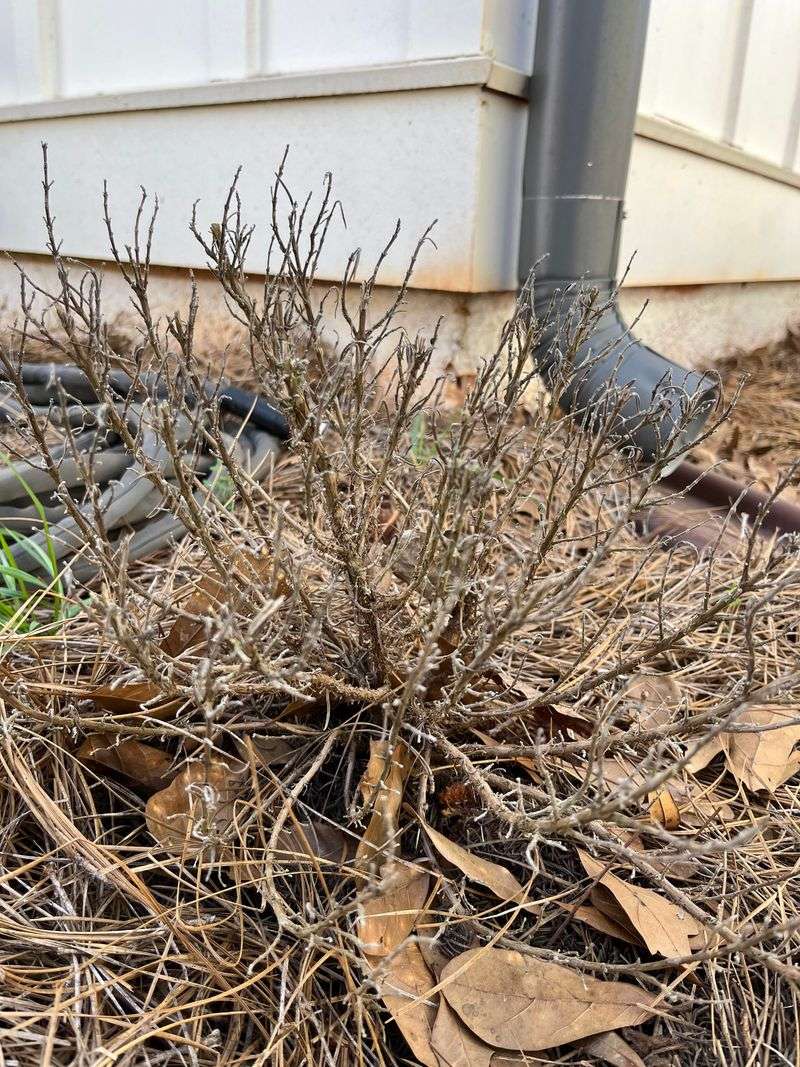
Brown or sparse stems can look alarming after winter, but resist the urge to grab the shears. Appearance alone cannot tell you what happened.
Age, wet soil, winter injury, and pests can all be involved, and sometimes more than one at once.
Patience is the best diagnostic tool. Extension guidance advises waiting for spring growth before deciding which apparently bare stems are dead.
New green shoots will show you which branches are still alive.
While you wait, look for clues. Soft, dark roots or a sour smell in a pot point toward soggy soil.
Sticky residue, webbing, or tiny insects on stems suggest pests. A cold snap that browned the tips on one side of the plant may mean winter injury.
A bare base with healthy green tips is often just age, which UC Master Gardeners describe as normal for this plant.
Once growth begins, trim off only the stems that stay dry and snap cleanly. Do not cut deep into leafless old wood hoping for a fresh start, because it may not regrow reliably.
Keep the November task in perspective
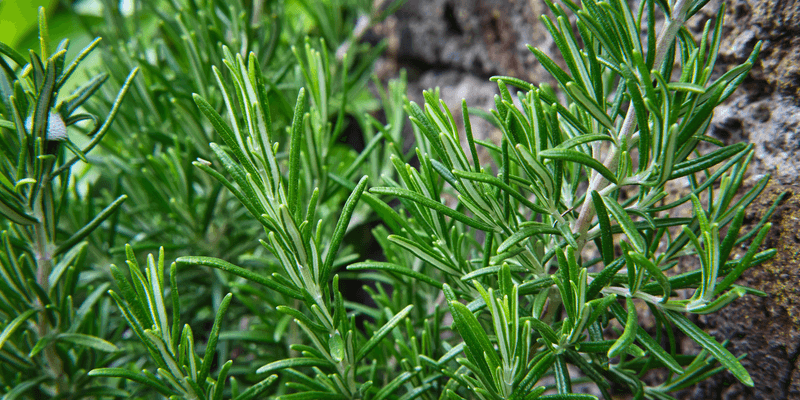
Before the rains settle in, check whether your rosemary is sitting in water, and fix drainage or watering where you find a problem. UC’s November guidance supports that kind of look-around.
Leave shaping for after flowering, as the UC fact sheet advises.
The check lowers wet-soil risks, but it cannot stop normal woodiness or promise a fuller plant by spring. Rosemary ages on its own schedule.
What you can control is whether its roots spend the winter in a puddle.