
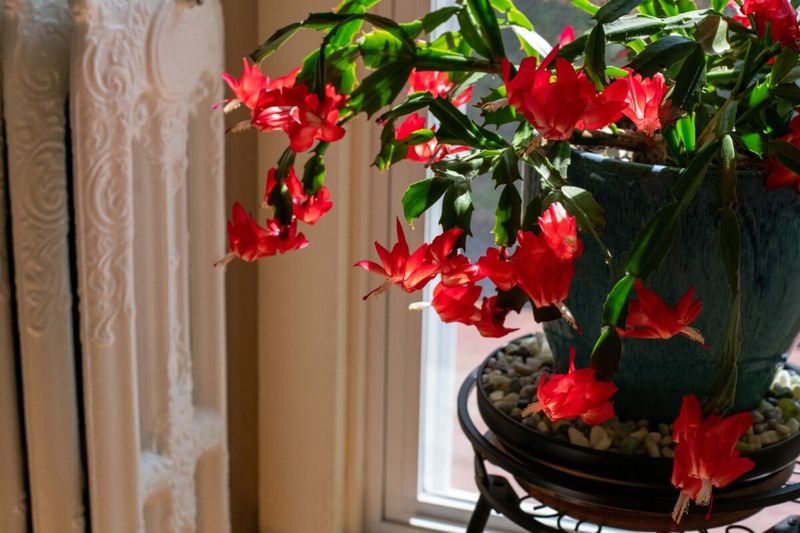
You bought a holiday cactus, kept it alive all year, and now the stems are bare of buds while the decorations go up. Take a breath, because a plant without buds is not automatically a plant in trouble.
Light, darkness, and temperature all play a part in telling it when to bloom. A simple routine started now may encourage buds, though it comes with some honest limits on timing.
No buds yet does not mean the plant has failed
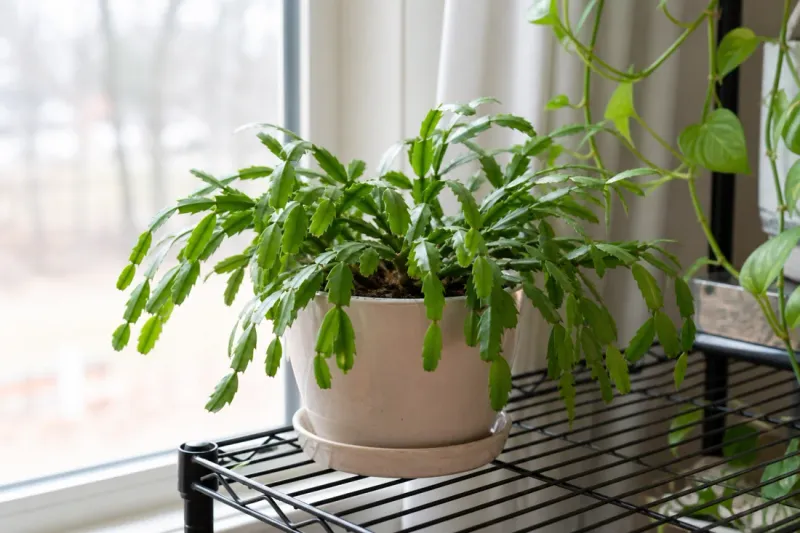
A bare holiday cactus can look like a lost cause, but the missing buds tell you less than you might think. Holiday cacti come in several related types and many cultivars, and each one can respond a little differently to its growing conditions.
UConn’s holiday cactus fact sheet notes that hybrids and cultivars vary, so the name on the pot is not a bloom calendar.
Here is a detail that surprises many owners. A lot of plants sold as Christmas cactus are actually Thanksgiving cactus, which is a close relative with its own habits.
Illinois Extension explains the difference, and checking the stem edges can help you work out which one you own. Pointed, saw-toothed segments often suggest a Thanksgiving cactus, while rounded, scalloped ones point toward a true Christmas cactus.
So if the stems are firm and green, your plant is likely just waiting for the right signals. Those signals are mostly about how much light it gets, how long its nights are, and how cool the room stays.
The next sections walk through each one.
Why long nights matter
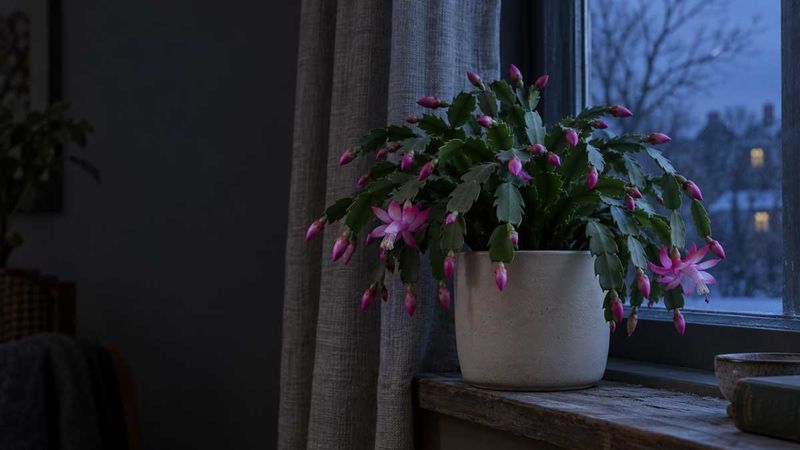
Picture a porch light shining through a window every evening. To a holiday cactus, that glow can look like a long day, and it may hold back bud formation.
Iowa State Extension explains that these plants respond to both day length and temperature, and that long, uninterrupted nights help prompt buds.
Household lamps, TV glow, and outdoor lights can all break up that dark stretch. University of Illinois Extension also points to darkness as a key part of getting a plant to rebloom.
Even a brief burst of light in the middle of the night may be enough to interfere.
Keep one thing straight, though. The plant needs darkness at night only, not all day long.
During daylight hours it still wants bright, indirect light so it can build the energy to make buds.
Give the plant light by day and darkness at night
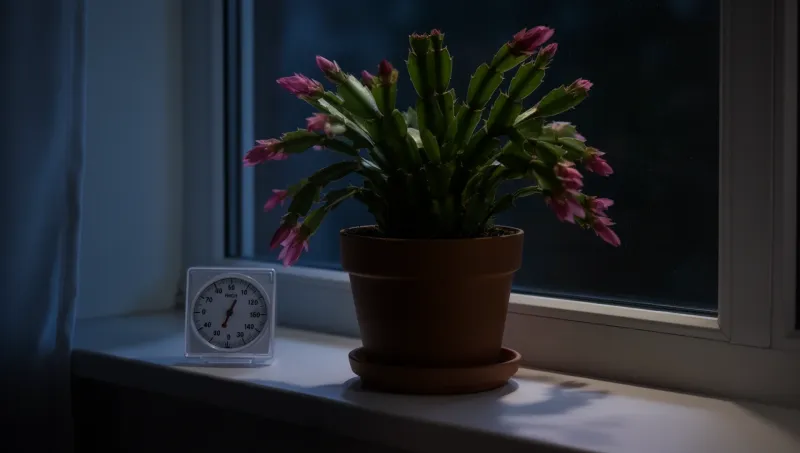
Daytime comes first. Park the cactus where it gets bright, indirect light, such as near an east window or a few feet back from a sunny one.
Direct afternoon sun, especially strong Florida and Texas sun, can scorch the stems.
For nights, aim for about 12 to 14 hours of uninterrupted darkness for several weeks. Sources vary, with Iowa State and University of Minnesota Extension describing ranges from at least 12 hours up to 14 to 16 hours, and treatment periods of roughly three to six weeks.
Clemson’s guide offers a similar picture, so treat the numbers as a range rather than a strict rule.
An easy method is a spare bedroom or closet that nobody opens at night. Move the plant in around dusk and back to its bright spot each morning, or cover it with a box that blocks all light.
This routine may encourage buds, but it is not a guaranteed recipe, since plants and cultivars differ.
Choose a safe, cool indoor location
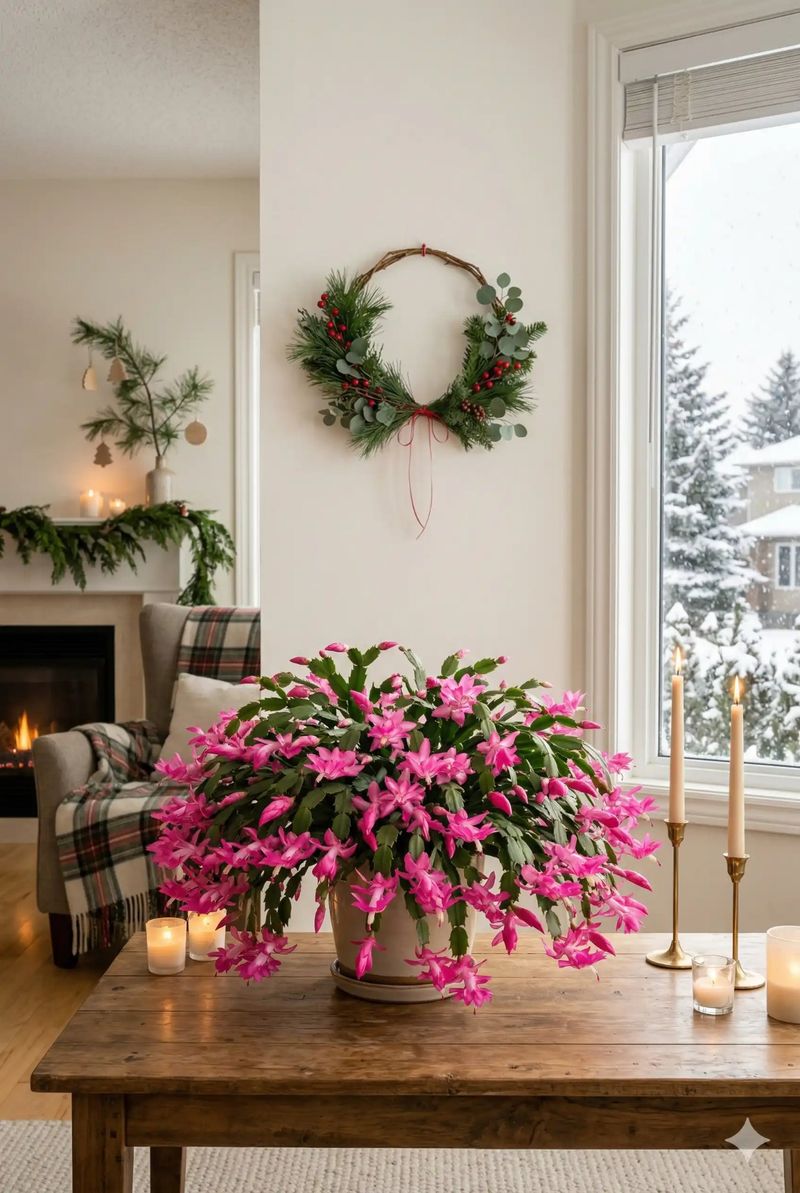
Cooler air can nudge a holiday cactus toward budding, and a room around 60 to 70°F is a sensible target. Iowa State cautions that temperatures above 70°F can prevent flowering, while Minnesota Extension describes nights near 55°F as helpful for inducing buds even without short days.
Think of these as handy guides, since cultivars respond differently.
Southern homes often run warm, so look for the coolest bright spot you have. A north- or east-facing room, an enclosed sunporch that stays mild, or a guest room with the air conditioning set a bit lower can all work.
Cooler nights are a bonus where you can manage them.
Resist the urge to park the plant outside as a shortcut. Texas A&M AgriLife guidance supports cool conditions, but temperatures near 50°F can damage the plant or cause bud drop.
If a cold snap might dip below 50°F, keep the cactus indoors.
Steady care protects developing buds
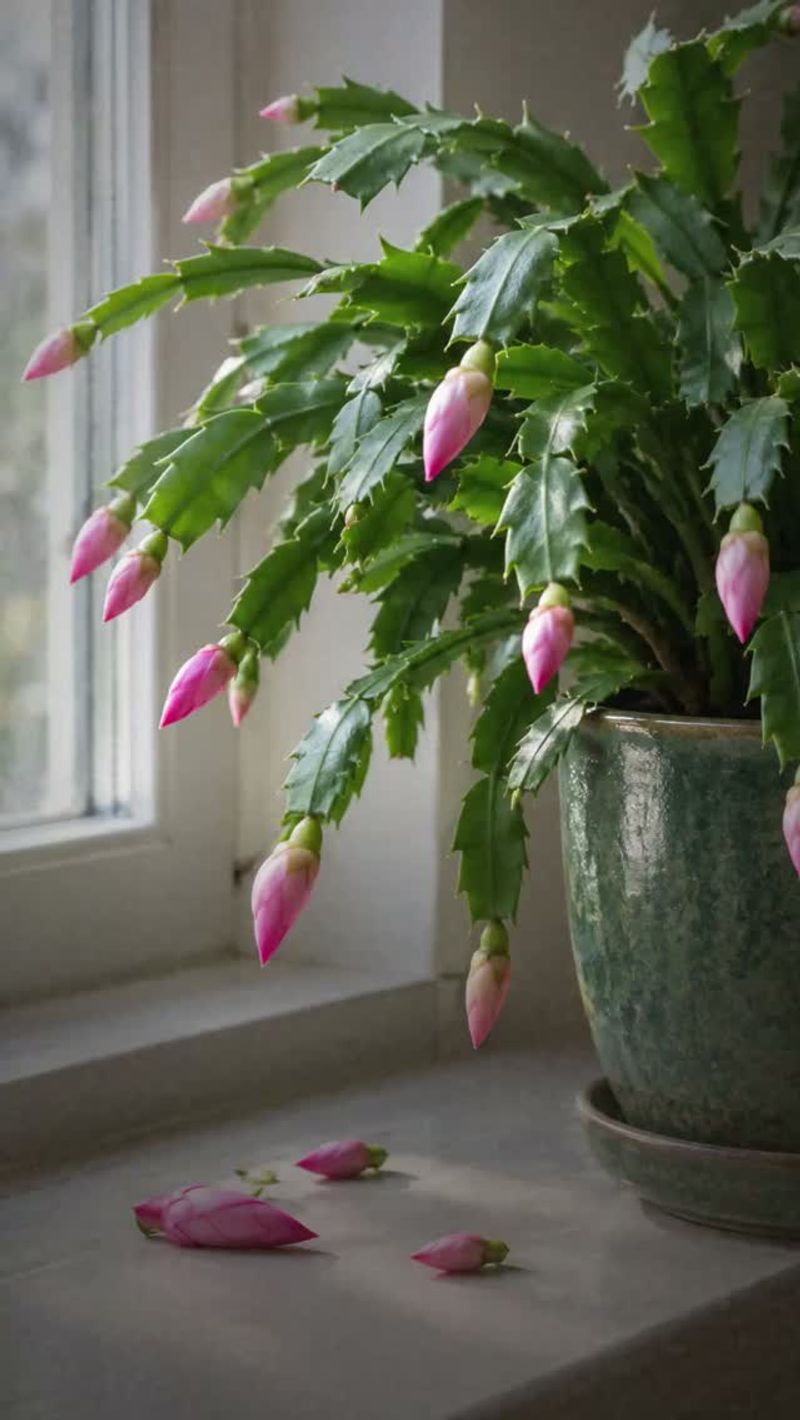
Tiny buds at the stem tips are a good sign, and now the job changes. You are no longer pushing the plant to bud.
You are trying not to startle it.
Moisture is a good place to start. Let the top of the soil dry slightly, then water, and avoid both bone-dry pots and soggy ones.
Clemson Extension warns that stress can cause buds to fall, and Illinois Extension echoes the need for steady care in its rebloom advice.
Watch for drafts from vents, doors, and ceiling fans, and avoid sudden swings in light or temperature. A cactus that is moved around the house may respond by dropping buds.
Iowa State advises waiting to move the plant until flowers begin opening, so choose a stable spot and let it be. If you notice a few fallen buds, that does not mean the whole plant is lost.
Can this still bloom by Christmas?
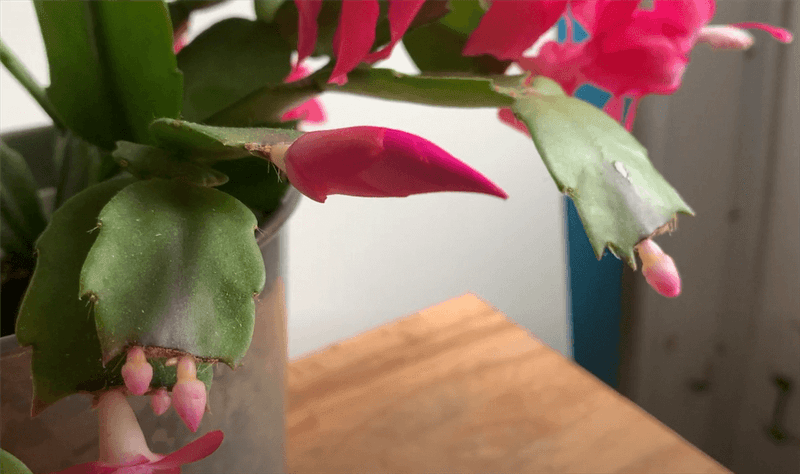
Here is the honest answer: maybe, but nobody can promise it. UF/IFAS gives an example of six weeks of dark treatment followed by about ten weeks to full bloom.
Start on November 3 and Christmas arrives in under eight weeks, so flowers on December 25 cannot be counted on.
That example is just one illustration, not a forecast for every plant. Timing shifts with the cultivar, the temperature, and how consistent the nights are.
Some plants may show buds sooner, and others may bloom in January or later.
The sensible move is to start the routine now and keep expectations loose. Hold to the same steady care Iowa State recommends if buds show up.
Late flowers are still flowers, and a cactus that blooms after the holidays has simply kept its own calendar.