
A handful of wildflower seed can turn a bare corner into a spring show, but only if the seed stays put and wakes up at the right time. Finches, gusty days, and dry spells all make fall sowing feel like a gamble.
A few smart choices about timing, seed, cover, and water can tip the odds in your favor. Here is how to give your California bed its best shot.
Let local rains—and a calm forecast—set the sowing window
Fall sowing suits many California native wildflowers because it lines up with the cool, rainy season, when seed can sprout with less help from a hose. UC Davis Arboretum guidance points to October and November as a good sowing period.
Treat that as a useful window in many gardens, not a rule for the whole state.
Your real cue is when the cool, rainy weather begins where you live. A coastal yard, an inland valley, a foothill lot, and a high-elevation garden can all start their wet season at different times.
Watch your own forecast and the way the evenings are cooling, and sow as that shift begins.
Later sowing can still work. UC Master Gardeners of Contra Costa County notes that native annuals can go in from November through winter and into early spring, though later sowings may need extra water.
If you garden in Southern California, wind deserves a glance at the forecast too. The National Weather Service describes Santa Ana winds as dry winds that occur in the cooler months, including fall.
Nobody has measured how much seed they might move, so think of this as a sensible precaution rather than a proven fix.
If a windy spell is on the way, wait for a calmer few days close to the start of reliable rain. A short delay costs little, and it lets you spread, press, and water seed without it shifting around.
Match the mix to the yard, not just the label
Walk the spot before you shop. Note how many hours of sun it gets, whether water drains quickly or lingers after irrigation, and what the soil feels like.
Those details matter as much as the flower colors on the packet.
California is climatically varied, so a blend that thrives in a sunny coastal garden may struggle in a hot inland yard or a shady one. UC ANR guidance on California native wildflowers stresses matching plants to local conditions.
Look for mixes labeled for your region and for your light and soil.
The word wildflower on a package does not guarantee California natives. Some products sold as wildflower mixes include nonnative or even invasive species, a caution raised in UC Master Gardeners of San Mateo and San Francisco Counties advice.
Read the ingredient list. A good packet names each species, often by its Latin name, and says where the seed is best suited.
If it only lists vague terms or a rainbow of colors, set it back on the shelf.
Buy from a reputable source, such as a native plant nursery or a seed company that specializes in California natives. Ask staff which species suit your area and exposure.
No single blend suits the whole state, and the right one for your yard may be a plain-looking packet.
A clean, shallow seedbed helps small seeds make contact
Start with the weeds. Pull or hoe out every plant you can, roots included, because weeds that survive will compete with young wildflower seedlings for water and light.
Aim for a small bed you can manage rather than a huge patch you cannot keep clear.
Next, scratch up the surface. UC Master Gardeners describe a shallow disturbance of the top layer rather than deep digging.
Rake it lightly so the soil is loose and crumbly with no big clods.
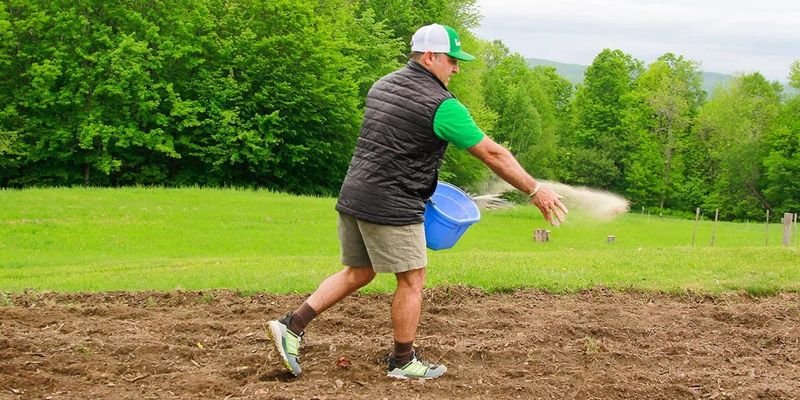
Many wildflower seeds are tiny and hard to spread evenly. Mix them with coarse sand or loose soil in a bucket, as UC Master Gardeners of Contra Costa County suggest.
The filler shows you where you have already sown and helps you avoid thick clumps.
Broadcast half the mix walking one direction, then the rest crossing at a right angle. That crisscross helps fill gaps.
Keep your hand low to the ground so a breeze has less chance to carry the seed.
Finally, press the seed gently into the soil. You can walk over the bed with a board under your feet or use a flat tamper.
The goal is seed-to-soil contact, not packing the ground hard.
How much cover is enough?
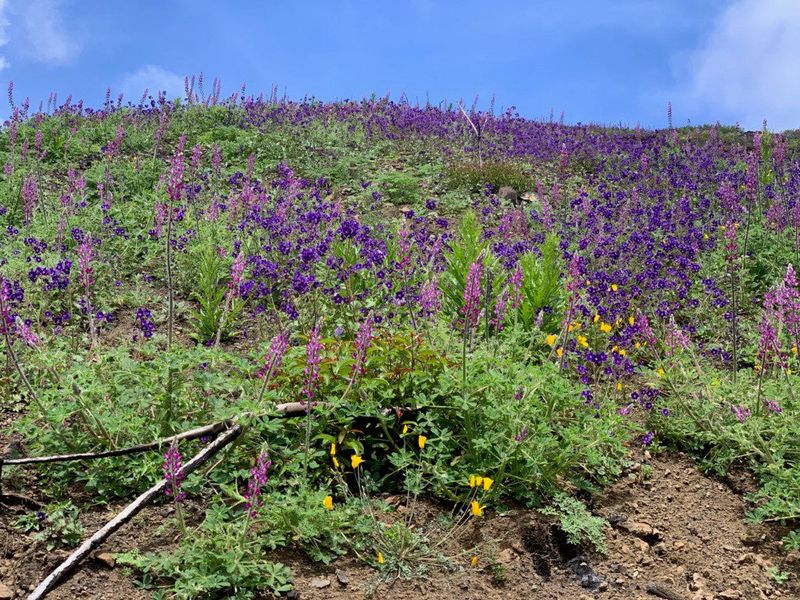
Cover depth is not one-size-fits-all. One UC guide suggests a thin layer, and another UC source gives a range of roughly 1/8 inch to less than 1/4 inch.
That is a dusting, not a blanket.
Some seeds need light to germinate. UC ANR guidance says these should be barely covered.
Burying them under a thick layer could keep them from sprouting at all.
So check the packet first. If it names a depth for your species, follow it.
If you are sowing a mix, a very light sift of soil or simply tamping the seed in is a cautious middle path.
It is tempting to think more soil means more protection from birds. That is not a safe assumption.
A thicker layer can smother seed that needs light or is too small to push through.
Covering is not a proven bird-proof fix, either. A California Native Plant Society gardening account describes a few small San Diego-area comparisons where uncovered seed did better and covered seed sometimes germinated poorly.
The account itself says the tests are too few to settle the question.
Treat light cover as one tool that may reduce exposure, and let the species decide how much you use.
Use a secured barrier when birds are a concern
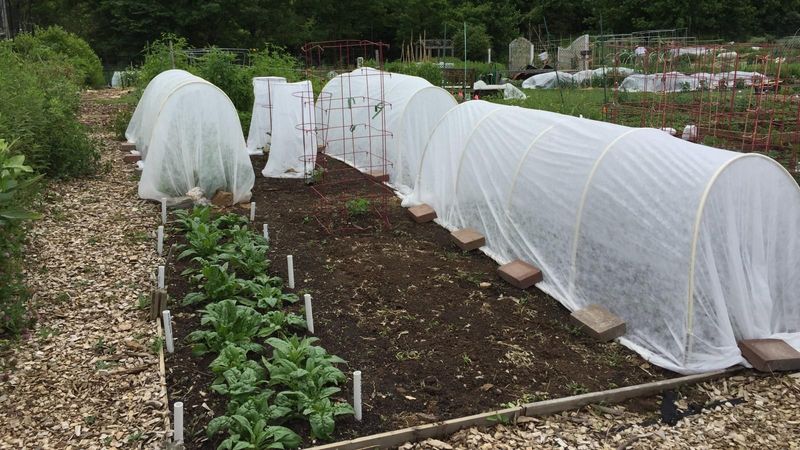
If finches or quail visit your yard often, a temporary barrier may help. UC guidance lists row cover as an option, and the California Department of Fish and Wildlife habitat handbook suggests lightweight row cover where birds or other herbivores are likely, removed once plants are established.
Support the fabric on low hoops or a frame so it does not rest directly on the soil. Then anchor every edge with pins, stakes, or heavy boards so wind cannot lift it.
A flapping cover can scatter seed and trap animals.
Rigid mesh can also work if it is sturdy and fixed in place. Look at it as a screen over the bed, not a loose drape.
Skip loose plastic netting. Wildlife agencies, including the U.S.
Fish and Wildlife Service, warn that netting can entangle birds, snakes, and other animals.
Check the barrier every few days, and after any windy night. Look for gaps, tears, and trapped creatures, and fix problems right away.
Once seedlings are up and sturdy, take the cover off. A barrier can lower the odds of loss, but it cannot promise that every seed stays where you put it.
Keep the seedbed moist through rain gaps
Rain in California comes in bursts, and gaps of a week or more can happen in the middle of the wet season. A seed that has begun to swell and then dries out may not recover.
That is why fall sowing does not mean you can walk away until spring.
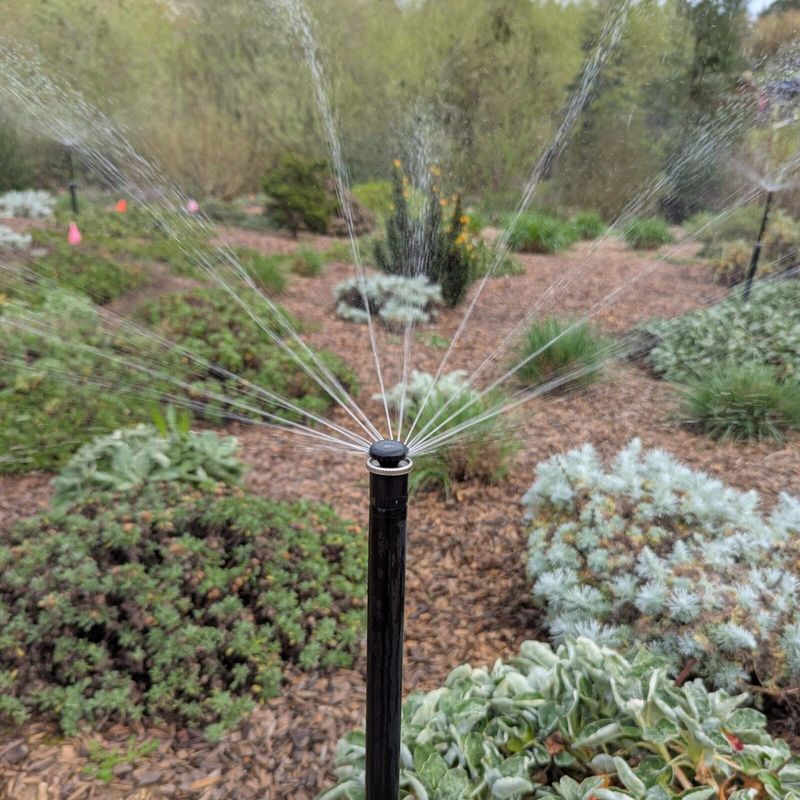
Water with a fine spray or mist so droplets do not wash seed into low spots or bury it. Hold the nozzle up and let the water fall softly, or use a watering can with a gentle rose.
The goal, as described by UC Master Gardeners of Sonoma County, is a bed that stays moist but not saturated until seeds germinate. Soggy soil can rot seed and invite fungus, so check before you water again.
A simple test helps: touch the top inch of soil. If it feels dry and dusty, water lightly.
If it feels damp, wait a day and look again.
The UC Davis Arboretum also advises supplementing during dry spells instead of counting on winter rain. Short, light waterings use less water than a heavy soak, which fits a water-wise yard.
As seedlings grow, you can stretch the time between waterings. Keep pulling weeds as they appear so your young wildflowers have the space.
Give the bed a better chance, not a guarantee

Pick seed that fits your site, sow as your local rains begin, and choose a calm spell if you can. Follow UC cover guidance and your packet, and use only secured protection like the row cover described in the state wildlife handbook.
Then keep watching moisture, as the UC Davis Arboretum advises.
Birds will still eat some seed, and some will never sprout. A patchy first year is normal, and the gaps often fill in later.