

Those pots of fall mums on your porch look great for a few weeks, then the blooms fade and many of us toss them out. Some mums can come back, though, and a little know-how can improve their chances.
The answer depends on the type of mum, where you live, and when it went into the ground. Here is how to decide if yours is worth keeping and what care may help.
First, check whether your mum is a garden mum

Not every mum on the porch is built to last. Florist mums are commonly sold as seasonal display plants, while UF/IFAS says garden mums are hardier.
Check the plant tag, or ask the seller whether you bought a garden mum.
Even a garden mum may not make it. Variety, planting time, site, and local weather all play a part, so keeping a spent mum is an option, not a sure thing.
If yours is a florist type in a decorative foil-wrapped pot, enjoy it as a seasonal plant and do not feel bad about composting it.
Timing matters too. Spring planting gives roots months to settle in, and Virginia Cooperative Extension notes that late planting lowers survival.
Iowa State likewise cautions that mums planted in fall do not reliably overwinter. If you can, plant in spring next time, and treat a fall-planted mum as a bonus if it returns.
Choose a sunny, well-drained site

Mums like a spot that gets plenty of sun and has soil that drains well. UF/IFAS recommends full sun and well-drained soil for chrysanthemums.
A raised bed or a slightly sloped area can help if your yard holds water after storms.
Roots matter here. Illinois Extension points out that mums have shallow roots that can dry out, and that soggy or poorly drained spots cause trouble.
Water during dry spells, and check the soil with a finger before adding more.
Planning where to put your mum? Keep pets in mind.
The ASPCA lists mums as toxic to dogs, cats, and horses, so choose a spot they cannot nibble. Good site choices may improve your odds, but they cannot guarantee survival.
What to do when the blooms fade

Many people grab the shears the minute the flowers brown. Hold off on that.
Illinois Extension advises leaving the dormant top growth standing through winter and removing it once new growth starts in spring.
The idea is simple. Old stems can offer some cover for the crown while the plant rests, and you can clip them off easily when fresh green shoots appear.
Another Illinois Extension article gives similar guidance for mums.
Keep in mind that Illinois winters are far colder than most Texas and Florida yards, so this is one region’s advice, not a rule for everyone. Plenty of Southern gardeners handle winter differently, and the next section covers those differences.
Adjust winter care to your region

Winter care changes with the map. Illinois suggests leaving dormant growth in place, while Texas A&M AgriLife Extension in Bexar County describes another option: remove dead tops and add mulch.
It also says garden mum hardiness varies by area and season, and that mums are annuals in most cases, though some return.
In Texas, that means your results may differ from a neighbor in another part of the state. Watch your own winter, and choose the method that fits your soil and weather.
Mulch can help cushion roots, though it will not guarantee anything.
South Florida is a tougher case. UF/IFAS says hot, wet summers limit mums as perennials and recommends treating them as annuals there.
If you garden in South Florida, do not expect any winter routine to make mums reliably come back.
Clean up and divide in spring if needed
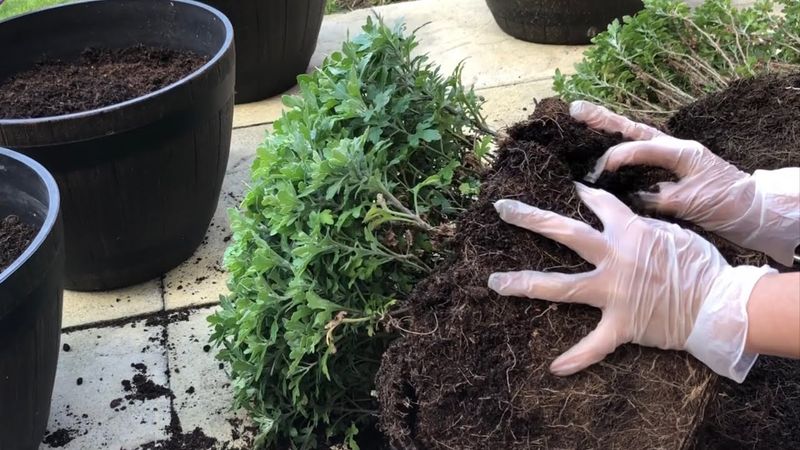
Spring is cleanup time. When you see new growth at the base, clip away the old, dry stems from last year.
Cut close to the ground without damaging the fresh shoots.
Established clumps can spread over a few years. Clemson Cooperative Extension covers dividing garden mums, and spring is generally the time to do it.
Dividing helps manage a crowded clump, nothing more.
To divide, dig up the clump, pull or cut it into sections that each have roots and shoots, and replant them in well-drained soil at the same depth. Water them in and keep an eye on moisture.
Illinois Extension notes that mums may need dividing every few years. Division will not promise a bigger or better-looking plant, so do it only when the clump looks crowded.
Pinch new growth to encourage a bushier shape
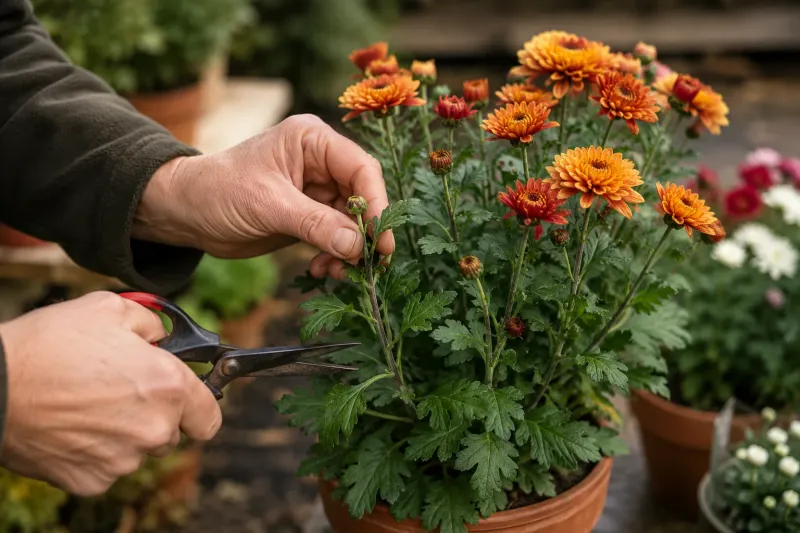
Pinching is simple. Use your fingertips to snip off the top inch or so of each growing stem.
This may encourage the plant to branch, giving it a bushier, more rounded form with more flowering shoots.
Start in spring and continue into early summer, then stop before buds form. Timing varies.
Illinois Extension suggests a last pinch around late June or early July, while Texas A&M Bexar County says no later than August 15 for most cultivars. Check your own variety and local advice.
Be realistic about results. Virginia Tech says cultivar, growing conditions, and pinching all affect size and form.
Pinching may give you a bushier plant, but it does not guarantee a larger plant or more blooms next fall.
Expect a chance to return, not a guarantee

The realistic plan is to keep a suitable garden mum if your local conditions allow. Give it sun, good drainage, and water in dry spells, then follow winter care that fits your region.
Pinch in season if you want a bushier shape.
Survival and future size are not assured. Virginia Tech notes that mums are often at their best in the first year and may decline later.
UF/IFAS also separates hardier garden mums from florist types.
A mum that comes back is a pleasant surprise, and one that does not was still a good season of color.