
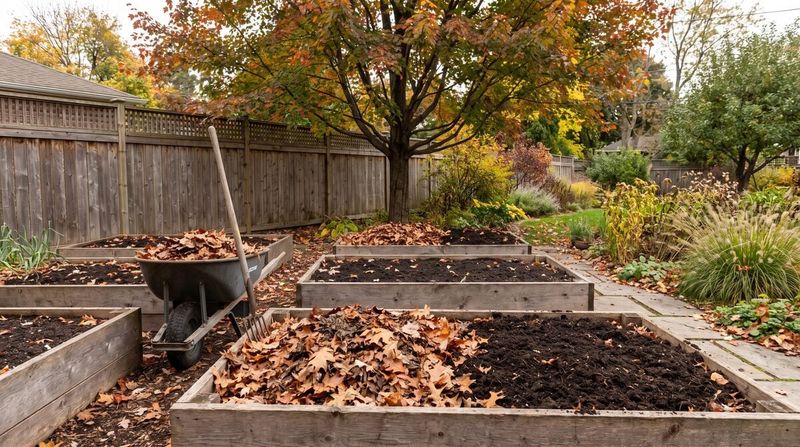
Raking leaves feels like a never-ending November chore, but those piles are worth keeping. Healthy leaves can protect your vegetable beds and feed your soil a little at a time.
With a few simple steps, you can turn yard waste into a free soil-building tool for next season and beyond. Here is how to use them well, what to leave out, and what to expect when spring arrives.
Leaves add organic matter as they break down
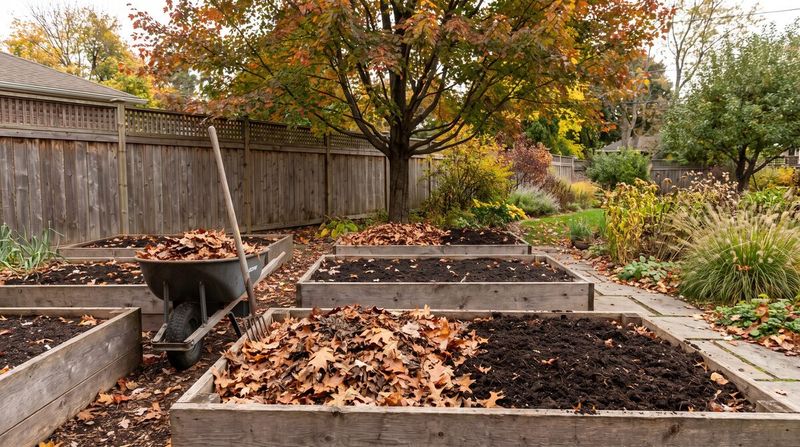
Raised beds in Florida and Texas lose organic matter fast in the heat, and healthy fallen leaves are a free way to help replace some of it. As leaves decompose, they protect the soil surface and add organic matter that can improve soil structure and water-holding capacity over time.
UF/IFAS recommends fallen leaves as mulch in edible gardens, which makes them a smart, low-cost choice for vegetable growers.
Keep your expectations realistic, though. Building soil organic matter is gradual, and UF/IFAS cautions that a significant change can take years.
One fall of leaves will not transform sandy or clay soil overnight.
Leaves also are not a complete fertilizer. They add some nutrients as they break down, but your tomatoes, peppers, and squash still have crop-specific needs.
Think of leaves as a soil-friendly helper, not a replacement for feeding.
You have two main ways to put them to work: spread shredded leaves on the bed as surface mulch, or add them to a compost pile. The next sections show how each one works.
Choose between mulch and compost
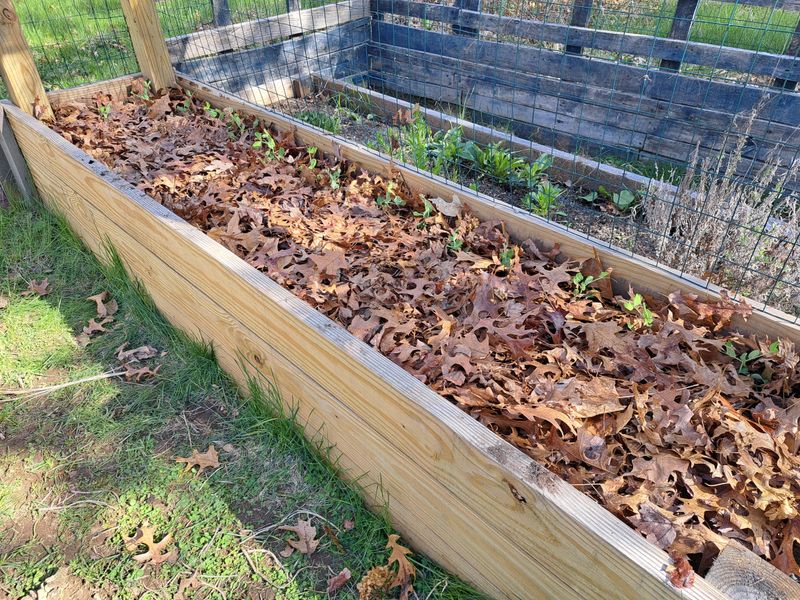
Which route fits your yard depends on what you want and how much effort you can give. Mulching is the simple option: you shred leaves and spread them right on the bed.
Composting takes more attention, but it gives you a darker, more broken-down material to use later.
The words matter here. Leaves spread on the soil are mulch while they decompose, and Colorado State Extension treats mulch as a surface covering that protects soil.
Finished compost is a more thoroughly decomposed material, and UF/IFAS notes that composting time varies with how the pile is managed.
Both approaches put leaves to good use. Neither guarantees finished soil by spring, so plan on a gradual payoff.
A practical split works well for many gardeners. Use the cleanest, most shredded leaves as mulch around crops, and send extra healthy leaves to a compost pile.
You do not need to move every leaf in your yard into a vegetable bed.
Shred leaves for a more manageable bed mulch
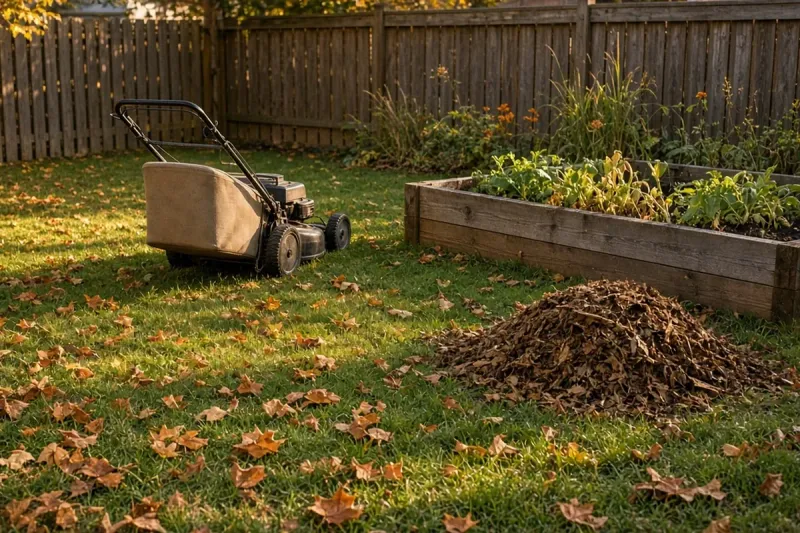
Wind and rain can be hard on whole leaves. They blow off the bed, or they settle into a soggy, compacted mat that sheds water.
Running a mower over a pile a few times is the easy fix, and UGA Extension mulch guidance points to shredding as a way to keep leaves in place and avoid matting.
Spread a manageable layer over the bed, a few inches at most rather than a deep blanket. Thick, wet layers can slow airflow and water movement.
UF/IFAS mulching advice for edible landscapes supports using organic mulch to protect soil around vegetables.
Leave a small gap around each stem and around any woody trunks. UF/IFAS advises keeping mulch from piling against them.
Leave the mulch on top. Digging coarse, undecomposed leaves into the soil is a different practice, and it is not what this method calls for.
Mix leaves with greens to make compost
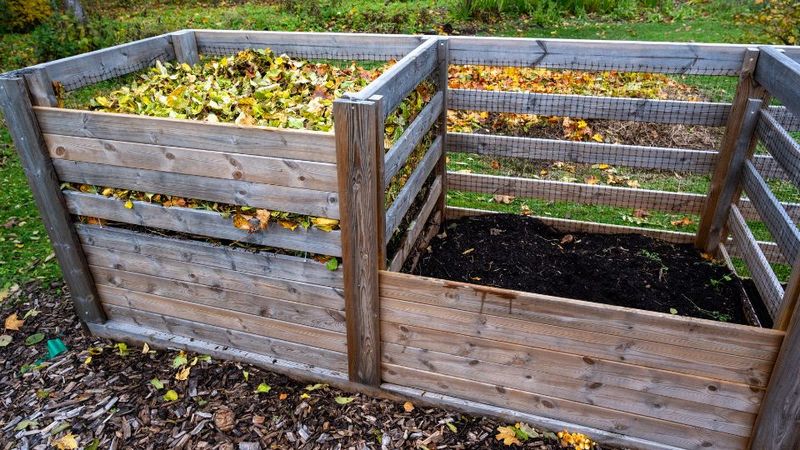
A pile of leaves left alone can sit for a very long time. A managed pile moves faster because you balance the ingredients.
Leaves are carbon-rich browns, so pair them with nitrogen-rich greens such as vegetable scraps or grass clippings, and keep the pile damp and aerated.
As one example, UF/IFAS describes two parts shredded leaves to one part vegetable scraps by volume. Treat that as a starting point, not a strict formula.
Your pile may need tweaking depending on moisture and the materials you have.
Fresh clippings can clump and pack down. Texas A&M AgriLife advises mixing clippings with dry material to prevent compaction, and dry leaves are ideal for that job.
Turn the pile now and then and check that it feels like a wrung-out sponge. Even with good care, expect compost to take months, and a cool or neglected pile can take longer.
Keep diseased and questionable leaves out
Spotted, blighted, or moldy leaves are better off in the trash. Diseased leaves can carry pathogens, and UF/IFAS advises keeping them out of edible beds and compost.
If tomato plants struggled with leaf spot last season, be extra careful about what goes near them.
Watch out for invasive plants too. Seeds from them can survive in a compost pile, so leaves and trimmings from those plants should not go in.
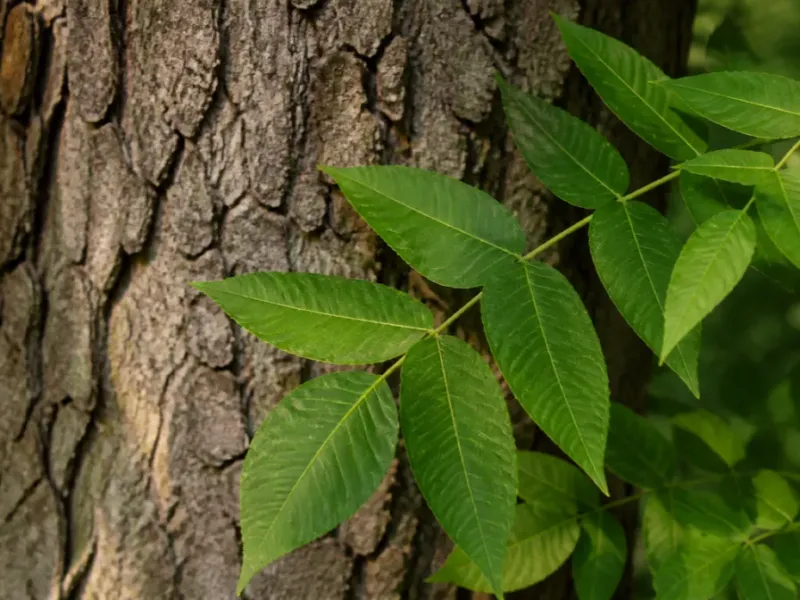
Walnut leaves are a special case. Oregon State Extension says the compound juglone breaks down in a well-managed compost pile, yet an Oregon State gardening guide advises against using walnut leaves as mulch or compost.
The simple homeowner rule is to leave walnut leaves out of both beds and compost. Not every leaf needs to go into the garden, and sorting takes only a few extra minutes.
Set a realistic timeline for spring
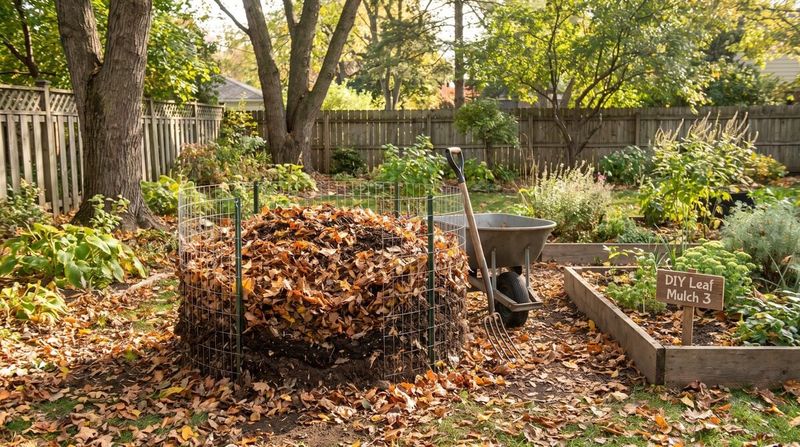
By spring, you may find a mix. Shredded leaf mulch can break down substantially over winter, but UGA Extension describes leaves as a natural homemade mulch, and that means some pieces may still be intact when you plant.
A cool or unmanaged compost pile can take months to more than a year, according to UF/IFAS.
Several things set the pace: leaf size, moisture, temperature, and the mix of materials. Smaller pieces, steady dampness, warmth, and some greens usually speed things up.
Surface mulch is different from mixing undecomposed leaves into soil. Colorado State Extension says nitrogen use by microbes is typically concentrated at the soil-mulch interface, so mulch alone usually does not starve plants.
Skip automatic fertilizer, and use a soil test and Texas A&M AgriLife soil preparation guidance to decide what your crops need.
Your first step is simple: choose healthy leaves, shred them, then mulch a bed or layer them with greens in a compost pile. Soil improves a season at a time, and the leaves you rake this week are a small down payment.