
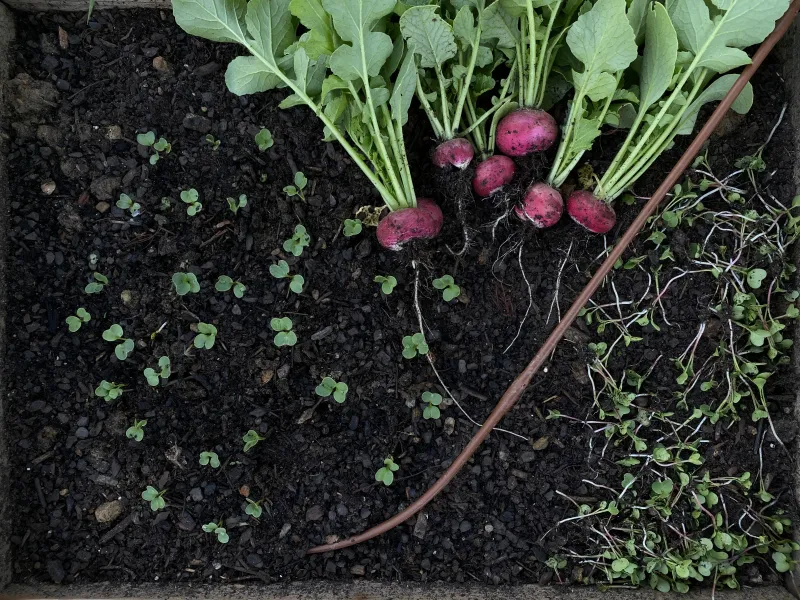
You pull a radish from the fall row and find a big leafy top with a skinny root, or a root that is cracked or tough as a twig. Each problem looks like a failed crop, but each one usually has a different cause.
Knowing which symptom you have helps you fix the rest of the row and plant a better one next time. Here is how Southern gardeners can sort it out.
The symptoms point to different problems
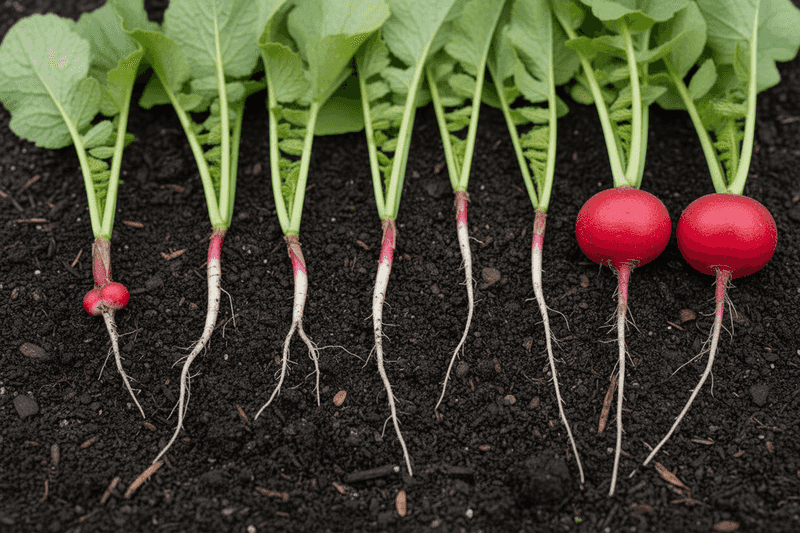
Dig up a few radishes and look closely before you decide what went wrong. A big leafy top with a thin or missing root is one problem.
A root with cracks down its side is another. A root that feels tough, pithy, or stringy when you cut it is a third.
It is tempting to blame one cause, like a crowded or soggy bed, for all three. That shortcut does not hold up.
Crowding can limit how much room roots have to swell, but splitting is more closely tied to uneven moisture and roots left in the ground too long, as Utah State University Extension describes.
Woody texture usually points somewhere else again. North Carolina State Extension links it to age, heat, or slow growth.
Poorly drained soil can cause root rot, which is its own separate problem.
So the plan is simple. Check the roots, think about how the row has been watered and spaced, and match the symptom to its likely cause.
The next sections walk through each one, and none of them promises that a damaged root will bounce back.
Leafy tops do not prove the row is too crowded
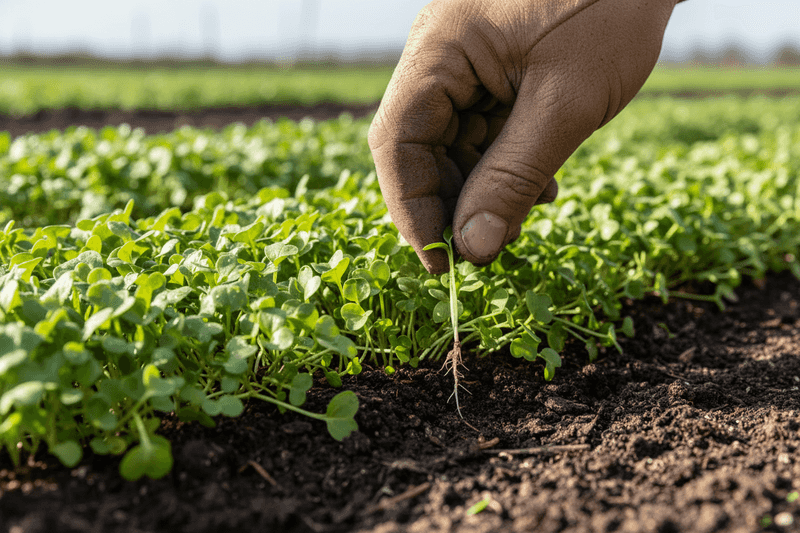
Lush green radish tops feel like good news until the root turns out to be the size of a pencil. Crowding is one possible reason, since plants packed tightly have little space to bulk up underground.
It is not the only reason, though. Iowa State Extension lists several causes of lots of foliage and poor roots, including too much nitrogen, heat arriving before roots mature, and in severe cases too much shade.
Run through a quick checklist. Are the seedlings touching each other with no gaps?
If so, crowding is a strong suspect. Did you recently use a high-nitrogen fertilizer or feed the bed heavily?
Extra nitrogen tends to push leaves over roots.
Think about the weather and the light too. A warm spell in early fall, common in Florida and Texas, can hurt root development.
A bed shaded by a fence, a tree, or a building for much of the day may also struggle.
Leafy tops alone cannot tell you which cause is at work. Combine what you see in the row with how you planted, fed, and sited it, and treat the answer as a best guess.
University of Illinois Extension also notes that radishes want sun and steady growing conditions.
Thin seedlings while they are still small
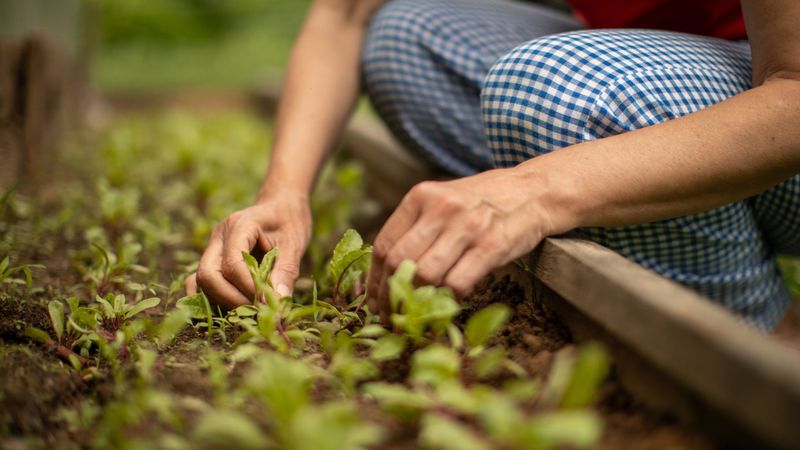
If the row looks packed, thinning is the quickest fix you can do today. Do it while seedlings are young, so the plants you keep have room to grow.
Spacing depends on the type. Small salad radishes often do well at about 1 to 2 inches apart, while larger or winter types need more room.
Your seed packet gives the right number for your cultivar, so follow it. Oregon State University Extension covers thinning radishes to give them space.
Use small scissors and snip the extra seedlings at soil level. Pulling them can tug on the roots of the neighbors you want to keep.
Set your expectations honestly. Thinning gives the remaining young plants more room, but it cannot promise that roots already stunted or damaged will recover.
If a plant is past the seedling stage and has a thin root, it may not catch up.
Spacing also differs between spring salad types and larger daikon or winter radishes, a point University of Illinois Extension makes. Skip any one-size spacing rule and read the packet.
Split roots call for steadier moisture, not a drier bed
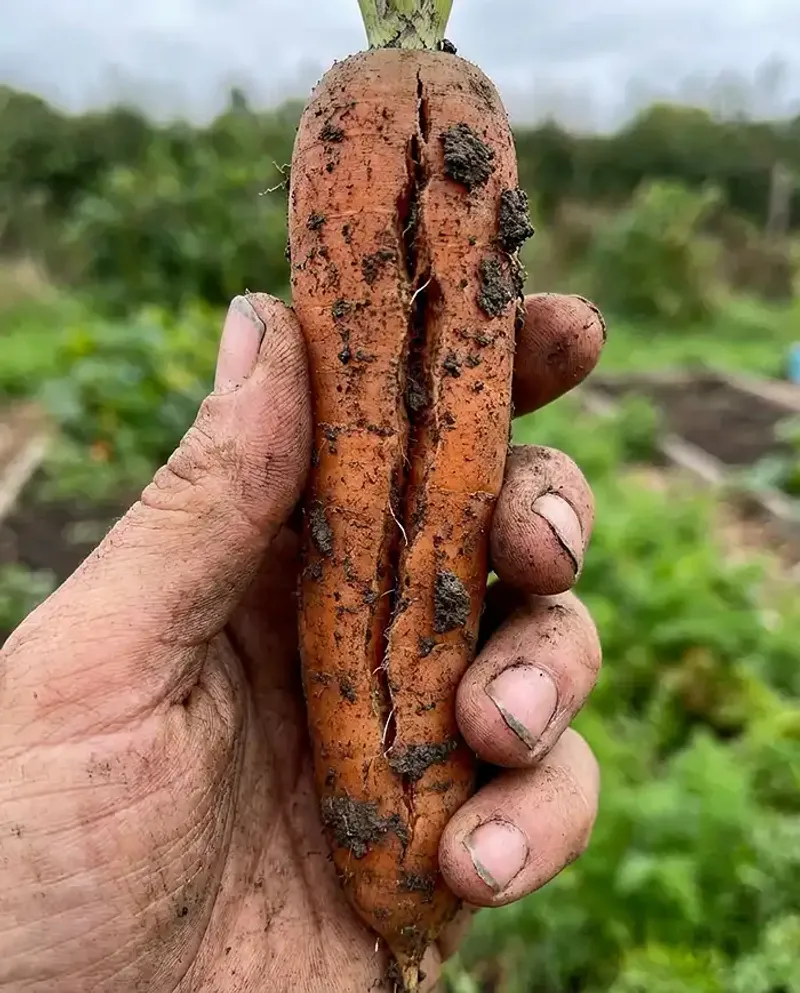
Cracked radishes often follow a pattern. The soil dries out, then a heavy watering or a downpour arrives.
The root swells quickly and the skin splits. Utah State University Extension connects cracking with this kind of moisture swing.
Older roots can split as well, even when watering has been steady. A radish left too long in the ground is more likely to crack, which is one reason to harvest on time.
The goal is soil that stays evenly moist but never waterlogged. University of Maryland Extension recommends consistent moisture and good drainage.
In sandy Florida beds, that may mean light, regular watering. In heavy Texas clay, it may mean raised rows or added compost.
Do not let a soggy bed talk you into withholding water. Cutting back sharply can set up the dry-then-drenched cycle that leads to splits.
Persistently poor drainage is a different worry, because it can lead to root rot rather than splitting.
If the bed holds standing water, fix the drainage. If it dries out fast, water a little more often.
Either way, aim for steady.
Woody roots need attention to heat, growth, and harvest timing
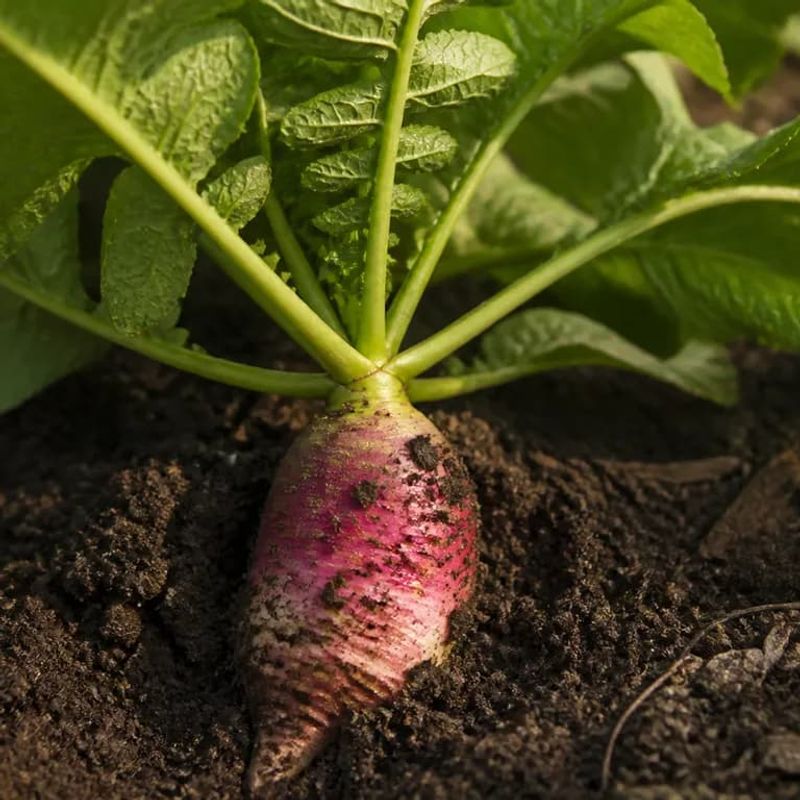
Bite into a radish that is tough, hollow, or stringy and you have met the woody problem. It looks different from splitting and usually has different roots, so to speak.
Woody or pithy texture is more often tied to roots left too long, hot weather, slow growth, or bolting than to soggy soil. North Carolina State Extension points to age, heat, and slow growth.
The practical fix is to check your roots often. Gently brush soil from the top of a few and look at the shoulder.
When roots reach a usable size, pull them. UF/IFAS Gardening Solutions advises harvesting promptly, since waiting makes radishes less pleasant to eat.
Timing varies a lot. A small salad radish and a large daikon do not mature on the same schedule, and University of Illinois Extension notes that varieties differ.
Your seed packet is the best guide for your row.
A flower stalk shooting up is a sign of bolting, often triggered by warmth. Roots on a bolting plant are likely to turn tough, so harvest what is usable.
Reset the next sowing for local conditions
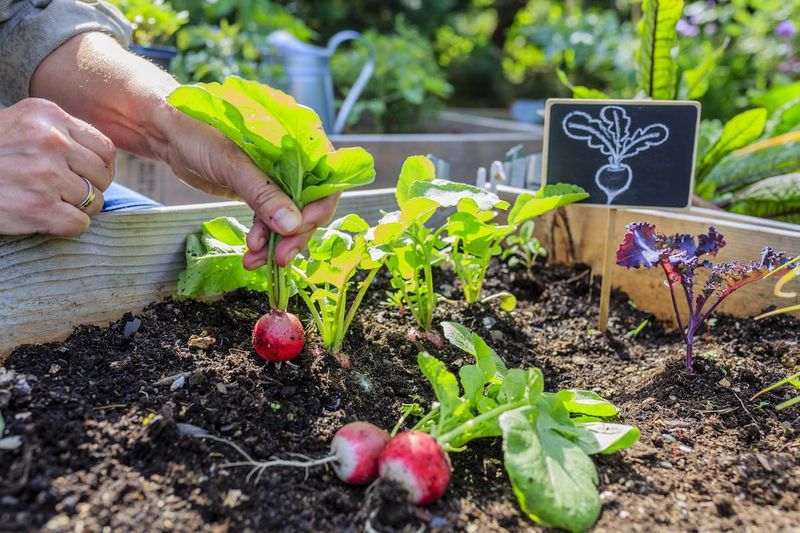
For the row you have now, work in this order. Thin the young plants that remain.
Keep the soil evenly moist while you sort out any drainage trouble. Then harvest usable roots promptly.
Some damaged roots may not recover, and that is normal.
For the next sowing, give seeds the spacing printed on the packet. Oregon State University Extension backs thinning early so plants have room.
University of Maryland Extension supports steady moisture and well-drained soil.
Timing is local. UF/IFAS gives September through March for radishes in Florida.
For Texas, Texas A&M AgriLife Extension lists September for Central Texas specifically, not the whole state. Gardeners in the Panhandle, the Gulf Coast, or elsewhere should adjust for their own weather and the variety they grow.
Watch the forecast, not just the calendar. A run of hot days can undo a well-timed sowing.
Radishes forgive a lot, so a failed row is a cheap lesson. Sow again in a couple of weeks and you will be eating them soon.