
A favorite geranium can feel like a plant you hate to lose when the first cold snap is on the way. Some gardeners dig it up, shake off the dirt, and store it bare-root instead of keeping a pot on a windowsill.
The trick costs almost nothing, but it does not always work. Here is how to decide if it suits your plant, your yard, and your local frost risk.
Which “geraniums” can you store bare-root?
Garden centers sell two very different plants under one name. The bright, rounded-leaf plants in porch pots and window boxes are tender garden geraniums, which belong to the genus Pelargonium.
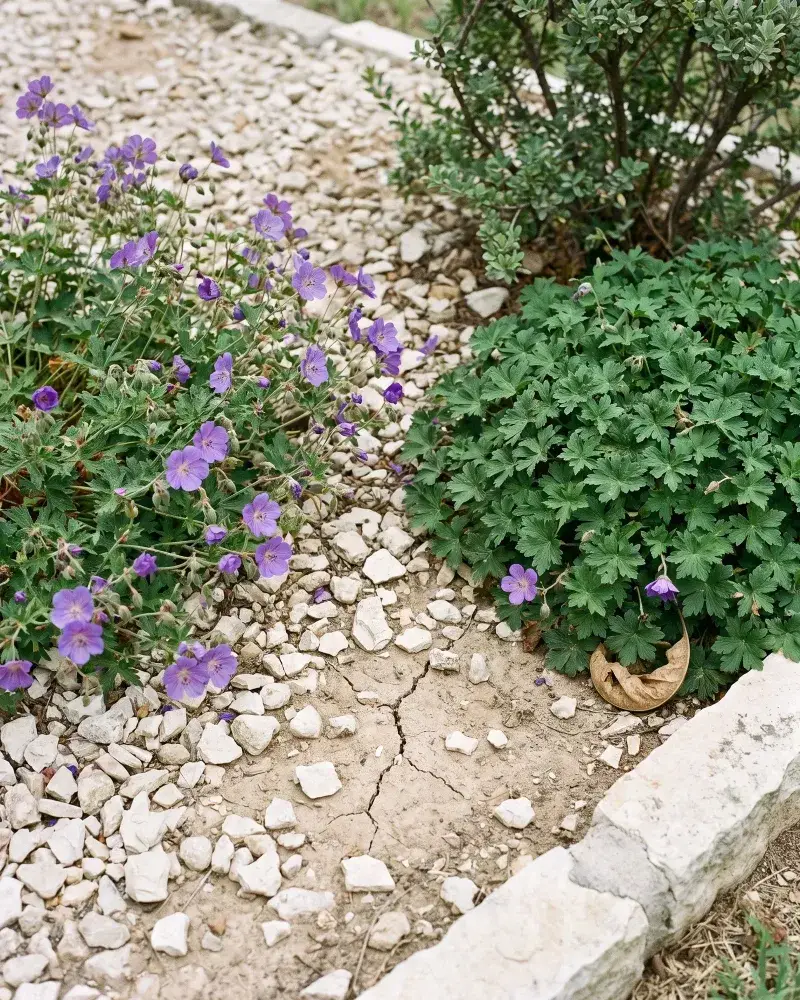
Hardy true geraniums, also called cranesbills, are a separate group of perennials that handle winter outdoors in many gardens.
That difference matters here. UC IPM separates the two groups, and the bare-root storage advice in this article is meant for the tender Pelargonium type only.
A cranesbill does not need to be dug and bagged, so treating it that way would be extra work for no reason.
Check your plant tag, your receipt, or a photo of the leaves and flowers if you are unsure. Once you know you have a Pelargonium, the next question is timing: how soon could cold weather reach your yard?
Use local frost information to set the deadline
The South does not share one frost date. Your own forecast and your own yard decide when to dig.
Iowa State advises digging geraniums before the first fall frost, so the goal is to act ahead of cold at your address.
Regional numbers show how much places differ. The National Weather Service’s Tallahassee-area frost and freeze information puts average first frost around early November at many sites, with first freezes arriving later.
Meanwhile, the Fort Worth office lists November 22 as the average first freeze for Dallas-Fort Worth.
Notice that one set describes frost and the other describes freezes, and they cover different places. Both are historical averages, not a forecast for this week.
Watch your local forecast, and keep a calendar reminder to check it often as nights cool.
Dig only healthy plants and prepare them carefully
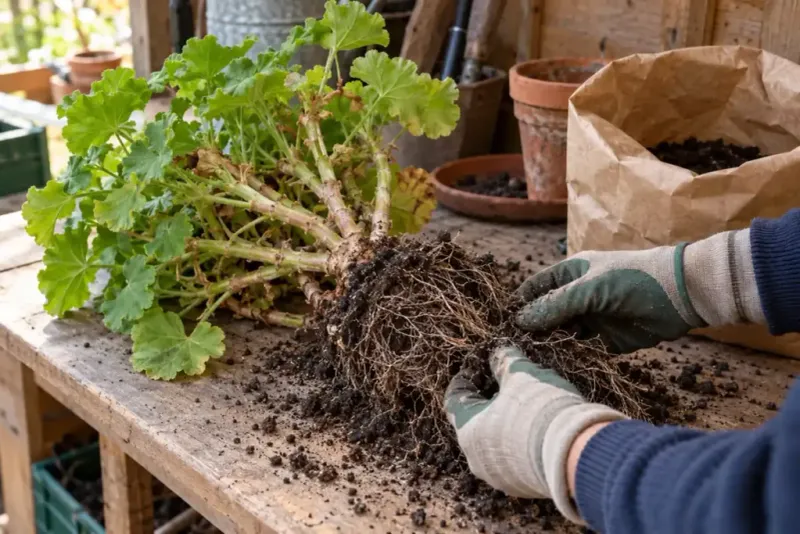
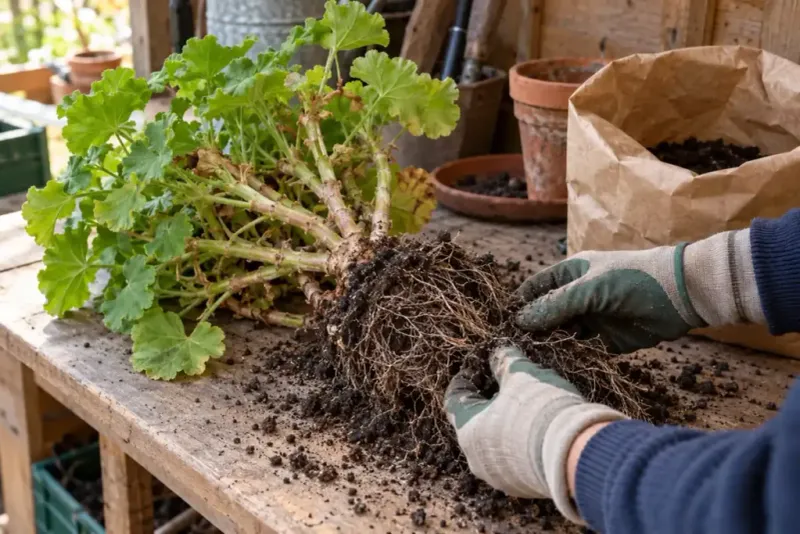
Start by choosing a plant that looks strong. Dig it before frost, then loosen the soil around it and lift it with as many roots as you can keep.
Shake or brush off the extra soil, but go gently so the roots are not damaged.
Purdue warns that diseased plants store and perform poorly. It lists leaf spots, wilting, darkened stems, rot, shriveling, and blotchy coloration as reasons to discard a plant.
A plant in serious decline is better left out of storage.
A healthy start gives the attempt its best chance, but it cannot promise success. Iowa State describes the same basic steps of digging before frost and removing soil, and the rest depends on storage conditions and how the plant responds.
Treat it as a trial and expect some losses.
A paper sack belongs in a cool, dry place
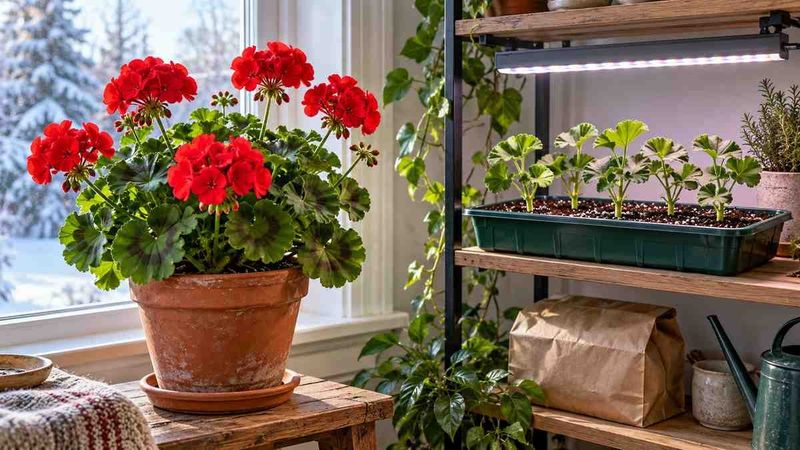
Iowa State’s approach is simple. Put one or two prepared plants in a large paper sack and keep the sack in a cool, dry location at 45 to 55°F, according to its extension guidance.
That is one extension recommendation, not the only way to do it and not a precise recipe for every home. The sack does not make a poor space safe.
A basement that freezes, floods, or runs warm and damp is not a good fit just because the plants are bagged.
A cheap thermometer placed where the sack will sit can tell you a lot before you commit. Garages, sheds, and basements vary widely in the South, so check the actual space over a few cool nights.
Keep the plants well away from freezing temperatures.
How should you manage the roots through winter?
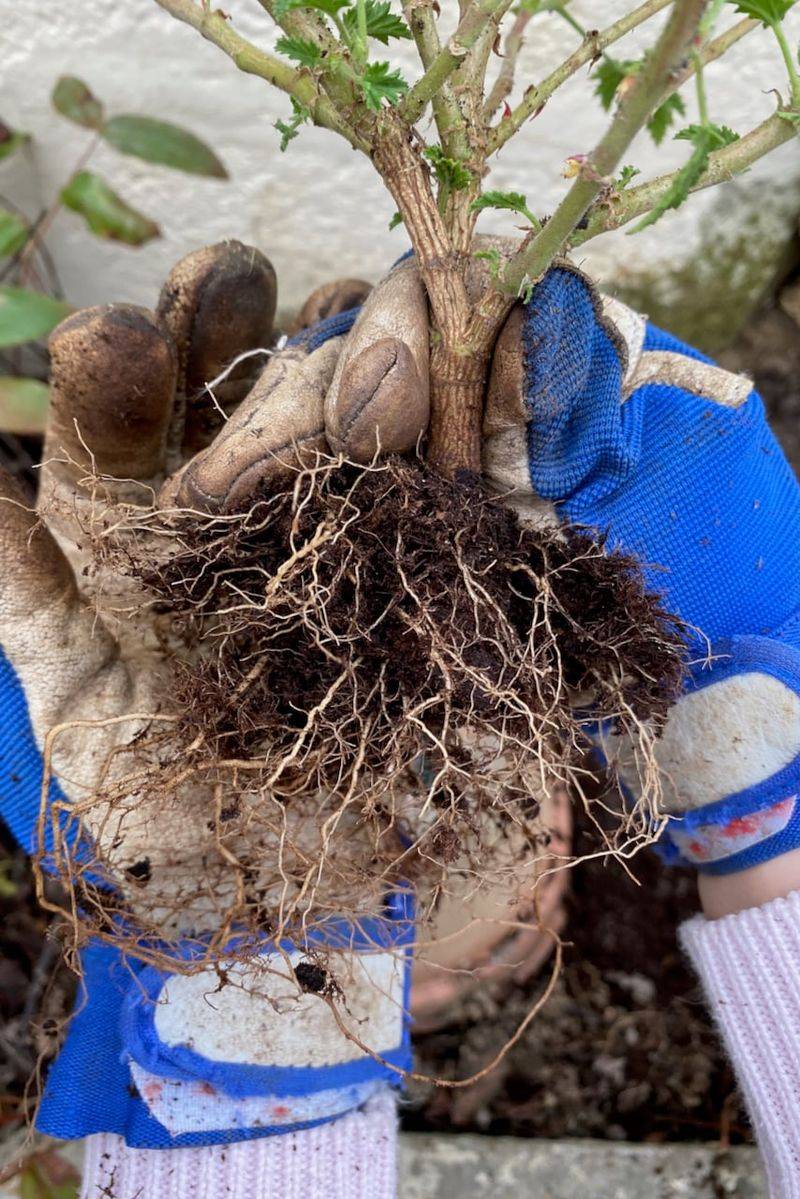
Here the published advice splits. Purdue describes a cool, dry basement at 45 to 50°F and suggests soaking the roots monthly.
Georgia Extension describes hanging plants in a cool, moist, frost-free basement and soaking the roots periodically.
Iowa State’s paper-sack method, covered earlier, calls for a dry spot and does not mention soaking. Minnesota Extension calls the approach challenging.
These sources do not form one protocol, so pick one and follow it as written rather than blending them. Keep the plants from freezing, and do not assume extra water is safer.
Soggy roots and a wet storage space can lead to rot. If a plant turns mushy, discard it.
Pot the plants when spring returns
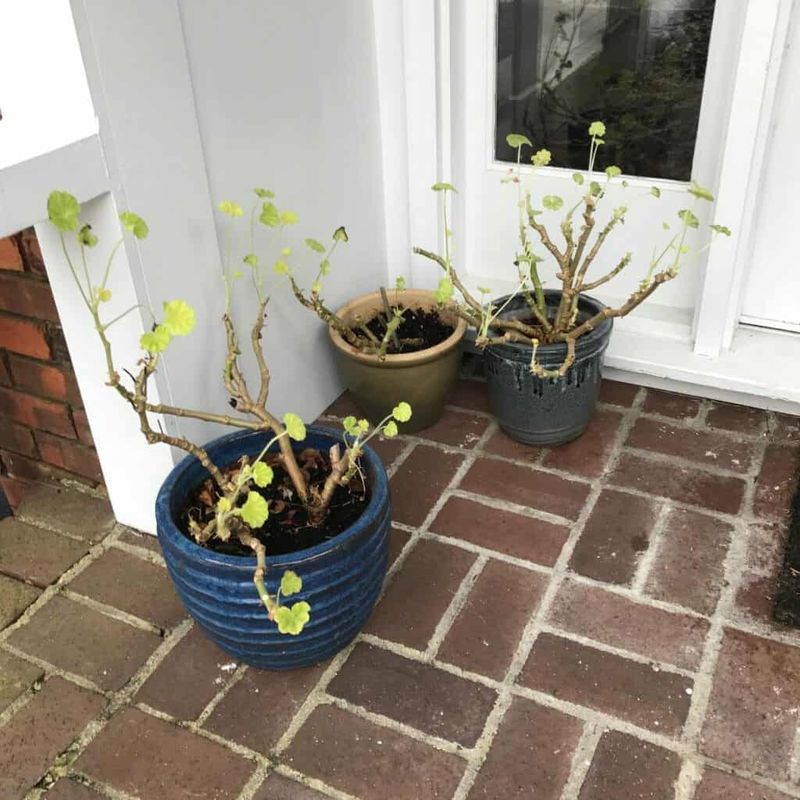
Spring brings the restart. Take the plants out and remove dead or shriveled material.
Iowa State says to cut stems back to firm green tissue, pot the plants, water thoroughly, and give them bright light.
Expect some dieback. Foliage and shoot tips often die during storage, and Georgia Extension also describes trimming and repotting in spring.
Firm living stem is what you want to keep.
Iowa’s March potting and May outdoor planting dates belong to its own climate and should not be copied into Southern gardens. Use your local last-frost information and the weather at hand to decide when to pot up and when to set plants outside.
Shriveled stems that never firm up are a sign that a plant did not make it.
Treat this as an experiment, not a guarantee
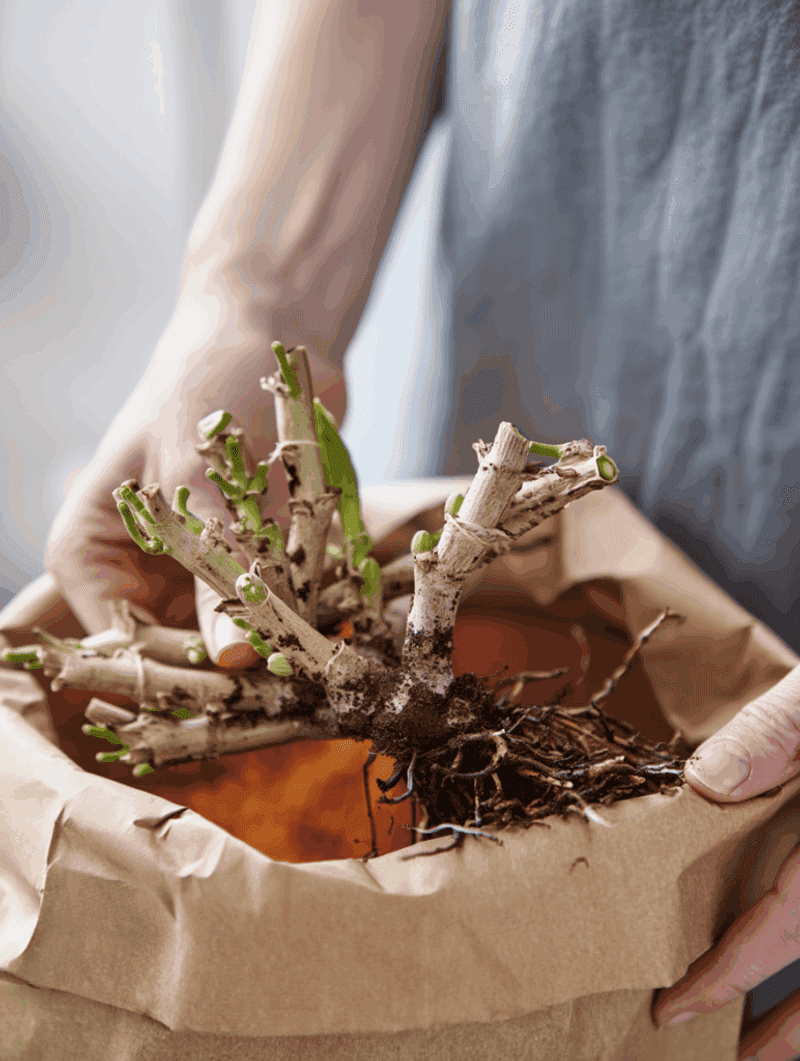
Bare-root storage may save a favorite plant, but results vary. Arkansas Extension says bare-root plants may or may not survive.
One University of Minnesota Extension account reports good results with common geraniums but poorer results with some scented types. That is one gardener’s experience, not controlled research.
Many Florida gardeners do not need this at all. UF/IFAS notes that South and Central Florida commonly grow geraniums as winter annuals from October to March.
Try it with a plant you can afford to lose. A bag of bare roots is a small bet, and cheap to place.