
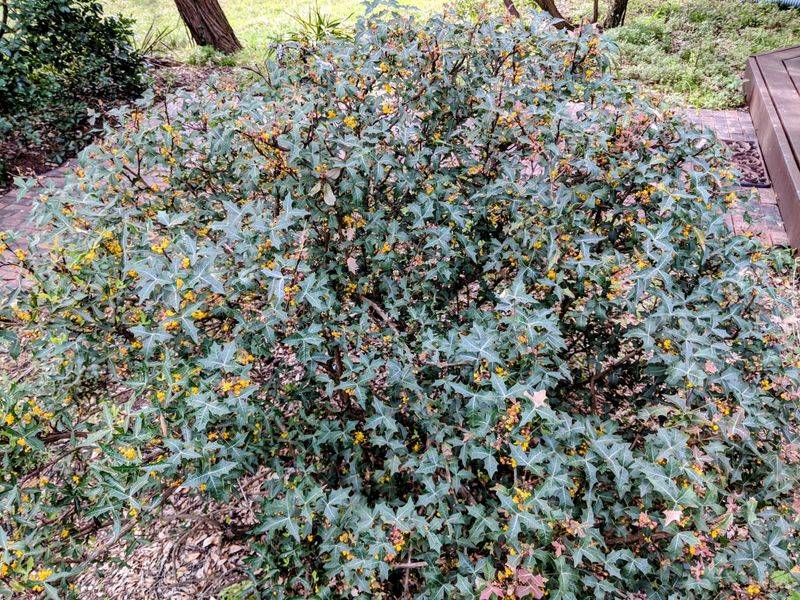
Plenty of Central Texas yards have a dry, sunny corner that nothing seems to like. Agarita, a tough native shrub, may be the plant that fits there.
It lights up late winter with yellow flowers, and its tart berries come months afterward. Here is what the shrub really does, where it fits, and how to enjoy its fruit safely.
Agarita flowers in winter, but its berries come later
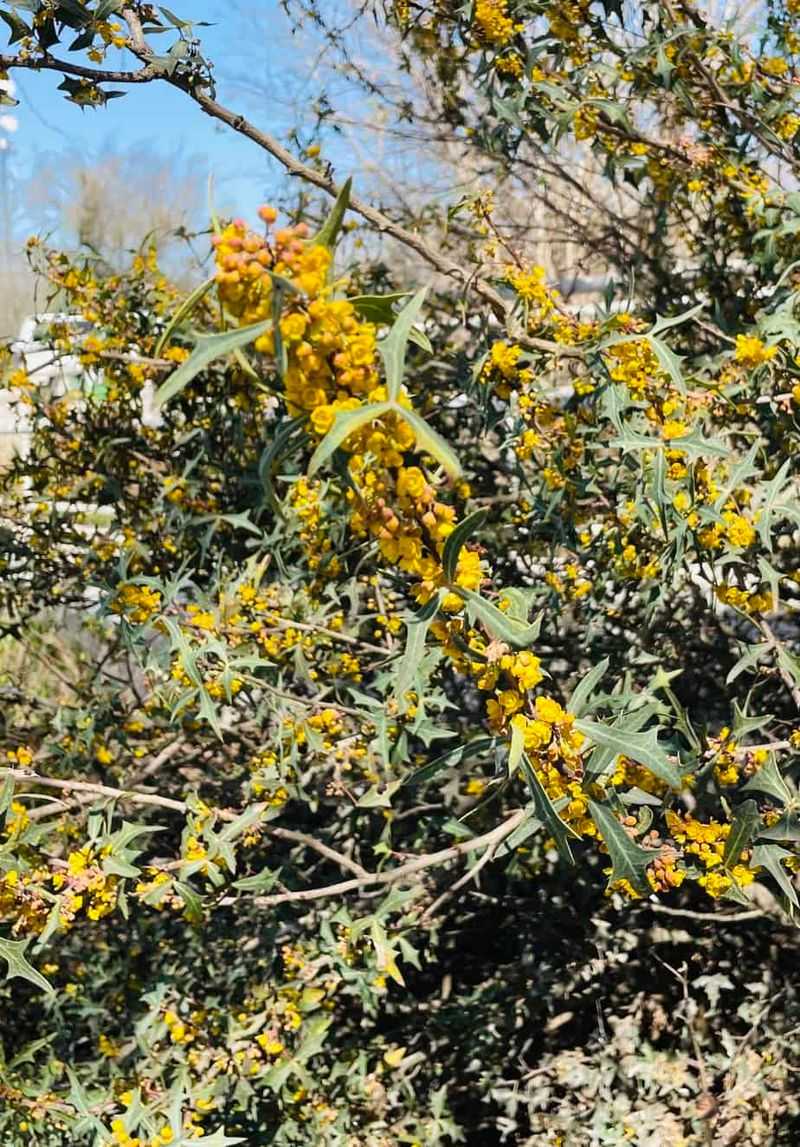
Winter belongs to the flowers. Agarita is an evergreen Texas native, and its yellow blooms open in late winter or early spring, often when the rest of the yard still looks bare.
Those flowers are the first part of the story, not the berries.
The fruit comes later. The U.S.
Forest Service species review gives a broad ripening window of April through July and reports peak ripeness around May 1. Texas Parks and Wildlife lists harvest as May to early June.
Those ranges do not match exactly, and that is normal. Local weather, the amount of sun, and the plant itself all shift the timing.
Think of it as a spring-to-early-summer window rather than a date to circle on the calendar. Your shrub may be earlier or later than a neighbor’s.
Color needs a correction too. Texas sources typically describe agarita berries as red, not purple.
Individual fruits can vary a little, so color alone should never be your test for identification.
So if you were hoping for purple berries ripening in January, adjust the plan. Expect yellow flowers first, then red fruit in the warmer months.
Agarita can suit a sunny, well-drained Central Texas yard
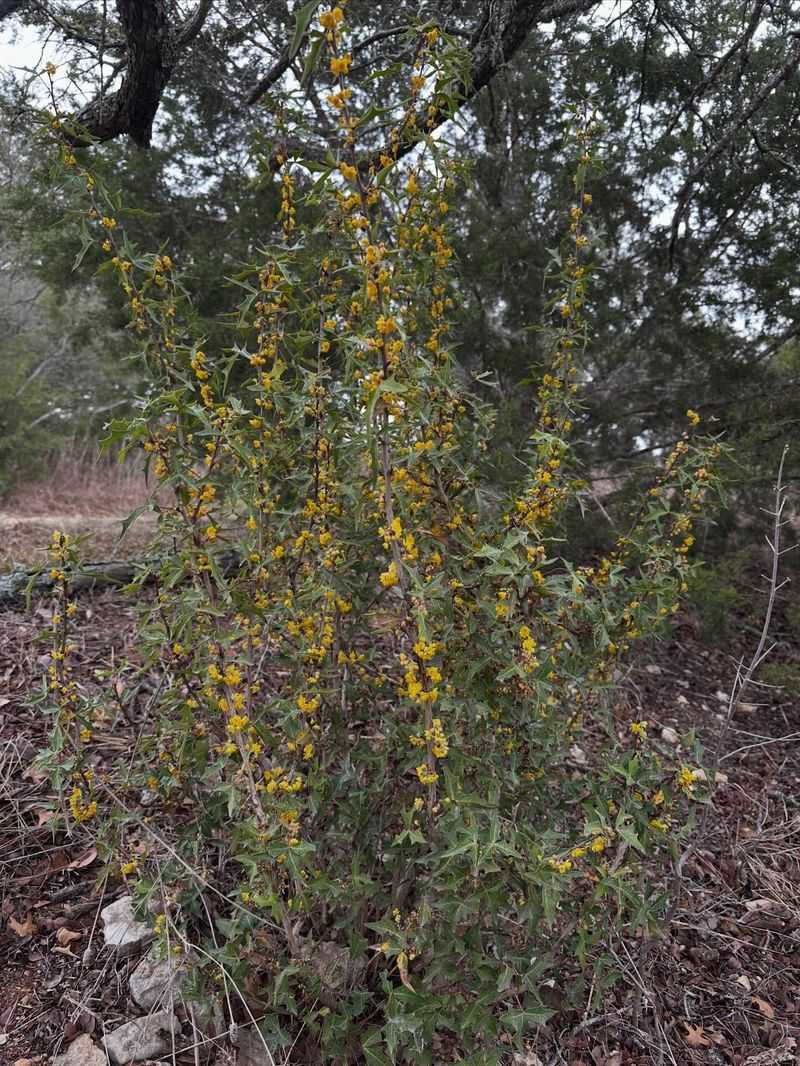
Few shrubs match agarita for tough, low-fuss character in a Texas yard. It is native to much of Texas, especially the central, western, and southern areas.
The Forest Service says it occurs across most of the state except the eastern and southeastern portions, so East Texas gardeners should not assume it belongs in their beds.
For Central Texas homeowners, that native range is a real advantage. The plant is already suited to local heat, thin soils, and dry spells.
It also gives birds and other wildlife something to use.
Site matters, though. Agarita does best in sun or partial sun with well-drained soil.
A spot where water pools after a storm is a poor match, even if it looks dry most of the year.
Water needs are low, not zero. Austin’s plant guide lists its water needs as very low, and the Native Plant Society of Texas calls it drought-tolerant once established.
That wording is the key. Drought tolerance is a benefit with limits, and it does not mean the shrub will thrive in any spot or without any care.
Could a fence line be the right place?
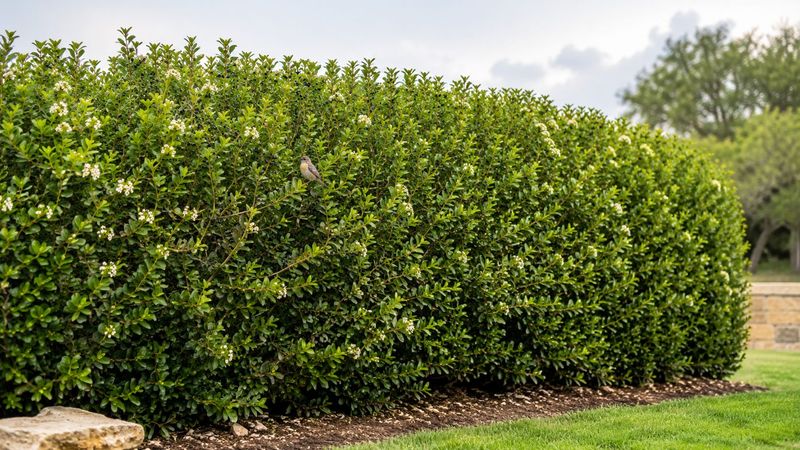
A fence line can work well for agarita, as long as the spot checks a few boxes. Texas Parks and Wildlife notes that sunny plants are more likely to fruit, so a fence that sits in shade all day is a weak choice.
Dryness alone is not enough.
Drainage is the second check. A dry-looking strip where runoff collects can still stay too wet for this shrub.
Look for a place where water drains away soon after rain.
Then think about people. The leaves are holly-like and sharply spined, and the Lindheimer Chapter of the Native Plant Society advises against planting it near walkways.
Keep it away from gates, paths, and any place where kids, pets, or you will brush past.
Finally, picture the grown plant. Austin lists a mature height of 3 to 7 feet and a spread of 3 to 6 feet.
That is a sizable footprint for a plant that looks small in a nursery pot.
Measure out that space before you dig. A back fence with sun, good drainage, and elbow room is a far better bet than a cramped side yard.
New shrubs need water before they earn their drought tolerance
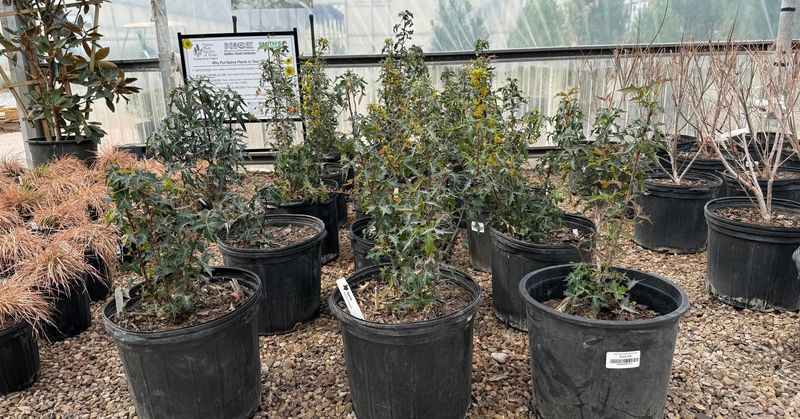
A tag that says drought-tolerant can be misleading on planting day. That label describes established shrubs, not ones that went into the ground last week.
A new agarita is still building the roots it will rely on later.
The Lindheimer Chapter’s care guidance recommends deep watering during roughly the first three months, whenever the top 2 to 3 inches of soil are dry. Checking the soil with your finger or a trowel tells you more than any fixed calendar.
After that establishment period, the plant can lean on its own roots. The Native Plant Society of Texas describes agarita as drought-tolerant once established.
Austin’s very low water rating points the same way.
Notice the careful wording. Very low water needs are not the same as no water, and a stretch of harsh weather can still stress even a settled plant.
If you want a harvest someday, those first months matter. Give the shrub a solid start, and it is more likely to reward you with flowers and fruit in the years ahead.
The tart red berries reward patience—and careful picking
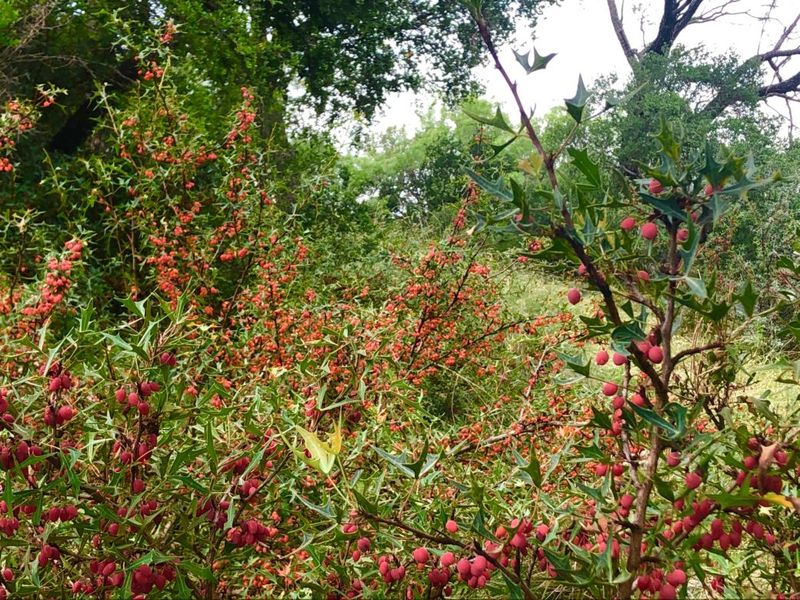
Agarita fruit is tart, and that sharpness is the point. People eat the berries fresh and also turn them into jelly and other preparations.
Texas Parks and Wildlife describes the red berries as worth the trouble of picking.
Trouble is the right word. The berries are small, and the prickly foliage makes them hard to reach.
Thick gloves and patience help, and a slow pace beats a rushed one.
Sun plays a role in the crop. Sunny plants are more likely to fruit, so a shaded shrub may flower nicely and produce little.
No shrub is guaranteed to give you a harvest in any given year.
You will also have company. The Forest Service notes that birds and other wildlife eat the berries.
That is a good reason to enjoy the plant even in a year when you pick nothing.
Plan to share. Leaving plenty on the branches keeps the shrub useful to local wildlife while you gather a modest handful for the kitchen.
Only eat fruit from a positively identified agarita
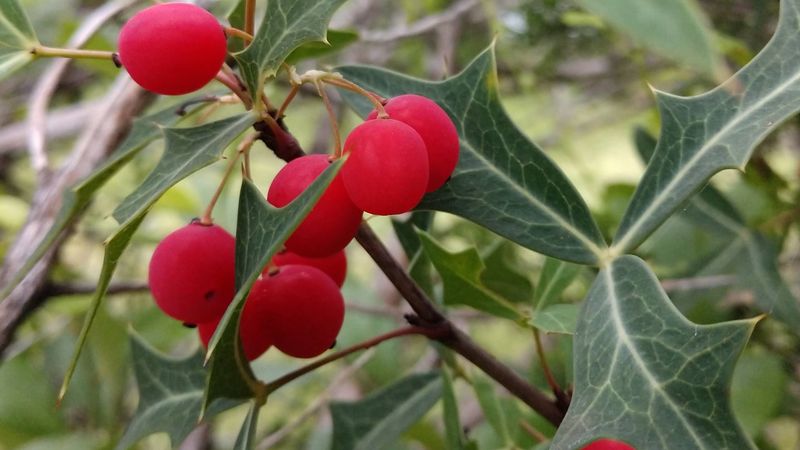
Foraging has one firm rule here. Edibility applies to fruit from a correctly identified agarita, not to any red, blue, or similar-looking berry.
Color or a photo is not enough to go on, so confirm the plant itself before anything goes in your mouth.
The U.S. Forest Service identifies the fruit as edible and notes that the roots contain alkaloids that can be poisonous in high concentrations.
Keep other plant parts out of the kitchen entirely. The fruit is the only part this article discusses as food.
Watching a bird eat a berry proves nothing about people. Texas Poison Center guidance warns that an animal’s ability to eat a berry does not mean it is safe for humans.
If someone eats an unknown berry, call Poison Help at 1-800-222-1222. HRSA’s Poison Help guidance points readers to that number, and the staff can advise on next steps.
When in doubt, leave it on the shrub.
Plan for a spring harvest, not winter berries
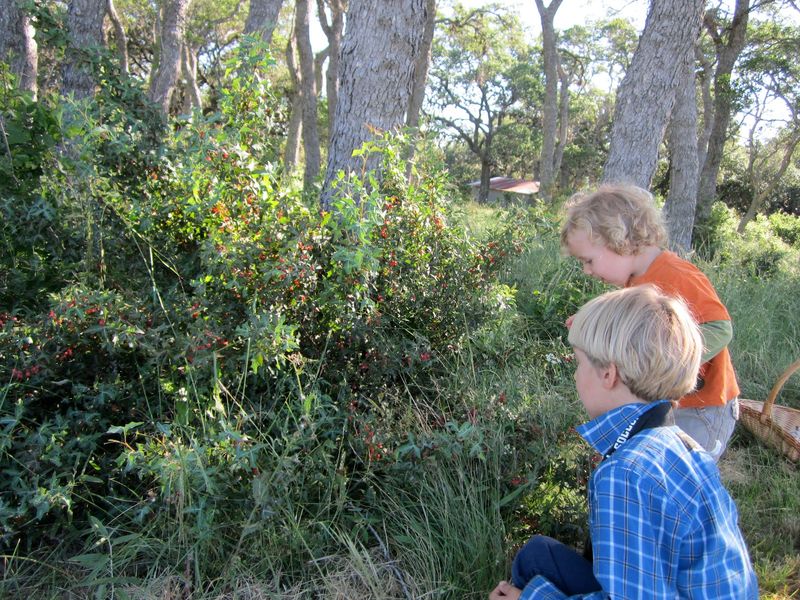
Agarita earns a spot in a sunny, well-drained corner with room to spread and no foot traffic nearby. Give it water while it settles in, then look for fruit as spring turns toward summer.
Winter brings the yellow blooms, and the red berries come later. A shrub that waits for the right season is easy to forgive.