
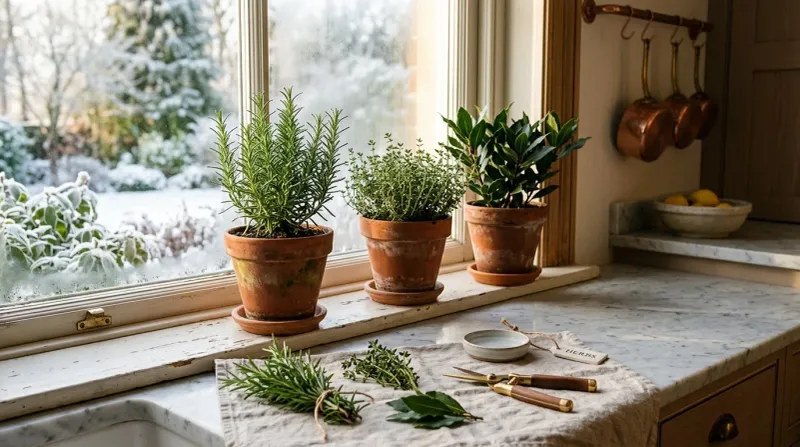
Gray-looking rosemary and thyme can make any gardener worry that a winter herb is on its way out. But gray is not always a warning sign, and brittle leaves can come from more than one cause.
A few simple checks of the plant, the room, and the pot can point you toward the right fix. Here is how to work through them before you change your care routine.
Gray leaves need a baseline
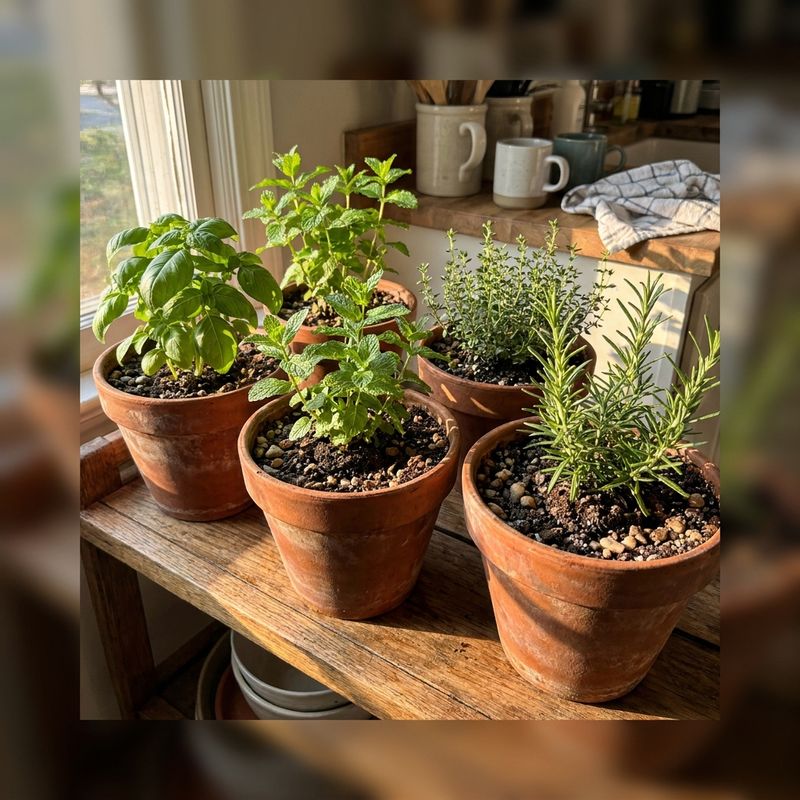
Before you worry about color, take a good look at what normal looks like. Illinois Extension describes thyme as having small gray-green leaves, so a soft silvery tone is simply part of the plant.
Rosemary has its own quirk, since the undersides of its needles carry a pale band that can look gray when the stems sway or you turn a leaf over.
What matters more is change. Compare the plant today with how it looked a few weeks ago, or with a photo you took when you brought it home.
Needles that were firm and green and are now curling, browning at the tips, or snapping off are a better clue than color alone.
Rosemary can also develop brown tips and dieback indoors when it dries out, as Illinois Extension notes for rosemary. That does not tell you why it dried out, though.
Dry air, a dry pot, a soggy pot, weak light, and pests can all leave a similar mark.
So think of the next sections as a checklist. Each one looks at a different possible cause, and none of them assumes the answer ahead of time.
Hot, dry drafts can damage exposed tips
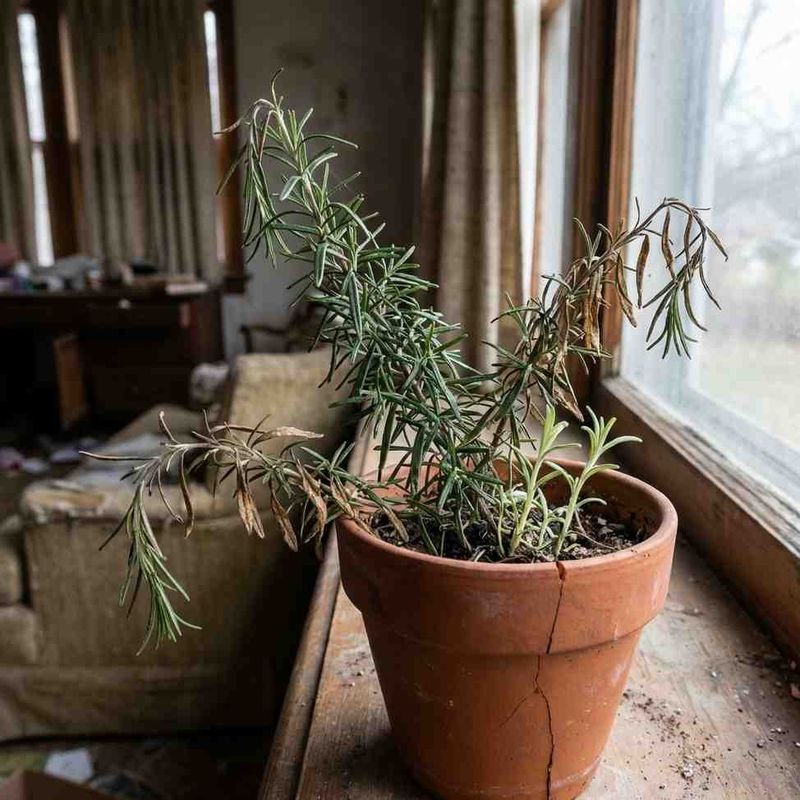
Where the damage sits can tell you a lot. If the browning and curling show up mostly on the side facing a heating vent, radiator, or stove, a hot, dry stream of air may be part of the story.
Missouri Botanical Garden describes leaves nearest dry-air sources browning and curling at the tips.
Walk over to the plant and hold your hand where the pot sits. Do you feel warm air blowing across it when the heat kicks on?
Rotate the pot and see whether the stressed growth is lopsided, since damage on one side points toward an exposure issue rather than a whole-plant problem.
Keep this as one possible contributor, not a verdict. A hot draft can dry out foliage, but that does not prove the whole plant needs more humidity.
Southern homes differ a great deal in November. Some are heated daily, others run the air conditioner, and plenty of Florida and Texas homes swing between the two.
Look at your own spot rather than assuming.
Check room humidity and potting mix separately
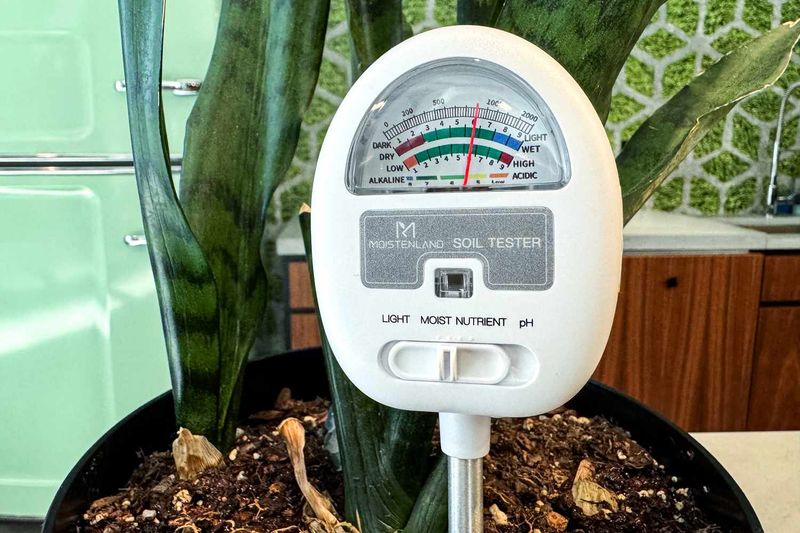
Dry air and dry soil are two different problems, and a plant can have one without the other. A cheap hygrometer lets you measure the room instead of guessing.
Penn State Extension covers humidity and houseplants and is a handy place to learn why measuring helps.
There is no single humidity number proven for rosemary or thyme indoors, so use the reading as a clue about your room, not a pass or fail score. Low winter light and dry air are both documented limits for indoor herbs, as Illinois Extension explains, but your own home may be more humid than you expect, especially in a coastal or Gulf Coast house.
Next, check the pot on its own. Push a finger an inch or two into the mix.
Rosemary prefers to dry slightly between waterings, as Illinois Extension notes for rosemary, so damp mix means waiting, while bone-dry mix means a drink.
Suspecting dry air is not a reason to water automatically. If the mix is already wet, more water can add root trouble.
Look beneath leaves and check a persistently wet pot
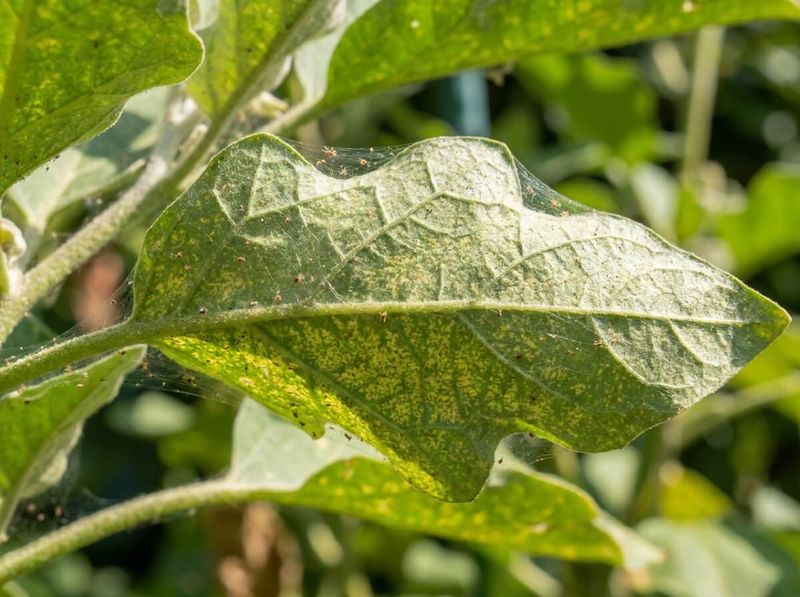
Flip a few leaves and look underneath. Stippling, gray or bronze discoloration, and fine webbing can point to spider mites, according to Penn State Extension’s guide to indoor plant pests.
A magnifying glass or a white sheet of paper held under a tapped stem can make the tiny pests easier to spot.
Dry conditions can favor mites, so brittle, gray-looking foliage is not automatically a humidity injury. If you suspect them, move the plant away from its neighbors.
Rinsing the leaf surfaces is one suggested control, and it may help reduce their numbers.
Now think about the pot. If a plant wilts while the mix is wet, that calls for a root check rather than more water.
University of Maryland Extension explains that healthy roots are firm and light-colored, while rotten roots look dark and soft.
Neither of these clues is the same thing as humidity stress. They are separate possibilities worth ruling in or out before you change the room.
Give rosemary and thyme bright, sheltered positions
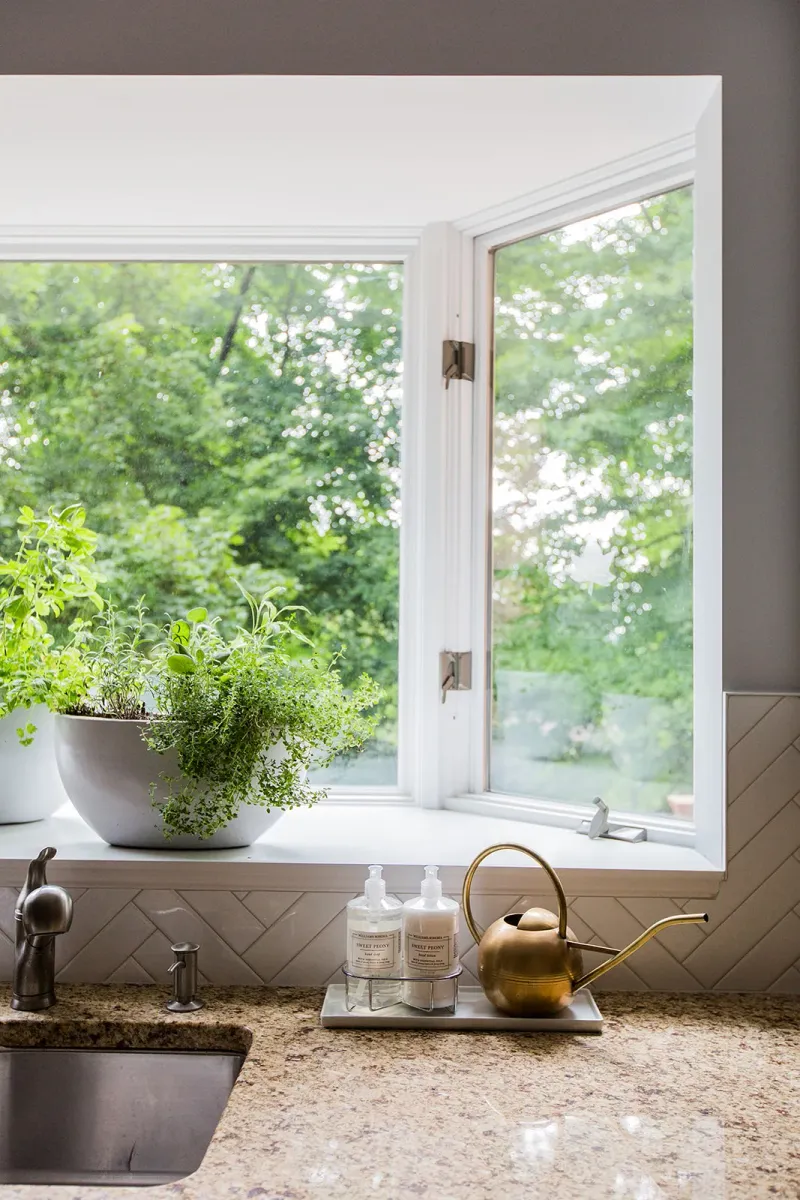
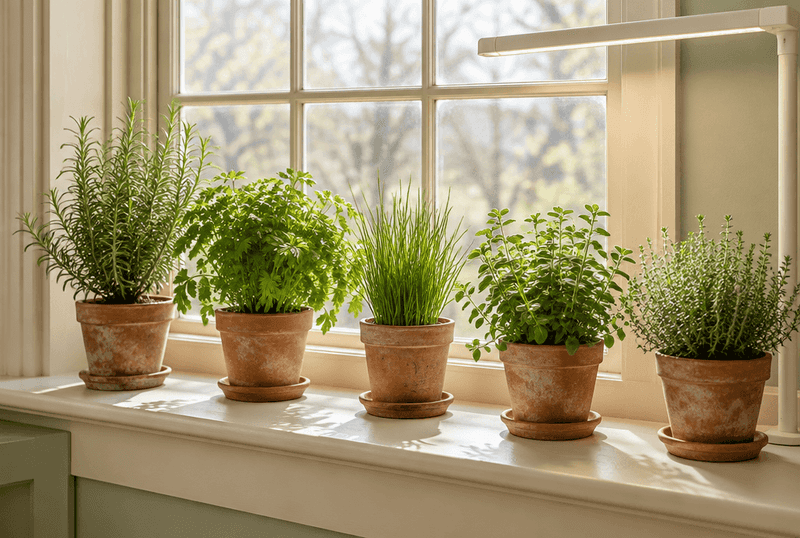
Light does a lot of quiet work in winter. Penn State Extension recommends about six hours of direct sun for these herbs, and low light can produce thin, spindly growth.
A south or west window is usually the best bet, and a grow light can fill in when the days are short or the window is dim.
Position matters too. Slide pots out of the path of any hot vent, but do not tuck them into a stuffy corner.
Air that moves gently across the leaves is helpful, and Penn State Extension notes that good circulation can help reduce powdery mildew risk on rosemary.
That means spacing is part of the fix. Leave a few inches between pots so leaves can dry and air can pass, instead of crowding every herb onto one sill.
Keep expectations realistic as well. Extra humidity will not make up for too little light, so if the plant is leggy and pale, brighter placement is likely the step to try first.
Water according to the mix, not the brittle tips
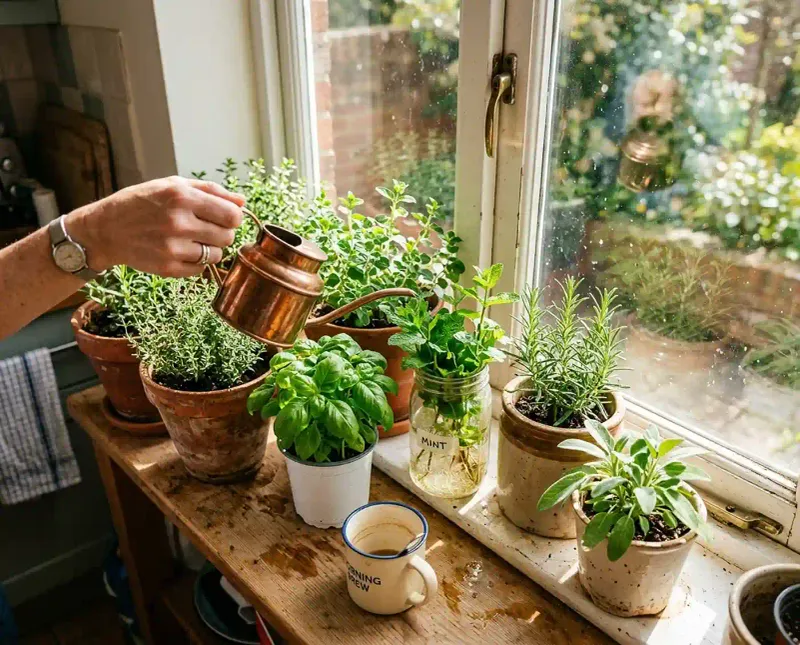
Brittle tips tempt people to grab the watering can, but the mix should make the call. Check it with a finger or a wooden skewer, and water when the top layer has dried slightly.
Skip the fixed calendar, since a pot in a sunny Texas window dries much faster than one in a dim room.
Drainage matters just as much. Penn State Extension advises using a container with drainage holes and not leaving the pot standing in drained water.
Tip out the saucer after each watering.
Winter light is weaker, so plants often need less water than they did in summer. Still, watering is absolutely part of the picture, because both too little and too much can contribute to decline.
Illinois Extension points out that rosemary and thyme should dry slightly between waterings and that overwatering can cause root rot.
So when the mix is dry, water thoroughly and let the extra drain. When it is still damp, wait and look at the other clues instead.
Raise humidity only when the room is actually dry
If your hygrometer shows the room really is dry, a humidifier placed nearby is a practical option. Keep it near the plants but not aimed straight at the pots, and watch that the leaves and mix do not stay soggy.
There is no species-specific humidity target for rosemary or thyme, so use the reading as a guide to your room.
Other tricks are less dependable. Illinois Extension says the effect of misting is brief, so it will not hold humidity up for long.
Pebble trays get mixed reviews, and Penn State Extension cautions that their effect on room humidity may be negligible. If you try one anyway, keep the pot above the waterline so the roots do not sit in water.
Treat each step as a test. Move the pot from the vent, add light, adjust watering, then see how new growth responds over the next few weeks.
Fix what you found, not what you assumed, and the plant will usually tell you whether you were right.