
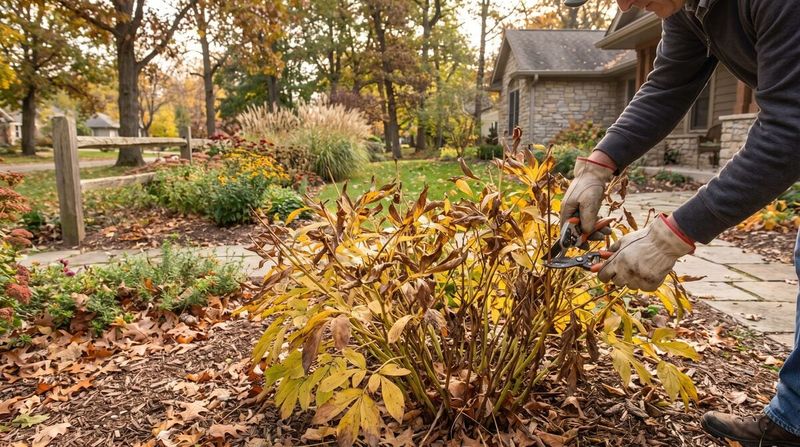
Peonies look like they vanish every fall, and that leaves many North Carolina gardeners wondering what to do with the leftover stems. The right move depends on the type of peony you grow and on what the plant is doing, not on a date on the calendar.
A few careful steps can keep the bed tidy and help you avoid common mistakes. Here is how to handle each type as the cold arrives.
Use the plant’s condition, not November, to time care
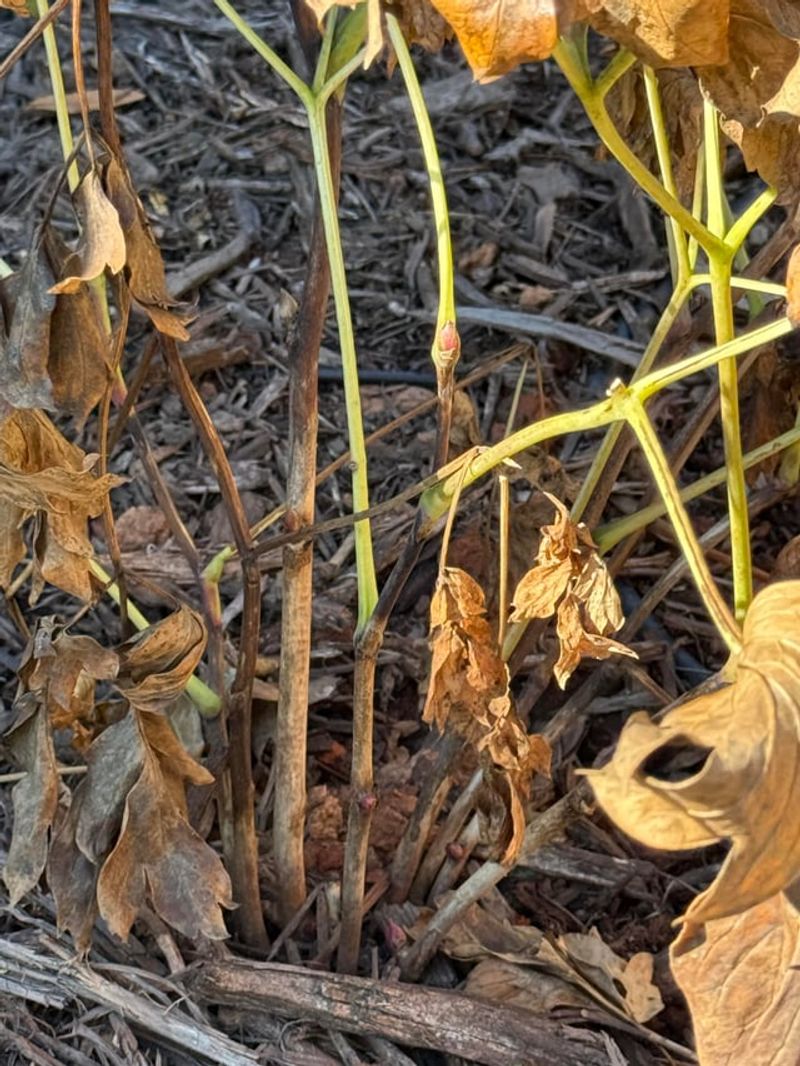
Plenty of garden advice makes November sound like a deadline for peonies. In North Carolina, it is better treated as a month to walk out, look closely, and see what your plants are telling you.
Herbaceous peonies die back each year, and the cue for cleanup is foliage that has collapsed, browned, or been killed by frost.
The calendar is a poor guide here because freeze timing swings widely across the state. The mountains can see frost weeks before the Piedmont, and the coastal plain often stays mild well into the season.
A peony in Asheville may be ready for cleanup while one near Wilmington still has green leaves.
To get a sense of your own timing, check NC State’s frost date resource for average freeze dates in your area. The NC State Climate Office Freeze Date Explorer lets you look at historical freeze records for a specific location.
Treat those numbers as typical ranges, since any given year can run early or late.
Herbaceous peonies are also described in local guidance as plants that die back each year, as noted in Lee County Extension’s peony tips. So if the leaves are still green and active, leave them alone, even if the date says November.
If they are limp and brown after a freeze, the plant has finished its season and you can move on to cleanup.
Fall care also is not a promise of spring flowers. Light, plant age, disease, and planting depth all play a part in whether a peony blooms.
Identify your peony before pruning
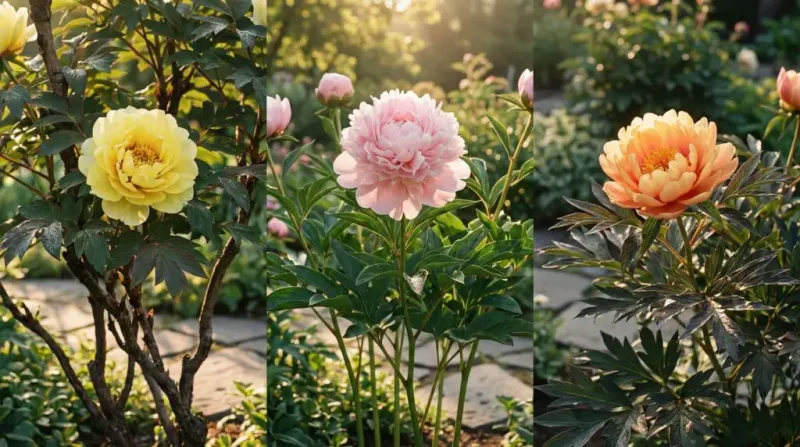
Before picking up pruners, figure out which kind of peony you have. Herbaceous peonies are the classic garden type, and they send up fresh stems each spring and die back to the ground in fall.
Tree peonies are true shrubs with woody branches that stay standing all winter.
Intersectional peonies, often sold as Itoh peonies, are a cross between the two. They die back like herbaceous types, yet they hold onto short woody stems over winter.
That mix is why one rule does not fit every plant in the yard.
Tree peonies should not be cut to the ground. NC State’s Plant Toolbox says they should be pruned only for shaping.
Cutting them down removes the wood that carries next year’s buds.
For intersectional types, leave the short woody stems in place over winter. Lee County Extension notes that these plants may need dead-tip pruning after spring bud break, so the trimming happens later and is lighter.
You can find that advice in their southern peony tips.
If you are not sure what you have, check the plant tag, a garden journal, or a photo from last spring. Look at the stems now too: soft, floppy stems point to herbaceous, while hard, woody stems point to a tree or intersectional peony.
When in doubt, wait and leave the plant alone.
Cut herbaceous foliage after it dies back

Once an herbaceous peony’s foliage has died back or frost has killed it, the plant is dormant and cleanup is straightforward. Use clean, sharp pruners and cut the stems near the soil line.
Work slowly and keep the blades away from the crown, the spot at the base where the new buds sit.
Iowa State Extension recommends cutting after a hard freeze and cutting stems near ground level, according to its peony cutback guidance. The same source warns that cutting in August or early September may lead to fewer blooms than a fall cutback.
In other words, trimming right after flowering or while leaves are still green is too early.
Purdue Extension cautions gardeners to avoid injuring the crowns while cutting, as described in its peony publication. Leaving a short stub is safer than slicing too low and nicking the buds.
Take a moment to look at the base before each cut.
Because North Carolina freeze dates differ so much, your cutback might happen in November, December, or even later in milder spots. Lee County Extension’s southern peony tips are a handy local reference.
Let the plant set the schedule.
Think of this as good housekeeping rather than a bloom booster. A tidy bed removes old stems that can harbor problems, but it cannot guarantee flowers next spring.
Remove diseased foliage and debris
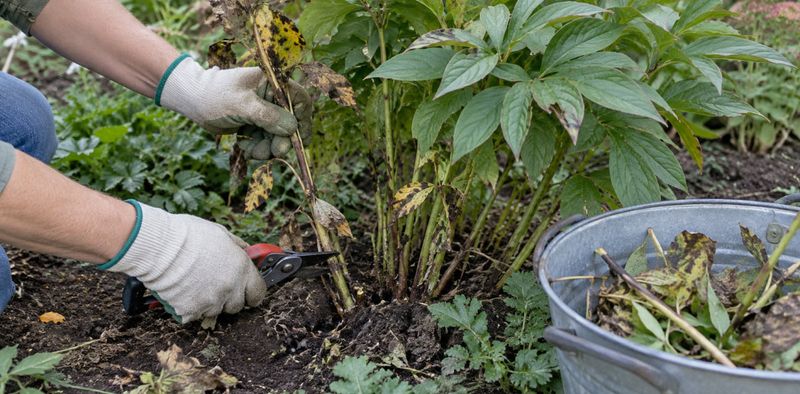
Routine cutback and disease disposal are two different jobs. Cutting herbaceous stems is simply seasonal cleanup.
Leaves with spots, mold, or blotches need extra care in how you get rid of them.
NC State’s Plant Toolbox advises removing and destroying dead or diseased leaves, as listed on its herbaceous peony page. Old foliage can hold fungal problems that carry into the next season.
Clearing it away can reduce the places where disease lingers.
Do not expect cleanup to make a peony disease-free. Wet weather, crowded plants, and poor airflow can still invite trouble.
Removing debris is one helpful habit among several.
Disposal matters too. The University of Connecticut’s peony fact sheet recommends a thorough end-of-season cleanup and says diseased debris should not go into a home compost pile.
Home piles often do not get hot enough to break down disease, so it can survive and spread later.
Bag the diseased material and put it in the trash, or follow your local yard waste rules. Healthy-looking stems and leaves are less of a worry, but when in doubt, bag them.
Rake the soil surface too, since small bits of fallen leaf can hide under the crown.
Keep winter mulch off established crowns in warm areas
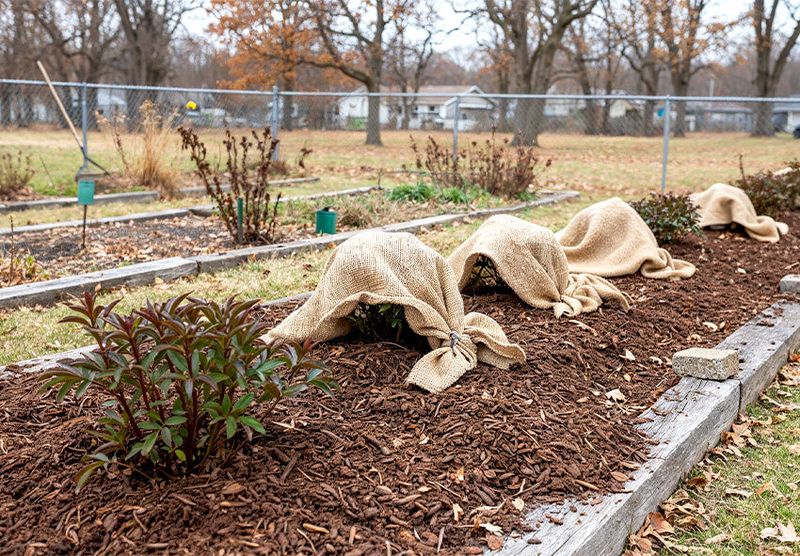
A common idea says to pile mulch over peony buds before the first hard freeze. For North Carolina, that advice does not hold up as a general rule.
NC State’s Plant Toolbox says peonies in warm areas should not be winter-mulched, because mulch can insulate them.
That matters because peonies need cold exposure. A local Extension specialist in Lee County says that chilling helps encourage bloom formation, so a blanket of mulch over the crown works against the plant.
Their southern peony tips say mulch may go around the plant, but not over the exposed buds.
That small difference is easy to picture. A ring of pine straw or shredded bark near the edge of the bed is fine, while a mound sitting on the pink buds is not.
Pull mulch back a few inches if it has drifted toward the center.
The same guidance says not to cover peonies for a late frost. Peony buds are tougher than many gardeners assume.
This is not a blanket rule for every yard. Northern guidance sometimes suggests light mulch for a new plant’s first winter, but that advice comes from colder climates.
In mountain gardens with harsher winters, local conditions and your county Extension office are the best guides.
Understand crown depth without disturbing a settled plant
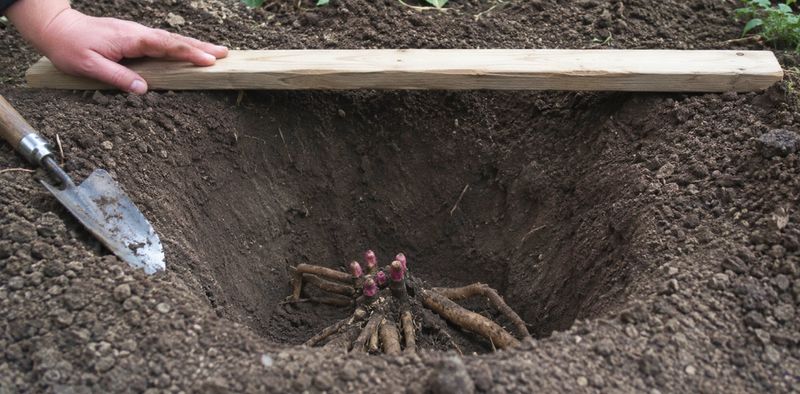
Planting depth is one of the biggest reasons a peony sulks and refuses to bloom. NC State recommends that crowns sit no more than 1 inch deep in warm areas, as described on its Plant Toolbox page.
Lee County Extension puts it in simple terms: keep the root plate and buds at the soil surface, as noted in their peony tips.
That guidance shines at planting time. Set new roots shallow, and do not bury them under extra soil or compost.
It also helps explain why mulch over the buds is a problem, since it adds the same extra layer.
If an established peony has never bloomed well, depth is one thing to consider. The University of Connecticut’s peony fact sheet lists depth among the conditions that can affect flowering, along with light, plant maturity, and disease.
So look at all of them before blaming one cause.
Still, a settled plant that is growing well does not need to be dug up in November just to measure. The guidance supports shallow planting and keeping mulch off buds, not routine excavation.
If you suspect a problem, brush back soil or mulch gently by hand and look at the top of the crown.
Make a type-specific fall check
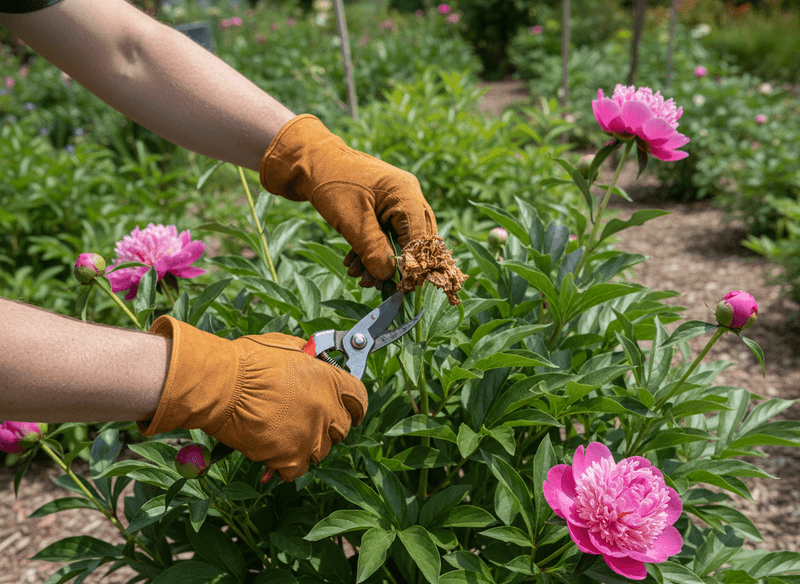
Walk the yard and run through a short list. Identify each peony type, and cut only herbaceous plants once the foliage has died back or frost has killed it.
Cut near the soil line without hurting the crown, then bag any diseased debris. Leave established crowns free of winter mulch in warm areas.
Check NC State’s frost dates for your area, and see the Plant Toolbox and Lee County’s tips for more detail.
Good care sets a plant up well, but blooms still depend on the weather and the site. The peony will keep its own schedule.