
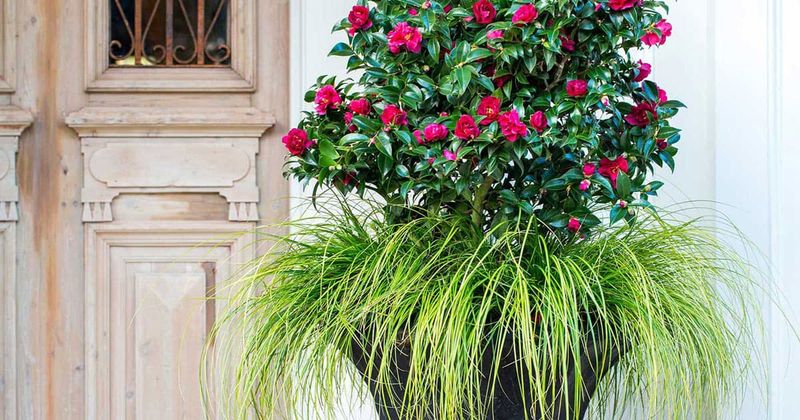
Most North Carolina yards go quiet and brown once the first frost rolls through. The right camellias can change that, opening fresh pink, red, and white flowers in fall and carrying color well into winter.
Pick a few early bloomers now, and you can enjoy flowers from October to March with very little fuss. Here are eight standouts that tend to kick off the season first and keep it going.
1. Camellia sasanqua ‘Setsugekka’
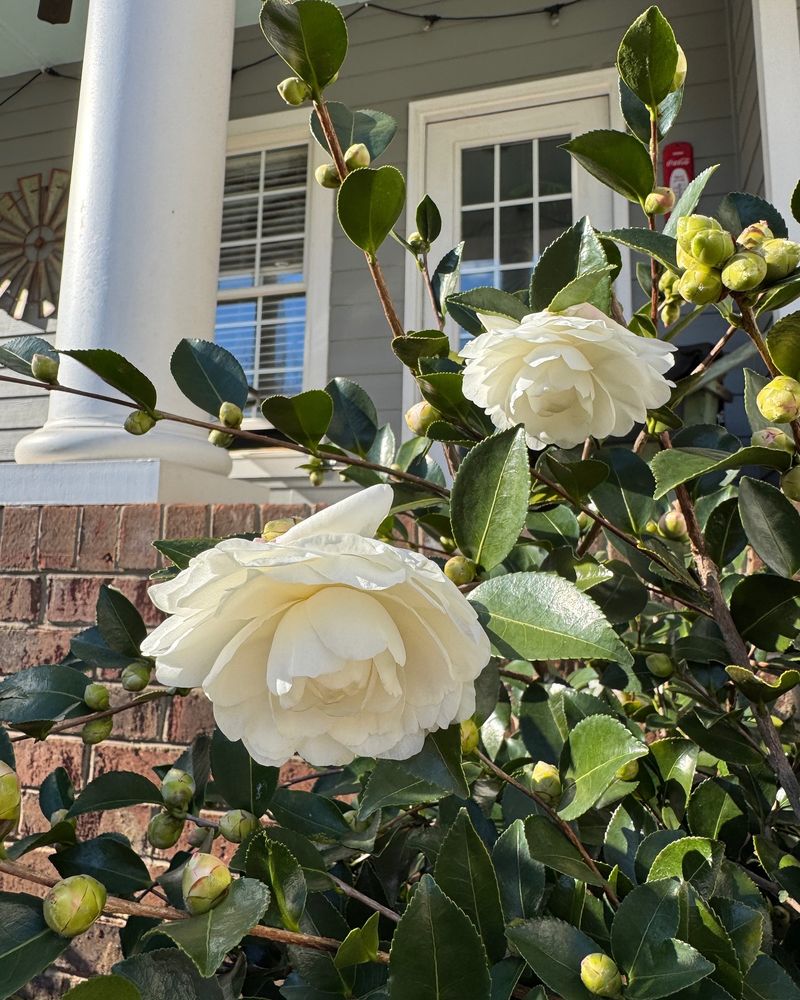
Picture a shrub covered in snowy, ruffled blooms while your maples are still turning. ‘Setsugekka’ often opens in late September or October across the Piedmont, making it one of the earliest white camellias you can plant.
The flowers are large for a sasanqua, with crinkled petals and a bright gold center. Bees still out on warm fall afternoons may visit the open blooms, which gives you a little wildlife bonus late in the year.
Growth is upright and fairly quick, so it works well as an informal screen along a fence line. Give it morning sun and afternoon shade, and plan on roughly 8 to 10 feet over time.
2. Camellia sasanqua ‘Yuletide’
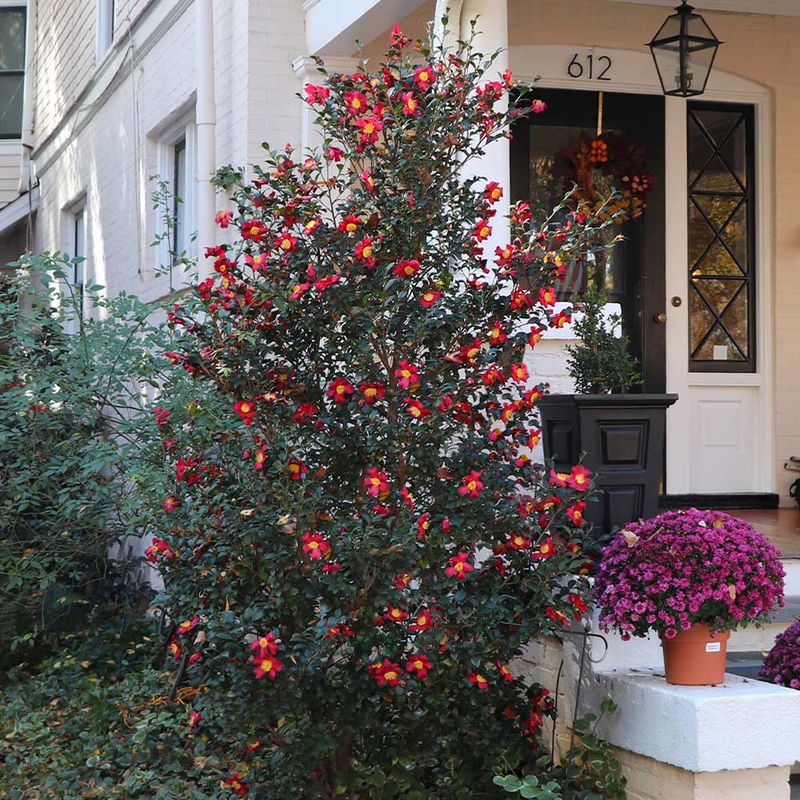
Holiday decorating gets easier when the shrubs do part of the work. ‘Yuletide’ produces small, single red flowers with a bold yellow center, usually peaking from November into December.
Its tidy, compact shape makes it a natural fit near porches and entry walks. You get that festive red-and-green look without stringing a single light.
Coastal plain gardeners tend to see the longest show, since mild nights help buds open steadily. In the mountains, a sheltered spot near the house can help protect flowers from hard freezes.
3. Camellia sasanqua ‘Shishi Gashira’
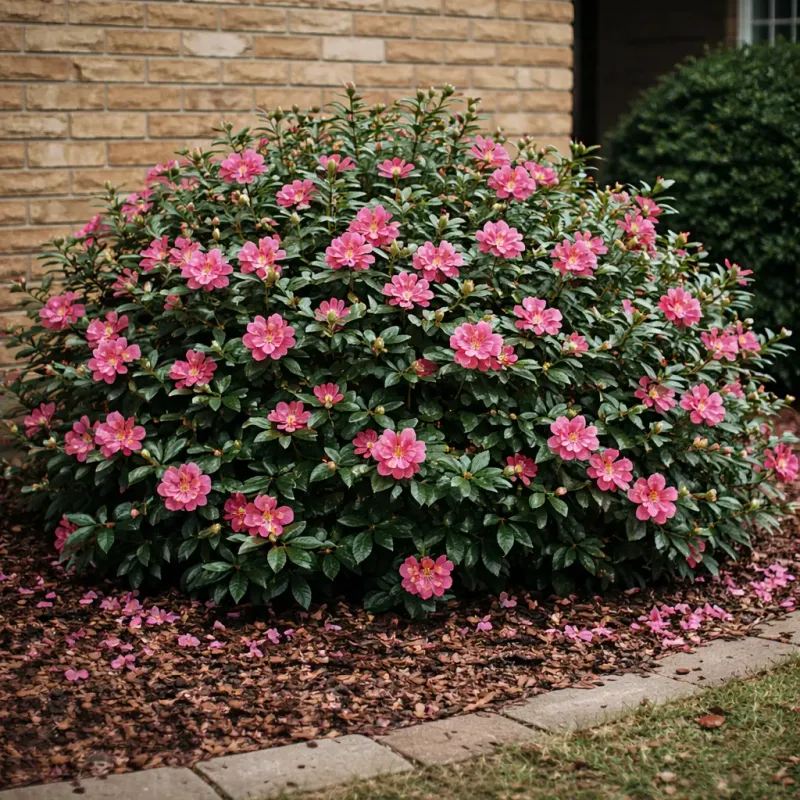
Short on space? Here’s the camellia for you. ‘Shishi Gashira’ stays low and spreading, often around 3 to 4 feet tall, so it tucks under windows without blocking the view.
Rose-pink, semi-double flowers start in fall and can keep appearing for weeks. Many growers count it among the most dependable bloomers in the sasanqua group.
Use it as a foundation planting, a low hedge, or even a large container on a patio. It handles a bit more sun than most camellias once established, though some afternoon shade still helps in hot Piedmont summers.
4. Camellia sasanqua ‘Kanjiro’
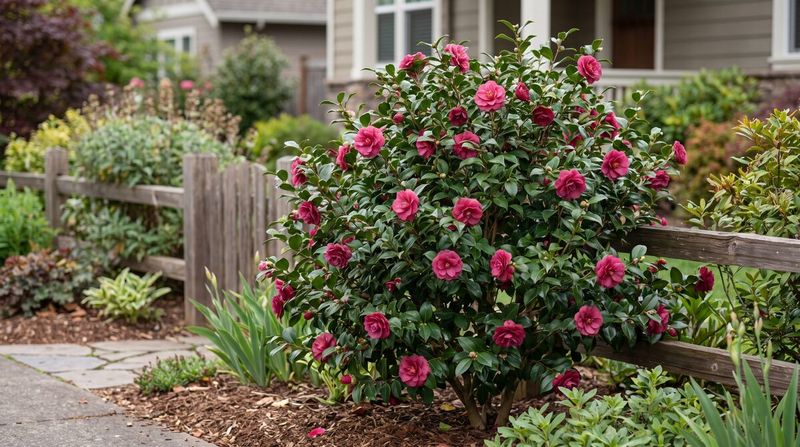
Need privacy and color in one shrub? ‘Kanjiro’ grows fast and tall, often reaching 10 feet or more, with deep rose-pink flowers that fade to a lighter edge.
Bloom time usually runs from October into December. Because it grows quickly, it’s a favorite for gardeners who want a living fence sooner rather than later.
Fun fact: nurseries often use ‘Kanjiro’ as rootstock for grafting other camellias, a sign of how tough and vigorous it is. Plant it at least 5 feet apart for a hedge, and water deeply during its first summer.
5. Camellia sasanqua ‘October Magic Ruby’
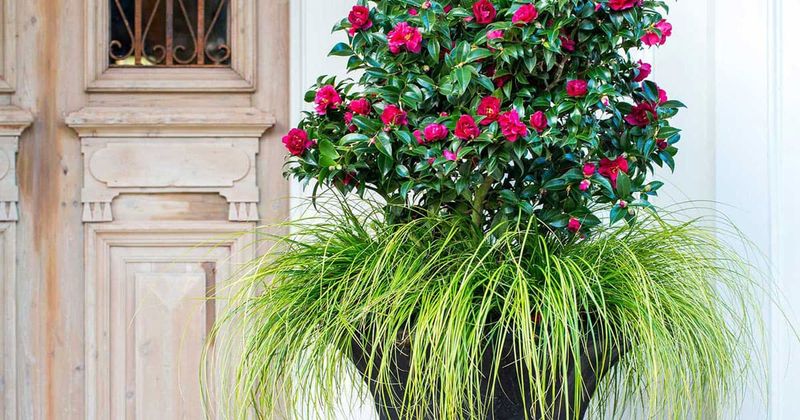
The name tells you when the show begins. Bred as part of the October Magic series, this compact shrub often opens deep ruby flowers right as fall arrives.
It stays rounded and manageable, around 5 to 6 feet, which keeps pruning chores light. The dark foliage gives the red blooms a rich, jewel-tone backdrop.
Pair it with a white sasanqua for a two-tone border that looks planned without much effort. Fall is a great planting window across most of NC, since cooler weather helps roots settle in before summer heat.
6. Camellia x ‘Winter’s Star’
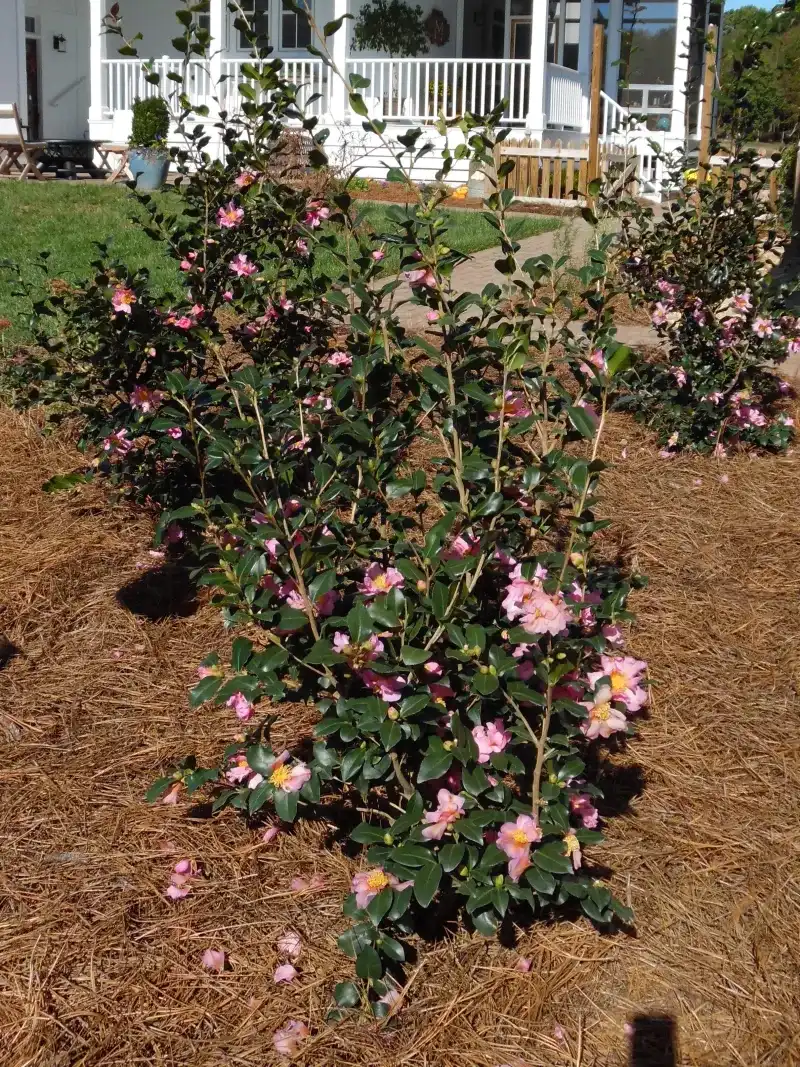
Mountain gardeners, this one’s for you. ‘Winter’s Star’ came from the U.S. National Arboretum’s cold-hardy breeding work, aimed at camellias that survive colder winters.
Its single, lavender-pink flowers usually show up in fall. In places like Asheville or Boone, it can hold on where many standard camellias struggle.
Choose a spot sheltered from harsh winter wind, such as the east side of a house. A layer of pine straw over the roots can help soften cold snaps.
7. Camellia japonica ‘Daikagura’
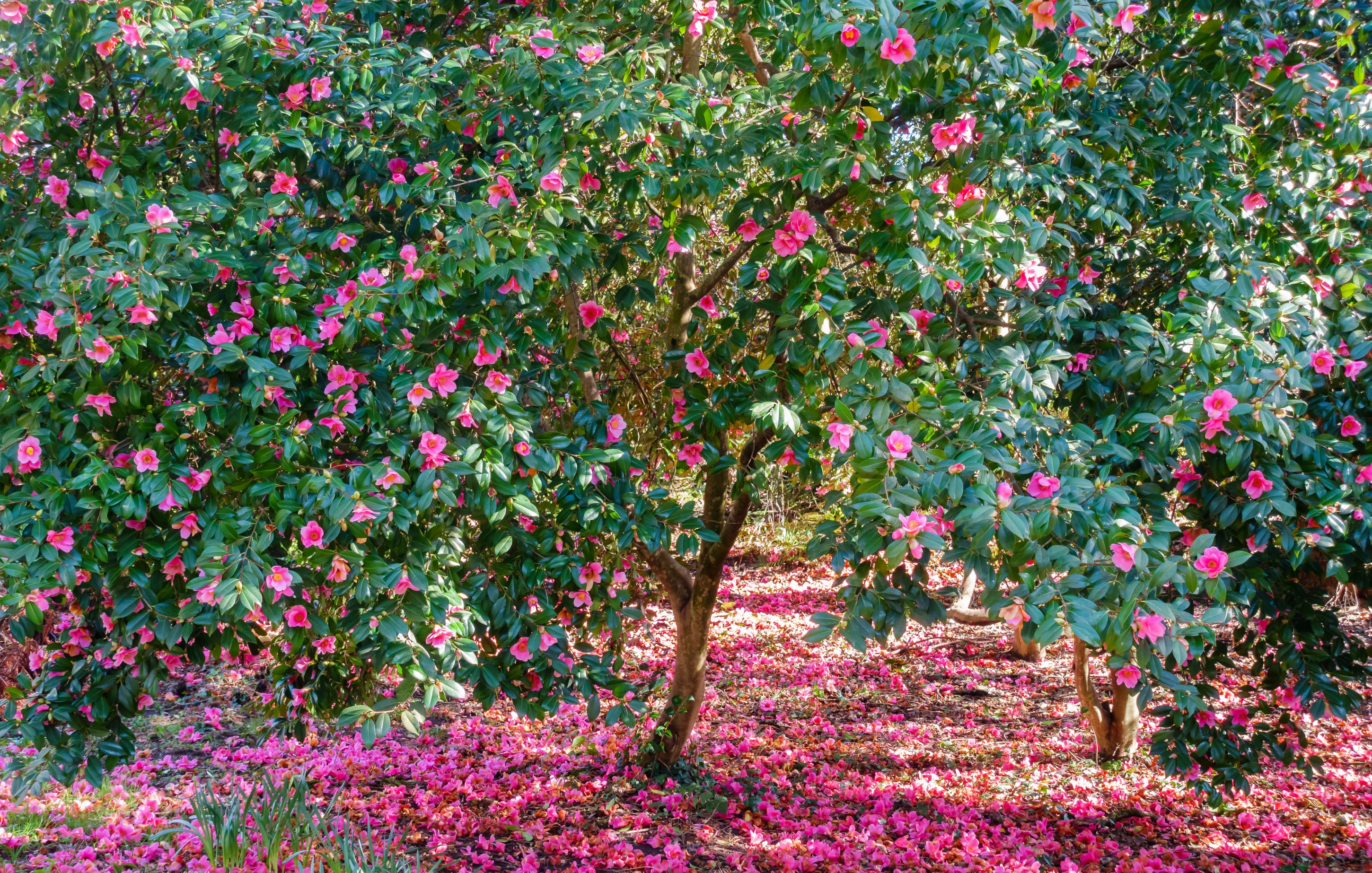
Most japonicas wait until late winter, but ‘Daikagura’ doesn’t like to wait. It often begins blooming in fall, then carries on through winter, bridging the gap between sasanquas and later japonicas.
The flowers are big, peony-shaped, and rose pink, sometimes splashed with white. They look almost too fancy for a shrub that asks so little.
Give it bright shade and moist, acidic soil, which much of eastern NC already offers. Heavy freezes can brown open blooms, but new buds usually open after the cold passes.
8. Camellia japonica ‘Professor Charles S. Sargent’
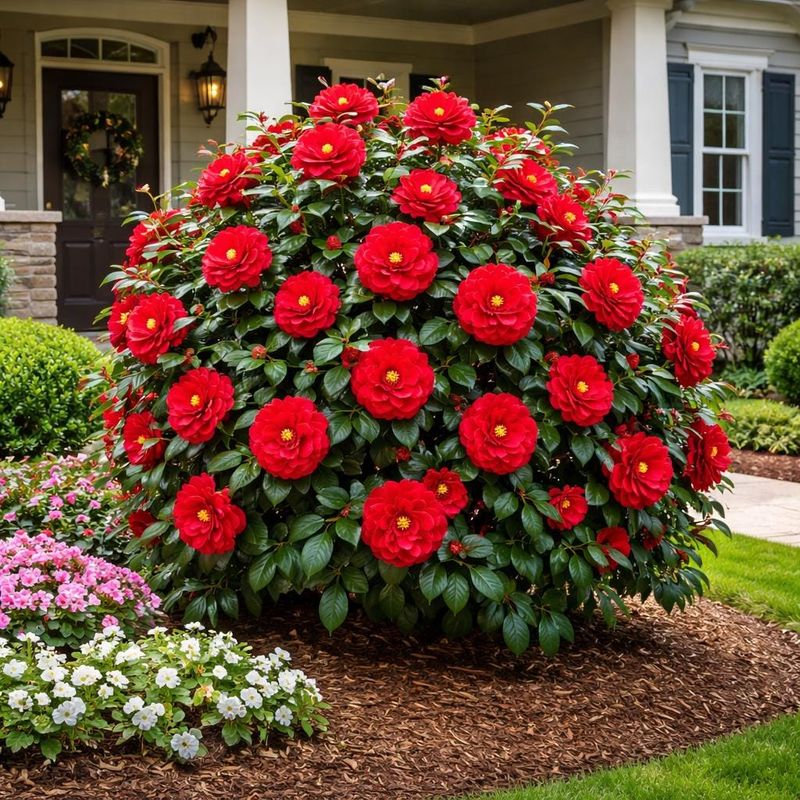
Old Southern gardens often hide a few of these veterans. ‘Professor Charles S. Sargent’ has been grown for well over a century, prized for deep red, fully double flowers.
Bloom usually starts in mid-season and stretches into early spring, picking up right as early sasanquas fade. That handoff is what keeps your yard colorful for months.
It’s known for better cold tolerance than many japonicas, making it a smart pick for the Piedmont. Plant it where you can see it from a window, since its best show often lands on gray February days.