
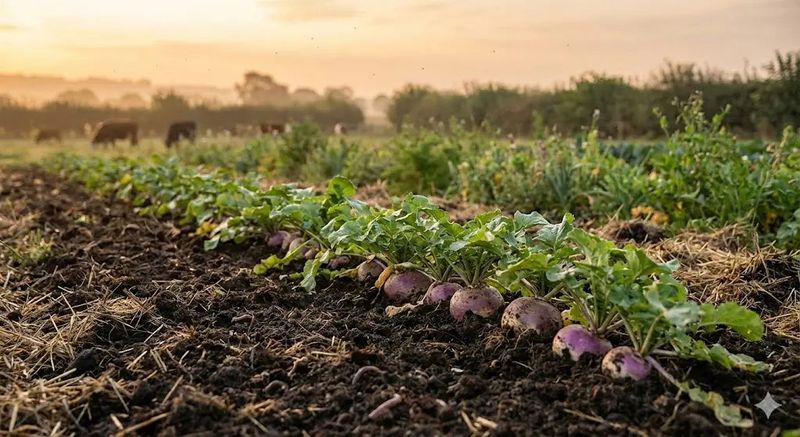
Your turnip bed looks lush from above, with broad green leaves everywhere. Then you pull a plant and find a root no bigger than a marble.
Crowding is one common reason, and it is also one of the easiest to fix. Here is how to sort out what is going on and what to do this week.
Why are the tops thriving while roots lag?
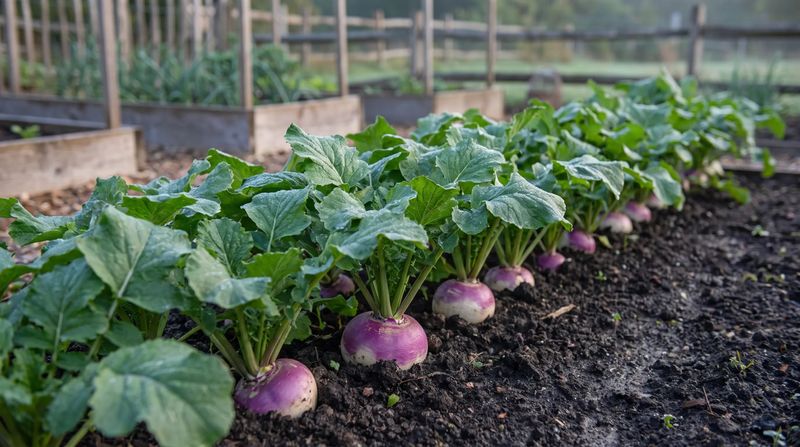
Big, healthy leaves with a puny root underneath is a clue, not a diagnosis. Turnips can be grown for tops, roots, or both, and the UF/IFAS Florida gardening guide lists varieties bred mainly for greens.
So leafy growth alone does not prove that something went wrong.
Crowding is one possible cause of small roots. Plants packed tightly compete for space, and extension guidance such as Utah State’s turnip guide calls for thinning so roots can expand.
Tiny and woody are two different problems. Woody or tough texture is tied to drought or uneven moisture, hot weather, and roots left in the ground too long, as Illinois Extension notes about old turnips.
Check spacing first, then look at watering, temperatures, and how long the roots have been growing.
Give established seedlings room to size up
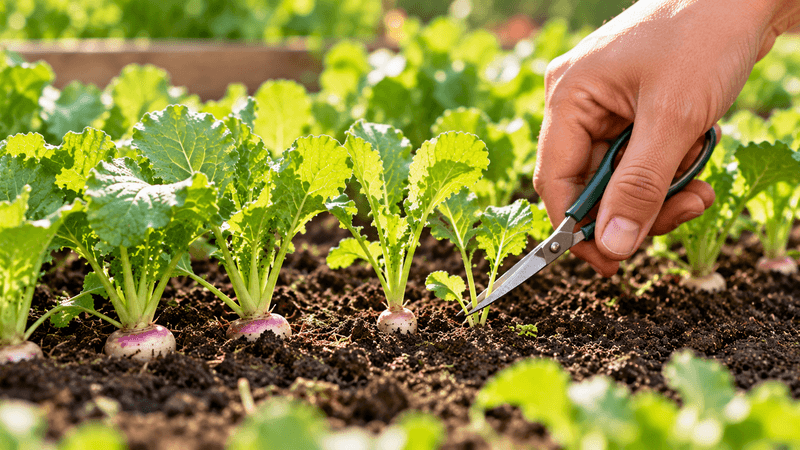
If your seedlings are already up and growing close together, thinning is the main job. Wait until they are established, then pull the weakest ones so the keepers stand roughly 3 to 4 inches apart.
This step is for an existing bed, not for sowing a new crop.
Four inches is a handy target, not a rule. Utah State suggests 3 to 4 inches, University of Minnesota gives 3 to 6 inches depending on the root size you want, and UF/IFAS lists 2 to 6 inches for Florida.
Water the bed first so the soil is loose, then pull or snip extras at the base to avoid disturbing neighbors. Thinning gives roots more room, but it will not rescue roots already stressed by heat or dry soil.
The seedlings you remove can go in the kitchen
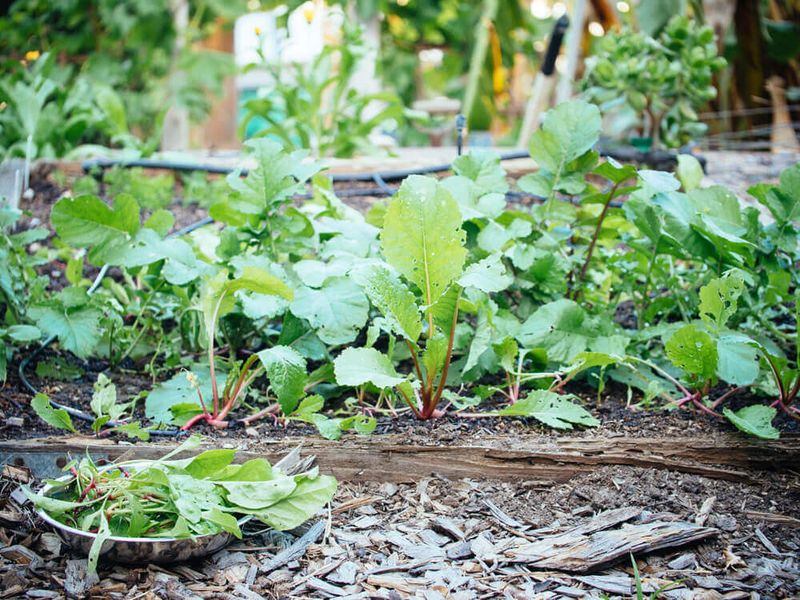
Thinning does not have to mean waste. Both Minnesota Extension and Illinois Extension note that the crowded seedlings you pull can be eaten as greens.
Rinse them well, since young plants hold grit. Tender leaves work in a quick saute, a soup, or tossed raw into a salad, though not every seedling will suit every recipe.
Treat this as a kitchen bonus only. Eating the thinnings does nothing for the roots left behind, which depend on spacing, moisture, and timing.
Steady moisture helps protect root quality
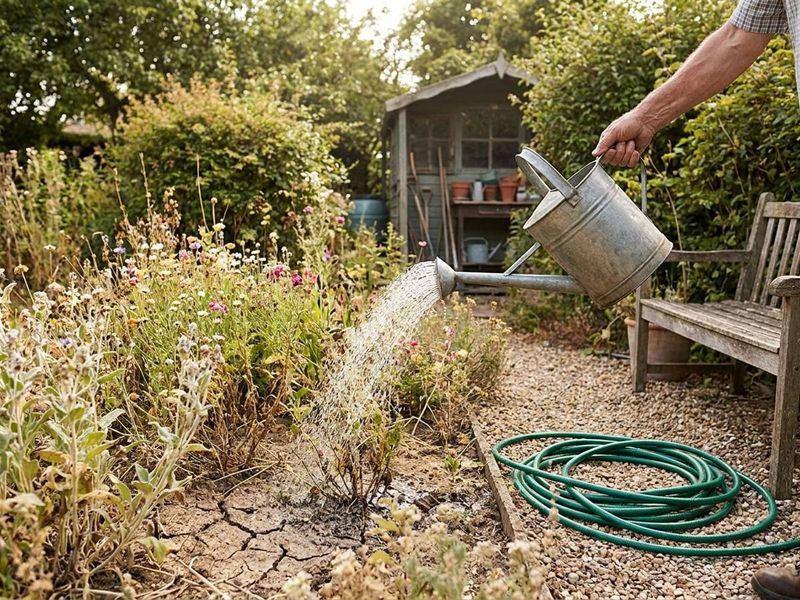
Thinning cannot fix a dry bed. Drought or swings between dry and soggy soil can hurt root quality and are linked to tough, woody texture.
Aim for reasonably even moisture rather than a feast-or-famine pattern.
Extension numbers are starting points. Utah State suggests about 1 to 2 inches of water a week depending on weather and soil, while Minnesota suggests about 1 inch weekly, with more frequent watering possible in sandy soil.
Sandy Florida soils drain fast, and a Texas clay bed holds water longer, so check the soil with a finger a couple of inches down. A layer of mulch may help hold moisture.
Extra water now will not reverse damage that already happened, but it can protect roots still forming, as Virginia Cooperative Extension guidance on root crops also stresses.
Harvest roots while they are still young
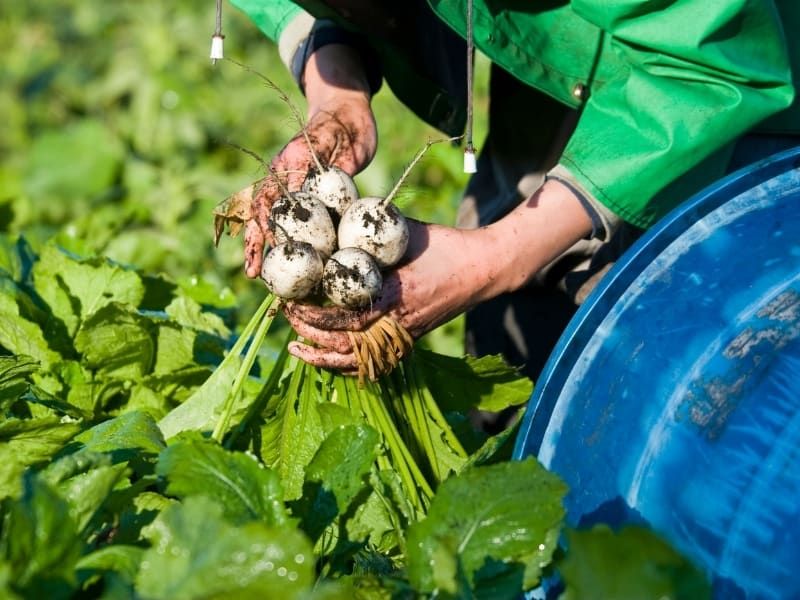
Size at harvest matters as much as spacing. Minnesota Extension recommends harvesting at about 2 to 3 inches wide, and Illinois Extension calls roots of that size the best quality.
Old turnips tend to turn tough and woody. A root left in the ground for weeks past its prime is a common reason for a disappointing bite, even in a bed that was spaced well.
Treat 2 to 3 inches as a guide, not a hard cutoff. Check a few roots by brushing back soil at the shoulder, and pull the ones that have reached size.
Pulling on time frees up room, too.
Fall timing depends on where you garden
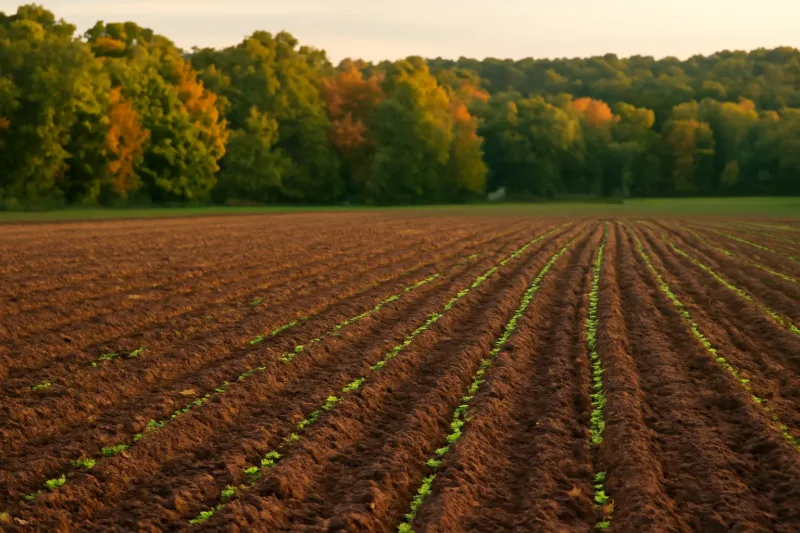
Southern planting windows are not interchangeable. UF/IFAS lists North Florida for January to April and September to October, Central Florida for September to February, and South Florida for September to January.
Texas varies too. Texas A&M AgriLife gives turnip planting dates running from September 1 in Region I to December 15 in Region V.
Keep two jobs apart. Sowing a new crop depends on your regional window, so a gardener in North Florida may be past the fall date while Central and South Florida can still sow.
Thinning seedlings already growing can happen any time they are established. Find your region before you plant anything.
Thin first, then check the other causes
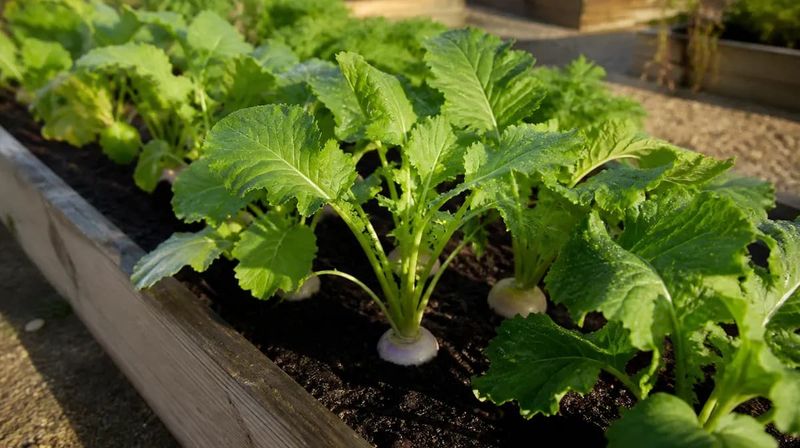
Start with spacing: thin established seedlings to about four inches, or somewhere in the 3 to 6 inch range for your goals, as Minnesota Extension describes. Keep the soil evenly moist, and harvest while roots are young.
Thinning addresses crowding and may help root size, but it is no guaranteed cure for woody roots. Heat, dry spells, and late harvest still count, as Utah State guidance suggests.
Big leaves are only the first half of the story. The roots tell you the rest.