
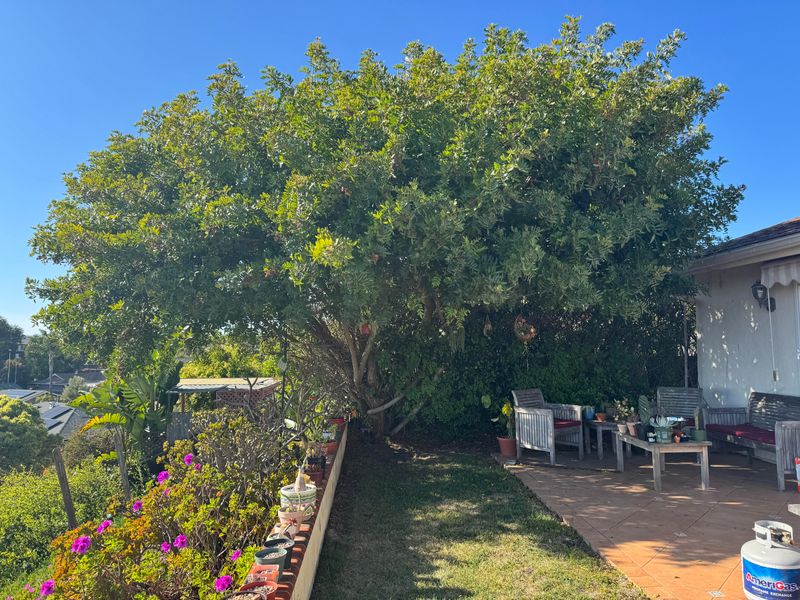
A shrub with glossy red berries can look cheerful in a Florida yard, but Brazilian peppertree is a serious invasive plant. Its fruit ripens mostly in winter, not in every yard at once.
Birds and other animals carry the seeds, and so do people. Knowing what to check before you pick up the loppers can keep a small problem from growing.
Fall flowers do not mean every yard has red fruit now
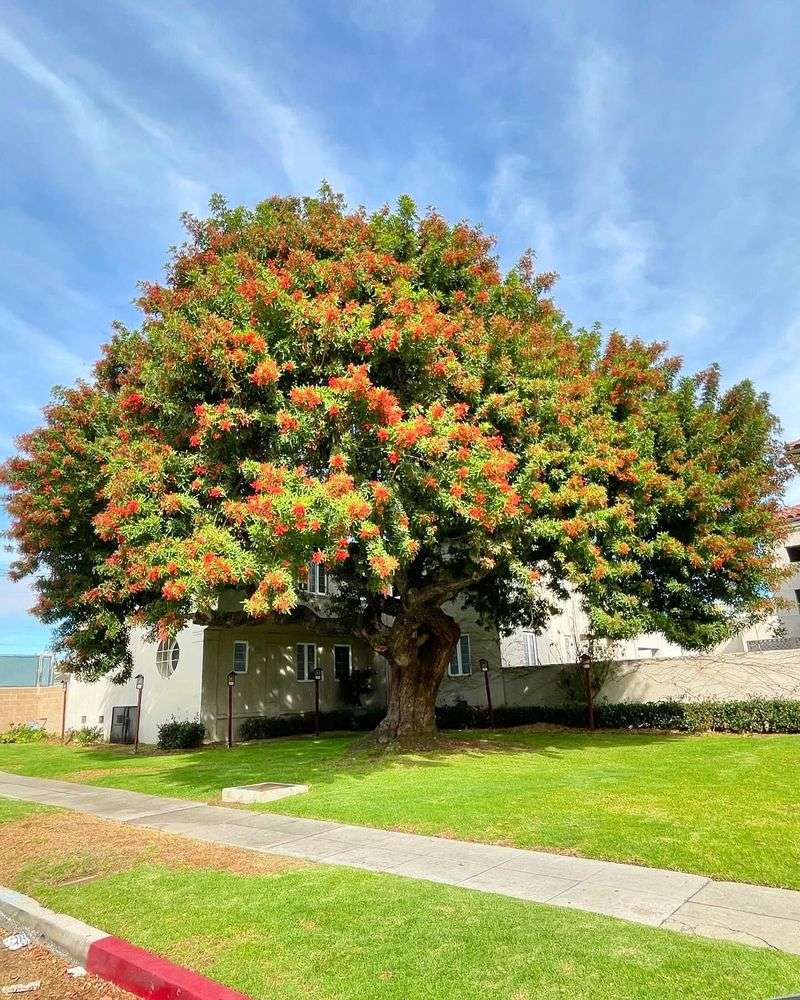
Early November is a good time to look at a Brazilian peppertree, but not a safe bet that ripe red berries are waiting. UF/IFAS control guidance says Florida plants flower mainly from September through November, and the fruits are usually mature by December.
The timing is a little different depending on the source. A US Forest Service species review describes a broader Florida ripening window of December through March, with some fruit lingering into May.
A simple way to hold both ideas is this: fall flowering, then red fruit generally ripening in winter.
Local conditions and the weather in a given year can shift what you see. A tree in a sheltered yard in the southern part of the state may not match one farther north, and last year’s pattern is not a reliable guide for this year.
So skip the guesswork and walk up to the plant. Look for flower clusters, green fruit, bright red fruit, or old fruit still hanging on.
Whatever you find decides your next step, because a plant with no fruit is far easier to deal with than one loaded with berries. Write down what you see and the date, so you can compare when you check again in a few weeks.
Identify the plant before you remove it
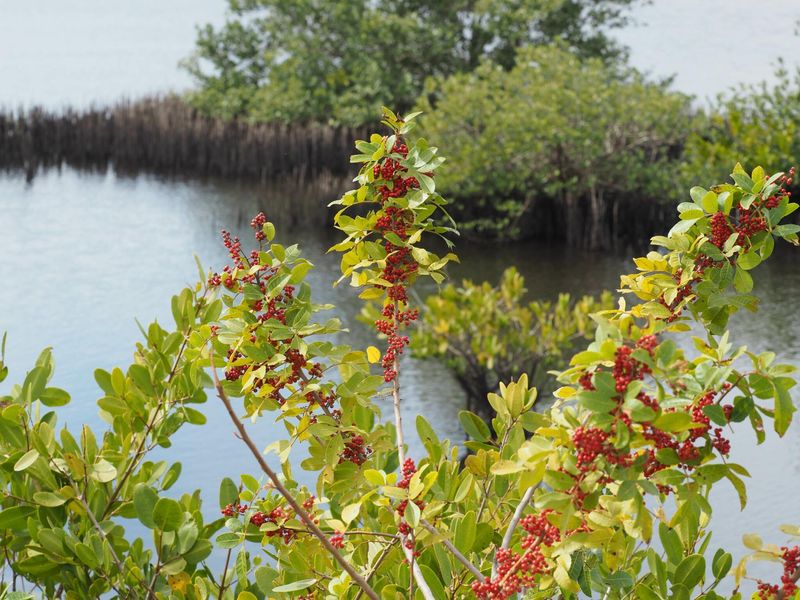
Brazilian peppertree carries its fruit in glossy clusters that ripen from green to bright red. The Florida Fish and Wildlife Conservation Commission describes it as widely established in central and south Florida.
It is not limited to those regions. The Florida Department of Agriculture and Consumer Services reports it also grows in protected and coastal areas farther north in the peninsula.
A yard in north-central Florida near the coast could still have one.
Getting the name right matters before any cutting starts. Brazilian peppertree can be mistaken for other plants, including poison sumac in wet habitats.
Poison sumac is a different plant with different risks, and a wrong guess can lead to the wrong handling plan.
One helpful clue involves the fruit. Poison sumac has pale fruit at maturity, while Brazilian peppertree fruit turns bright red.
Habitat can also give a hint, since poison sumac tends to show up in wet spots.
If you are unsure, take clear photos of the leaves, the fruit, and the whole plant. Your county UF/IFAS Extension office can help confirm what you have before you pick up a saw or a sprayer.
Birds disperse seeds, but people and other animals matter too
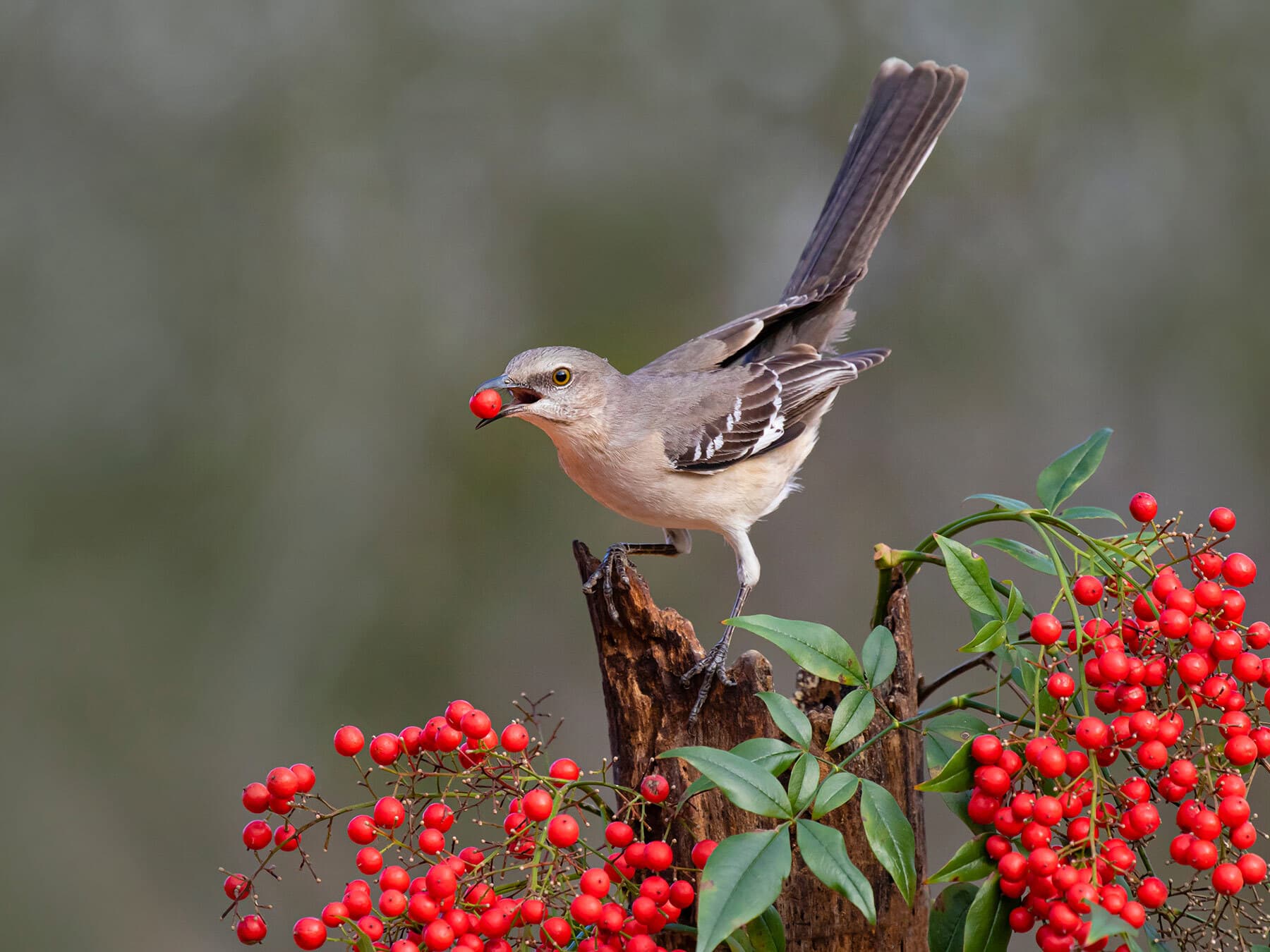
Birds are real players in the spread of this plant. The US Forest Service names mockingbirds, cedar waxwings, robins, and catbirds among the birds that eat the fruit and disperse the seeds.
Birds are not working alone. The Florida Department of Agriculture and Consumer Services also lists reptiles and small mammals as animals that eat or move the fruit.
A seed can travel in a gut or get dropped far from the parent tree.
The Forest Service review also points to people as the main way the plant has spread overall. Ornamental planting put it in yards and landscapes, and improper disposal of garden waste has moved it around too.
That changes how to think about your yard. You cannot control every bird that stops by, but you can control what you plant, what you cut, and where plant material ends up.
The idea that birds spread it everywhere is too simple, and so is blaming wildlife alone.
A practical example: a fruiting branch dumped at the edge of a lot or in a ditch is a seed source that you put there yourself.
Contain fruit before cutting a fruiting plant
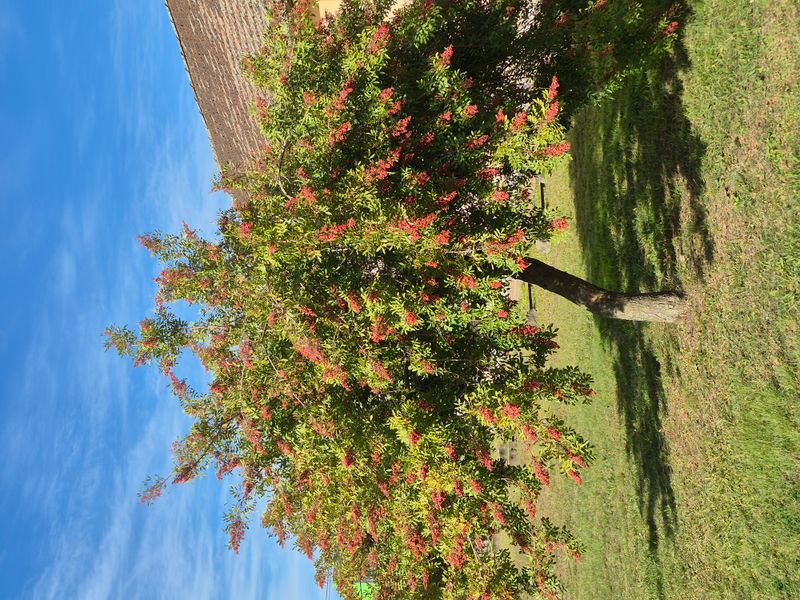
The best time to cut Brazilian peppertree is when it is not fruiting, according to UF/IFAS. If your plant is still in flower or has not set fruit, that is your window.
A plant that already has berries calls for more planning. Cutting it without containing the fruit can move seeds to new places, because berries shake loose and branches get dragged across the yard.
UF/IFAS cautions homeowners to take care not to spread the fruit.
Cutting a berry-covered plant does not automatically stop seed dispersal. It can do the opposite if the fruit is scattered during the work.
Before the first cut, decide how you will keep berries and seed-bearing branches from falling and traveling. Think about where the cut material will go, how you will carry it without dropping fruit, and who will help.
Lay out your plan on paper if that helps.
If the plant is large or hard to manage, waiting until it is not fruiting may be the better choice. A local extension office or a licensed professional can help you decide what fits your situation.
Choose a removal method that accounts for regrowth
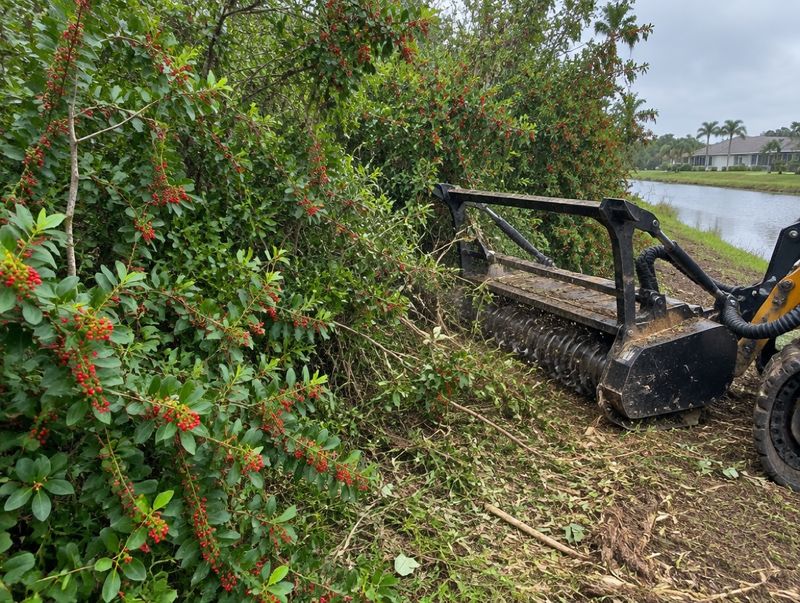
Size decides the method. For small plants, hand-pulling or digging can work, but only if you get the whole root system out.
UF/IFAS Center for Aquatic and Invasive Plants warns that plants can resprout from tissue left behind.
Established plants are tougher. Mechanical removal of a big plant can cause vigorous resprouting, so a single cut is not a dependable plan.
For cut-stump treatment, UF/IFAS advises cutting near the ground and applying a suitable herbicide containing glyphosate or triclopyr to the living cambium, just inside the bark, within five minutes. The cambium is the thin living layer, so the treatment has to reach it promptly after the cut.
Which product and how much to use depends on the label. Read the specific product label and follow it exactly.
UF/IFAS says using an herbicide contrary to its label is illegal, and the UF/IFAS herbicide application techniques guide explains how woody plant treatments are applied.
Cutting alone can prompt regrowth, so plan on checking the stump and the surrounding soil afterward. Look for new shoots from the stump and roots, and for seedlings from fruit that fell earlier.
Catching them while small makes the follow-up much easier.
Protect your skin and lungs during cleanup
Cleanup is where many people get a rash. UF/IFAS documents that the sap can cause contact dermatitis, and sensitive people may react to the leaves as well.
Florida Poison Control warns that touching the leaves or plant oil can cause an itchy, blistering rash. Wear long sleeves, long pants, gloves, and eye protection, and wash your skin and clothes afterward.
Do not burn the cut material. Smoke from burning the plant can cause wheezing or breathing difficulty, so a brush fire is the wrong way to finish the job.
Protective gear and careful cleanup also tie into spread prevention. The US Forest Service lists improper garden-waste disposal as one way people have moved this plant around.
The sources do not lay out a single disposal route for homeowners, so check with your county extension office or local solid waste service about how to handle fruit-bearing material. Until you know, keep it contained and away from places where seeds could end up.
Check for seedlings and resprouts after removal
Think of removal as a short sequence. Identify the plant, check whether it is fruiting, and contain any fruit before cutting.
Then choose a method that fits the plant’s size, following UF/IFAS guidance and any product label.
After that, come back. Remaining tissue can resprout, as the UF/IFAS Center for Aquatic and Invasive Plants notes, and seeds that dropped earlier may sprout.
Walk the area every few weeks and deal with new growth while it is small.
The job is finished when the stump stays quiet, not when the tree comes down.